
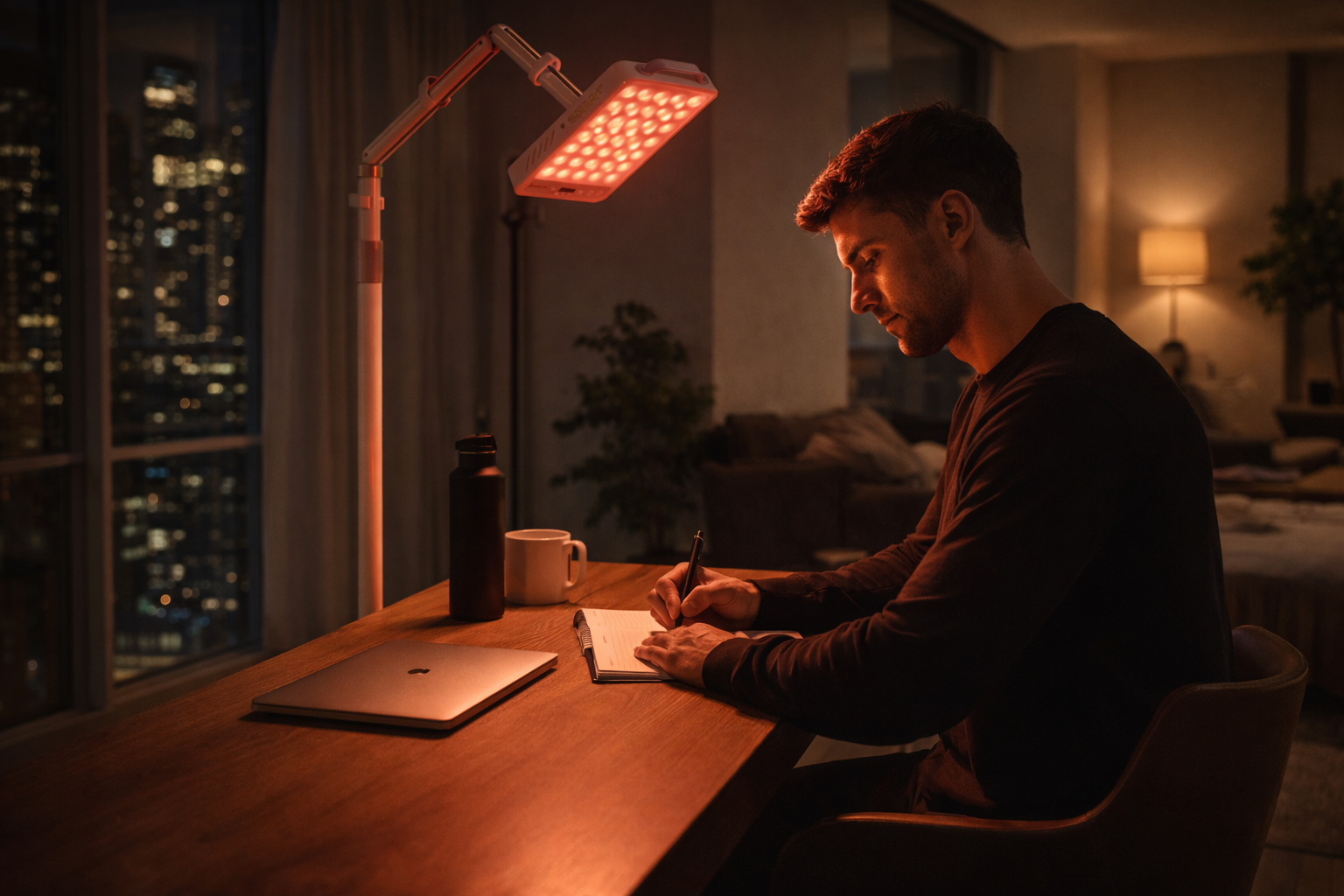
Biohacking Health, Powered by Light
A modern protocol designed to support cellular energy, circadian alignment, and daily performance—built for consistency.
Not a gadget. A protocol.
Most wellness tools fail because they’re hard to stick with. SOLRA is designed as a repeatable light ritual—simple, consistent, and easy to integrate.
What biohackers use light for
Mitochondria & ATP
Supports cellular energy routines and daily output.
Recovery Loop
Designed to support post-stress recovery habits.
Circadian Alignment
Often used as part of evening wind-down rituals.


Experience the power of advanced red light at home with our 40-LED panel system, complete with versatile floor and desktop stand options.
Advanced Red Light Technology
The SOLRA Red Light Panel uses specific red and near-infrared light wavelengths to interact with cellular processes that may contribute to general wellness. Our 40-LED configuration delivers consistent light coverage for comprehensive at-home sessions.
Model: SOLRA SR40 (also available on Amazon). 660nm red + 850nm near-infrared, 200W, 0.0uT @10cm EMF.
Key Features:
- 40 High-Output LEDs: Premium quality diodes delivering verified 660nm and 850nm wavelengths
- Dual Wavelength Technology: 660nm red light and 850nm near-infrared for coverage of both surface and deeper tissue
- Strong Irradiance Output: High-output design for consistent daily sessions
- Versatile Stand System: Includes both floor and desktop stands for flexible positioning
- Timer Function: Built-in timer with multiple session duration options
- Low EMF Design: Minimal electromagnetic field emission for safe daily use
- Quiet Operation: Whisper-quiet cooling system for peaceful sessions
- Durable Construction: Built to last with premium materials and components
Wellness Disclaimer: SOLRA products are general wellness devices and have not been evaluated by the FDA. The information here is for general wellness and educational purposes only and is not intended to diagnose, treat, cure, or prevent any disease. Individual results may vary. Consult a qualified healthcare professional before starting any new wellness practice, especially if you have a medical condition or are taking medications.
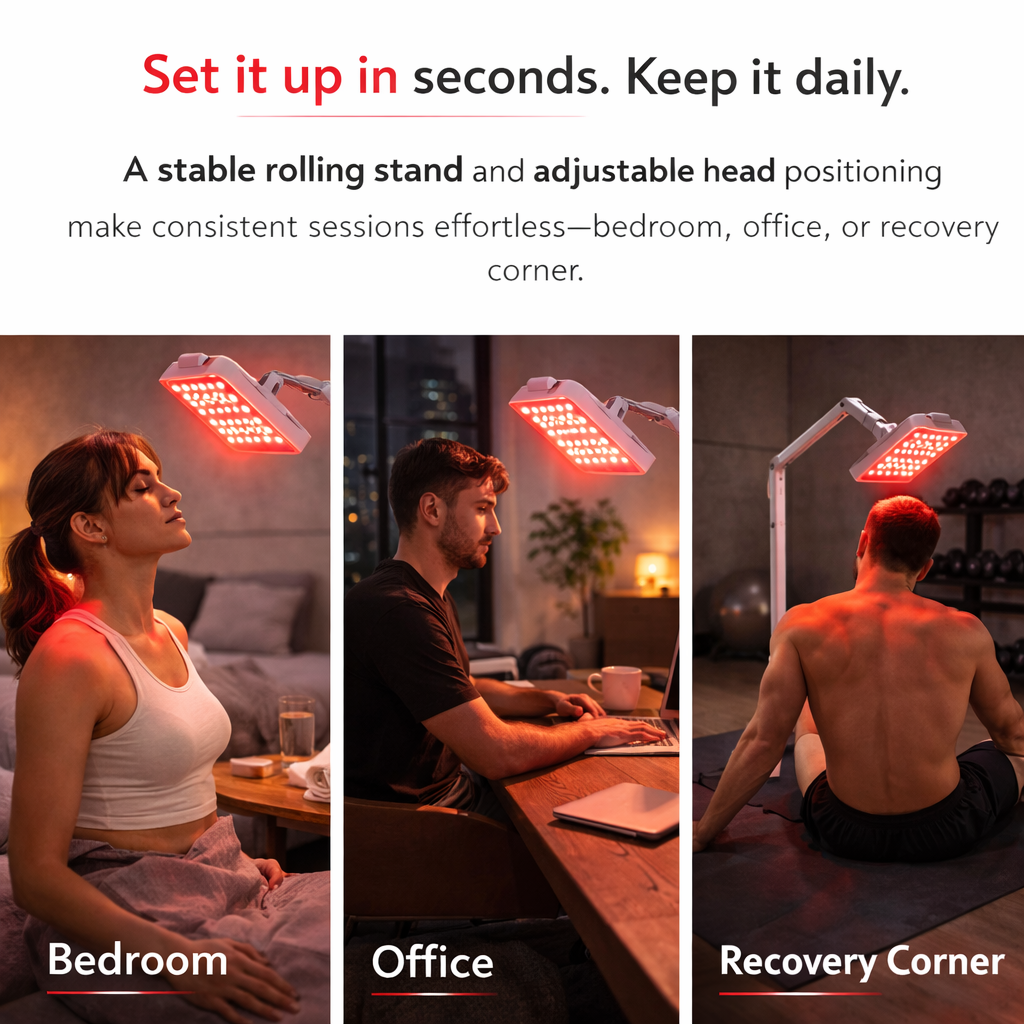
Set it up in seconds. Keep it daily.
A stable rolling stand and adjustable head positioning make consistent sessions effortless—bedroom, office, or recovery corner.
The SOLRA Biohacking Protocol
5–10 min for a clear start.
10 min to support focus and recovery rhythm.
10–15 min as a calm pre-sleep ritual.
FAQ
What's the minimum effective dose for red light?
Based on published research, most photobiomodulation studies use energy densities between 3–6 J/cm² per session. In practical terms, that translates to about 10–15 minutes at 6–10 inches from the panel. Start with 10 minutes daily and track how you feel over 2–3 weeks before adjusting. More is not always better — there is a biphasic dose response curve where excessive dosing can reduce benefits.
Morning or evening — which protocol is better?
It depends on your goal. Morning sessions (5–10 min, RED + NIR) are popular for an energy and circulation boost to start the day. Evening sessions (10–15 min, NIR only) are more commonly used for circadian wind-down and sleep support, since near-infrared light doesn't contain the blue spectrum that disrupts melatonin. Many biohackers run both — a short morning session and a longer evening session.
Can I stack red light with sauna or cold plunge?
Yes, and this is one of the most common biohacking stacks. A typical protocol is: sauna → cold plunge → red light. The idea is to use heat stress and cold stress for hormetic benefits, then follow with red light to support cellular recovery. If you're new to stacking, introduce one modality at a time and track your response (HRV, sleep quality, energy) before adding the next.
Does red light affect HRV or sleep data?
Some users report improvements in HRV (heart rate variability) and deep sleep duration after 2–4 weeks of consistent evening NIR sessions. These are self-reported observations, not guaranteed outcomes. If you track with an Oura Ring, WHOOP, or Apple Watch, run your baseline for 1 week without red light, then add evening sessions and compare your 2-week averages.
What's the difference between pulsed and continuous mode?
The SOLRA panel operates in continuous wave (CW) mode, which is the most widely studied and commonly used mode in red light research. Pulsed mode is an emerging area of study with some early-stage research showing potential for neurological applications, but CW mode is the proven standard for general wellness, recovery, and skin health.
How does red light work at the mitochondrial level?
When red (660nm) and near-infrared (850nm) photons reach your cells, they are absorbed by cytochrome c oxidase (CCO), an enzyme in the mitochondrial electron transport chain. This absorption displaces nitric oxide from CCO, allowing the enzyme to function more efficiently, which increases ATP (adenosine triphosphate) production. More ATP means more cellular energy for repair, recovery, and regeneration. This process is called photobiomodulation.
Should I wear clothes during a session?
For maximum energy delivery, expose the target area directly to the light. Clothing — especially thick or dark fabrics — will absorb or block a significant portion of the photons before they reach your skin. Light, breathable fabric (like a thin white t-shirt) reduces effectiveness but doesn't block it entirely. For the best results, use the panel on bare skin.
How do I know if red light is actually working for me?
Track objective data. Before you start, record baseline metrics for whatever you're targeting: sleep quality (deep sleep minutes via wearable), recovery (HRV), skin appearance (photos in consistent lighting), or subjective energy levels (1–10 scale daily). Use the panel consistently for 3–4 weeks, then compare. If you're not tracking, you're guessing.
Ready to Start Your Ritual?
The SOLRA — 200W · 40 LEDs · 660nm + 850nm · Free Floor Stand Included
Free US Shipping · 2-Year Warranty · 60-Day Returns