
Last Updated: May 13, 2026
Key takeaways
- Light, especially blue wavelengths around 460–480nm, signals the brain to suppress melatonin and promote wakefulness, while darkness lets melatonin rise for sleep.
- The melanopsin photopigment is far less sensitive to red wavelengths, so red light at 660nm produces much smaller circadian signals than equivalent blue light.
- Several small studies report improved sleep-quality scores and modestly increased melatonin in evening protocols, though the evidence base is preliminary.
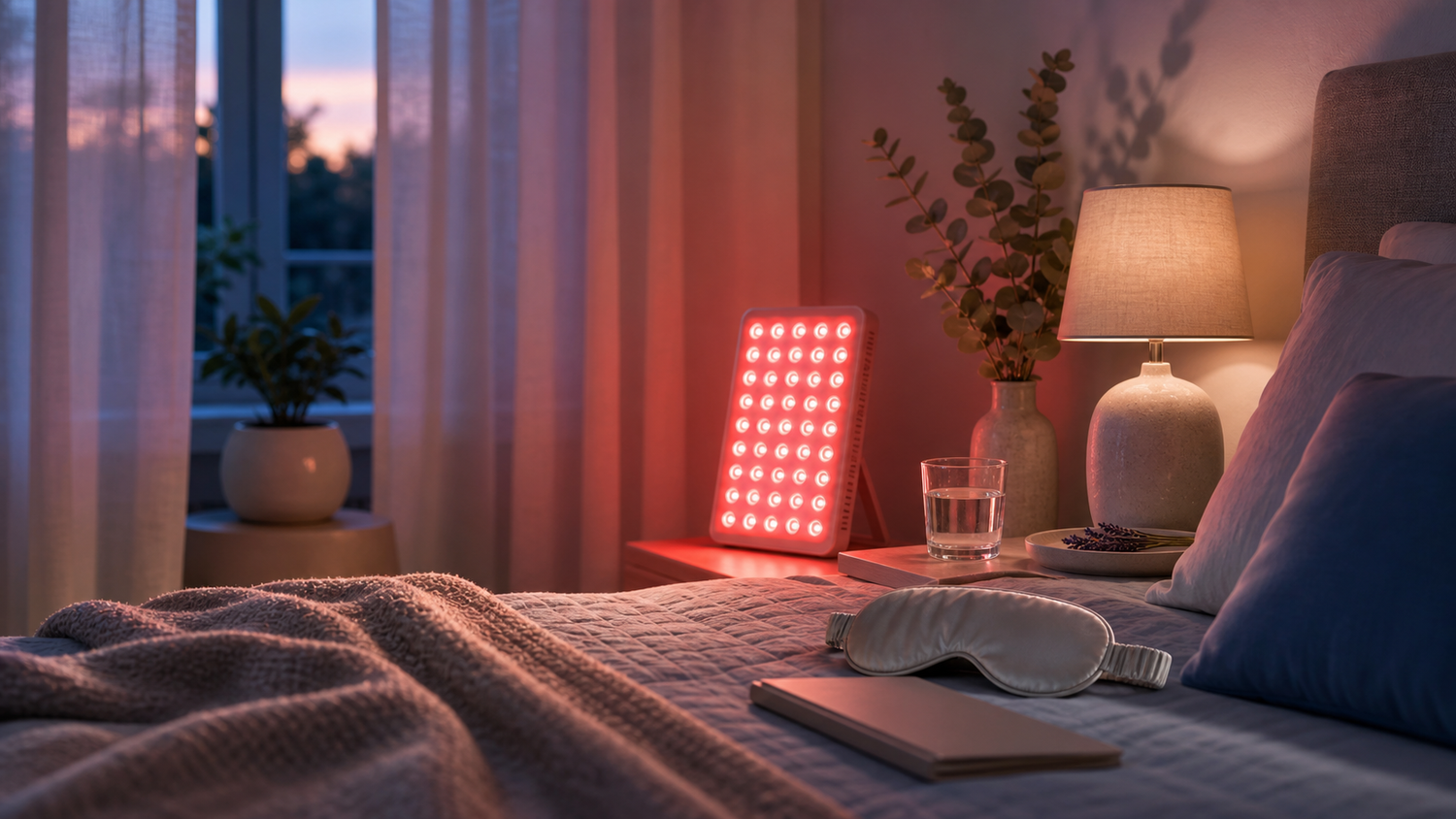
- Red light may support sleep without strongly disrupting it, partly by avoiding evening blue-light exposure, but timing effects vary by individual.
- It is not a substitute for sleep hygiene fundamentals and is not a treatment for diagnosed sleep disorders.
Sleep and light have an inseparable relationship. Long before electric lighting, human circadian rhythms were calibrated by sunrise, sunset, and the long dark hours in between. Modern life has scrambled that calibration - bright indoor light at night, blue-shifted screens before bed, and underexposure to daylight during the day all push the body's internal clock in directions it did not evolve for.
Red light therapy occupies an interesting position in this conversation. The wavelengths used are at the opposite end of the visible spectrum from the blue light most associated with circadian disruption. Some research suggests this might matter for sleep in ways that are worth understanding - and some of the popular claims about red light and sleep run ahead of the evidence.
This article walks through what is actually known about light, circadian rhythm, and sleep, and where red light therapy fits into that picture.
How does light control sleep and wake cycles?
Light exposure - particularly blue wavelengths around 460-480 nm - signals the suprachiasmatic nucleus in the brain to suppress melatonin production and promote wakefulness, while darkness allows melatonin to rise and prepare the body for sleep.
The mechanism runs through a specialized class of retinal cells called intrinsically photosensitive retinal ganglion cells (ipRGCs). These cells contain a photopigment called melanopsin, which is maximally sensitive to blue light. When blue wavelengths strike the retina, ipRGCs send signals to the suprachiasmatic nucleus - the brain's master circadian clock - which then orchestrates downstream effects including melatonin suppression, cortisol release, body temperature changes, and alertness.
This system evolved in an environment where bright, blue-rich daylight reliably signaled day, and the absence of that light signaled night. Modern lighting environments break the signal: blue-rich light from screens and LEDs reaches the eyes at hours when the circadian system expects darkness, telling the body it is still daytime when it is actually 11 pm.
Why are different wavelengths treated so differently by the body?
The melanopsin photopigment in circadian-sensing retinal cells has peak sensitivity in the blue range and significantly reduced sensitivity to red wavelengths, meaning red light produces much smaller signals to the circadian system than equivalent intensities of blue light.
This is not subtle. Research measuring melatonin suppression at different wavelengths has found that the same number of photons at 460 nm (blue) produces dramatically more melatonin suppression than at 660 nm (red). Some studies estimate the difference at roughly 100-fold for the same photon intensity.
This wavelength dependence is the biological basis for several common recommendations:
- Dim, warm-toned lighting in the evening
- Blue-light filters on screens at night
- Avoiding overhead lights with high blue content close to bedtime
- Bright, blue-rich light exposure in the morning to anchor the circadian rhythm
It is also why red light therapy panels - which deliver intense red and near-infrared light - have been studied for effects on sleep that differ from what bright white or blue light would produce.
What does research suggest about red light and sleep quality?
Several small studies have explored red light therapy effects on sleep, with some reporting improved sleep quality scores and modestly increased melatonin levels in evening protocols, though the evidence base is preliminary and the effects are smaller than for established sleep interventions.
A 2012 study in the Journal of Athletic Training examined elite female basketball players given 30 minutes of whole-body red light exposure over a 14-day period. The researchers reported improvements in sleep quality scores measured by validated questionnaires and increased serum melatonin levels compared to a control period.
A 2019 study published in Photobiology examined evening exposure to red light at various intensities and reported smaller circadian-disrupting effects compared to white or blue light at equivalent intensities, consistent with the wavelength-dependent melanopsin sensitivity.
Other small trials have examined red light therapy effects in shift workers, athletes, and general populations with mixed but generally positive findings on subjective sleep quality measures.
The honest summary: red light therapy is not an established sleep treatment in the way that cognitive behavioral therapy for insomnia (CBT-I), sleep hygiene optimization, or evidence-based medications are. But the wavelength-based rationale is plausible, the existing data is suggestive, and adverse effects in published trials have been minimal.
Why might red light support sleep without disrupting it?
Red light produces minimal melatonin suppression while still potentially supporting tissue-level processes that may contribute to overall sleep quality, including muscle recovery, reduced inflammation, and effects on tissues involved in the sleep-wake transition.
Several non-circadian mechanisms have been proposed:
Tissue recovery effects
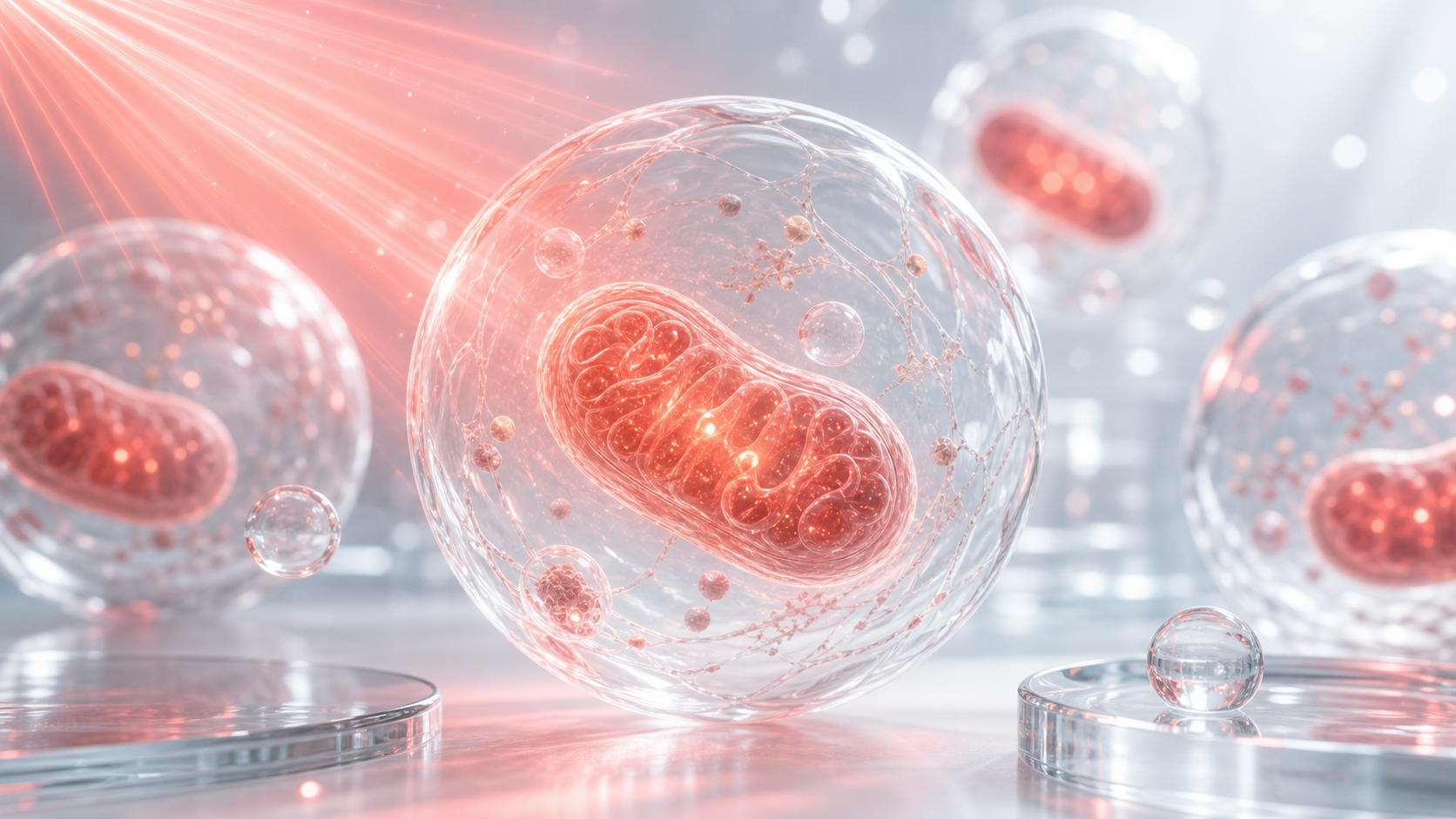
The cellular mechanisms of photobiomodulation - increased ATP production, modulated inflammation, supported tissue repair - might contribute to recovery processes that occur during sleep. If red light therapy during the day supports these processes, the body might enter the sleep period with less inflammation or musculoskeletal discomfort interfering with rest.
Reduced evening blue light exposure
Using a red light panel during evening hours, in a room with otherwise dim lighting, may incidentally reduce exposure to blue-rich indoor lighting during the period when circadian disruption is most consequential. The benefit here is partly from what is being avoided (blue light) rather than from the red light itself.
Modulation of cellular processes during sleep
Some research suggests light exposure during the day may influence cellular metabolic processes that affect nighttime tissue restoration. This is an active research area without firm conclusions yet.
Possible direct effects on sleep regulation
A small body of research has examined whether red light wavelengths might directly influence melatonin synthesis or sleep regulatory pathways. Preliminary findings are intriguing but require much larger studies to confirm.
When should red light therapy be used for best sleep effects?
The timing question is more complicated than "use it before bed," with morning sessions offering different potential benefits than evening sessions, and individual responses varying significantly.
Morning sessions
Some practitioners and researchers suggest morning red light therapy as a way to anchor circadian rhythm and support daytime energy. The reasoning involves the cellular activation effects of photobiomodulation occurring during the period when the body is naturally moving toward alertness. Morning sessions also avoid any potential alerting effects close to bedtime.
Evening sessions
Other practitioners recommend evening sessions, often 1-3 hours before sleep, on the reasoning that the muscle relaxation, recovery support, and minimal circadian impact make this timing well-suited to wind-down routines. Some users report this approach feels relaxing; others report it can feel mildly activating.
Individual variation
People differ substantially in how their circadian systems respond to various light exposures. Chronotype (whether someone is naturally a morning lark or evening owl), individual melanopsin sensitivity, baseline sleep quality, and other factors all influence how someone might respond to red light therapy at a given time of day.
A practical approach: try morning sessions for two weeks and observe sleep quality, then try evening sessions for two weeks and compare. The data point that matters is the individual's actual sleep, not theoretical predictions.
What does not constitute a sleep solution?
An honest discussion has to address what red light therapy cannot do for sleep:
It is not a substitute for sleep hygiene fundamentals. Consistent sleep and wake times, a dark sleep environment, limited evening blue light, moderate evening caffeine and alcohol, and adequate sleep duration are the foundation of sleep quality. No light therapy modality can substitute for these basics.
It is not a treatment for diagnosed sleep disorders. Conditions like sleep apnea, restless legs syndrome, narcolepsy, and chronic insomnia require diagnosis and medical treatment. Red light therapy may sit alongside these treatments but does not replace them.
It is not a way to compensate for chronic sleep deprivation. No therapeutic modality fixes the cumulative effects of sleeping 5 hours a night for years. The fundamental requirement is adequate sleep duration; everything else is at most an enhancement.
It is not a uniformly effective tool. Some people report meaningful sleep improvements; others notice no change. The variability in response means individual experimentation is necessary rather than assuming benefit.
The bottom line
The relationship between light and sleep is one of the most fundamental in human biology. Red light therapy occupies a particular spot in this relationship: wavelengths that produce minimal disruption to the circadian melatonin system while potentially supporting tissue-level processes relevant to recovery and rest.
The research base for red light therapy specifically as a sleep intervention is preliminary - some suggestive studies, plausible mechanisms, and a benign safety profile, but nothing close to the evidence supporting the basics of sleep hygiene, evening blue light reduction, or cognitive behavioral therapy for chronic insomnia.
The reasonable framing: red light therapy may be a useful piece of a broader sleep-supportive routine for some people, alongside the established fundamentals. It is not a sleep treatment in any rigorous sense, and it does not solve the harder problems that disrupted sleep often involves. Used with realistic expectations and combined with the basics, it may contribute to better rest. Used as a primary fix for serious sleep issues, it is likely to disappoint.
Frequently asked questions
Why does red light affect sleep differently than blue light?
The melanopsin photopigment in circadian-sensing retinal cells has peak sensitivity in the blue range and significantly reduced sensitivity to red, so red light produces much smaller signals to the circadian system. Some studies estimate the difference at roughly 100-fold for the same photon intensity at 460 nm versus 660 nm.
What does research suggest about red light and sleep quality?
Several small studies have explored red light effects on sleep, with some reporting improved sleep quality scores and modestly increased melatonin levels in evening protocols, though the evidence base is preliminary. A 2012 study of elite female basketball players given 30 minutes of whole-body red light over 14 days reported improved sleep quality scores and increased serum melatonin compared to a control period.
Is it better to do red light sessions in the morning or evening for sleep?
The timing question is complicated and individual responses vary, with some practitioners suggesting morning sessions to anchor circadian rhythm and others recommending evening sessions 1-3 hours before sleep. A practical approach is to try morning sessions for two weeks and evening sessions for two weeks and compare your actual sleep.
Can red light therapy replace good sleep habits or treat a sleep disorder?
No, it is not a substitute for sleep hygiene fundamentals like consistent sleep and wake times and a dark environment, and it is not a treatment for diagnosed sleep disorders such as sleep apnea or chronic insomnia. It may sit alongside established fundamentals but does not replace them.
Wellness Disclaimer: The information in this article is for general wellness and educational purposes only and is not intended to diagnose, treat, cure, or prevent any disease. SOLRA products are general wellness devices and have not been evaluated by the FDA. Individual results may vary. Consult a qualified healthcare professional before starting any new wellness practice, especially if you have a medical condition or are taking medications.
About this guide. Written and maintained by the SOLRA Team, who design and support the SOLRA Red Light Panel (660nm red + 850nm near-infrared light). Our guides focus on practical, comfort-first routines and use general wellness language rather than medical claims. Always follow your device instructions and consult a qualified professional about any medical condition. Editorial review: SOLRA Team · Updated June 2026.

Leave a comment
This site is protected by hCaptcha and the hCaptcha Privacy Policy and Terms of Service apply.