
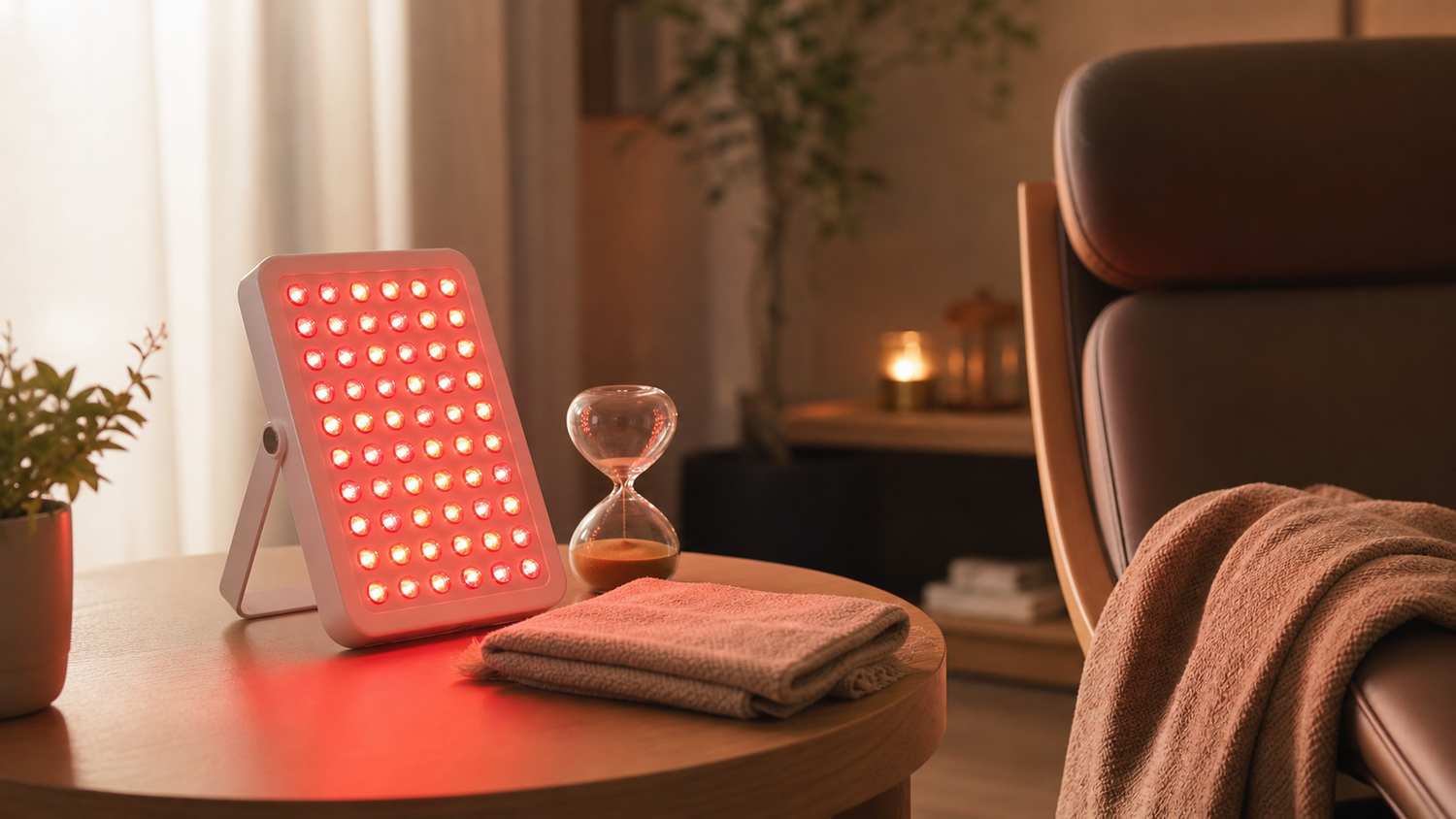
Red light wellness routines feel pleasant and low-effort, which makes it tempting to think more is always better. With many habits, doubling the time or running extra sessions feels like doubling the payoff. Red light does not really work that way, and understanding why helps you build a routine that stays comfortable and sustainable.
Key takeaways
- More is not better: red light wellness follows a comfort-first, consistency-over-intensity approach, not a "more sessions, faster results" logic.
- Stick to the session length and frequency your device recommends instead of stacking extra sessions or holding the panel far longer than suggested.
- Listen to simple comfort signals — warmth that stops feeling pleasant, tired or dry eyes, or skin that feels overdone are cues to ease off.
- When in doubt, do less: a shorter, regular routine is easier to keep up than an intense one you abandon.
Why "more" doesn't mean "better" here
It is natural to assume that if a short session is good, a much longer one must be better. Many wellness routines are built the opposite way: they reward a sensible, repeatable dose rather than maximum intensity. The useful mindset for red light is consistency over cramming. A brief routine you do regularly fits real life far better than long, draining sessions you cannot sustain, and comfort is the guide rather than a stopwatch pushed to its limit.
Follow the numbers your device gives you
The clearest way to avoid overdoing it is to use the session length, distance, and frequency your panel actually recommends. These figures exist for a reason, and treating them as a target rather than a minimum keeps your routine grounded.
- Keep each session to the length your device suggests instead of "rounding up."
- Use the recommended distance rather than pressing the panel as close as possible.
- Resist adding extra daily sessions on the assumption they speed things up.
If you want a structured starting point, our guides on session length and how often to use a panel lay out comfortable defaults.
Comfort signals to pay attention to
Your own comfort is a reliable everyday gauge. A session should feel relaxing from start to finish. A few simple cues suggest you may be doing too much:
- Warmth that shifts from pleasant to uncomfortable during a session.
- Eyes that feel tired, dry, or strained — a reminder not to stare into the LEDs and to consider eye protection.
- Skin that simply feels "overdone" rather than refreshed afterward.
None of these are reasons for alarm; they are signals to shorten the session, increase your distance, or take a day off. Easing back is always a reasonable response.
Building a routine you won't be tempted to overdo
The best protection against overdoing it is a routine that already feels complete at a sensible dose. Pick a realistic frequency, keep sessions to the recommended length, and let regularity — not intensity — do the work. If you ever feel you "should" be doing more, that is usually a cue to check expectations, not to add sessions.
When to step back or check in
If anything feels off, the simplest move is to pause and let things settle. And as with any wellness routine, if you are pregnant, photosensitive, taking light-sensitive medication, or managing a medical condition, talk to a qualified professional before continuing. Doing less, more consistently, is almost always the more sustainable path.
Frequently asked questions
Can you use red light therapy too much?
Red light wellness rewards consistency over intensity, so adding extra sessions or far longer session times is unnecessary; the better approach is to follow the session length, distance, and frequency your device recommends rather than assuming more is better.
What are signs you are overdoing red light therapy?
Simple comfort cues are the best guide: warmth that stops feeling pleasant during a session, eyes that feel tired or strained, or skin that feels overdone rather than refreshed afterward are all signals to shorten the session, increase your distance, or take a day off.
Is more red light therapy better for faster results?
No. Red light wellness is a comfort-first, consistency-over-intensity routine, so a shorter regular session is generally more sustainable than long or extra sessions, and doing more does not reliably speed anything up.
How long should a red light session be to stay safe and comfortable?
Keep each session to the length your device recommends and use the suggested distance rather than pressing the panel close; if anything feels uncomfortable, ease back, and consult a qualified professional if you are pregnant, photosensitive, or managing a medical condition.
Where SOLRA fits
Choose the configuration that matches your space: a tabletop setup for compact, seated routines, or a floor stand for larger areas and full-body sessions. The SOLRA Red Light Panel is built around 660nm red light and 850nm near-infrared light, with setup options for panel-only use, tabletop placement, or a complete floor-stand kit.
Quick safety notes
Red light wellness routines should feel comfortable. Avoid staring directly into bright LEDs, follow your device instructions, and consult a qualified professional if you are pregnant, photosensitive, using light-sensitive medication, or managing a medical condition.
About this guide. Written and maintained by the SOLRA Team, who design and support the SOLRA Red Light Panel (660nm red + 850nm near-infrared light). Our guides focus on practical, comfort-first routines and use general wellness language rather than medical claims. Always follow your device instructions and consult a qualified professional about any medical condition. Editorial review: SOLRA Team · Updated June 2026.

Leave a comment
This site is protected by hCaptcha and the hCaptcha Privacy Policy and Terms of Service apply.