
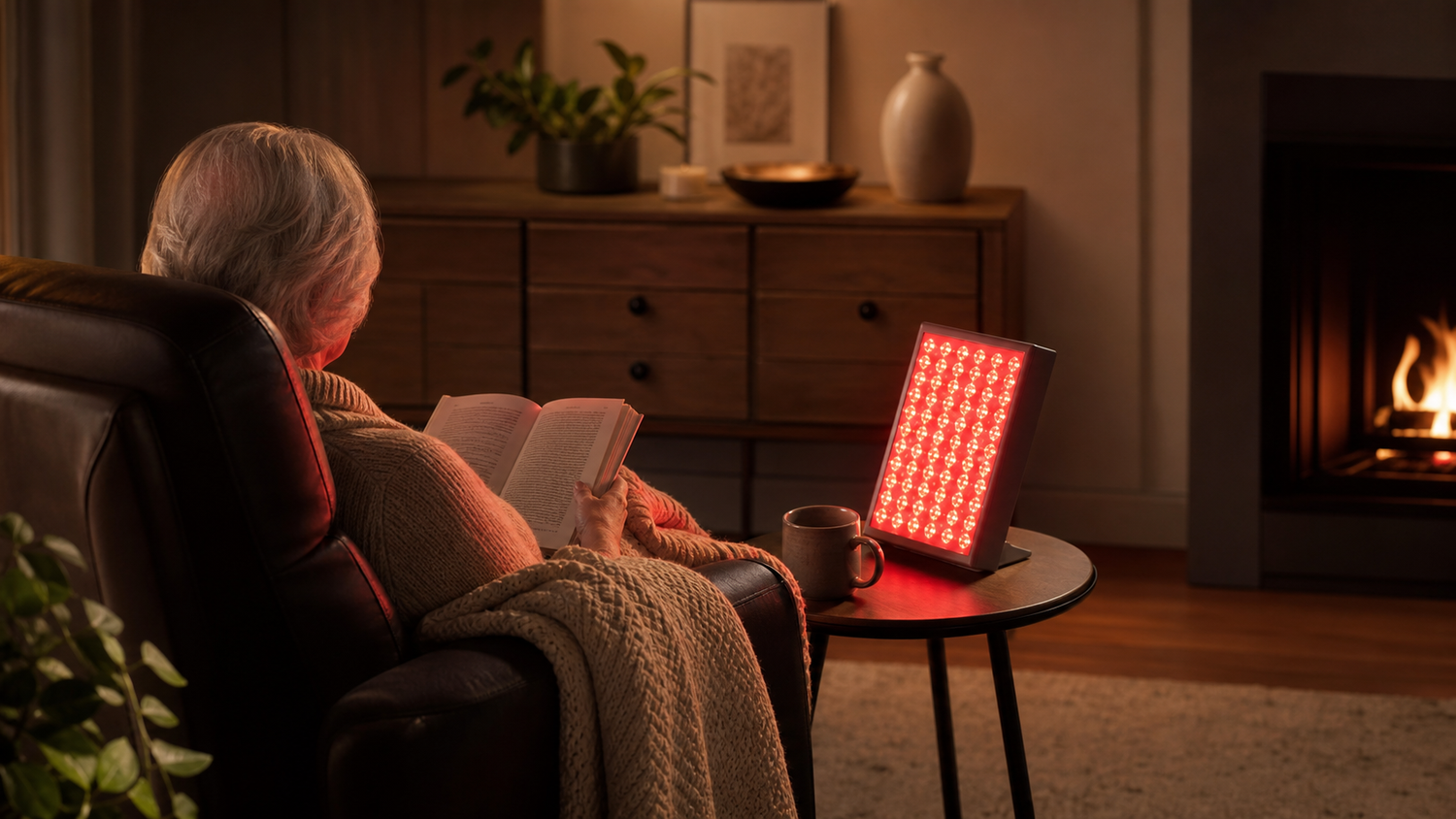
Red light wellness is often pictured as something for athletes or skincare enthusiasts, but its comfort-first, low-effort nature makes it just as approachable later in life. For many older adults, the appeal is simple: a calm routine you can do seated, at home, on your own schedule. Here is how to think about red light wellness with comfort and ease in mind.
Key takeaways
- Red light wellness suits older adults because sessions are short, can be done seated, and ask for no strenuous effort or special skills.
- A stable setup matters most — a steady stand at a comfortable seated height makes routines easy on the body and simple to repeat.
- Keep it gentle: follow the recommended distance and session length, and treat comfort as the goal rather than intensity.
- Common areas of interest include the face, hands, wrists, and joints; consult a qualified professional about any medical condition before starting.
Why red light wellness suits later life
A red light routine asks very little of you physically. Sessions are short, you can sit through them, and there is nothing strenuous to learn or perform. That makes it an easy habit to add to a daily rhythm, whether that is part of a morning routine or a quiet moment in the afternoon. For anyone who values low-effort, repeatable wellness habits, the format is a natural fit.
Set up for comfort and stability
The single biggest factor in an enjoyable routine is a stable, comfortable setup. The goal is to be able to sit naturally while the panel does its work, without holding anything or straining to stay in position.
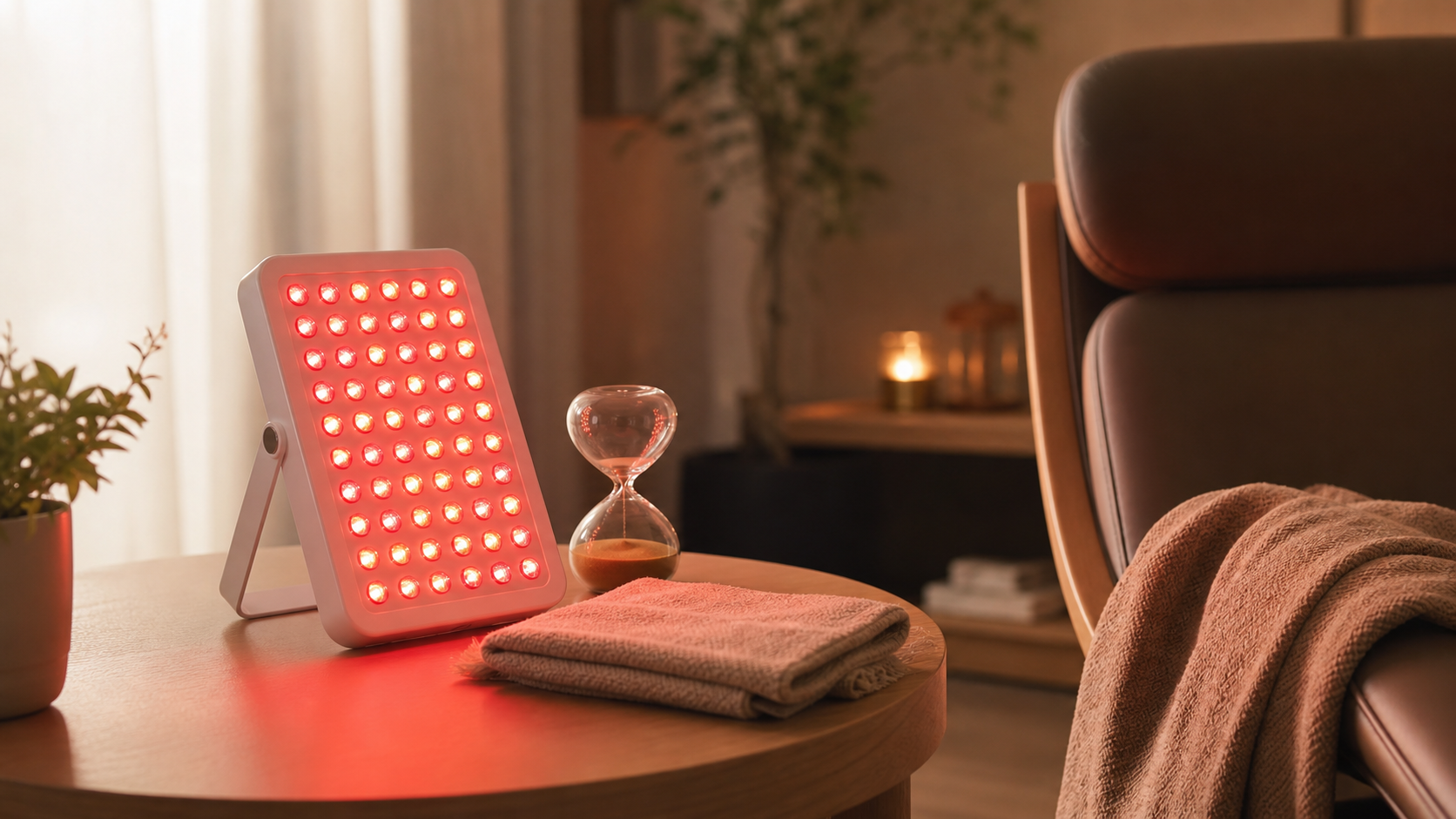
- Use a steady stand so the panel stays put — a tabletop placement for seated face or hand routines, or a floor stand for larger areas.
- Position the panel at a height that lets you sit upright and relaxed.
- Keep the recommended distance rather than leaning in toward the LEDs.
Our guide to setting up a panel at home walks through comfortable seated and full-body arrangements.
Areas people commonly focus on
Older adults often gravitate toward a few familiar areas. The face is popular as part of a gentle skincare-adjacent routine, and the hands, wrists, and feet are easy to position in a seated session. Many people are also curious about red light and joint comfort. Whatever the focus, the same principles apply: comfortable distance, sensible session length, and a relaxed posture.
Keep sessions gentle and consistent
There is no benefit to pushing intensity. Follow the session length and distance your device recommends, and let regularity carry the routine. A brief session most days is far easier to maintain than long sessions you have to talk yourself into. If sitting for a session is more comfortable in the morning, build it into that part of the day; consistency matters more than timing.
A note on checking in first
Comfort and caution go together. If you are managing any medical condition, take light-sensitive medication, or are unsure whether a routine suits you, it is worth a conversation with a qualified professional before you begin. Red light wellness is meant to be a pleasant, optional part of your day — never a source of strain or worry.
Frequently asked questions
Is red light wellness suitable for seniors and older adults?
Its format suits later life well because sessions are short, can be done seated, and require no strenuous effort or special skill; that said, anyone managing a medical condition or taking light-sensitive medication should consult a qualified professional before starting.
How should an older adult set up a red light panel comfortably?
Stability is the priority: use a steady tabletop placement for seated face or hand routines or a floor stand for larger areas, position the panel at a height that lets you sit upright and relaxed, and keep the recommended distance rather than leaning toward the LEDs.
What areas do older adults usually focus on with red light?
Common areas of interest include the face as part of a gentle skincare-adjacent routine, the hands, wrists, and feet, which are easy to position while seated, and the joints; the same comfortable-distance, sensible-length principles apply to each.
How often should seniors use a red light panel?
Follow the session length and frequency your device recommends and let consistency rather than intensity carry the routine; a short session most days is easier to sustain than long sessions, and a qualified professional can advise on what suits your situation.
Where SOLRA fits
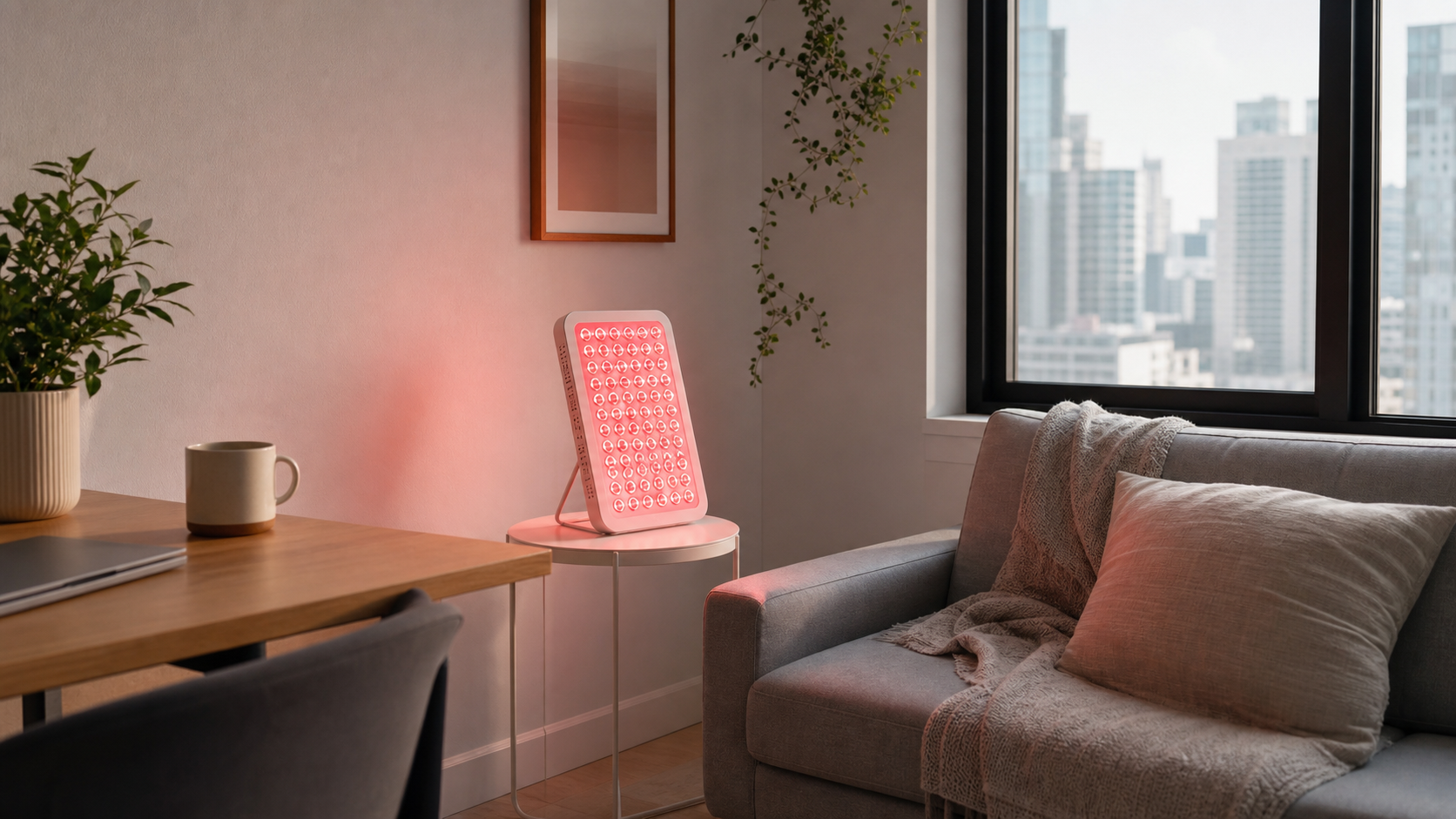
Choose the configuration that matches your space: a tabletop setup for compact, seated routines, or a floor stand for larger areas and full-body sessions. The SOLRA Red Light Panel is built around 660nm red light and 850nm near-infrared light, with setup options for panel-only use, tabletop placement, or a complete floor-stand kit.
Quick safety notes
Red light wellness routines should feel comfortable. Avoid staring directly into bright LEDs, follow your device instructions, and consult a qualified professional if you are pregnant, photosensitive, using light-sensitive medication, or managing a medical condition.
About this guide. Written and maintained by the SOLRA Team, who design and support the SOLRA Red Light Panel (660nm red + 850nm near-infrared light). Our guides focus on practical, comfort-first routines and use general wellness language rather than medical claims. Always follow your device instructions and consult a qualified professional about any medical condition. Editorial review: SOLRA Team · Updated June 2026.

Leave a comment
This site is protected by hCaptcha and the hCaptcha Privacy Policy and Terms of Service apply.