
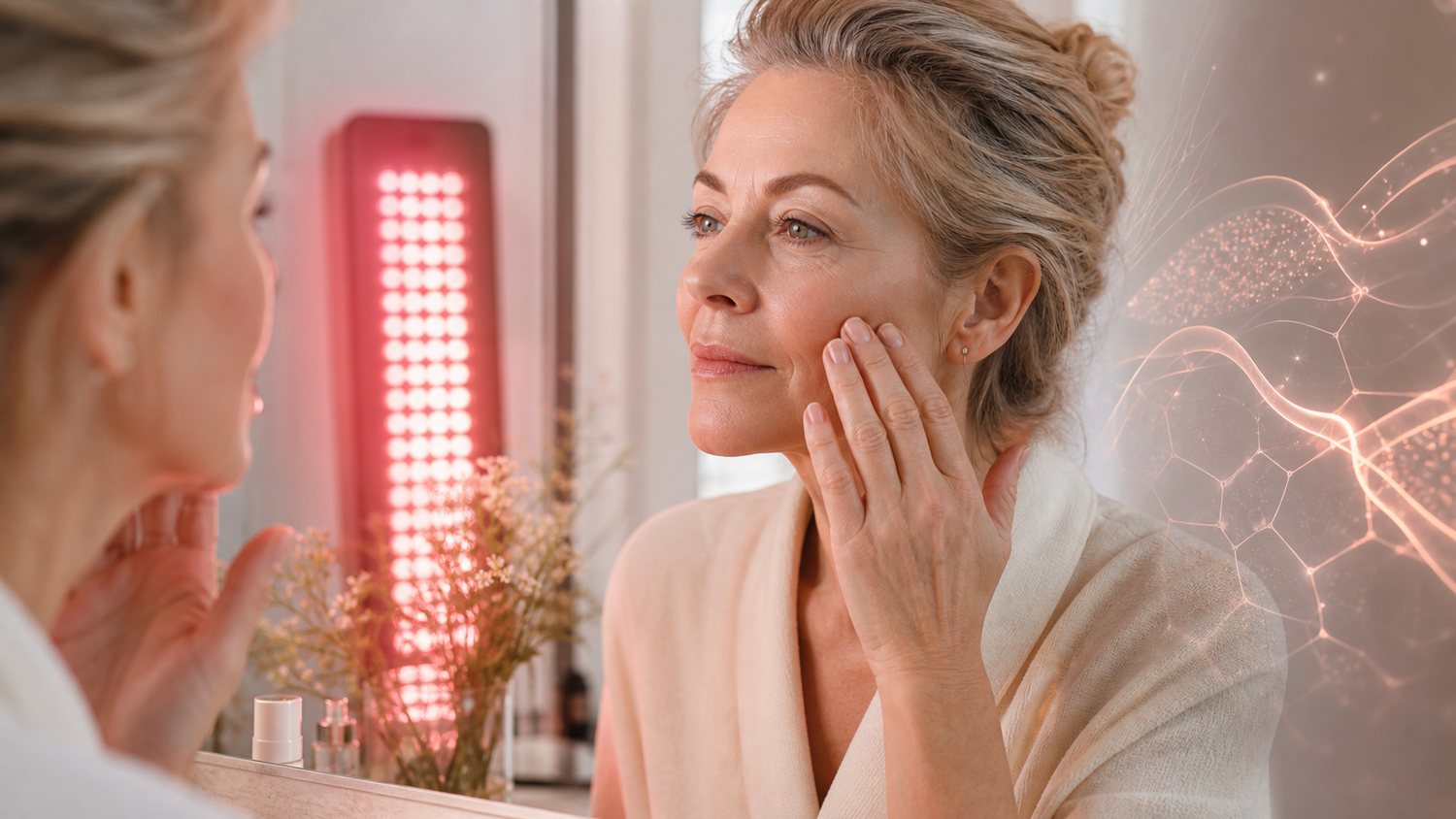
“Collagen” shows up constantly in conversations about skin and red light, often with big promises attached. It helps to understand what collagen actually is and why the language around it should stay grounded. This is an educational overview, not a treatment claim.
Key takeaways
- Collagen is a structural protein the body makes naturally; in skin its levels change gradually over years, not overnight.
- Red and near-infrared light wellness is often discussed alongside skin appearance — but the honest framing is modest, comfortable routines rather than dramatic claims.
- Read "collagen support" marketing critically: favour measured, patient language over promises of fast, dramatic change.
- Everyday basics — sun protection, hydration, sleep, and consistency — support skin regardless; a red light session is one calm part of that bigger picture.
What collagen is
Collagen is a structural protein your body makes naturally. In skin, it is part of what gives a smooth, supported feel. Its presence changes gradually over time and with everyday factors like sun exposure and lifestyle, which is why skin texture shifts slowly across years rather than overnight.
Why people connect it to red light
Red and near-infrared light wellness is often discussed alongside skin appearance, which is how collagen enters the conversation. The honest framing is that this is an area of ongoing interest and study, and that any skin-related benefits people pursue are about gradual, comfortable routines rather than dramatic transformation.
Reading "collagen support" claims carefully
Marketing language can overreach. A grounded reader can keep a few questions in mind.
- Is the claim modest and realistic, or does it promise dramatic, fast change?
- Does it describe a comfortable routine, or push intensity and long sessions?
- Does it respect that skin changes happen slowly, over weeks and months?
Claims that stay measured and patient are easier to trust than ones that promise the world.
Habits that support skin generally
Whatever role light plays, everyday basics matter for skin: sensible sun protection, hydration, sleep, and a consistent, gentle routine. A red light session can be one calm part of that bigger picture, not a substitute for the fundamentals.
Setting realistic expectations
The useful mindset is patience and consistency. Treat a red light routine as a pleasant, low-effort habit you maintain over time, keep expectations realistic, and let the fundamentals of skin care do their quiet work alongside it.
Frequently asked questions
What is collagen and how does it change over time?
Collagen is a structural protein the body makes naturally, and in skin its levels change gradually over years with everyday factors like sun exposure and lifestyle, which is why skin texture shifts slowly rather than overnight.
Does red light wellness boost collagen?
Red and near-infrared light wellness is often discussed alongside skin appearance, but the honest framing is that this is an area of ongoing interest and any skin-related goals are about gradual, comfortable routines rather than dramatic change.
How should I read collagen support claims in marketing?
Favour measured, patient language over promises of fast or dramatic change, and keep in mind that skin changes happen slowly over weeks and months.
What everyday habits support skin alongside red light?
Sun protection, hydration, sleep, and a consistent gentle routine support skin regardless, and a red light session is best treated as one calm part of that bigger picture rather than a substitute for the fundamentals.
Where SOLRA fits
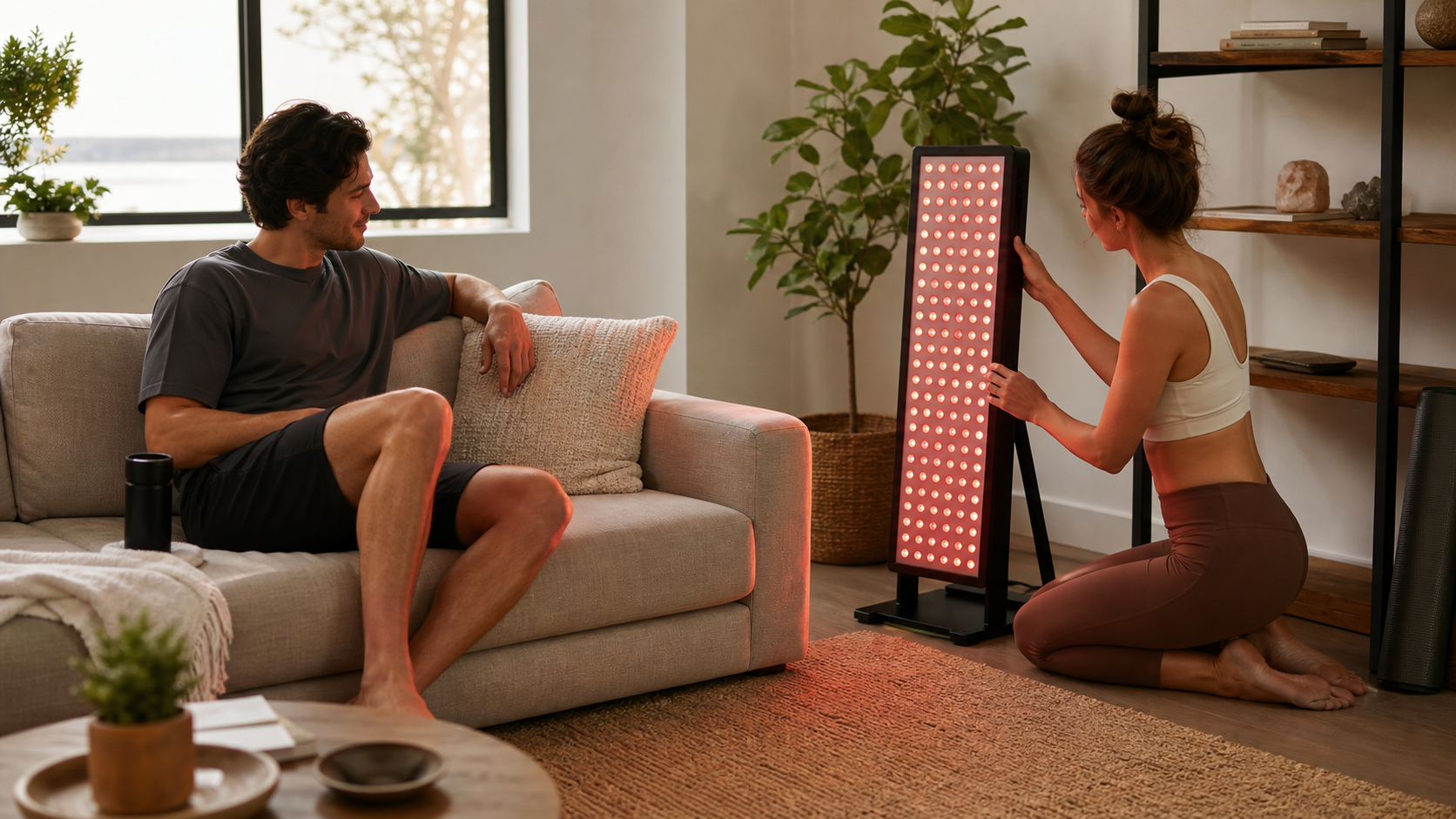
Choose the configuration that matches your space: a tabletop setup for compact, seated routines, or a floor stand for larger areas and full-body sessions. The SOLRA Red Light Panel is built around 660nm red light and 850nm near-infrared light, with setup options for panel-only use, tabletop placement, or a complete floor-stand kit.
Quick safety notes
Red light wellness routines should feel comfortable. Avoid staring directly into bright LEDs, follow your device instructions, and consult a qualified professional if you are pregnant, photosensitive, using light-sensitive medication, or managing a medical condition.
Wellness disclaimer: SOLRA products are general wellness devices and have not been evaluated by the FDA. This article is for educational purposes only and is not intended to diagnose, treat, cure, or prevent any disease. Consult a qualified healthcare professional before beginning a new wellness practice, especially if you have a medical condition or take medication.
About this guide. Written and maintained by the SOLRA Team, who design and support the SOLRA Red Light Panel (660nm red + 850nm near-infrared light). Our guides focus on practical, comfort-first routines and use general wellness language rather than medical claims. Always follow your device instructions and consult a qualified professional about any medical condition. Editorial review: SOLRA Team · Updated June 2026.

Leave a comment
This site is protected by hCaptcha and the hCaptcha Privacy Policy and Terms of Service apply.