
Last Updated: May 20, 2026
Key takeaways
- For most healthy adults using quality panels at recommended parameters with eye protection, red light wellness has a benign safety profile.
- It uses narrow wavelengths around 660nm red and 850nm near-infrared that are non-ionizing, produce no UV exposure, and operate at non-thermal doses.
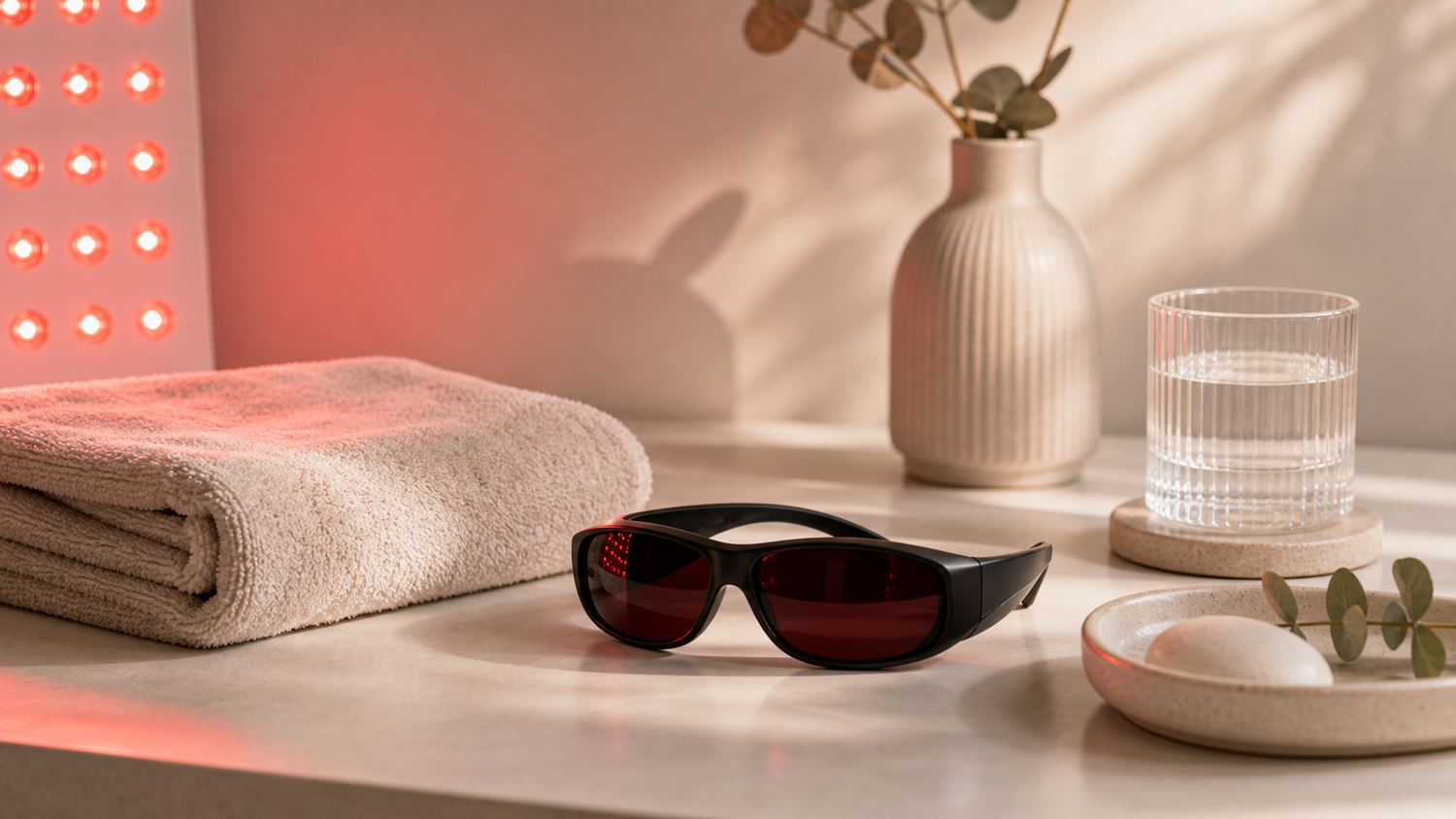
- Eye protection is the single most important practical consideration – wear goggles every session, even with eyes closed, since eyelids are not opaque.
- Consult a healthcare professional first if you take photosensitizing medications, have a photosensitive or other medical condition, are pregnant or breastfeeding, or have eye or skin concerns.
- Stay in the safe zone with 6–12 inches distance, 10–20 minute sessions, and 3–5 sessions per week, stopping if anything feels off.
Anyone considering a red light wellness panel should understand what's known about safety considerations — not because red light wellness carries unusual risks for most healthy adults, but because making informed decisions about any new wellness practice depends on understanding the basics.
This guide walks through what current research suggests about safe home use, who should consult a healthcare professional before starting, and the practical considerations for incorporating red light wellness thoughtfully.
What red light wellness uses
Red light wellness uses specific narrow wavelengths of visible red light (around 660 nm) and near-infrared light (around 850 nm). These wavelengths are non-ionizing, do not produce UV exposure, and operate at non-thermal doses in quality wellness panels.
For context on what these wavelengths are not:
- Not UV light: Red and near-infrared wavelengths are at the opposite end of the visible spectrum from UV. They do not produce the skin damage associated with UV exposure or tanning beds.
- Not ionizing radiation: Red and near-infrared light does not carry enough energy to ionize molecules or damage DNA.
- Not thermal heating: At therapeutic doses, the energy is absorbed at the cellular level without producing meaningful temperature increases in tissue.
Eye protection is the most important practical consideration
The single most important safety consideration in home red light wellness is using eye protection during every session.
Quality panels include goggles for this reason. Bright LEDs at close range can stress the retina even though the specific wavelengths themselves are not damaging in the way UV is. The simple practice: put on goggles before turning on the panel, every session, no exceptions.
If your panel didn't come with eye protection, get a pair of red-light-rated goggles before starting sessions.
Who should consult a healthcare professional first
Red light therapy panels are general wellness devices, not medical interventions. The following situations warrant consultation with a qualified healthcare professional before starting any new wellness practice including red light:
Medications and medical conditions
- Taking photosensitizing medications (some antibiotics like doxycycline and tetracycline, retinoids like Accutane, certain antidepressants, some chemotherapy agents, some diuretics, certain herbal supplements like St. John's Wort)
- Having a photosensitive medical condition (such as lupus or porphyria)
- Having any diagnosed medical condition you're managing
Skin-related situations
- Recent history of skin cancer or being monitored for skin concerns
- Active skin condition you haven't checked with a dermatologist
- Recent skin procedures or treatments
- Persistent or significant skin changes that haven't been evaluated
Specific life situations
- Pregnant or breastfeeding
- Recovering from surgery in the session area
- Implanted medical devices in the session area
- Any concern about how red light might interact with your specific situation
Eye-related conditions
- Recent eye surgery
- Diagnosed retinal conditions
- Any concern about your eye health
A healthcare professional can assess your individual circumstances and provide guidance no general wellness article can substitute for.
Common questions about side effects
Can red light wellness cause skin damage?
At therapeutic doses with quality panels, the wavelengths themselves do not produce the skin damage associated with UV exposure. Some users initially experience mild warmth or temporary skin flushing during or after sessions, which typically resolves quickly. If you experience anything beyond mild transient effects, stop sessions and consult a healthcare professional.
Can red light wellness cause headaches?
Some users report headaches in the first few sessions, possibly related to bright light exposure or other factors. Using the included eye protection and starting with shorter sessions (5–10 minutes) at greater distance (12–18 inches) can help. If headaches persist or worsen, stop sessions and consult a healthcare professional.
Is red light wellness safe to use daily?
For most healthy adults using a quality panel at recommended parameters, daily use is generally fine. The biphasic dose response means more is not better past the optimal range — but daily sessions within the recommended 10–20 minute range at 6–12 inches are within that range.
Can children use red light wellness panels?
The conservative approach for any minor is consulting a pediatrician before starting any new wellness practice. Children's bodies and skin behave differently from adults', and individual situations vary.
Quality matters for safety
Some practical considerations when choosing a panel:
- Verified wavelengths: Quality panels deliver true 660 nm and 850 nm wavelengths with narrow bandwidths. Cheaper panels may have wavelength drift.
- Honest irradiance specs: Quality manufacturers report irradiance at realistic distance (6 inches), not at zero distance.
- Low EMF design: Quality panels minimize electromagnetic field emissions.
- Safe thermal management: Panels should not run uncomfortably hot during normal use.
- Real warranty and support: Established brands stand behind their devices.
Our cheap panels guide covers what to look for and what to avoid in the panel market.
The session parameters that keep you in the safe zone
- Distance: 6–12 inches from skin
- Session length: 10–15 minutes for face, 15–20 minutes for body areas
- Frequency: 3–5 sessions per week (daily is fine for most users)
- Eye protection: Every session
- Listening to your body: Stop if anything feels off and consult a healthcare professional
Staying within these parameters keeps the dose within the well-studied therapeutic window. Significantly exceeding session length or proximity does not produce more benefit and may be uncomfortable.
Frequently asked questions
Do I need to wear goggles even with eyes closed?
Yes — the eyelid is not opaque, and bright LED light passes through. Use the included goggles every session.
Can I look at the panel briefly without protection?
The conservative approach is to keep goggles on whenever the panel is on. Brief glances at the panel from a distance during setup are generally fine, but treat the panel like any bright light source — don't stare into it.
What if I feel skin warmth during sessions?
Mild warmth is normal and usually comes from the LEDs themselves rather than from the light wavelengths being absorbed. If warmth becomes uncomfortable, increase distance from the panel. If it persists or causes irritation, stop sessions and consult a healthcare professional.
Should I tell my doctor I'm using red light wellness?
Yes — keeping your healthcare providers informed about all wellness practices is good practice. They can let you know if there are any specific considerations for your situation.
Are there long-term safety concerns?
The wavelengths used in red light wellness have been studied for decades. For typical home use at recommended parameters, long-term safety appears benign in the available research. Individual situations vary, and a healthcare professional can address specific concerns.
The bottom line
For most healthy adults using quality panels at recommended parameters with eye protection, red light wellness has a benign safety profile. The most important practical considerations are: using eye protection every session, consulting a healthcare professional if you have specific medical situations or medications, and staying within recommended session parameters.
For users incorporating red light wellness alongside the foundations and professional care where indicated, the SOLRA Red Light Panel delivers 660 nm + 850 nm wavelengths through 40 dual-chip LEDs with verified specs, honest irradiance, low EMF design, and included eye protection. $159-229 depending on stand configuration, with free US shipping and a 60-day money-back guarantee.
Frequently asked questions
What wavelengths does red light wellness use and are they like UV?
Red light wellness uses narrow wavelengths of visible red light around 660 nm and near-infrared around 850 nm, which are non-ionizing, do not produce UV exposure, and operate at non-thermal doses in quality panels. They are at the opposite end of the visible spectrum from UV and do not produce the skin damage associated with UV exposure or tanning beds.
What is the most important safety consideration for home use?
Using eye protection during every session is the single most important consideration, because bright LEDs at close range can stress the retina. The simple practice is to put on goggles before turning on the panel, every session, no exceptions.
Do I need to wear goggles even with my eyes closed?
Yes, because the eyelid is not opaque and bright LED light passes through, so use the included goggles every session. If your panel did not come with eye protection, get a pair of red-light-rated goggles before starting.
What session parameters keep red light use in the safe zone?
Stay at 6-12 inches from the skin, 10-15 minutes for face and 15-20 minutes for body areas, 3-5 sessions per week with daily use fine for most, and eye protection every session. Significantly exceeding session length or proximity does not produce more benefit and may be uncomfortable.
Wellness Disclaimer: The information in this article is for general wellness and educational purposes only and is not intended to diagnose, treat, cure, or prevent any disease. SOLRA products are general wellness devices and have not been evaluated by the FDA. Individual results may vary. Consult a qualified healthcare professional before starting any new wellness practice, especially if you have a medical condition or are taking medications.
About this guide. Written and maintained by the SOLRA Team, who design and support the SOLRA Red Light Panel (660nm red + 850nm near-infrared light). Our guides focus on practical, comfort-first routines and use general wellness language rather than medical claims. Always follow your device instructions and consult a qualified professional about any medical condition. Editorial review: SOLRA Team · Updated June 2026.

Leave a comment
This site is protected by hCaptcha and the hCaptcha Privacy Policy and Terms of Service apply.