
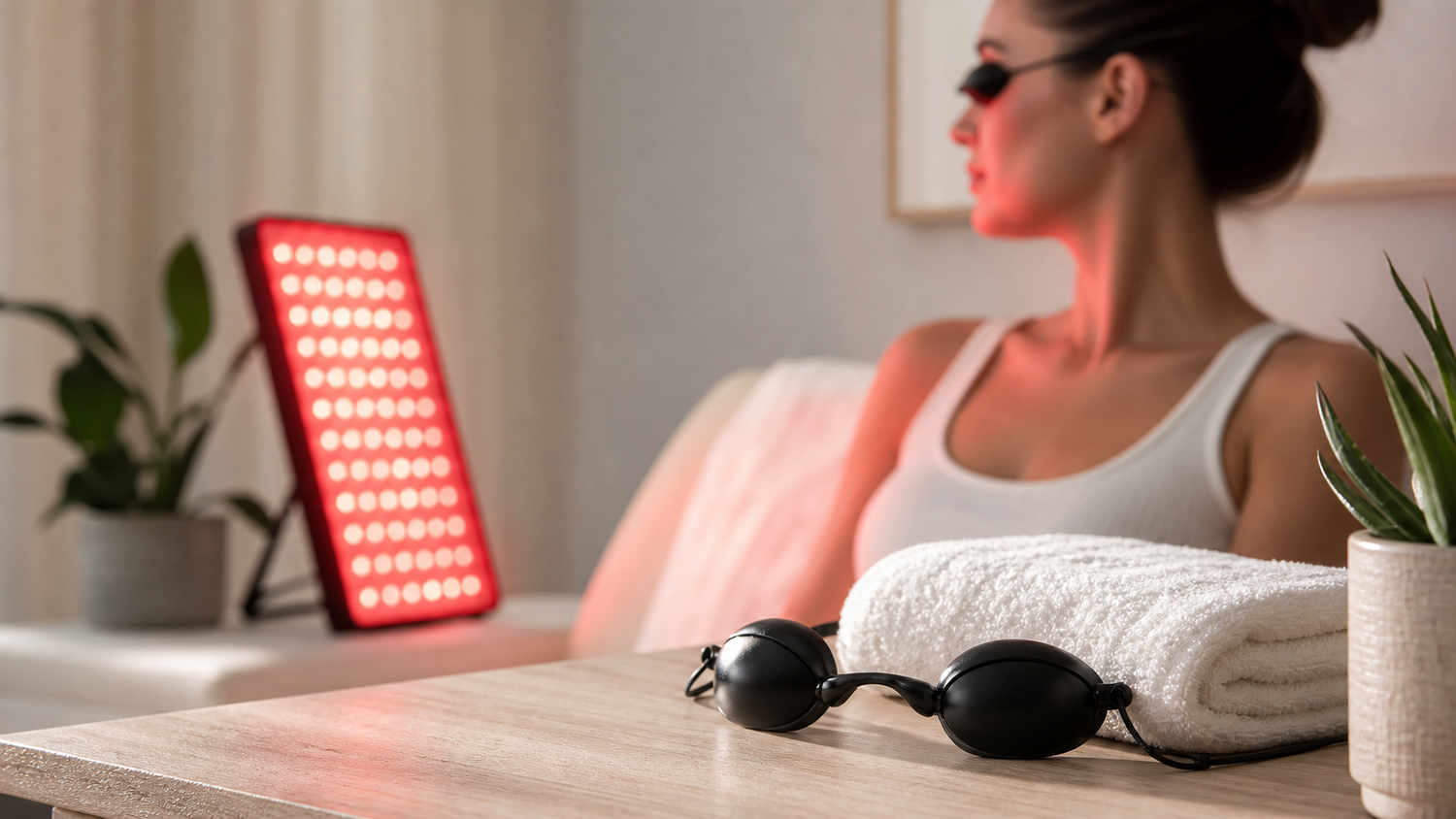
One of the most common questions for new panel owners is whether they need eye protection. Red and near-infrared LEDs are bright, and it is natural to wonder how that brightness affects your eyes. This guide covers what to keep in mind so your sessions stay comfortable and worry-free.
Key takeaways
- Red and near-infrared LEDs are bright, so the simplest habit is to avoid staring directly into them, the same way you would not stare into any bright lamp.
- Eye shields are most useful during facial sessions when the panel sits close to your eyes; for body sessions your eyes are naturally out of the direct path and goggles are usually unnecessary.
- Many people do facial routines with eyes gently closed, positioning the panel at the device's recommended distance and increasing distance if anything feels too bright.
- Reputable panels include eye-comfort guidance and often ship with shields or goggles, a sign the maker has considered everyday use.
- Follow your device instructions and consult a qualified professional if you are pregnant, photosensitive, using light-sensitive medication, or managing a medical condition.
Why brightness matters
A quality panel puts out a lot of visible red light, and looking straight into any bright light source is uncomfortable for anyone. The simplest habit is to avoid staring directly into the LEDs during a session, the same way you would not stare into any bright lamp.
- Keep your gaze relaxed and away from the panel face.
- Close your eyes if the panel is aimed near your face.
- Use the goggles or eye shields included with your device when provided.
When goggles are worth using
Eye shields are most useful during facial sessions, when the panel sits close to your eyes. They make it easy to relax without squinting and remove any temptation to look toward the light. For body sessions, where the panel is aimed at your back, joints, or legs, your eyes are naturally out of the direct path and goggles are usually unnecessary.
If bright light bothers you or you simply prefer extra reassurance, wearing the included shields adds comfort with no downside.
Comfort tips for facial sessions
Many people do facial routines with their eyes gently closed, which is comfortable and keeps the experience calm. Position the panel at the distance recommended for your device, and let the warmth and light feel pleasant rather than intense. If anything feels too bright, increase your distance.
What to look for in a panel
Reputable panels include guidance on eye comfort and often ship with shields or goggles. Look for clear instructions, a sensible recommended distance, and a build that lets you position the light without it pointing straight at your eyes. Good documentation is a sign the maker has thought about everyday use.
Frequently asked questions
Do I need eye protection during red light sessions?
Looking straight into any bright light source is uncomfortable, so the simplest habit is to avoid staring directly into the LEDs, keep your gaze relaxed and away from the panel face, and use the included goggles or shields when provided. Closing your eyes if the panel is aimed near your face also helps.
When are goggles most worth using?
Eye shields are most useful during facial sessions when the panel sits close to your eyes, making it easy to relax without squinting. For body sessions aimed at your back, joints, or legs, your eyes are naturally out of the direct path and goggles are usually unnecessary.
How should I position the panel for a comfortable facial session?
Many people do facial routines with their eyes gently closed, positioning the panel at the distance recommended for the device and letting the warmth and light feel pleasant rather than intense. If anything feels too bright, increase your distance.
What should I look for in a panel regarding eye comfort?
Reputable panels include guidance on eye comfort and often ship with shields or goggles, so look for clear instructions, a sensible recommended distance, and a build that lets you position the light without it pointing straight at your eyes. Good documentation is a sign the maker has thought about everyday use.
Where SOLRA fits
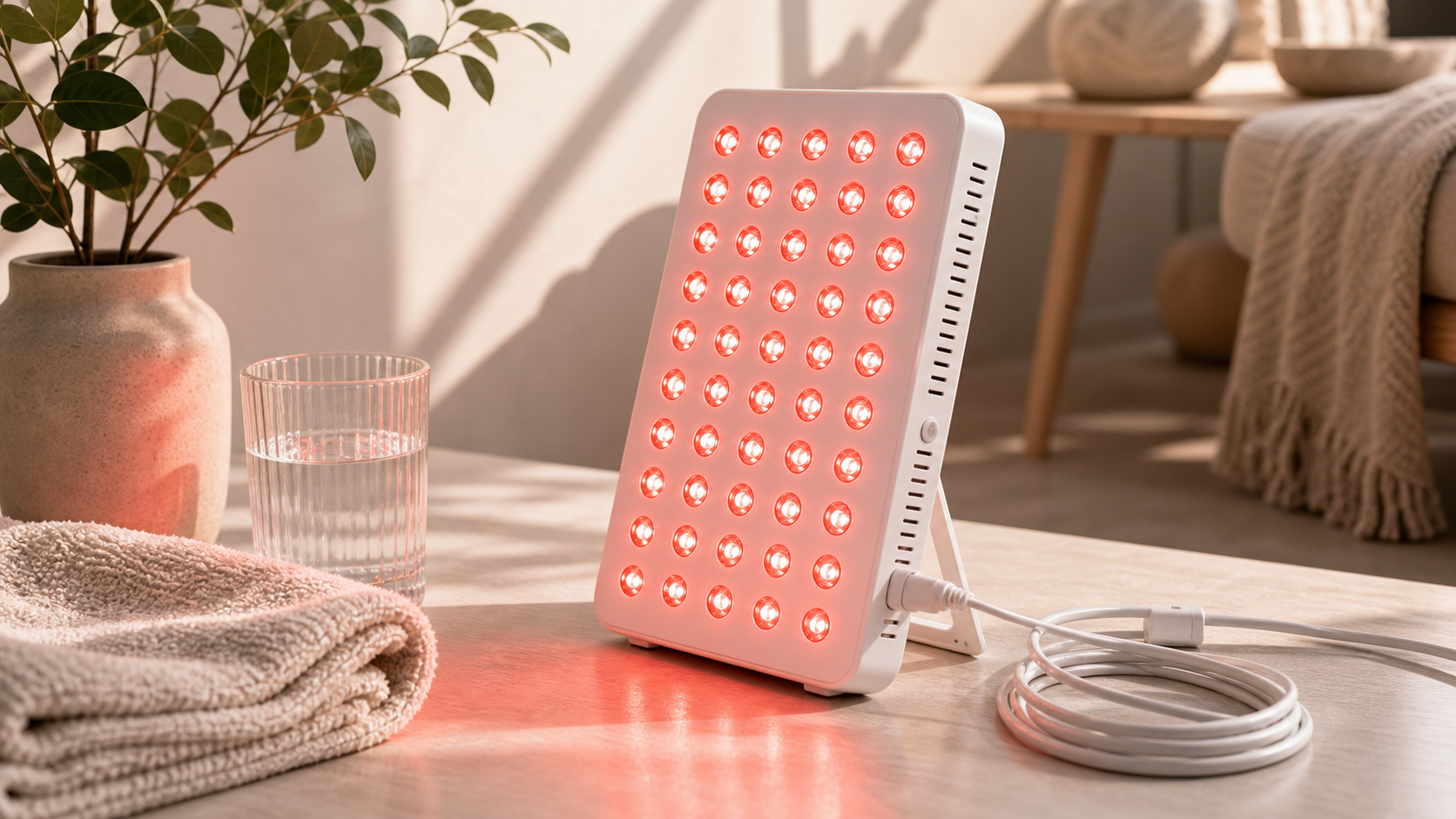
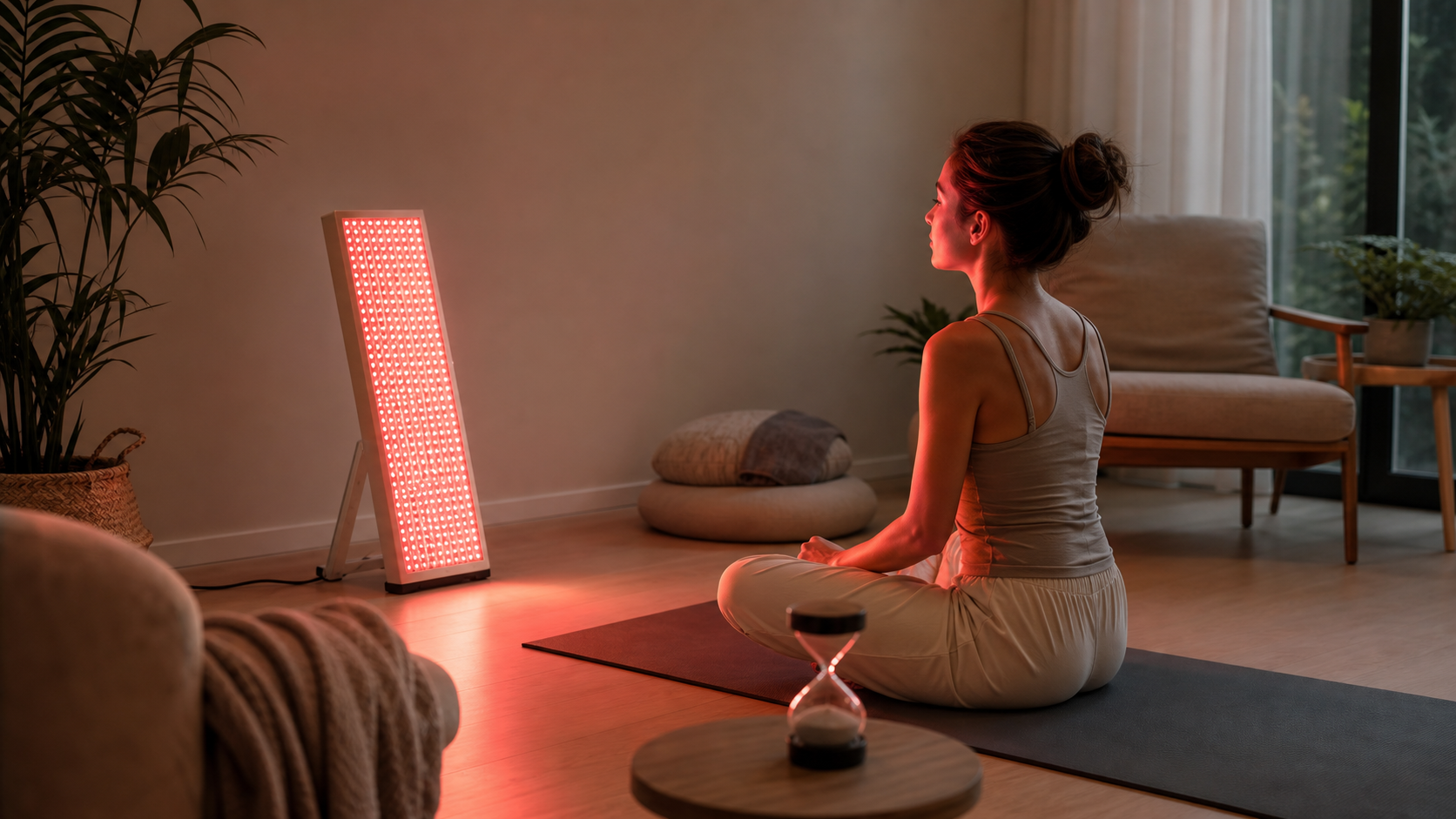
Choose the configuration that matches your space: a tabletop setup for compact, seated routines, or a floor stand for larger areas and full-body sessions. The SOLRA Red Light Panel is built around 660nm red light and 850nm near-infrared light, with setup options for panel-only use, tabletop placement, or a complete floor-stand kit.
Quick safety notes
Red light wellness routines should feel comfortable. Avoid staring directly into bright LEDs, follow your device instructions, and consult a qualified professional if you are pregnant, photosensitive, using light-sensitive medication, or managing a medical condition.
About this guide. Written and maintained by the SOLRA Team, who design and support the SOLRA Red Light Panel (660nm red + 850nm near-infrared light). Our guides focus on practical, comfort-first routines and use general wellness language rather than medical claims. Always follow your device instructions and consult a qualified professional about any medical condition. Editorial review: SOLRA Team · Updated June 2026.

Leave a comment
This site is protected by hCaptcha and the hCaptcha Privacy Policy and Terms of Service apply.