
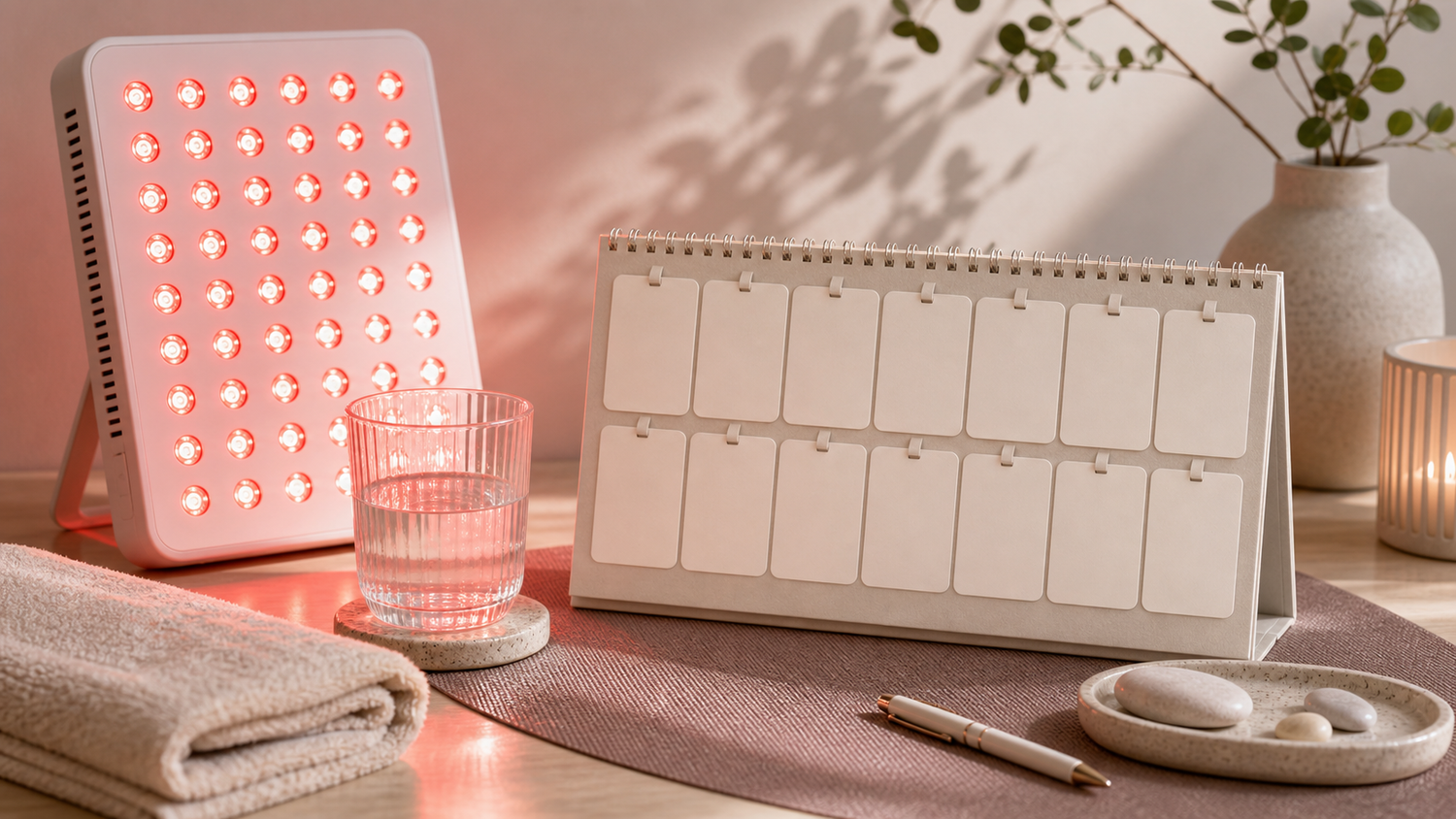
"How often should I use my red light panel?" is the number one question we get from new users. The answer depends on your goals, but here's the good news: the protocol is simple, and the research gives us clear guidelines. This guide breaks down frequency, duration, and scheduling for every major use case.
Key takeaways
- Most goals do best at 3–5 sessions per week; daily use is also fine — consistency over weeks matters more than maximizing any single week.
- Session length by goal: skin ~10–15 min (660nm), muscle & joint ~15–20 min (850nm), general wellness ~10–20 min in combo mode.
- More isn't better — cells reach saturation within one session and need 24–48 hours to process, so space sessions about a day apart rather than stacking them.
- Best time of day is whenever you'll actually do it consistently; red and near-infrared light don't disrupt melatonin, so evening use is fine.
- Anchor the habit to an existing routine and keep the panel set up and ready to lower the friction of starting.
The General Rule: 3-5 Times Per Week
For most people and most goals, using your red light therapy panel 3 to 5 times per week tends to produce the best results. This is based on the session frequencies used in the research that documented positive outcomes.
Why not every day? You can use red light therapy daily — it's safe for daily use and there's no evidence of harm from daily sessions. However, the research showing skin and recovery support used 3-5 sessions per week, so we know this frequency works. Some users prefer daily sessions. Others prefer 5 days on, 2 days off. Both approaches are supported by the available evidence.
The more important factor is consistency. Five sessions one week followed by zero sessions the next week is less effective than three sessions every week for eight weeks straight. Regularity matters more than maximizing any single week.
How Long Should Each Session Last?
Session duration depends on what you're focusing on:
Skin / anti-aging (660nm): 10-15 minutes per session. The skin is the first tissue the light reaches, so it receives therapeutic dose faster than deeper tissue. Longer isn't necessarily better for skin — after a certain dose, additional light doesn't provide proportionally more benefit.
Muscle recovery (850nm): 15-20 minutes per session area. Near-infrared light needs to penetrate through skin, fat, and connective tissue to reach deep muscle. This takes more time and a higher total dose than surface sessions.
General wellness (both wavelengths): 10-20 minutes. If you're using red light therapy for overall wellbeing without a specific focus, 15 minutes with both wavelengths provides a good balance of surface and deep-tissue exposure.
Joint comfort (850nm): 15-20 minutes directly over the target area. Position the panel as close as comfortable — 4-8 inches — to maximize the dose reaching deeper tissue.
Recommended Schedules by Goal
Goal: Skin support and anti-aging
Phase 1 (building, weeks 1-12): 5 sessions per week, 10-15 minutes each, using 660nm or combo mode. Apply after cleansing, before skincare products. This higher frequency supports collagen processes during the initial phase when you're establishing the foundation.
Phase 2 (maintenance, week 13+): 3 sessions per week, 10-15 minutes. Once you've established your routine, fewer sessions can help maintain the results.
Goal: Muscle recovery for athletes
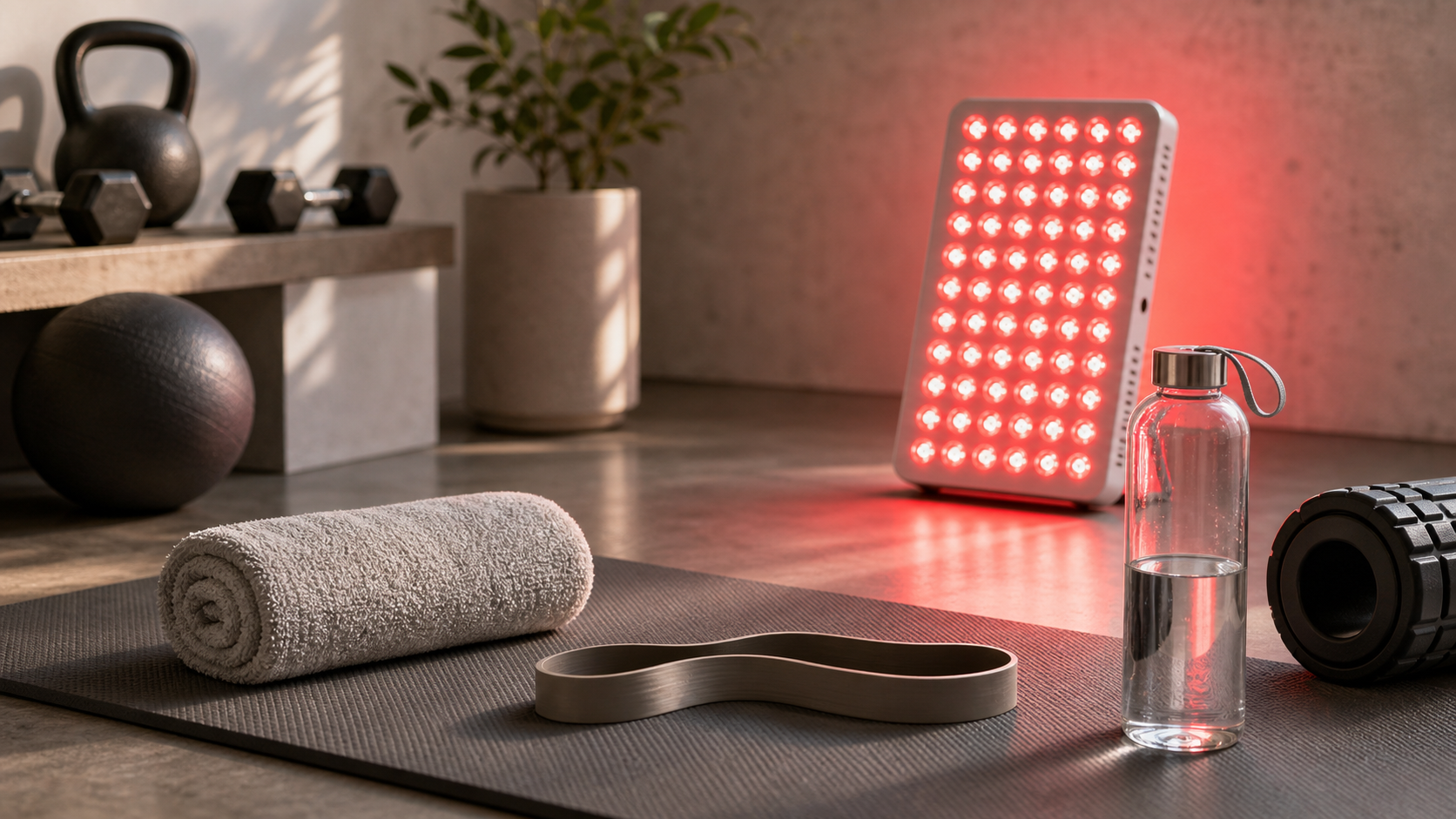
Post-workout: 15-20 minutes within 60 minutes of training, focused on worked muscle groups. Use 850nm or combo mode. Frequency matches your training schedule — if you train 5 days per week, use red light therapy 5 days per week.
Optional pre-workout: 5-10 minutes before high-intensity sessions to support cellular ATP.
Goal: Joint comfort and recovery
Daily sessions for the first 4-6 weeks: 15-20 minutes on the target area, 850nm mode. Once you notice improvement in how you feel, you can reduce to 3-4 sessions per week for ongoing wellness support.
Goal: General wellness
3-5 sessions per week, 10-15 minutes, combo mode. Many users incorporate this into their morning or evening routine — it's a passive practice that pairs well with reading, meditation, or screen time.
Can You Overdo Red Light Therapy?
The concept of "too much" in red light therapy is called biphasic dose response — essentially, there's an optimal dose window, and both too little and too much can reduce effectiveness. However, the "too much" threshold in red light therapy is quite high compared to other modalities.
Practical guidance: if you stay within the recommended 10-20 minute sessions at 6-12 inches, you're well within the therapeutic window. You would need significantly higher doses (multiple 30+ minute sessions per day at very close range) to exceed the optimal zone — and even then, the risk is diminished results rather than harm.
That said, there's no benefit to doing three 20-minute sessions in a row. Your cells reach saturation point within one session. Additional light beyond that point provides diminishing returns until the cells have time to process the energy — which takes 24-48 hours. This is why daily sessions (spaced 24 hours apart) are optimal, not multiple sessions per day.
Best Time of Day to Use Red Light Therapy
Morning: Some users prefer morning sessions as part of their wake-up routine. The light can feel energizing, and starting the day with a skin session means your face is freshly cleansed and product-free.
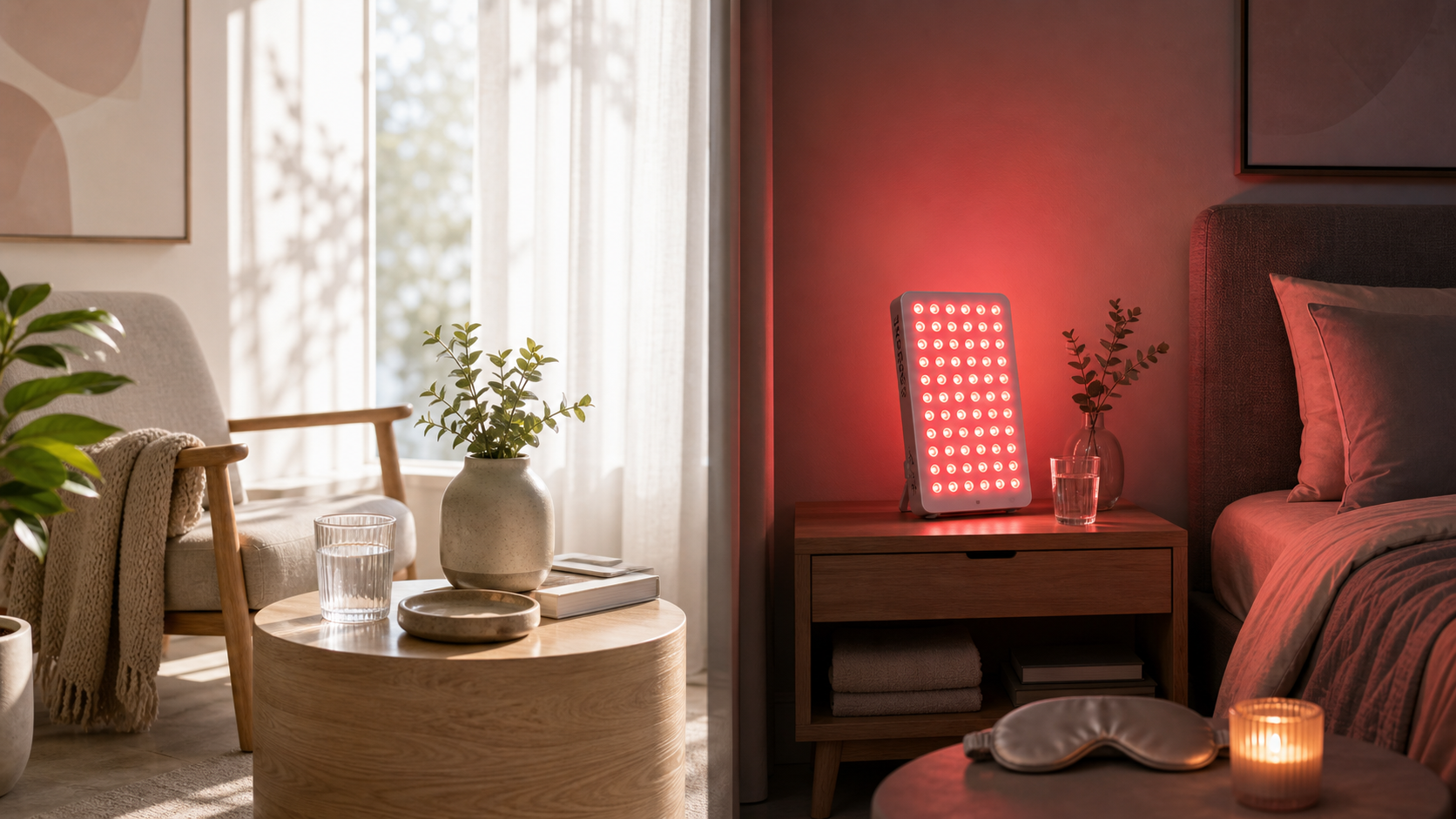
Evening: Others prefer evening sessions. If you're using red light therapy for muscle recovery, post-workout in the evening is common. The gentle warmth can also be relaxing before bed. Importantly, red and near-infrared light do not disrupt melatonin production like blue light does — so evening use is perfectly fine for sleep.
Post-workout (any time): For muscle recovery, the timing relative to your workout matters more than the time of day. Within 60 minutes post-exercise is ideal.
The honest answer: the best time is whatever time you'll do it consistently. A morning person who tries to force an evening routine will eventually skip sessions. Choose the time that fits your life and stick with it.
Building the Habit
The biggest predictor of results with red light therapy isn't the panel, the wavelength, or the protocol — it's consistency. Here are practical tips for building the habit:
1. Anchor it to an existing habit. If you already have a morning skincare routine, add red light therapy right before it. If you already stretch after workouts, add red light therapy during your stretching. Attaching a new habit to an existing one dramatically increases adherence.
2. Make it easy. Keep your panel set up and ready to use. If you have to get it out of a closet, set it up, plug it in, and find your eyewear every time — you'll eventually stop doing it. The SOLRA with the Tabletop Stand ($189) stays on your desk ready to use — flip it on, sit down, done.
3. Track your sessions. Use a simple habit tracker app or a checkmark on your calendar. Seeing a streak of consistent sessions is motivating. Breaking a streak is demotivating — use that psychology to your advantage.
4. Don't aim for perfection. Missed a day? That's fine. Missed a week? Just start again. The benefits of red light therapy are cumulative — a gap doesn't erase your progress, it just pauses it. Resuming is always better than quitting.
The Quick-Reference Schedule
Skin: 5x/week for 12 weeks, then 3x/week ongoing. 10-15 min per session. 660nm or combo.
Muscle recovery: After every workout. 15-20 min. 850nm or combo.
Joint comfort: Daily for 4-6 weeks, then 3-4x/week ongoing. 15-20 min. 850nm.
General wellness: 3-5x/week. 10-15 min. Combo mode.
The SOLRA Red Light Panel has a built-in timer so you can set your session length and let the panel do the work. Starting at $159 with free US shipping and a 60-day money-back guarantee.
Frequently asked questions
How often should I use red light therapy?
For most people and goals, 3 to 5 sessions per week tends to produce the best results, based on the session frequencies used in supportive research; daily use is also safe, and consistency over weeks matters more than maximizing any single week.
How long should each session last?
Duration depends on focus: about 10 to 15 minutes for skin at 660nm, 15 to 20 minutes per area for muscle or joint sessions at 850nm, and 10 to 20 minutes for general wellness in combo mode.
Can you overdo red light therapy?
Red light follows a biphasic dose response with an optimal window, but the too-much threshold is high; staying within 10 to 20 minute sessions at 6 to 12 inches keeps you well within it, and exceeding it tends to reduce results rather than cause harm.
Is it better to use red light in the morning or evening?
Both work, and red and near-infrared light do not disrupt melatonin the way blue light does, so evening use is fine; the best time is whatever you can do consistently.
Wellness Disclaimer: The information in this article is for general wellness and educational purposes only and is not intended to diagnose, treat, cure, or prevent any disease. SOLRA products are general wellness devices and have not been evaluated by the FDA. Individual results may vary. Consult a qualified healthcare professional before starting any new wellness practice, especially if you have a medical condition or are taking medications.
About this guide. Written and maintained by the SOLRA Team, who design and support the SOLRA Red Light Panel (660nm red + 850nm near-infrared light). Our guides focus on practical, comfort-first routines and use general wellness language rather than medical claims. Always follow your device instructions and consult a qualified professional about any medical condition. Editorial review: SOLRA Team · Updated June 2026.

Leave a comment
This site is protected by hCaptcha and the hCaptcha Privacy Policy and Terms of Service apply.