
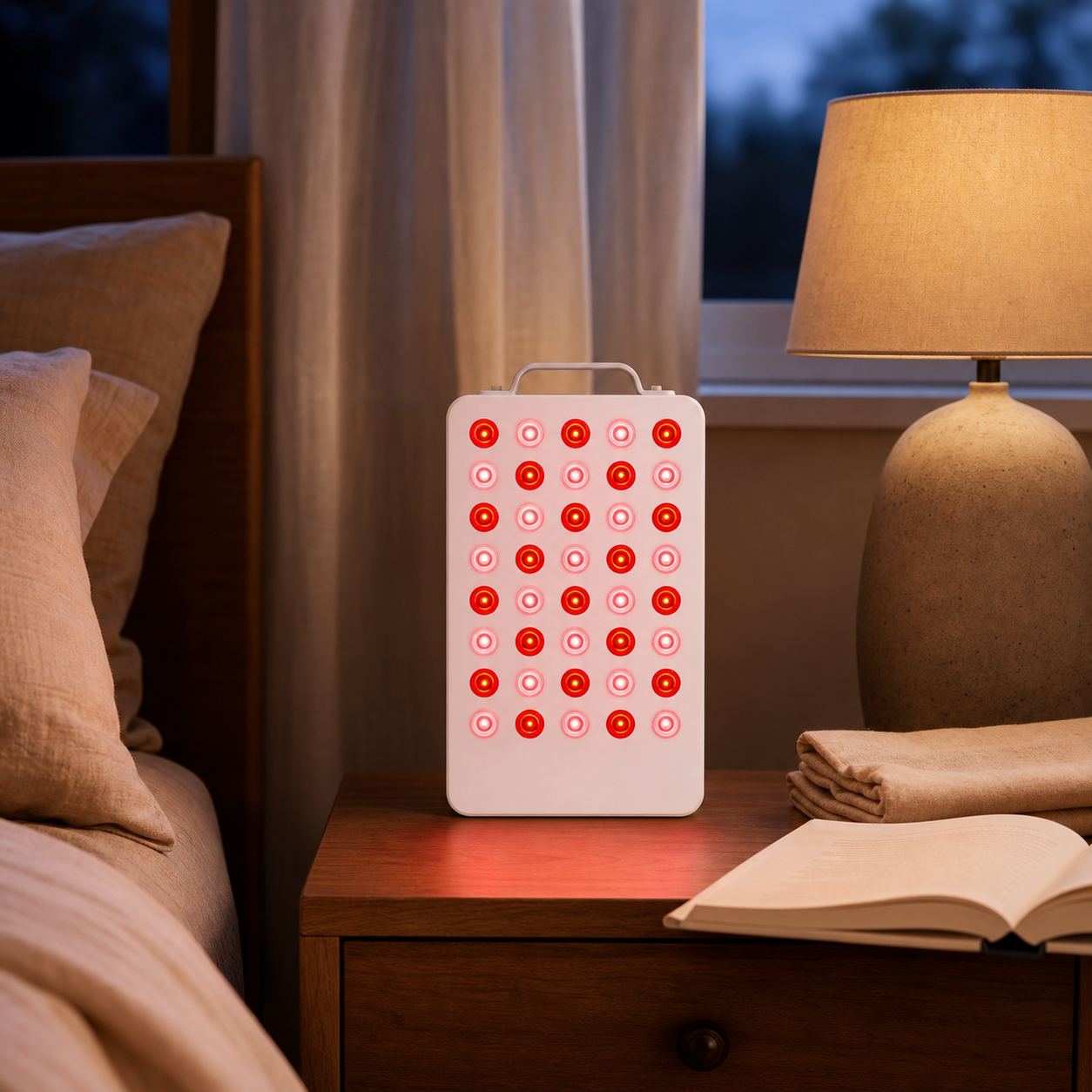
Evening is one of the most natural times to use a red light panel, but timing still matters. A good wind-down routine feels calm and repeatable; it should not turn into bright-light stimulation right before bed or a long session you feel obligated to complete. Here is the balanced version.
Key takeaways
- Evening sessions work best when they happen before the final sleep window, not at the exact moment you are trying to fall asleep.
- Use the routine as a boundary between the day and the night: screen down, session, then quieter habits.
- Keep normal distance and session length; do not extend the session just because it feels relaxing.
- If bright light makes you feel more alert, move the session earlier.
Evening can work, but not too late
A red light panel is still a bright light source. Even when the routine feels calm, using bright LEDs right at bedtime may not suit everyone. The safer practical approach is to place the session earlier in the evening: after work, after a shower, or before your last quiet stretch of the night. Our sleep and circadian rhythm guide gives the broader timing context.
Turn it into a transition
The strongest evening routine is a boundary. Put the laptop away, dim the room, run the session, then move into lower-stimulation habits. This works better than treating the panel as something to squeeze in while scrolling. The value is not only the light; it is the pause around it.
Do not overdo the calm feeling
Because an evening session can feel relaxing, it is tempting to stretch it longer. Resist that. Use the same recommended session length and distance you would in the morning. More is not the goal, and our guide on overdoing red light explains why comfort and consistency beat intensity.
Adjust if you feel alert afterward
People respond differently to bright routines. If you notice that a session close to bed makes you feel more awake, move it earlier. That is not a failure; it is good routine design. The best timing is the one that lets you use the panel consistently while still protecting your wind-down.
A simple evening template
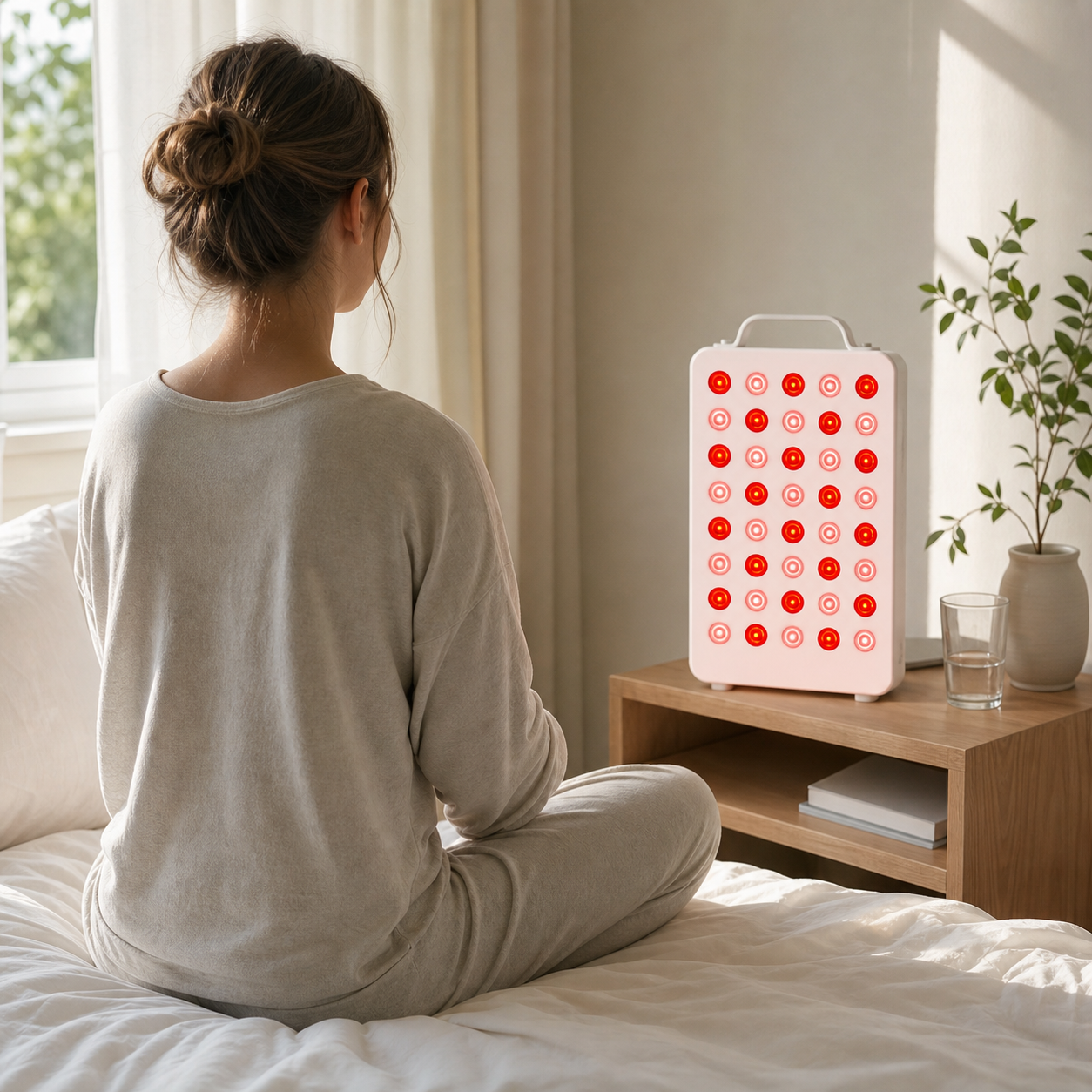
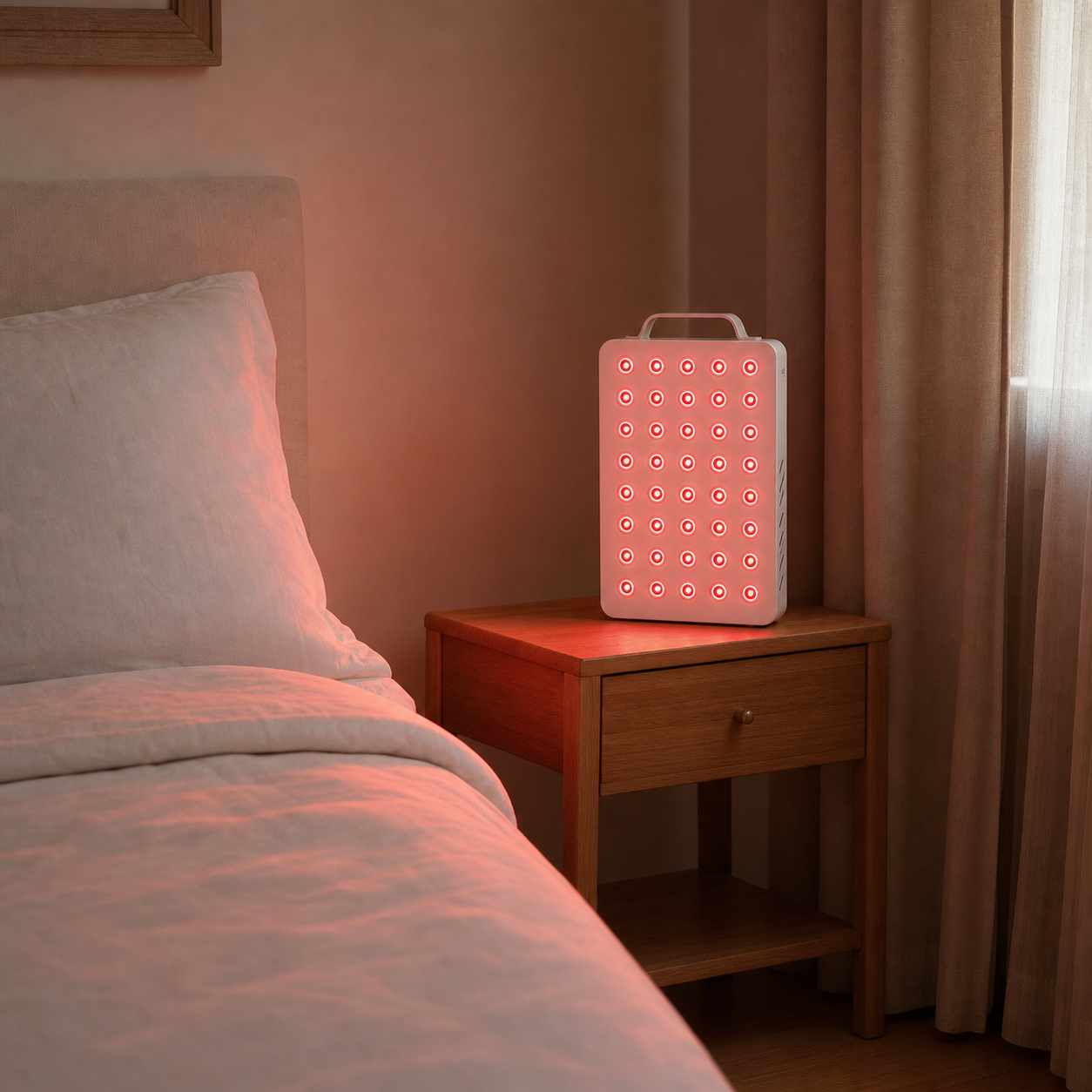
Choose a spot in the bedroom or living room, run the session after the busy part of the evening but before your final sleep window, then shift to quiet habits. Keep the setup stable, the session short, and the expectations modest. A wind-down routine should leave your night simpler, not more crowded.
Frequently asked questions
Can I use a red light panel at night?
Yes, but it is usually better to use it earlier in the evening rather than at the exact moment you are trying to fall asleep, because the panel is still a bright light source and some people may feel more alert afterward.
What is a good evening red light routine?
Use the session as a transition: put screens down, run a short session at the recommended distance, then move into quieter habits. Keep it simple and repeatable rather than turning it into a long ritual.
Should evening sessions be longer?
No. Evening does not require a longer session. Follow your device instructions and normal session length; extending the session because it feels relaxing is not a better trade.
What if red light makes me feel awake at night?
Move the session earlier. Timing should support your sleep window, so if a bright session close to bed feels stimulating, place it after work, after a shower, or earlier in the evening instead.
Where SOLRA fits
Choose the configuration that matches your space: a tabletop setup for compact, seated routines, or a floor stand for larger areas and full-body sessions. The SOLRA Red Light Panel is built around 660nm red light and 850nm near-infrared light, with setup options for panel-only use, tabletop placement, or a complete floor-stand kit. For more flexible, multi-area sessions, see the SOLRA Portable Red Light Panel.
Quick safety notes
Red light wellness routines should feel comfortable. Avoid staring directly into bright LEDs, follow your device instructions, and consult a qualified professional if you are pregnant, photosensitive, using light-sensitive medication, or managing a medical condition.
Wellness disclaimer. SOLRA content and products are intended for general wellness and comfort. They are not medical devices and are not intended to diagnose, treat, cure, or prevent any disease or health condition. These statements have not been evaluated by the Food and Drug Administration. Individual experiences vary; consult a qualified healthcare professional before starting any new wellness routine, especially if you are pregnant, photosensitive, taking light-sensitive medication, or managing a medical condition.
Wellness disclaimer: SOLRA products are general wellness devices and have not been evaluated by the FDA. This article is for educational purposes only and is not intended to diagnose, treat, cure, or prevent any disease. Consult a qualified healthcare professional before beginning a new wellness practice, especially if you have a medical condition or take medication.
About this guide. Written and maintained by the SOLRA Team, who design and support SOLRA red light panels. Our guides focus on practical, comfort-first routines and use general wellness language rather than medical claims. Always follow your device instructions and consult a qualified professional about any medical condition. Editorial review: SOLRA Team · Updated July 2026.

Leave a comment
This site is protected by hCaptcha and the hCaptcha Privacy Policy and Terms of Service apply.