
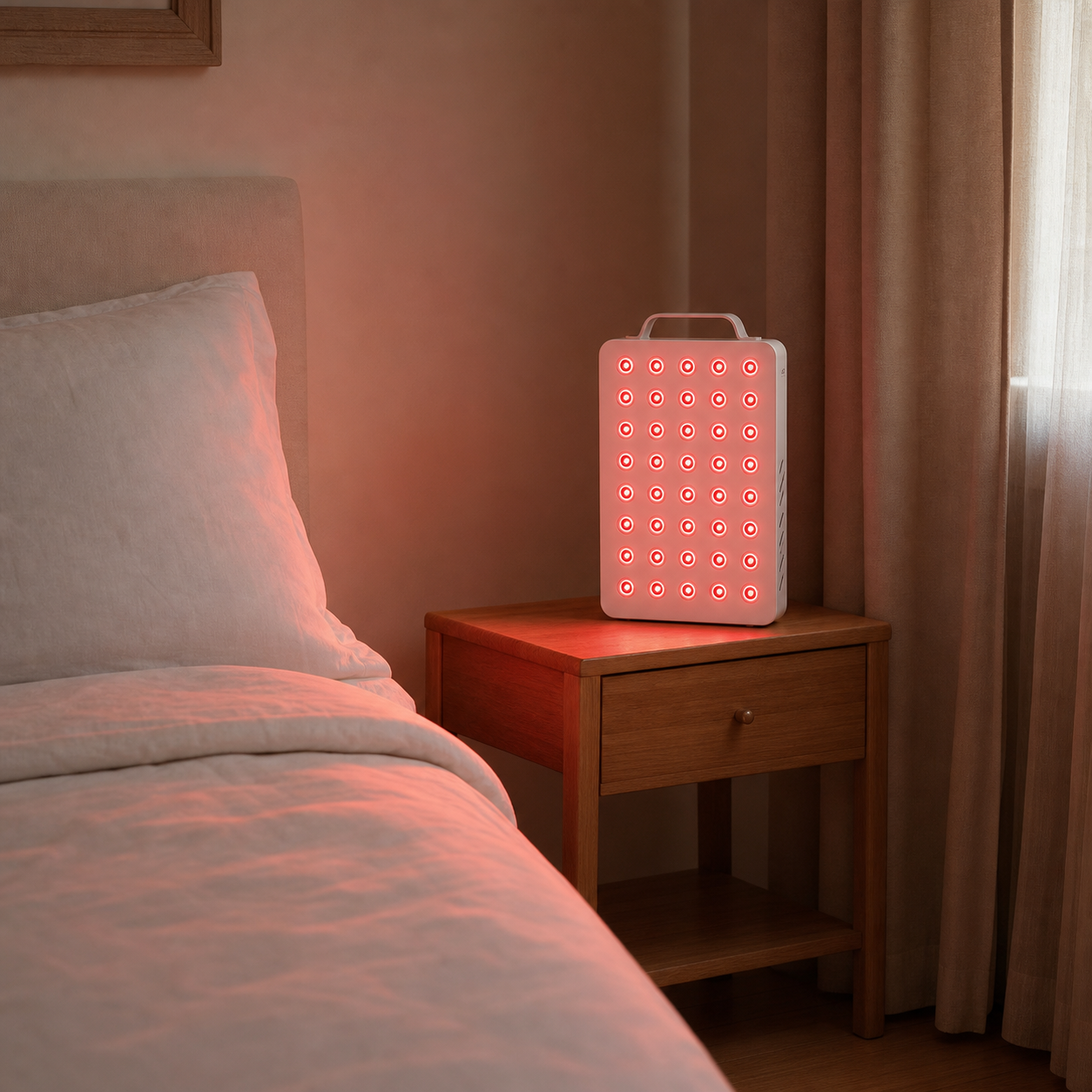
A small bedroom can still be a good place for a red light panel if the setup is intentional. The goal is not to make the room look like a clinic or a storage corner. It is to create a compact, calm routine spot that is easy to use and easy to live with.
Key takeaways
- Small bedrooms work best with compact, fixed routines: tabletop placement, a clean corner, or a slim stand.
- Keep the panel easy to access but visually tidy so the setup does not make the room feel cluttered.
- Distance and glare matter more in small rooms because there is less room to adjust.
- A premium-feeling setup comes from cable control, stable placement, and a routine that takes seconds to start.
Think compact, not hidden
If the panel is buried under the bed or behind boxes, the routine will disappear. In a small bedroom, the better move is a compact fixed spot: beside a chair, near a dresser, or in a corner where the panel can stay ready without dominating the room. Our small-space guide covers the same principle for apartments.
Tabletop setups are often enough
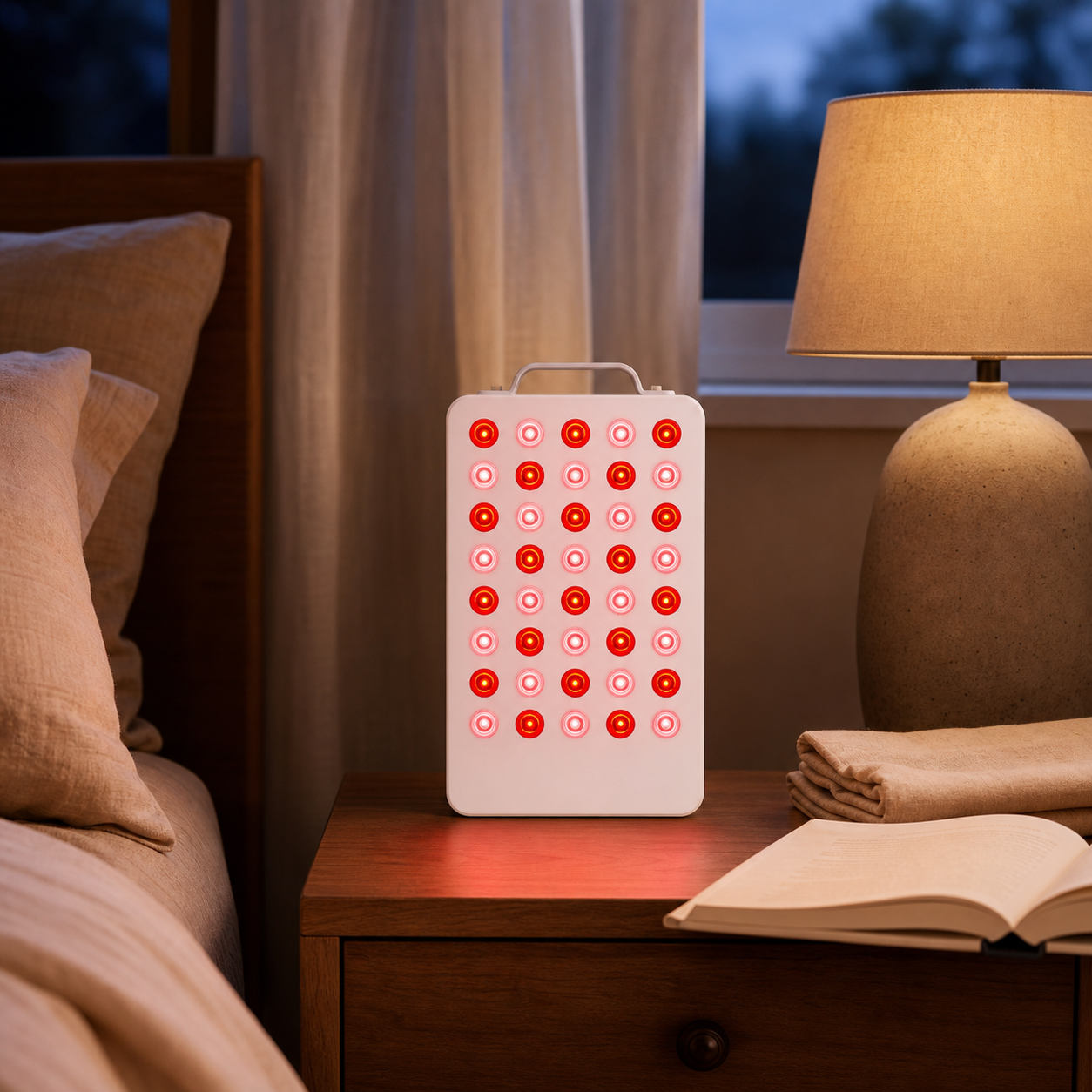
For face, neck, chest, hands, or upper-body routines, a tabletop setup can be the cleanest option. It uses furniture you already have, keeps the panel stable, and avoids taking floor space. Just make sure the height and angle are comfortable, and avoid balancing the panel somewhere unstable. If you need larger coverage, then a slim floor stand may be worth the footprint.
Control cables and glare
Two things make small-room setups feel messy fast: loose cords and bright glare. Run the cable neatly, keep the outlet accessible, and position the panel so bright LEDs are not pointed into mirrors, doorways, or another person in the room. These are small details, but they are what make a setup feel intentional rather than temporary.
Protect distance and airflow
Small rooms tempt people to crowd the panel. Do not. Keep your usual distance, leave airflow around the unit, and choose a spot where you can sit comfortably without twisting. Our electrical-safety guide is worth reading before making any setup permanent.
A simple premium setup
Pick one chair or bed-edge position, set the panel at a stable height, manage the cord, and keep the surrounding surface clear. That is enough. A small bedroom does not need a dramatic installation. It needs a routine that feels calm, tidy, and easy to repeat.
Frequently asked questions
Can I use a red light panel in a small bedroom?
Yes. A small bedroom can work well when the setup is compact and intentional, such as a tabletop placement, clean corner, or slim stand that stays ready without making the room feel cluttered.
What setup is best for a small bedroom?
For focused routines, tabletop placement is often enough and saves floor space. For larger-area routines, a slim floor stand may be worth it as long as you can keep distance, airflow, and glare under control.
How do I make the setup look less cluttered?
Control cables, keep the surface around the panel clear, avoid temporary balancing, and choose a fixed spot where the panel looks intentional. A tidy setup is easier to live with and easier to use consistently.
What should I avoid in a small-room setup?
Avoid crowding the panel, blocking airflow, aiming bright LEDs into mirrors or doorways, and using unstable furniture. Keep a comfortable distance and make sure the panel is securely positioned.
Where SOLRA fits
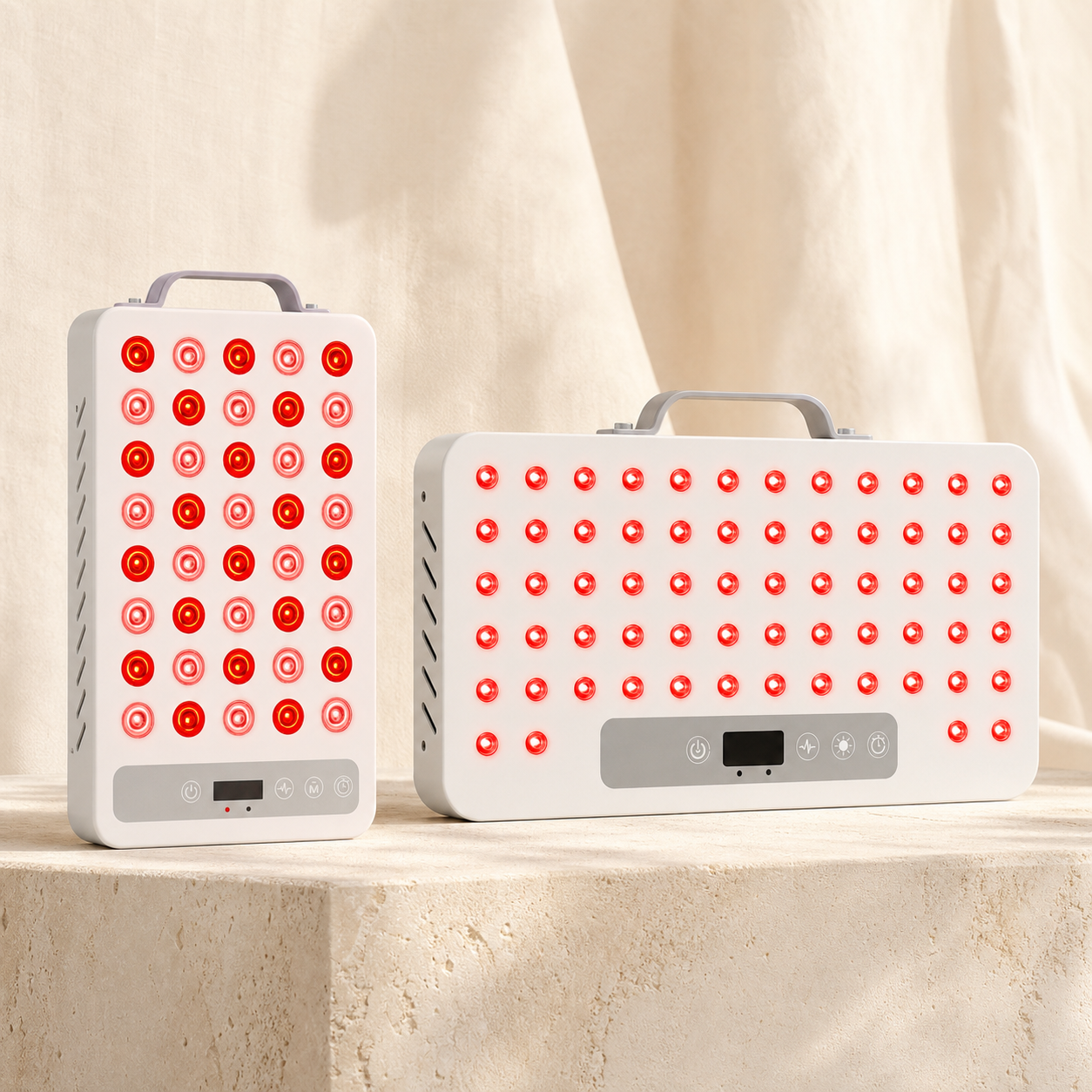
Choose the configuration that matches your space: a tabletop setup for compact, seated routines, or a floor stand for larger areas and full-body sessions. The SOLRA Red Light Panel is built around 660nm red light and 850nm near-infrared light, with setup options for panel-only use, tabletop placement, or a complete floor-stand kit. For more flexible, multi-area sessions, see the SOLRA Portable Red Light Panel.
Quick safety notes
Red light wellness routines should feel comfortable. Avoid staring directly into bright LEDs, follow your device instructions, and consult a qualified professional if you are pregnant, photosensitive, using light-sensitive medication, or managing a medical condition.
Wellness disclaimer. SOLRA content and products are intended for general wellness and comfort. They are not medical devices and are not intended to diagnose, treat, cure, or prevent any disease or health condition. These statements have not been evaluated by the Food and Drug Administration. Individual experiences vary; consult a qualified healthcare professional before starting any new wellness routine, especially if you are pregnant, photosensitive, taking light-sensitive medication, or managing a medical condition.
Wellness disclaimer: SOLRA products are general wellness devices and have not been evaluated by the FDA. This article is for educational purposes only and is not intended to diagnose, treat, cure, or prevent any disease. Consult a qualified healthcare professional before beginning a new wellness practice, especially if you have a medical condition or take medication.
About this guide. Written and maintained by the SOLRA Team, who design and support SOLRA red light panels. Our guides focus on practical, comfort-first routines and use general wellness language rather than medical claims. Always follow your device instructions and consult a qualified professional about any medical condition. Editorial review: SOLRA Team · Updated July 2026.

Leave a comment
This site is protected by hCaptcha and the hCaptcha Privacy Policy and Terms of Service apply.