
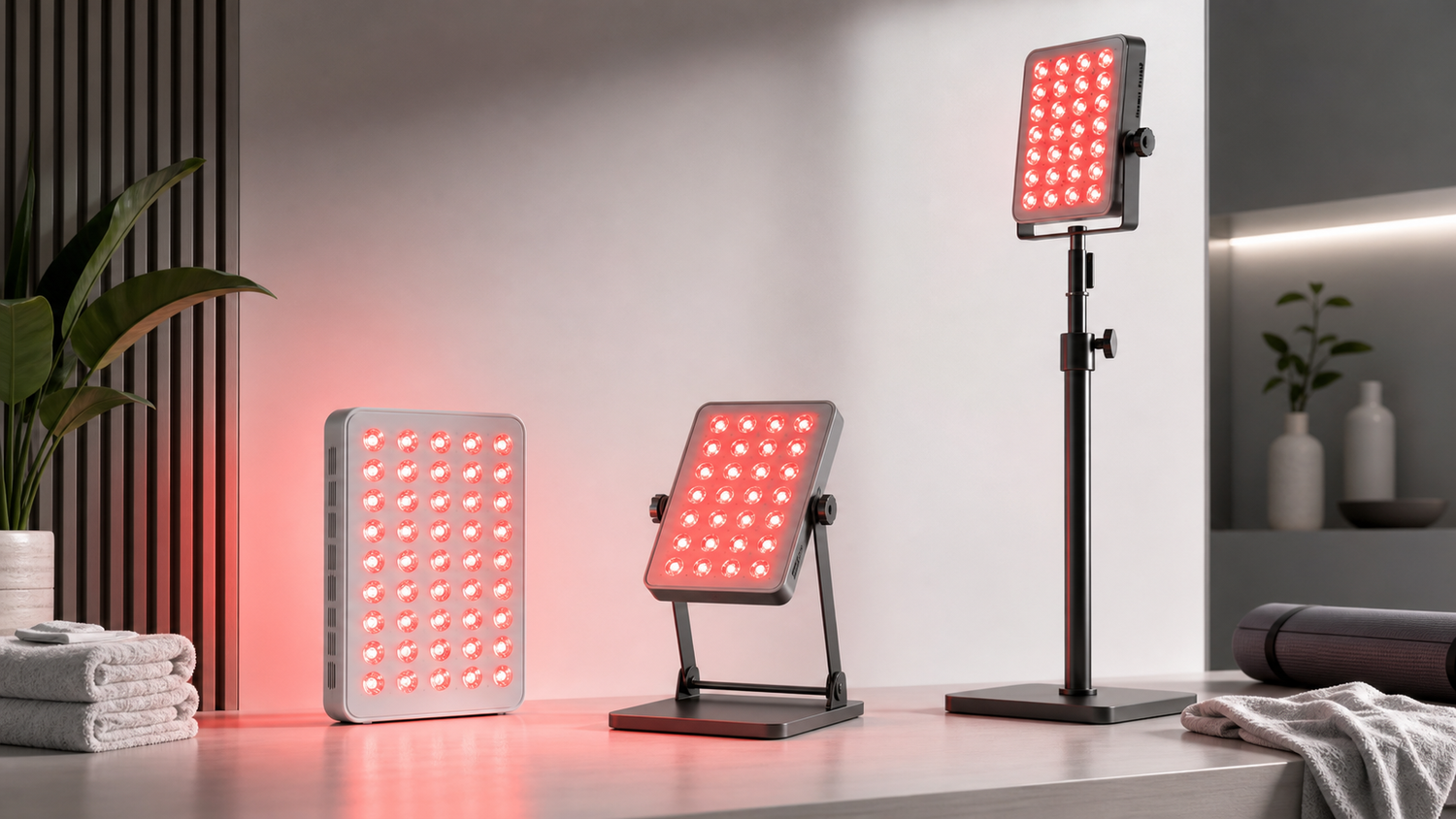
Choosing a red light panel is not only about wavelengths and power. The setup matters too. Where the panel sits, how easily you can position it, and whether it fits into your daily routine will shape how consistently you use it. SOLRA gives you three practical setup paths: panel only, panel plus tabletop stand, and the complete kit with floor stand. Here is how to choose the right one.
Key takeaways
- The article outlines three SOLRA setups – panel only, panel plus tabletop stand, and the complete floor-stand kit – all sharing the same 660nm and 850nm output.
- Panel only suits people who already have a stable surface at the right height, keeping the entry price lower.
- The tabletop stand fits face, neck, and desk-based routines in smaller spaces and stays visible for daily use.
- The complete floor-stand kit gives the most positioning freedom for the back, legs, hips, shoulders, and shared household use.
- Its simple rule: choose by your most common use case, since the best setup is the one you will actually use consistently.
Choose panel only if you already have a stable setup
Panel only is the most straightforward choice. It works well if you already know where the panel will live, such as a shelf, counter, desk, or other stable surface. This option keeps the entry price lower while still giving you the same core 660nm and 850nm light output.
The tradeoff is positioning. A red light routine works best when you can keep a comfortable distance and cover the area you care about. If you are constantly stacking books, moving furniture, or trying to balance the panel at a strange angle, panel only may feel less convenient over time.
- Best for: simple face, chest, arm, or seated sessions.
- Good fit if: you already have a safe surface at the right height.
- Watch out for: awkward angles and inconsistent distance.
Choose the tabletop stand for desks, counters, and face-focused routines
A tabletop stand makes the panel easier to use in smaller spaces. It is especially useful for face, neck, shoulder, and desk-based routines because it gives the panel a more stable position than leaning it against a wall or balancing it on a surface.
This setup is also easy to keep visible. When a wellness tool is packed away, it is easier to forget. A tabletop setup can live near your morning routine, skincare area, or work-from-home desk so short sessions become more natural.
- Best for: face, neck, desk workers, skincare routines, and compact rooms.
- Good fit if: you want a cleaner setup without committing floor space.
- Pair with: the SOLRA Tabletop Stand.
Choose the complete kit for full-body flexibility
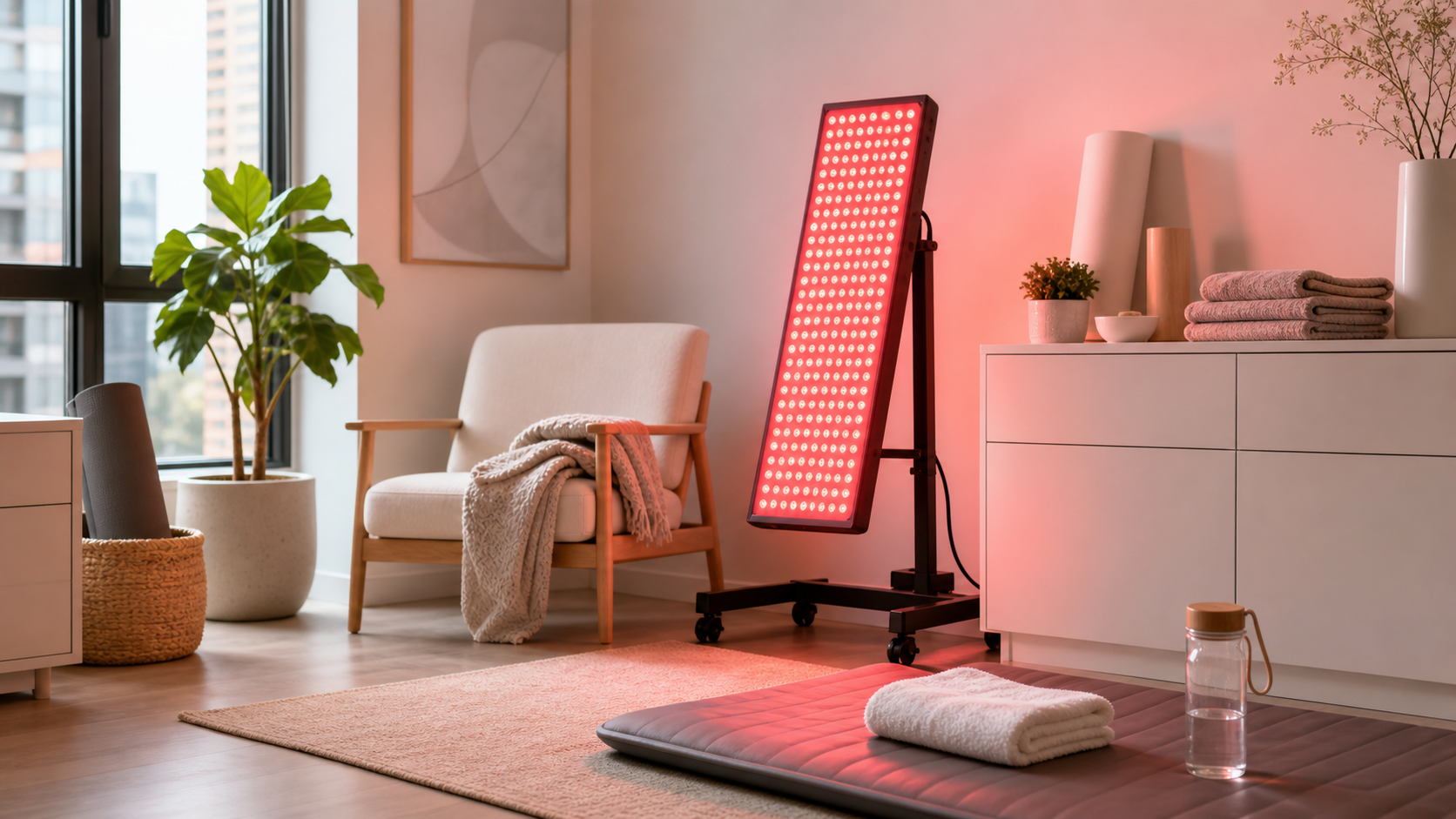
The complete kit is the most flexible option because the floor stand makes it easier to position the panel for larger areas such as the back, legs, hips, and shoulders. If more than one person will use the panel, or if you want to switch between seated, standing, and recovery positions, a floor stand is usually the smoother long-term choice.
It also reduces friction. You are less likely to skip a session when the panel can be rolled or positioned quickly. For people building a consistent recovery routine, that convenience can matter as much as technical specs.
- Best for: back, legs, hips, shoulders, and shared household use.
- Good fit if: you want maximum positioning freedom.
- Pair with: the SOLRA Mobile Floor Stand.
The simple decision rule
If your sessions are mostly face or desk based, tabletop is often enough. If you want to target the back, legs, or larger muscle areas, the complete kit is easier to live with. If budget is the priority and you already have a stable setup, panel only keeps things simple.
The best setup is the one you will actually use. Red light wellness is a consistency habit, not a one-time event.
Frequently asked questions
When should I choose the panel-only setup?
Panel only works well if you already know where the panel will live, such as a shelf, counter, desk, or other stable surface, and it keeps the entry price lower while giving the same core 660nm and 850nm light output. The tradeoff is positioning, so watch out for awkward angles and inconsistent distance.
What is the tabletop stand best for?
A tabletop stand is especially useful for face, neck, shoulder, and desk-based routines because it gives the panel a more stable position than leaning it against a wall or balancing it on a surface. It is also easy to keep visible near your morning routine, skincare area, or work-from-home desk.
Who should get the complete kit with the floor stand?
The complete kit is the most flexible option because the floor stand makes it easier to position the panel for larger areas such as the back, legs, hips, and shoulders. It is a good fit for shared household use or for switching between seated, standing, and recovery positions.
What is the simple rule for deciding between setups?
If your sessions are mostly face or desk based, tabletop is often enough; if you want to target the back, legs, or larger muscle areas, the complete kit is easier to live with; and if budget is the priority and you already have a stable setup, panel only keeps things simple. The best setup is the one you will actually use.
Where SOLRA fits
If you are deciding between setups, start with your most common use case: face and desk routines, recovery sessions, or larger body areas. The SOLRA Red Light Panel is built around 660nm red light and 850nm near-infrared light, with setup options for panel-only use, tabletop placement, or a complete floor-stand kit.
Quick safety notes
Red light wellness routines should feel comfortable. Avoid staring directly into bright LEDs, follow your device instructions, and consult a qualified professional if you are pregnant, photosensitive, using light-sensitive medication, or managing a medical condition.
About this guide. Written and maintained by the SOLRA Team, who design and support the SOLRA Red Light Panel (660nm red + 850nm near-infrared light). Our guides focus on practical, comfort-first routines and use general wellness language rather than medical claims. Always follow your device instructions and consult a qualified professional about any medical condition. Editorial review: SOLRA Team · Updated June 2026.

Leave a comment
This site is protected by hCaptcha and the hCaptcha Privacy Policy and Terms of Service apply.