
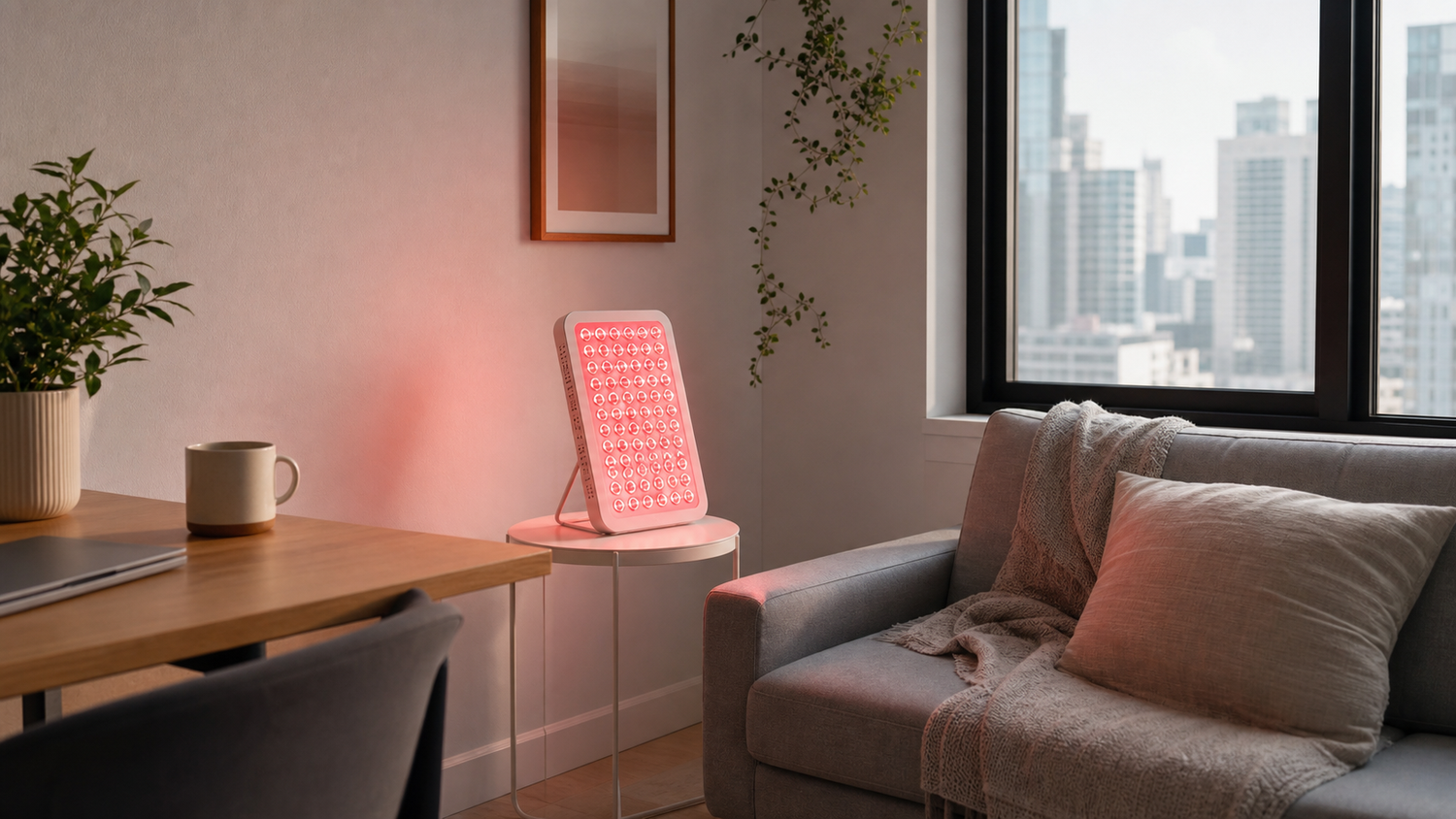
You do not need a dedicated wellness room to enjoy a red light routine. Plenty of people run a panel happily in a studio apartment, a shared flat, or a rental where drilling into walls is off-limits. The key is choosing a setup that fits small spaces and packs away easily. Here is how to make red light wellness work when square footage is tight.
Key takeaways
- A red light routine fits small apartments easily — sessions are short, and a tabletop or floor-stand panel needs no permanent installation.
- For renters, freestanding stands beat wall mounts: nothing to drill, and the panel moves or packs away when you need the space back.
- A tabletop setup suits seated face and upper-body routines in tight spaces; a floor stand covers more of the body when you have a little room to stand.
- Look for a panel that is easy to reposition and store, so it slots into a closet or corner between sessions.
Small space, short sessions: a natural fit
Red light sessions are brief and stationary, which is exactly what cramped homes can accommodate. You are not running a treadmill or installing a sauna; you are sitting or standing near a panel for a few minutes. That means the real question is not "do I have a spare room?" but "where can the panel live, and how easily does it move?"
Renter-friendly: skip the wall mount
If you rent, freestanding options are your friend. A stand-based setup avoids drilling, patching, and lost deposits entirely, and it moves with you when you go.
- A tabletop stand turns any desk, counter, or table into a seated-session spot.
- A floor stand gives you full-body positioning without touching the walls.
- Both pack down or roll aside, so the space goes back to normal between sessions.
Matching the setup to your space
Different small spaces suit different configurations. Use this as a quick guide.
Quick setup comparison
| Your space | Best fit | Why |
|---|---|---|
| Desk or studio, very tight | Panel only / tabletop | Seated face & upper-body routines; stores flat |
| Small bedroom with a little floor | Floor stand | Full-body positioning; rolls aside when done |
| Shared flat / move often | Tabletop or floor stand | No installation; packs away and travels |
For a deeper look at the trade-offs, see panel only vs tabletop vs complete kit and the panel size guide.
Storage and everyday practicality
In a small home, what happens between sessions matters as much as the session itself. A panel that leans in a closet, slides under a bed, or sits in a corner on its stand stays out of the way without becoming a chore. Choosing something easy to reposition means you will actually keep using it, rather than leaving it boxed because setup is a hassle.
Making it a habit in tight quarters
The smaller the space, the more a simple routine helps. Pick one reliable spot — a desk for seated sessions, or a clear patch of floor — and keep the panel nearby so starting a session takes seconds. Our home setup guide covers comfortable arrangements for compact rooms.
Frequently asked questions
Can you use a red light panel in a small apartment?
Yes. Sessions are short and stationary, so a tabletop or floor-stand panel works well in studios, shared flats, and tight bedrooms without needing a dedicated room or any permanent installation.
What red light setup is best for renters?
Freestanding options are ideal for renters because they avoid drilling, patching, and lost deposits: a tabletop stand turns a desk or counter into a seated-session spot, while a floor stand allows full-body positioning without touching the walls, and both move with you.
Tabletop or floor stand for a small space?
A tabletop or panel-only setup suits very tight spaces and seated face and upper-body routines, while a floor stand fits a small bedroom with a little floor room and covers more of the body; both pack away or roll aside between sessions.
How do you store a red light panel in a small home?
Choose a panel that is easy to reposition so it can lean in a closet, slide under a bed, or sit in a corner on its stand between sessions; easy storage makes the routine practical and keeps the space usable.
Where SOLRA fits
Choose the configuration that matches your space: a tabletop setup for compact, seated routines, or a floor stand for larger areas and full-body sessions. The SOLRA Red Light Panel is built around 660nm red light and 850nm near-infrared light, with setup options for panel-only use, tabletop placement, or a complete floor-stand kit.
Quick safety notes
Red light wellness routines should feel comfortable. Avoid staring directly into bright LEDs, follow your device instructions, and consult a qualified professional if you are pregnant, photosensitive, using light-sensitive medication, or managing a medical condition.
About this guide. Written and maintained by the SOLRA Team, who design and support the SOLRA Red Light Panel (660nm red + 850nm near-infrared light). Our guides focus on practical, comfort-first routines and use general wellness language rather than medical claims. Always follow your device instructions and consult a qualified professional about any medical condition. Editorial review: SOLRA Team · Updated June 2026.

Leave a comment
This site is protected by hCaptcha and the hCaptcha Privacy Policy and Terms of Service apply.