
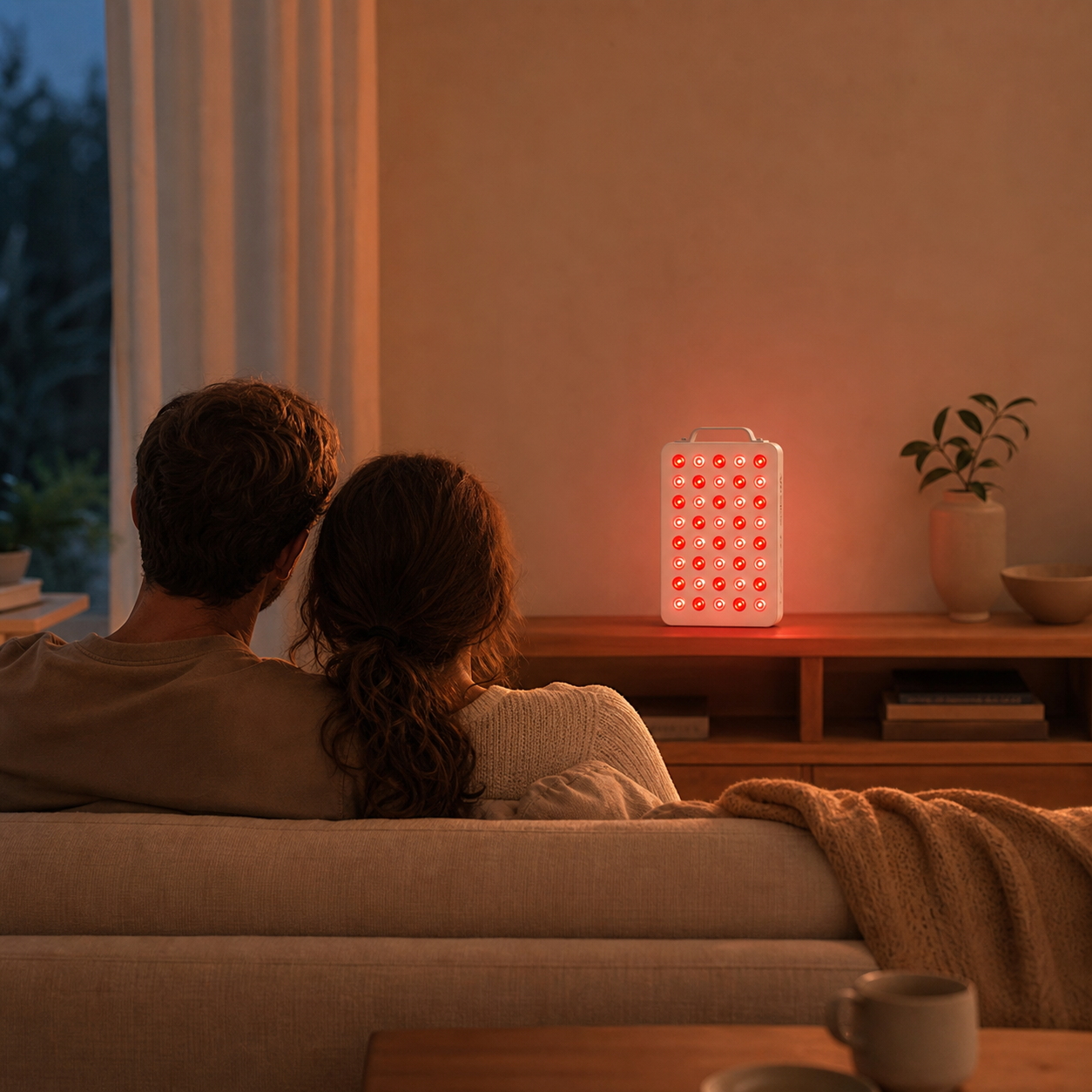
Sharing one red light panel can be simple, but only if the routine is built around real schedules instead of ideal ones. Couples often need different session times, different focus areas, and different levels of enthusiasm. Here is how to make one panel work for two people without turning it into a household negotiation.
Key takeaways
- One panel can work well for two people when the setup is easy to access and the routine is not over-scheduled.
- Separate sessions are usually simpler than trying to share the exact same session every time.
- A stable stand and a fixed location reduce friction for both people.
- Keep expectations individual: comfort, timing, and consistency may differ from person to person.
Do not force the same routine
The easiest mistake is assuming both people need to use the panel the same way. One person may prefer mornings; the other may prefer evenings. One may focus on face and neck; the other may want back or legs. That is normal. A shared panel works best when each person has a simple version of the routine that fits them.
Make access obvious
If the panel has to be moved, unpacked, or re-angled every time, one person will eventually stop using it. Keep it in a fixed location where both people can reach it, with a stand or setup that does not require a mini project. Our placement guide can help choose the room.
Use separate sessions when needed
Sharing does not have to mean sitting together. Separate sessions are often cleaner because each person can choose distance, posture, and focus area without compromise. If you do share the same time, keep it simple: one person after the other, same location, same timer, no elaborate rotation.
Respect different comfort levels
Some people love bright wellness devices immediately. Others need time. Let comfort lead: use the recommended distance, avoid glare, keep sessions short at first, and do not pressure the other person into matching your cadence. Our safety guide and eye-safety guide are worth sharing before the first session.
A low-friction shared setup
Choose a room both people already use, keep the panel on a stable stand, agree on a rough window rather than a strict schedule, and let each person run their own short session. That is enough. Shared wellness habits work when they feel light, repeatable, and respectful of two different routines.
Frequently asked questions
Can two people share one red light panel?
Yes. One panel can work well for two people when the setup is easy to access, the location is fixed, and each person can use a routine that fits their own schedule, focus area, and comfort level.
Should couples use a red light panel at the same time?
They can, but separate sessions are often simpler because each person can choose their own distance, posture, and focus area. Sharing the device does not require sharing the exact same session.
Where should a shared panel live?
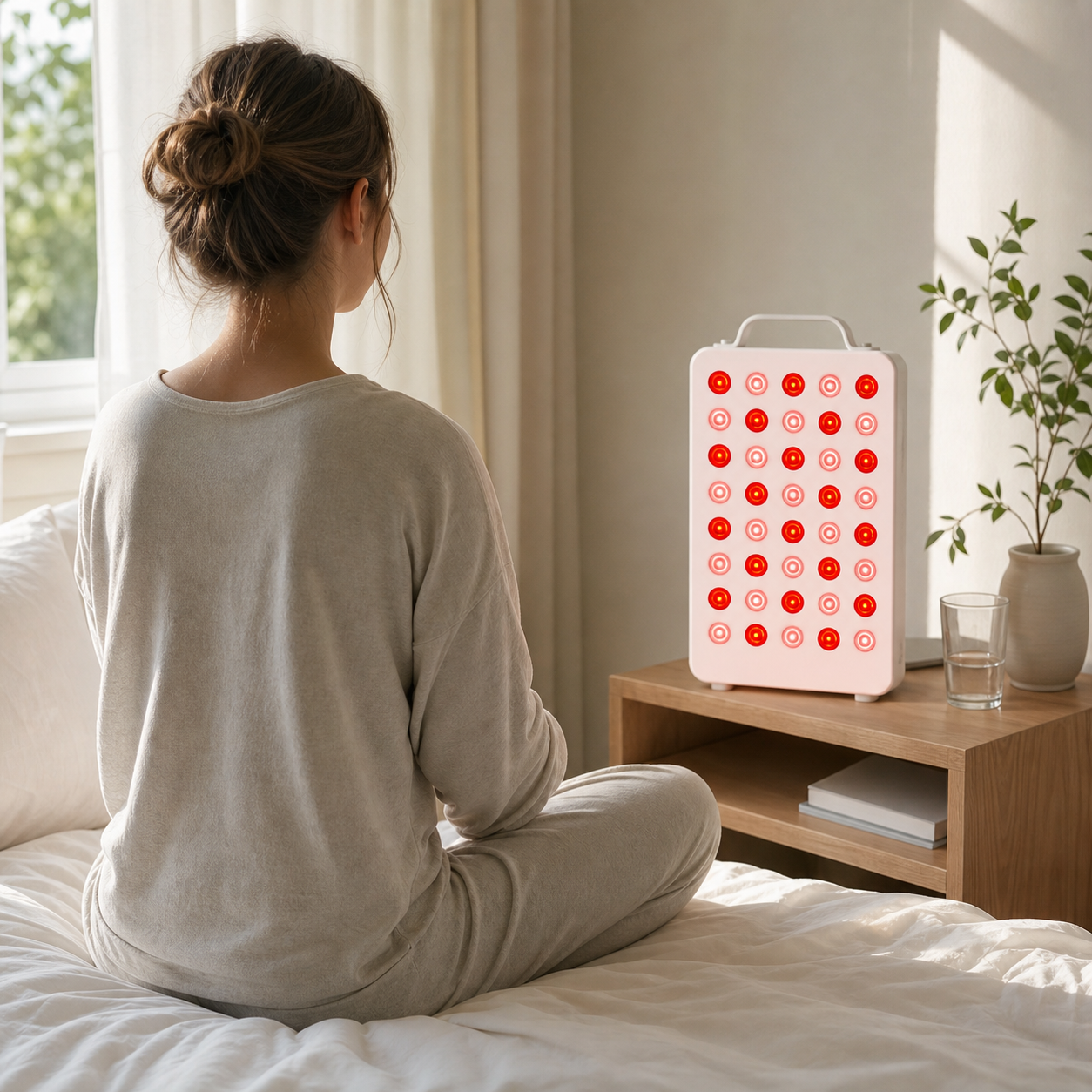
Choose a room both people can access easily, such as a bedroom, living room corner, or home gym, and use a stable stand so the setup is ready instead of having to be rebuilt each time.
What if one person wants to use it more often?
That is fine. Treat consistency as individual rather than shared. One person can use the panel more frequently while the other keeps a lighter routine, as long as both follow comfort-first habits and device instructions.
Where SOLRA fits
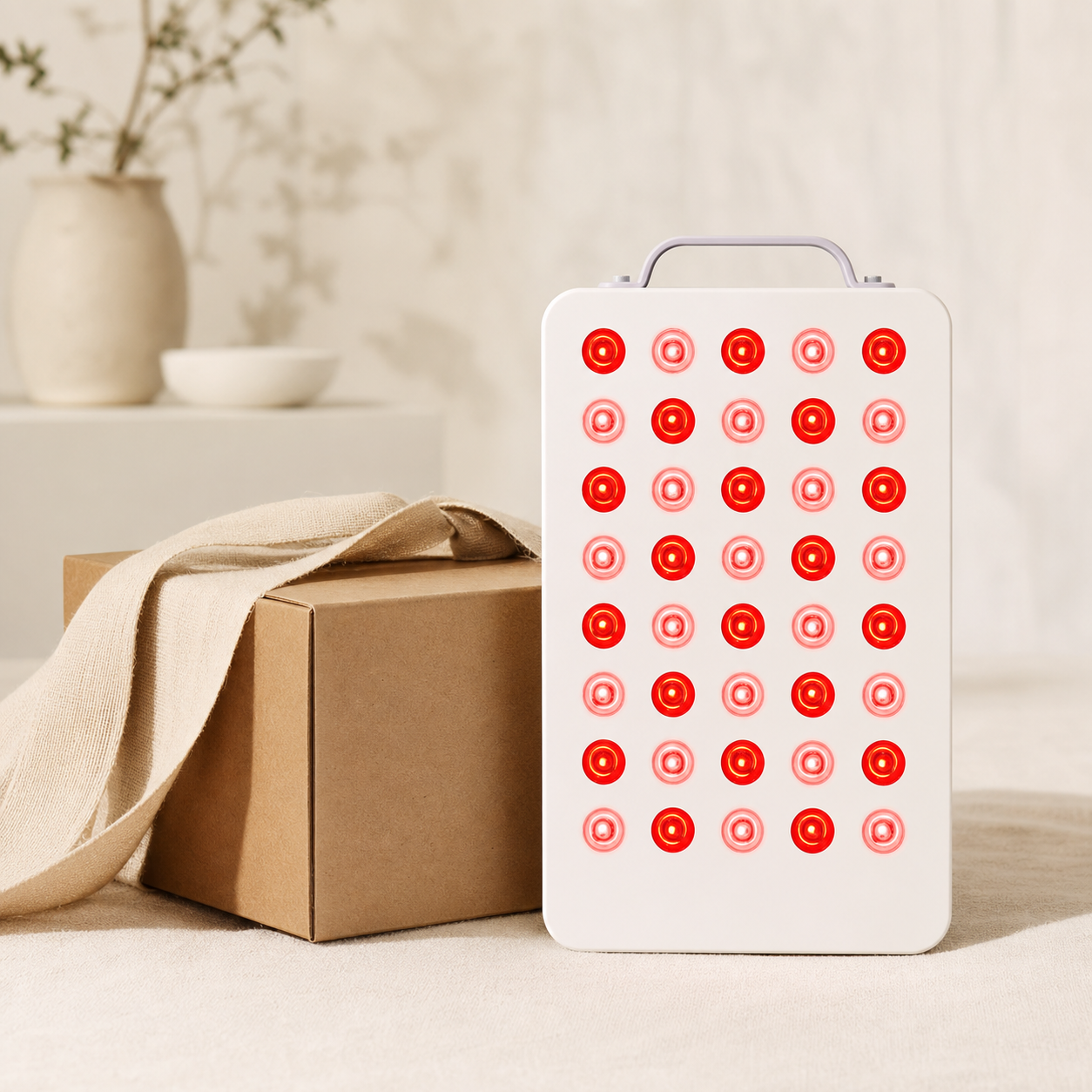
Choose the configuration that matches your space: a tabletop setup for compact, seated routines, or a floor stand for larger areas and full-body sessions. The SOLRA Red Light Panel is built around 660nm red light and 850nm near-infrared light, with setup options for panel-only use, tabletop placement, or a complete floor-stand kit. For more flexible, multi-area sessions, see the SOLRA Portable Red Light Panel.
Quick safety notes
Red light wellness routines should feel comfortable. Avoid staring directly into bright LEDs, follow your device instructions, and consult a qualified professional if you are pregnant, photosensitive, using light-sensitive medication, or managing a medical condition.
Wellness disclaimer. SOLRA content and products are intended for general wellness and comfort. They are not medical devices and are not intended to diagnose, treat, cure, or prevent any disease or health condition. These statements have not been evaluated by the Food and Drug Administration. Individual experiences vary; consult a qualified healthcare professional before starting any new wellness routine, especially if you are pregnant, photosensitive, taking light-sensitive medication, or managing a medical condition.
Wellness disclaimer: SOLRA products are general wellness devices and have not been evaluated by the FDA. This article is for educational purposes only and is not intended to diagnose, treat, cure, or prevent any disease. Consult a qualified healthcare professional before beginning a new wellness practice, especially if you have a medical condition or take medication.
About this guide. Written and maintained by the SOLRA Team, who design and support SOLRA red light panels. Our guides focus on practical, comfort-first routines and use general wellness language rather than medical claims. Always follow your device instructions and consult a qualified professional about any medical condition. Editorial review: SOLRA Team · Updated July 2026.

Leave a comment
This site is protected by hCaptcha and the hCaptcha Privacy Policy and Terms of Service apply.