
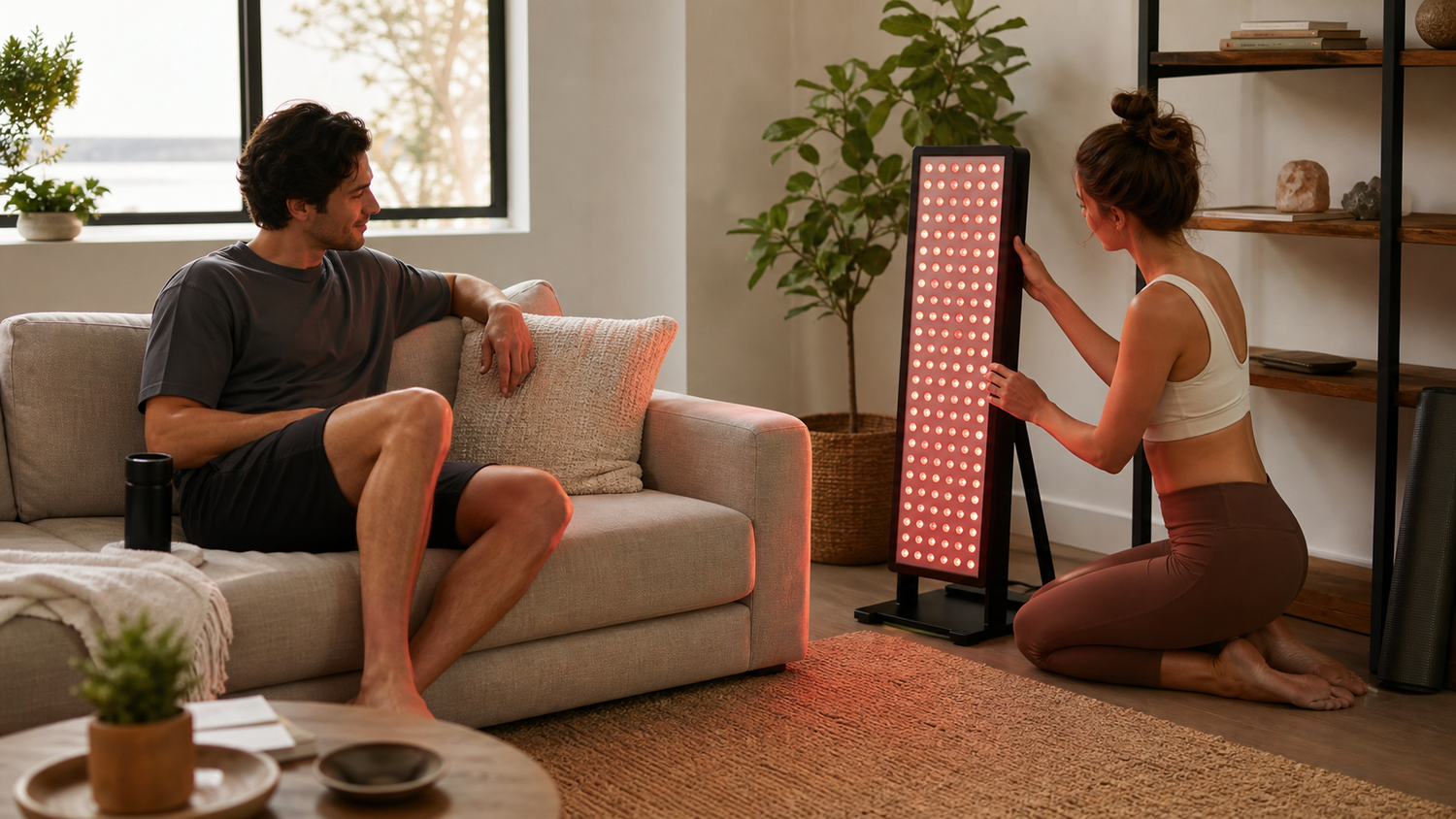
A red light panel does not have to be a solo gadget. Plenty of households share a single panel across partners, family members, or roommates. With a little planning, one device can support several routines without friction. Here is how to make sharing work.
Key takeaways
- A single red light panel can support several people's routines, since what changes between users is mostly position and distance, not the device itself.
- Because sessions are short, a simple staggered schedule around existing morning and evening routines keeps one panel from becoming a bottleneck.
- For shared comfort and hygiene, wipe any shared shields or surfaces between users and let each person note their preferred distance.
- An easy-to-reposition setup with a stable stand suits both seated facial sessions and larger body areas for mixed household needs.
- Avoid staring directly into bright LEDs and consult a qualified professional if you are pregnant, photosensitive, using light-sensitive medication, or managing a medical condition.
One panel, several routines
Different people often want different things from a session: one person may focus on facial routines, another on shoulders or legs after activity. The same panel serves all of these, since what changes is mostly position and distance, not the device itself. Agreeing on who uses it when is the main coordination needed.
Build a simple schedule
Sessions are short, so fitting several into a day is easy with light planning.
- Stagger sessions around existing routines, like mornings and evenings.
- Keep each person's session to the length their routine calls for.
- Use a shared note or reminder if coordination gets busy.
Because sessions are brief, a single panel rarely becomes a bottleneck.
Comfort and hygiene basics
If the panel sits close to the face, a quick wipe of any shared shields or surfaces between users keeps things pleasant. Each person can keep their own preferred distance noted so they do not have to re-measure every time. Small touches like these make shared use feel effortless.
Choosing a panel for a household
If you know several people will use a panel, a setup that is easy to reposition matters. A stable stand and a size that suits both seated facial sessions and larger body areas gives everyone flexibility. Modular options, such as a panel that works on a tabletop or a floor stand, adapt well to mixed needs.
Keeping the habit shared
A shared device can also be a shared habit. Some households find that having a common wellness routine, even a brief one, makes it easier for everyone to stay consistent. The panel becomes part of the household rhythm rather than one person's gadget.
Frequently asked questions
Can one red light panel serve several people in a household?
Yes, the same panel serves different routines since what changes is mostly position and distance, not the device itself, whether one person focuses on facial routines and another on shoulders or legs. Agreeing on who uses it when is the main coordination needed.
How do we schedule a shared panel without it becoming a bottleneck?
Sessions are short, so stagger them around existing routines like mornings and evenings, keep each person's session to the length their routine calls for, and use a shared note or reminder if coordination gets busy. Because sessions are brief, a single panel rarely becomes a bottleneck.
Are there hygiene considerations when sharing a panel?
If the panel sits close to the face, a quick wipe of any shared shields or surfaces between users keeps things pleasant. Each person can also keep their own preferred distance noted so they do not have to re-measure every time.
What kind of panel works best for a household?
If several people will use it, a setup that is easy to reposition matters, with a stable stand and a size suited to both seated facial sessions and larger body areas. Modular options such as a panel that works on a tabletop or a floor stand adapt well to mixed needs.
Where SOLRA fits
Choose the configuration that matches your space: a tabletop setup for compact, seated routines, or a floor stand for larger areas and full-body sessions. The SOLRA Red Light Panel is built around 660nm red light and 850nm near-infrared light, with setup options for panel-only use, tabletop placement, or a complete floor-stand kit.
Quick safety notes
Red light wellness routines should feel comfortable. Avoid staring directly into bright LEDs, follow your device instructions, and consult a qualified professional if you are pregnant, photosensitive, using light-sensitive medication, or managing a medical condition.
Wellness disclaimer: SOLRA products are general wellness devices and have not been evaluated by the FDA. This article is for educational purposes only and is not intended to diagnose, treat, cure, or prevent any disease. Consult a qualified healthcare professional before beginning a new wellness practice, especially if you have a medical condition or take medication.
About this guide. Written and maintained by the SOLRA Team, who design and support the SOLRA Red Light Panel (660nm red + 850nm near-infrared light). Our guides focus on practical, comfort-first routines and use general wellness language rather than medical claims. Always follow your device instructions and consult a qualified professional about any medical condition. Editorial review: SOLRA Team · Updated June 2026.

Leave a comment
This site is protected by hCaptcha and the hCaptcha Privacy Policy and Terms of Service apply.