
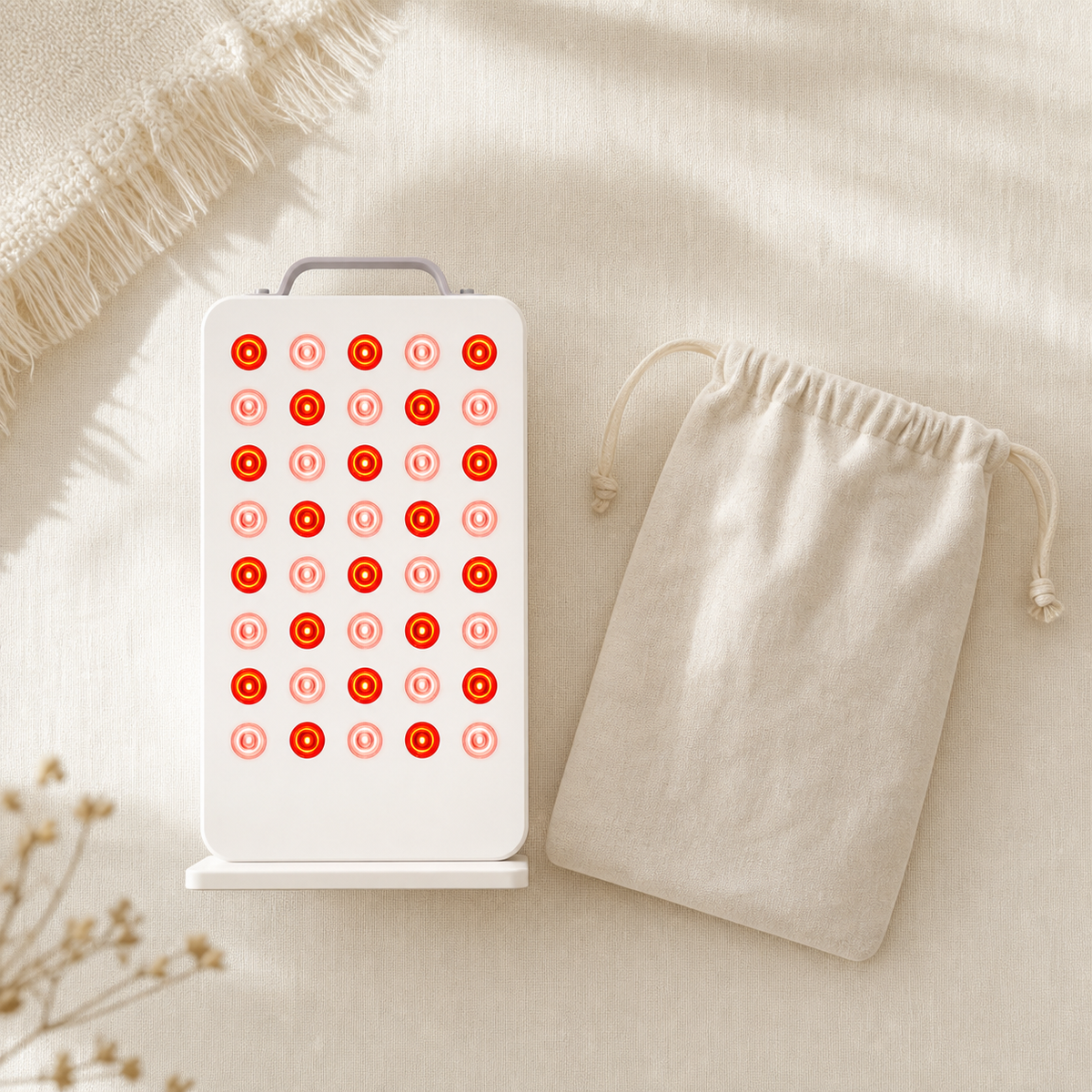
Once you own a red light panel, there is a small world of add-ons you could buy — stands, goggles, timers, mounts, covers. Some genuinely improve the routine; others are nice-to-have at best. Here is an honest sort of what earns its place versus what you can happily skip, so you spend on the things that actually make sessions easier.
Key takeaways
- The accessories that matter most are the ones that make sessions comfortable and repeatable: a stable stand or mount and, for many people, eye protection.
- A good stand is the highest-value add-on — hands-free, consistent positioning is what makes a routine stick.
- Eye comfort matters near bright LEDs; goggles are worth it for many people, though not staring into the light is the baseline habit.
- Many extras are optional conveniences — buy them if they solve a real friction in your routine, not by default.
The genuinely useful: a stable stand or mount
If you buy one accessory, make it a proper stand or mount. Hands-free, repeatable positioning is the single biggest factor in whether a routine survives past the first week — a panel propped precariously against a stack of books is a routine waiting to be abandoned. A tabletop stand suits compact, seated sessions; a floor stand suits larger, standing ones. This is exactly why SOLRA offers panel-only, tabletop, and complete-kit configurations — the stand is not really an "extra," it is part of a usable setup. Our home setup guide covers positioning.
Worth it for many: eye protection
You sit near a bright light source during a session, so eye comfort is a real consideration. The baseline habit is simply not staring into the LEDs, but many people find goggles make sessions more comfortable, especially for facial routines with the panel close and in view. Our dedicated goggles and eye safety guide walks through when they are worth having. Consider them a comfort upgrade rather than a gimmick.
Situationally handy
A few extras earn their place only if they solve a specific friction:
- A timer (if the panel lacks a built-in one): helpful for keeping session length consistent without watching the clock — but many panels already include one.
- A wall or VESA mount: great for a permanent, space-saving spot, especially in a small space; unnecessary if you prefer a movable stand.
- A carry case: useful mainly if you travel with the panel.
What you can usually skip
Plenty of add-ons are marketed harder than they are useful. Specialty "booster" attachments with vague claims, decorative covers, and anything promising to dramatically change results are generally not where your money is best spent. The fundamentals — a stable setup, consistent distance and timing, and clean maintenance — do far more for your routine than any novelty accessory. If an add-on does not remove a real friction you actually experience, it is fine to pass.
Spend where the friction is
The simple rule: buy the accessory that fixes the thing making your routine harder. For almost everyone that is a stable stand; for many it is eye protection; for some it is a mount or timer that fits their space and panel. Everything else is optional. A well-positioned, comfortable, consistent setup beats a drawer full of extras every time. For keeping the panel itself in good shape, see our maintenance guide.
Frequently asked questions
What accessories do I actually need for a red light panel?
The highest-value accessory is a stable stand or mount for hands-free, repeatable positioning, and for many people eye protection adds comfort; most other add-ons are optional conveniences worth buying only if they solve a real friction in your routine.
Is a stand necessary for a red light panel?
A proper stand or mount is close to essential in practice because hands-free, consistent positioning is what makes a routine stick; a tabletop stand suits seated sessions and a floor stand suits standing ones, which is why panels are often sold with stand configurations.
Do I need red light therapy goggles?
The baseline habit is simply not staring into the LEDs, but many people find goggles make sessions more comfortable, especially for close facial routines with the panel in view; consider them a worthwhile comfort upgrade rather than a strict requirement.
Which red light panel accessories are a waste of money?
Specialty "booster" attachments with vague claims, decorative covers, and anything promising to dramatically change results are generally skippable; the fundamentals of a stable setup, consistent distance and timing, and clean maintenance do far more than novelty add-ons.
Where SOLRA fits
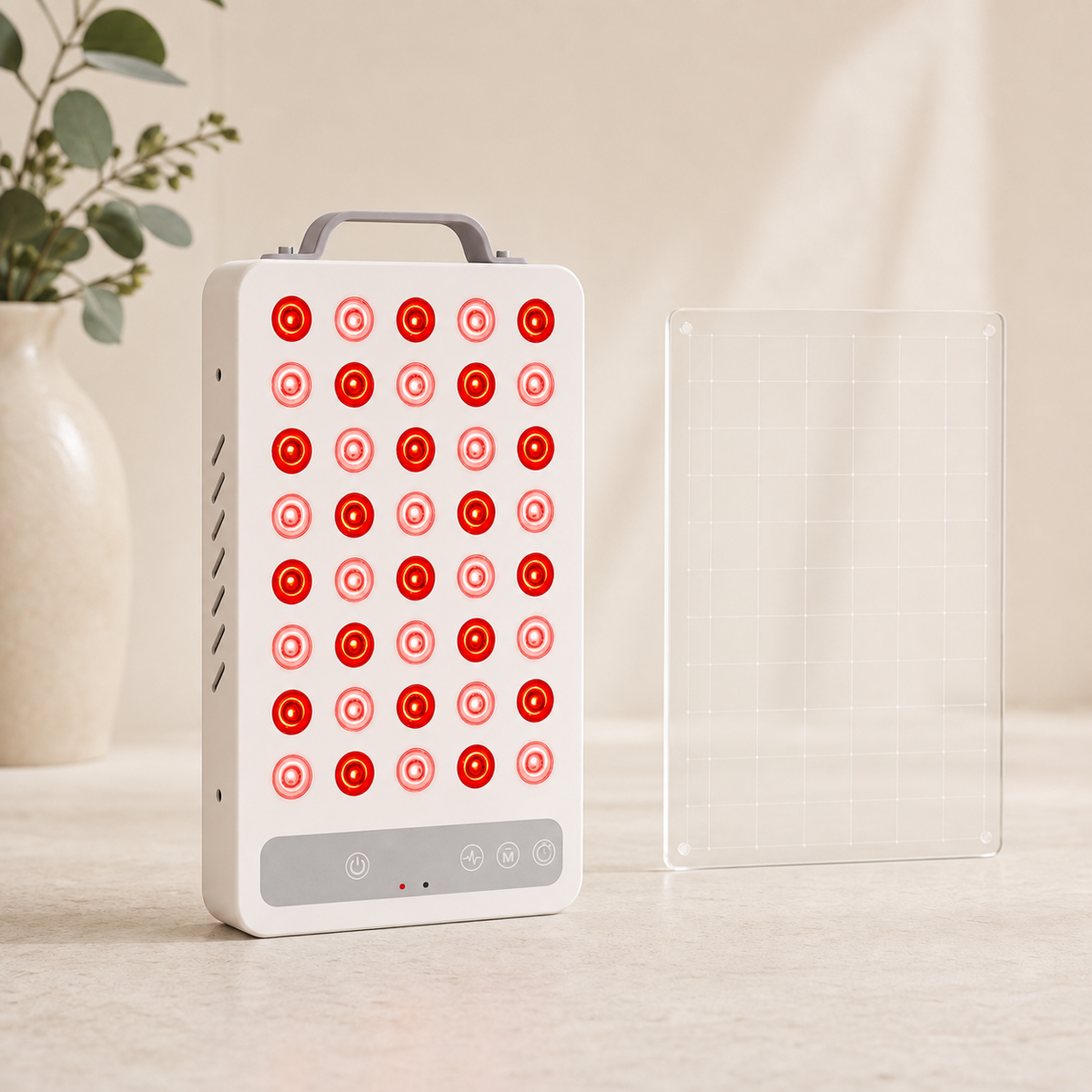
Choose the configuration that matches your space: a tabletop setup for compact, seated routines, or a floor stand for larger areas and full-body sessions. The SOLRA Red Light Panel is built around 660nm red light and 850nm near-infrared light, with setup options for panel-only use, tabletop placement, or a complete floor-stand kit.
Quick safety notes
Red light wellness routines should feel comfortable. Avoid staring directly into bright LEDs, follow your device instructions, and consult a qualified professional if you are pregnant, photosensitive, using light-sensitive medication, or managing a medical condition.
Wellness disclaimer. SOLRA content and products are intended for general wellness and comfort. They are not medical devices and are not intended to diagnose, treat, cure, or prevent any disease or health condition. These statements have not been evaluated by the Food and Drug Administration. Individual experiences vary; consult a qualified healthcare professional before starting any new wellness routine, especially if you are pregnant, photosensitive, taking light-sensitive medication, or managing a medical condition.
Wellness disclaimer: SOLRA products are general wellness devices and have not been evaluated by the FDA. This article is for educational purposes only and is not intended to diagnose, treat, cure, or prevent any disease. Consult a qualified healthcare professional before beginning a new wellness practice, especially if you have a medical condition or take medication.
About this guide. Written and maintained by the SOLRA Team, who design and support the SOLRA Red Light Panel (660nm red + 850nm near-infrared light). Our guides focus on practical, comfort-first routines and use general wellness language rather than medical claims. Always follow your device instructions and consult a qualified professional about any medical condition. Editorial review: SOLRA Team · Updated July 2026.


Leave a comment
This site is protected by hCaptcha and the hCaptcha Privacy Policy and Terms of Service apply.