
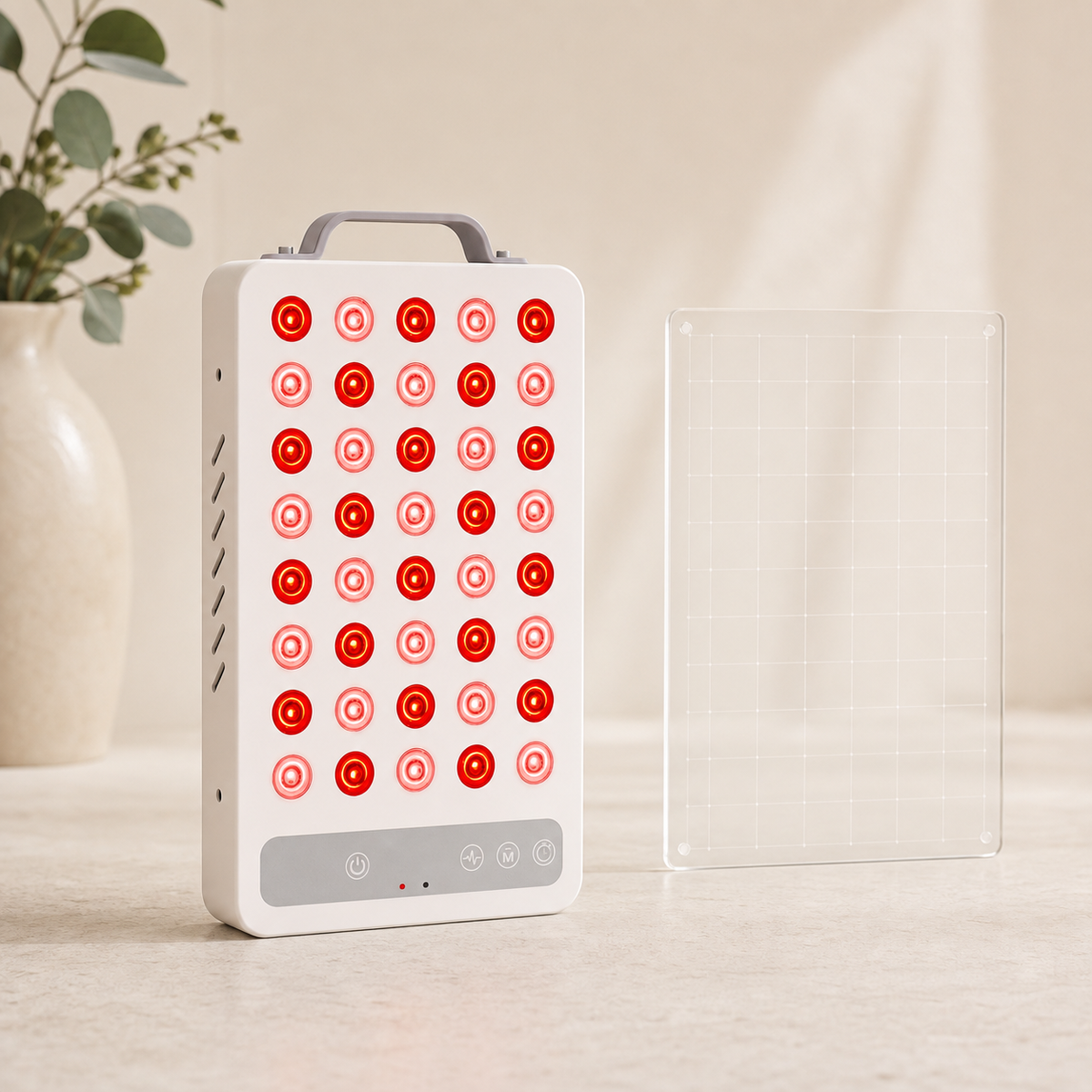
A red light panel spec sheet can read like a wall of numbers and units, and manufacturers do not always present them the same way. Once you know what each line means — and which ones actually matter for how you'll use the panel — the sheet becomes a genuinely useful comparison tool instead of marketing noise. Here is a plain-English tour of the whole thing.
Key takeaways
- A spec sheet mixes numbers that matter for your routine (wavelengths, irradiance, coverage) with ones that matter for practicality (size, weight, power, warranty).
- Wavelengths tell you the type of light; irradiance tells you intensity — but only meaningful when the measurement distance is stated.
- Watch for numbers quoted without context, especially irradiance with no distance or "total power" that reflects LED rating rather than real draw.
- Read the sheet as a whole: no single number makes a panel good, and honest, clearly-stated specs are themselves a quality signal.
The specs that describe the light
These are the lines about what the panel actually emits.
- Wavelengths (nm): the colors of light, usually 660nm red and 850nm near-infrared. Our 660 vs 850 guide explains what each is associated with.
- Irradiance (mW/cm²): how much light energy reaches a surface — the intensity figure. It is only meaningful with a stated distance, because intensity falls as you move back. Our irradiance guide goes deep on this.
- LED count & type: how many diodes and what kind; more is not automatically better, but it relates to coverage and density.
- Beam angle: how widely the light spreads, which affects coverage area.
The specs that describe the device
These lines are about living with the panel day to day.
- Panel size & weight: practical fit for your space and stand.
- Power / consumption: useful for running costs — but read carefully (see the pitfalls below).
- EMF: emissions during use, ideally quoted at a stated distance; see low-EMF specs.
- Lifespan (hours), warranty, timer, and mounting: longevity and convenience details.
A quick spec-sheet glossary
| Spec line | What it tells you | Read it carefully because… |
|---|---|---|
| Irradiance | Light intensity at a surface | Meaningless without a stated distance |
| Total power | A wattage figure | May be LED rating, not real wall draw |
| Wavelengths | Type of light emitted | Ranges and blends vary by model |
| EMF | Emissions during use | Best quoted at a set distance |
| Lifespan | Rated LED hours | A rating, not a guarantee |
The pitfalls to watch for
A few spec-sheet habits are worth a skeptical eye. Irradiance with no distance is the classic one — a big number measured at the panel surface tells you little about a real session distance. "Total power" figures can reflect the combined LED rating (for example, LED count multiplied by each diode's rated wattage) rather than what the unit actually draws from the wall, so a headline wattage may look larger than real consumption. And any spec quoted without units or context deserves a question. Honest sheets state their conditions; vague ones hope you won't ask. Our cheap-panel guide shows where this goes wrong.
Read the whole sheet, not one line
The real skill is refusing to be wowed by a single number. A good panel shows a coherent, honestly-stated set of specs — sensible wavelengths, irradiance at a distance, realistic power, a genuine warranty — rather than one heroic figure surrounded by vagueness. Use the sheet to compare like with like across panels, and treat clarity itself as a signal: a maker that states its conditions plainly is usually one worth trusting. From there, our how-to-choose guide turns the numbers into a decision.
Frequently asked questions
What specs matter most on a red light panel?
The specs that describe the light — wavelengths, irradiance at a stated distance, and coverage — matter for your routine, while size, weight, power, EMF, lifespan, and warranty matter for living with the device; no single number makes a panel good, so read them together.
Why does irradiance need a distance?
Irradiance measures how much light reaches a surface, and intensity falls as you move away from the panel, so a figure quoted without a distance is not meaningful; a big surface-level number can look impressive yet say little about a real session distance.
Is a higher "total power" number better?
Not necessarily — a total-power figure may reflect the combined LED rating rather than what the panel actually draws from the wall, so a large headline wattage can overstate real consumption; check whether the number is a rating or a measured draw.
How can I tell if a spec sheet is honest?
Honest sheets state their conditions — distance for irradiance and EMF, clear units, realistic power, and a genuine warranty — while vague ones quote big numbers without context; treat clarity itself as a quality signal and compare like with like across panels.
Where SOLRA fits
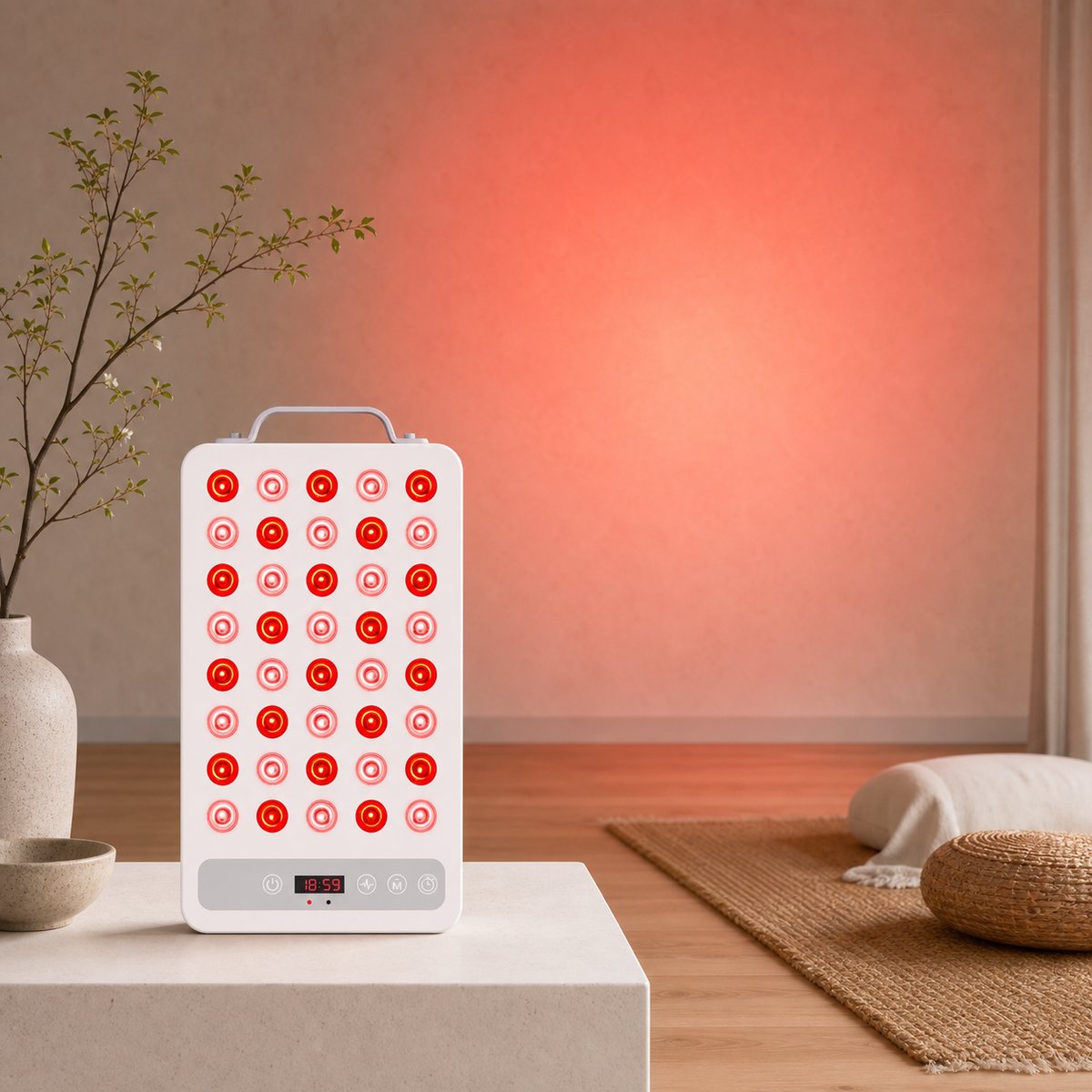
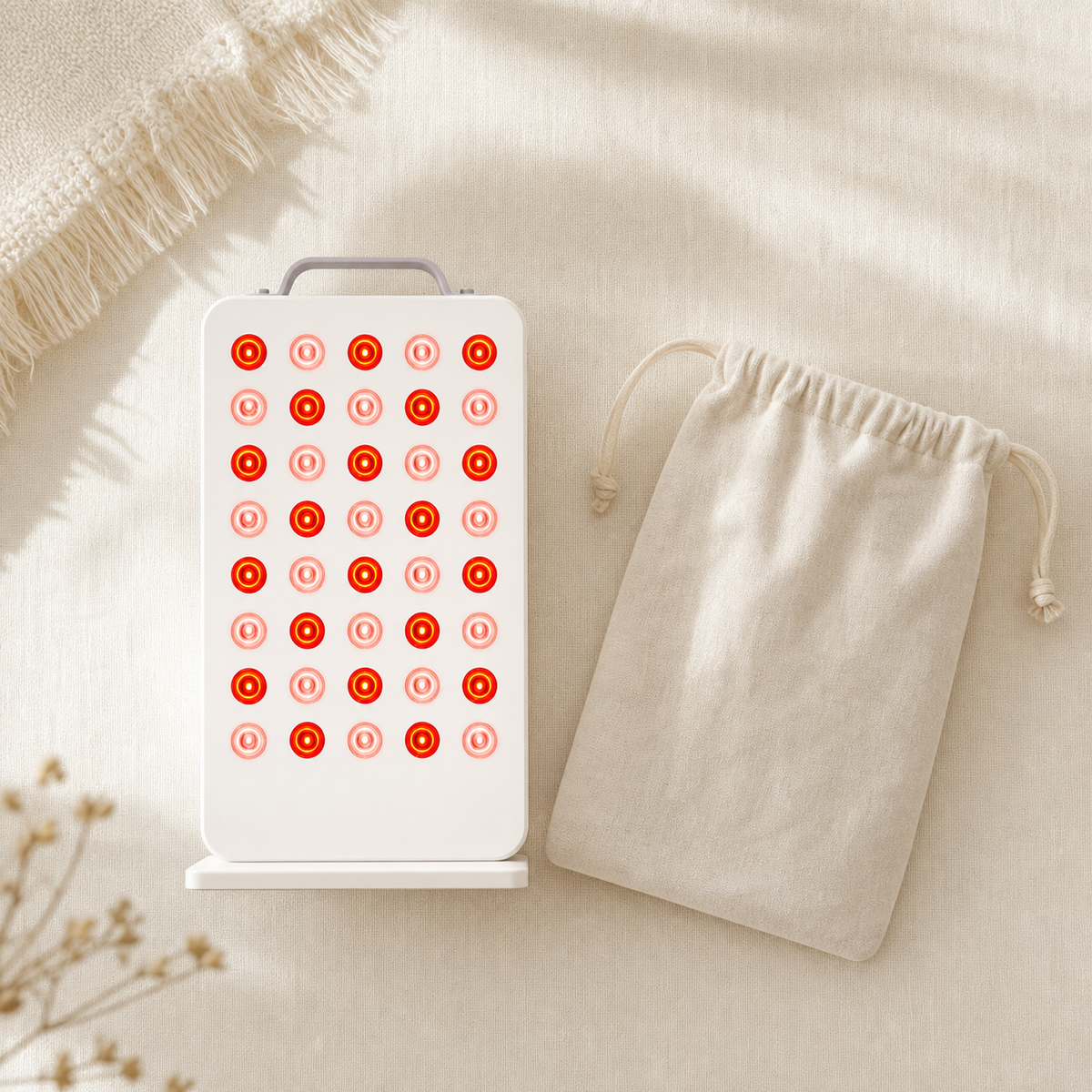
Choose the configuration that matches your space: a tabletop setup for compact, seated routines, or a floor stand for larger areas and full-body sessions. The SOLRA Red Light Panel is built around 660nm red light and 850nm near-infrared light, with setup options for panel-only use, tabletop placement, or a complete floor-stand kit.
Quick safety notes
Red light wellness routines should feel comfortable. Avoid staring directly into bright LEDs, follow your device instructions, and consult a qualified professional if you are pregnant, photosensitive, using light-sensitive medication, or managing a medical condition.
Wellness disclaimer. SOLRA content and products are intended for general wellness and comfort. They are not medical devices and are not intended to diagnose, treat, cure, or prevent any disease or health condition. These statements have not been evaluated by the Food and Drug Administration. Individual experiences vary; consult a qualified healthcare professional before starting any new wellness routine, especially if you are pregnant, photosensitive, taking light-sensitive medication, or managing a medical condition.
Wellness disclaimer: SOLRA products are general wellness devices and have not been evaluated by the FDA. This article is for educational purposes only and is not intended to diagnose, treat, cure, or prevent any disease. Consult a qualified healthcare professional before beginning a new wellness practice, especially if you have a medical condition or take medication.
About this guide. Written and maintained by the SOLRA Team, who design and support the SOLRA Red Light Panel (660nm red + 850nm near-infrared light). Our guides focus on practical, comfort-first routines and use general wellness language rather than medical claims. Always follow your device instructions and consult a qualified professional about any medical condition. Editorial review: SOLRA Team · Updated July 2026.

Leave a comment
This site is protected by hCaptcha and the hCaptcha Privacy Policy and Terms of Service apply.