
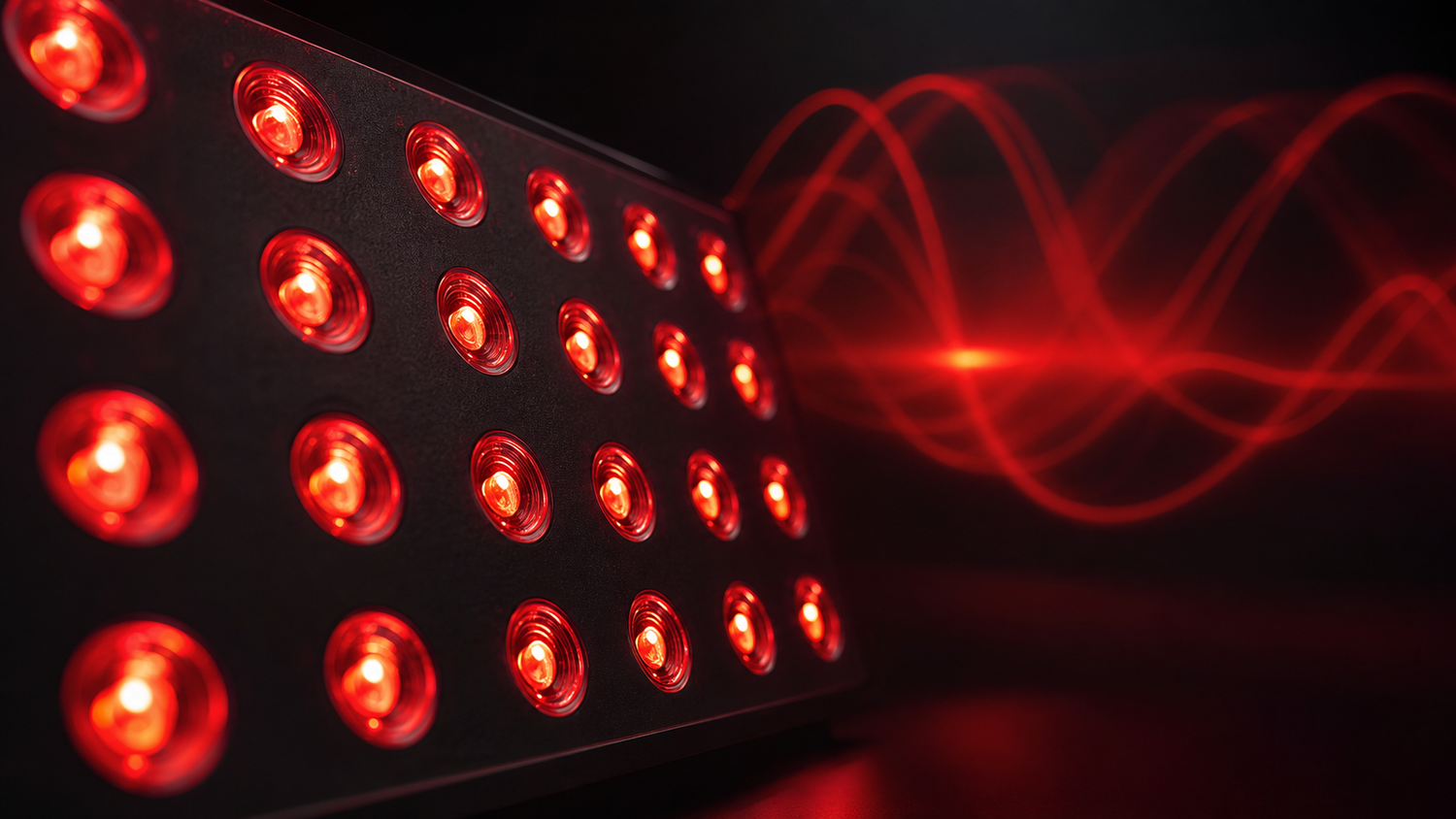
Flicker is one of those panel specs that rarely makes the headline numbers but can affect how comfortable a session feels — especially for the eyes. Most people never think about it until a light feels subtly "off." Here is what flicker means for a red light panel and why a low- or no-flicker design is worth noticing.
Key takeaways
- Flicker is rapid, often invisible fluctuation in a light’s brightness; many LED devices flicker to some degree because of how they are driven.
- For a red light panel, low or no visible flicker is a comfort feature — steady light tends to feel easier on the eyes during a session.
- Flicker is separate from wavelength, irradiance, and EMF; a panel can score well on those and still flicker, so it is worth checking on its own.
- You cannot always see flicker directly, so look for a stated low-flicker or flicker-free design and judge by comfort during real sessions.
What "flicker" actually is
Flicker is rapid fluctuation in how bright a light is, happening many times per second. Some flicker is fast enough to be invisible, yet it can still contribute to a subtle sense of eye tiredness or discomfort for sensitive people. LEDs can flicker depending on how their power is delivered and regulated. It is a genuine characteristic of a light source, distinct from the headline specs people usually compare.
Why it matters for a wellness panel
You spend a red light session sitting near a bright light source, sometimes with it in your field of view. That makes steadiness of the light a real comfort factor. A low- or no-flicker panel tends to feel calmer and easier on the eyes over a session, which fits the comfort-first spirit of a good routine. It also pairs naturally with sensible eye-care habits — not staring into the LEDs, and using eye protection when it helps.
Flicker is its own spec
It is worth stressing that flicker is independent of the specs people usually shop by. A panel can have solid wavelengths, good irradiance, and low EMF and still flicker noticeably — or be reassuringly steady. Because it is a separate quality factor, it deserves a separate look rather than being assumed from the other numbers.
How to judge flicker without lab gear
Most people cannot measure flicker directly, so two practical signals help:
- Stated design: a panel described as low-flicker or flicker-free has usually been engineered with steadiness in mind.
- Real-session comfort: pay attention to how your eyes feel during and after sessions; steady light should feel unremarkable, not tiring.
An old phone-camera trick — pointing a camera at the light and looking for banding on screen — can sometimes hint at flicker, but it is rough and not reliable across devices. Comfort over a real session is the more trustworthy guide.
The takeaway
Flicker will not appear on most spec-sheet comparisons, but a steady, low-flicker panel supports a more comfortable session, particularly for the eyes. Consider it a quiet quality signal alongside the headline specs, and let your own comfort during real sessions confirm it. For the wider picture of build and quality signals, see our build-quality checklist.
Frequently asked questions
What is flicker on a red light panel?
Flicker is rapid fluctuation in a light’s brightness, happening many times per second and often too fast to see; LEDs can flicker depending on how their power is delivered, and it is a real characteristic of the light source separate from the headline specs.
Does red light panel flicker matter?
For comfort, yes: you sit near a bright light during a session, sometimes with it in view, so a low- or no-flicker panel tends to feel calmer and easier on the eyes, which fits a comfort-first routine.
Is flicker the same as EMF or irradiance?
No. Flicker is independent of wavelength, irradiance, and EMF, so a panel can score well on those and still flicker or be steady; because it is a separate quality factor, it is worth checking on its own.
How can I tell if a panel flickers?
You usually cannot measure it directly, so look for a stated low-flicker or flicker-free design and judge by how your eyes feel during and after real sessions; steady light should feel unremarkable rather than tiring.
Where SOLRA fits
Choose the configuration that matches your space: a tabletop setup for compact, seated routines, or a floor stand for larger areas and full-body sessions. The SOLRA Red Light Panel is built around 660nm red light and 850nm near-infrared light, with setup options for panel-only use, tabletop placement, or a complete floor-stand kit.
Quick safety notes
Red light wellness routines should feel comfortable. Avoid staring directly into bright LEDs, follow your device instructions, and consult a qualified professional if you are pregnant, photosensitive, using light-sensitive medication, or managing a medical condition.
Wellness disclaimer: SOLRA products are general wellness devices and have not been evaluated by the FDA. This article is for educational purposes only and is not intended to diagnose, treat, cure, or prevent any disease. Consult a qualified healthcare professional before beginning a new wellness practice, especially if you have a medical condition or take medication.
About this guide. Written and maintained by the SOLRA Team, who design and support the SOLRA Red Light Panel (660nm red + 850nm near-infrared light). Our guides focus on practical, comfort-first routines and use general wellness language rather than medical claims. Always follow your device instructions and consult a qualified professional about any medical condition. Editorial review: SOLRA Team · Updated July 2026.

Leave a comment
This site is protected by hCaptcha and the hCaptcha Privacy Policy and Terms of Service apply.