
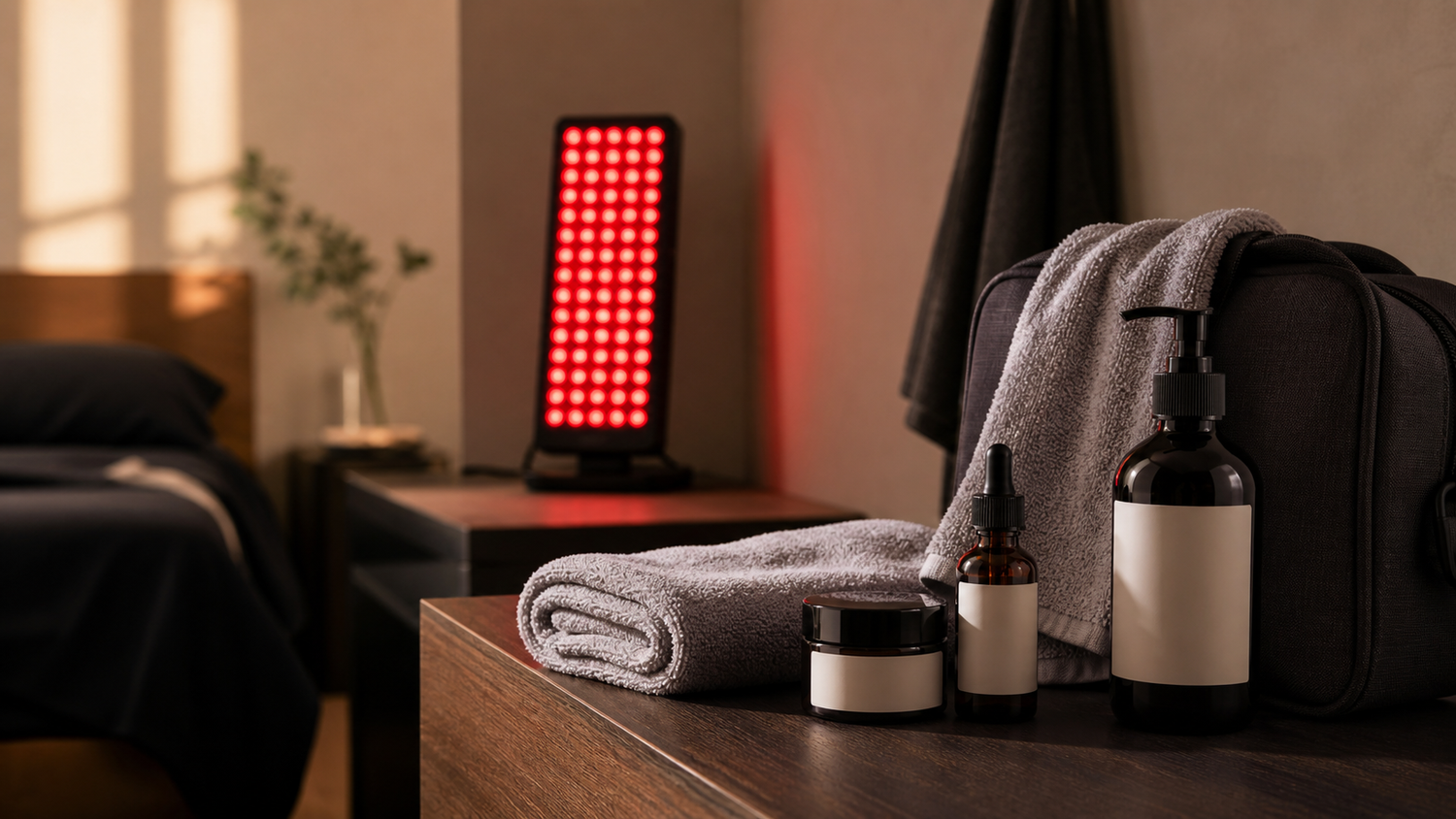
Red light wellness is often marketed with a skincare-forward, feminine tone, which can make men assume it is not for them. In practice, the routine is simple, low-effort, and easy to fit into an existing grooming or recovery habit. Here is a straightforward look at how men tend to use a panel, minus the fuss.
Key takeaways
- A red light routine is genuinely low-effort: a short seated or standing session that slots into an existing grooming or post-workout habit.
- Common areas of interest for men include the face and skin, the scalp, and post-training recovery for muscles and joints.
- Setup is the same as for anyone — a stable stand, the recommended distance, and a sensible session length; consistency does the work.
- Keep expectations realistic and comfort-first; this is a general wellness habit, not a quick fix.
Getting past the "not for me" idea
The format of red light wellness is about as unfussy as a habit gets: sit or stand near a panel for a few minutes, keep a comfortable distance, done. There is nothing to apply, learn, or perform. Framed that way, it fits neatly alongside the routines many men already have — a morning grooming block, or a wind-down after training. The beginner's guide applies equally to everyone; the principles do not change by audience.
Face and skin, without the ten-step routine
Plenty of men are interested in skin but uninterested in an elaborate regimen. A red light session is appealing precisely because it is passive — no layering of products required. If you do use skincare, our note on layering with common actives covers sequencing, but a simple clean-skin session is a perfectly reasonable starting point. Our skin wellness overview keeps it grounded.
Scalp and grooming interest
Scalp wellness is a common area of curiosity. Rather than make claims, we will point you to our research-based perspective on red light and scalp wellness, which lays out what is and isn't well established. As with everything here, the sensible approach is realistic expectations and a consistent, comfortable routine.
Recovery after training
For active men, the post-workout angle is often the entry point. A calm session can be a pleasant part of a wind-down, and our guides on muscle recovery and timing around training cover how people fit it around exercise. Keep it comfort-first: recommended distance, sensible length, and no urge to overdo it after a hard session.
A no-nonsense starter routine
If you want the simplest possible on-ramp: set the panel on a stable stand, sit or stand at the recommended distance, run a session of the length your device suggests a few times a week, and be consistent for several weeks before judging anything. That is the whole method. Our 12-week plan turns it into a schedule if you like structure.
Frequently asked questions
Is red light therapy good for men?
The routine is unisex — a short, low-effort session that slots into an existing grooming or post-workout habit; common areas of interest for men include the face and skin, the scalp, and post-training recovery, all using the same comfort-first principles.
How do men use a red light panel for skin?
A red light session is passive and needs no elaborate regimen: a simple clean-skin session at the recommended distance is a reasonable starting point, and if you use skincare, sequencing it around the session is optional rather than required.
Can men use red light for recovery after workouts?
Many active men use a calm session as part of a post-workout wind-down; keep it comfort-first with the recommended distance and a sensible session length, and avoid the urge to overdo it after a hard session.
What is a simple red light routine to start with?
Set the panel on a stable stand, sit or stand at the recommended distance, run a session of the length your device suggests a few times a week, and stay consistent for several weeks before judging results; consistency rather than intensity does the work.
Where SOLRA fits
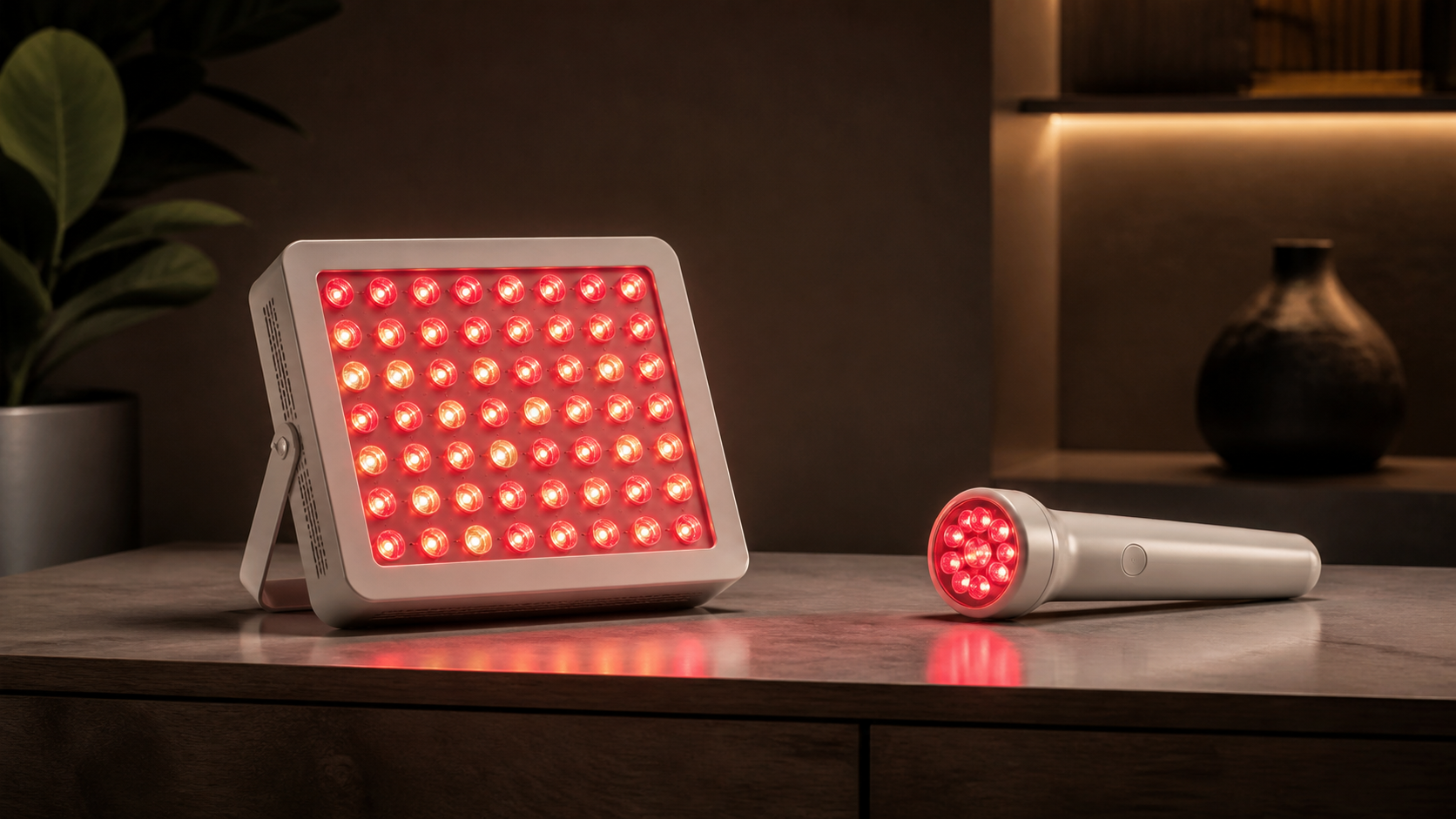
Choose the configuration that matches your space: a tabletop setup for compact, seated routines, or a floor stand for larger areas and full-body sessions. The SOLRA Red Light Panel is built around 660nm red light and 850nm near-infrared light, with setup options for panel-only use, tabletop placement, or a complete floor-stand kit.
Quick safety notes
Red light wellness routines should feel comfortable. Avoid staring directly into bright LEDs, follow your device instructions, and consult a qualified professional if you are pregnant, photosensitive, using light-sensitive medication, or managing a medical condition.
Wellness disclaimer: SOLRA products are general wellness devices and have not been evaluated by the FDA. This article is for educational purposes only and is not intended to diagnose, treat, cure, or prevent any disease. Consult a qualified healthcare professional before beginning a new wellness practice, especially if you have a medical condition or take medication.
About this guide. Written and maintained by the SOLRA Team, who design and support the SOLRA Red Light Panel (660nm red + 850nm near-infrared light). Our guides focus on practical, comfort-first routines and use general wellness language rather than medical claims. Always follow your device instructions and consult a qualified professional about any medical condition. Editorial review: SOLRA Team · Updated July 2026.

Leave a comment
This site is protected by hCaptcha and the hCaptcha Privacy Policy and Terms of Service apply.