
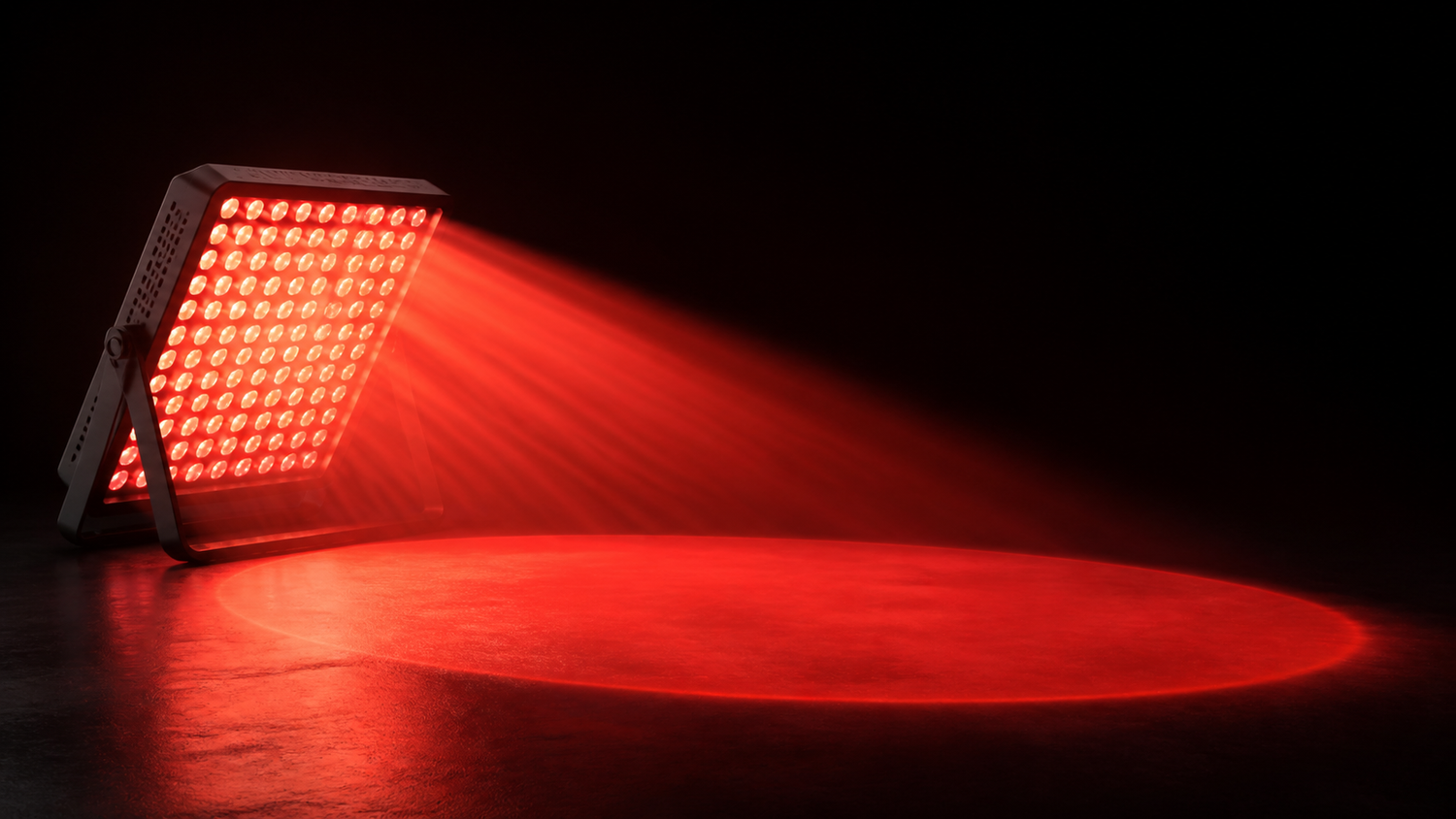
Wavelength and irradiance get most of the attention in red light panel specs, but two quieter factors decide how much of your body a panel actually reaches in one session: beam angle and coverage area. Understanding them helps you set the right distance and pick a panel that suits how you want to use it.
Key takeaways
- Beam angle describes how widely light spreads from the LEDs; a narrower angle concentrates light over a smaller area, while a wider angle spreads it over more but less intensely.
- Coverage area is how much of your body the panel effectively lights up at your chosen distance — it grows as you move back, but intensity drops as it spreads.
- There is a trade-off: sitting closer gives a smaller, more intense area; moving back covers more of the body with less intensity per spot.
- Match the panel and distance to your goal — a focused facial or joint routine wants concentration; a full-body routine wants coverage.
What beam angle actually means
Every LED emits light in a cone, and beam angle describes how wide that cone is. A narrower beam angle keeps light concentrated over a smaller footprint, so intensity stays higher in that spot. A wider beam angle spreads the same light over a larger footprint, so any single spot receives less. Neither is "better" in the abstract — they suit different uses. This works hand in hand with irradiance, which measures how much light actually reaches a given point.
Coverage area and distance are linked
Coverage area is the practical result: how much of your body the panel lights up at the distance you sit. As you move back, the lit area grows — but because light spreads out with distance, intensity at any single point falls at the same time. Move closer and you get a smaller, more intense area; move back and you get a broader, gentler one. This is the same distance relationship covered in our distance guide, seen from the coverage side.
The core trade-off at a glance
| Your setup | Coverage area | Intensity per spot | Best for |
|---|---|---|---|
| Closer to the panel | Smaller | Higher | Focused face, hands, or a single joint |
| Farther from the panel | Larger | Lower | Broader areas, full-body routines |
| Wider beam angle | Larger footprint | Spread thinner | Covering more at once |
| Narrower beam angle | Smaller footprint | Concentrated | Targeting one area |
Matching coverage to how you'll use it
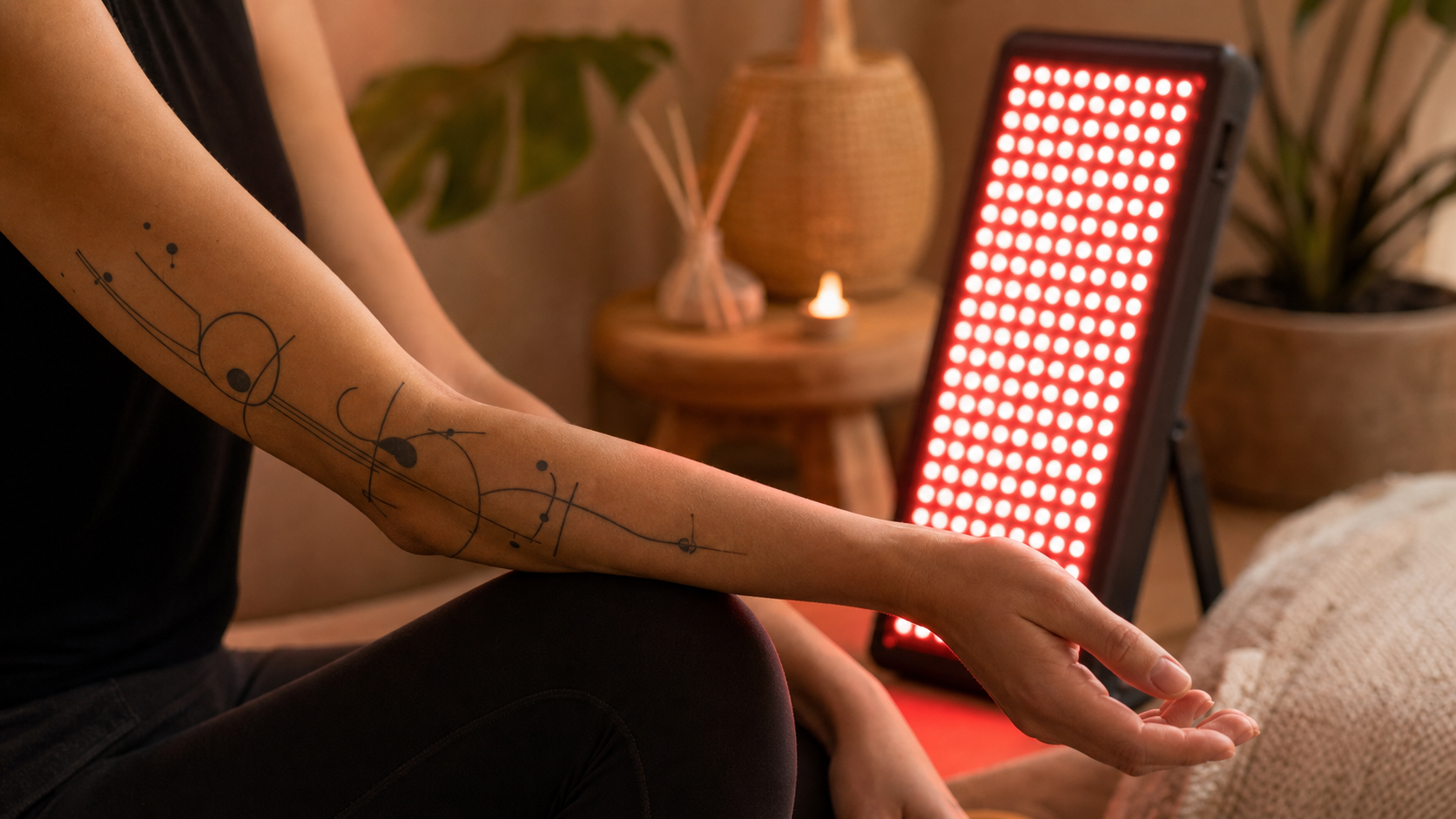
The right balance depends on your routine. If you mostly do focused sessions — the face, the hands, a single area — concentration matters more than sprawl, and a closer position over a smaller area suits you. If you want to cover the back, legs, or most of the body in one session, panel size and coverage become the priority, and you will typically sit a bit farther back. Our panel size guide and how to choose a panel both tie into this decision.
A simple way to set your distance
In practice, pick the distance that covers the area you care about while staying comfortable, then keep it consistent. If you are focusing on one spot, a closer, more concentrated position works; if you want to cover more, step back until the lit area includes everything you are targeting. Consistency at a sensible distance beats constantly chasing the "perfect" spot.
Frequently asked questions
What is beam angle on a red light panel?
Beam angle describes how widely light spreads from the LEDs: a narrower angle keeps light concentrated over a smaller footprint so intensity stays higher there, while a wider angle spreads the same light over a larger footprint so any single spot receives less.
How much area does a red light panel cover?
Coverage area depends on the panel and your distance — it grows as you move back because the light spreads out, but intensity at any single point drops at the same time, so closer gives a smaller more intense area and farther gives a broader gentler one.
Should I sit close or far from a red light panel?
It depends on your goal: sit closer for a smaller, more intense area when focusing on the face, hands, or a single joint, and move back to cover more of the body for a full-body routine; whichever you choose, keep the distance consistent.
Does a bigger panel mean better coverage?
A larger panel generally lights up more of the body at once, which matters for full-body routines, while a focused routine cares more about concentration than sprawl; match panel size and beam angle to whether you want targeted or broad coverage.
Where SOLRA fits
Choose the configuration that matches your space: a tabletop setup for compact, seated routines, or a floor stand for larger areas and full-body sessions. The SOLRA Red Light Panel is built around 660nm red light and 850nm near-infrared light, with setup options for panel-only use, tabletop placement, or a complete floor-stand kit.
Quick safety notes
Red light wellness routines should feel comfortable. Avoid staring directly into bright LEDs, follow your device instructions, and consult a qualified professional if you are pregnant, photosensitive, using light-sensitive medication, or managing a medical condition.
About this guide. Written and maintained by the SOLRA Team, who design and support the SOLRA Red Light Panel (660nm red + 850nm near-infrared light). Our guides focus on practical, comfort-first routines and use general wellness language rather than medical claims. Always follow your device instructions and consult a qualified professional about any medical condition. Editorial review: SOLRA Team · Updated July 2026.

Leave a comment
This site is protected by hCaptcha and the hCaptcha Privacy Policy and Terms of Service apply.