
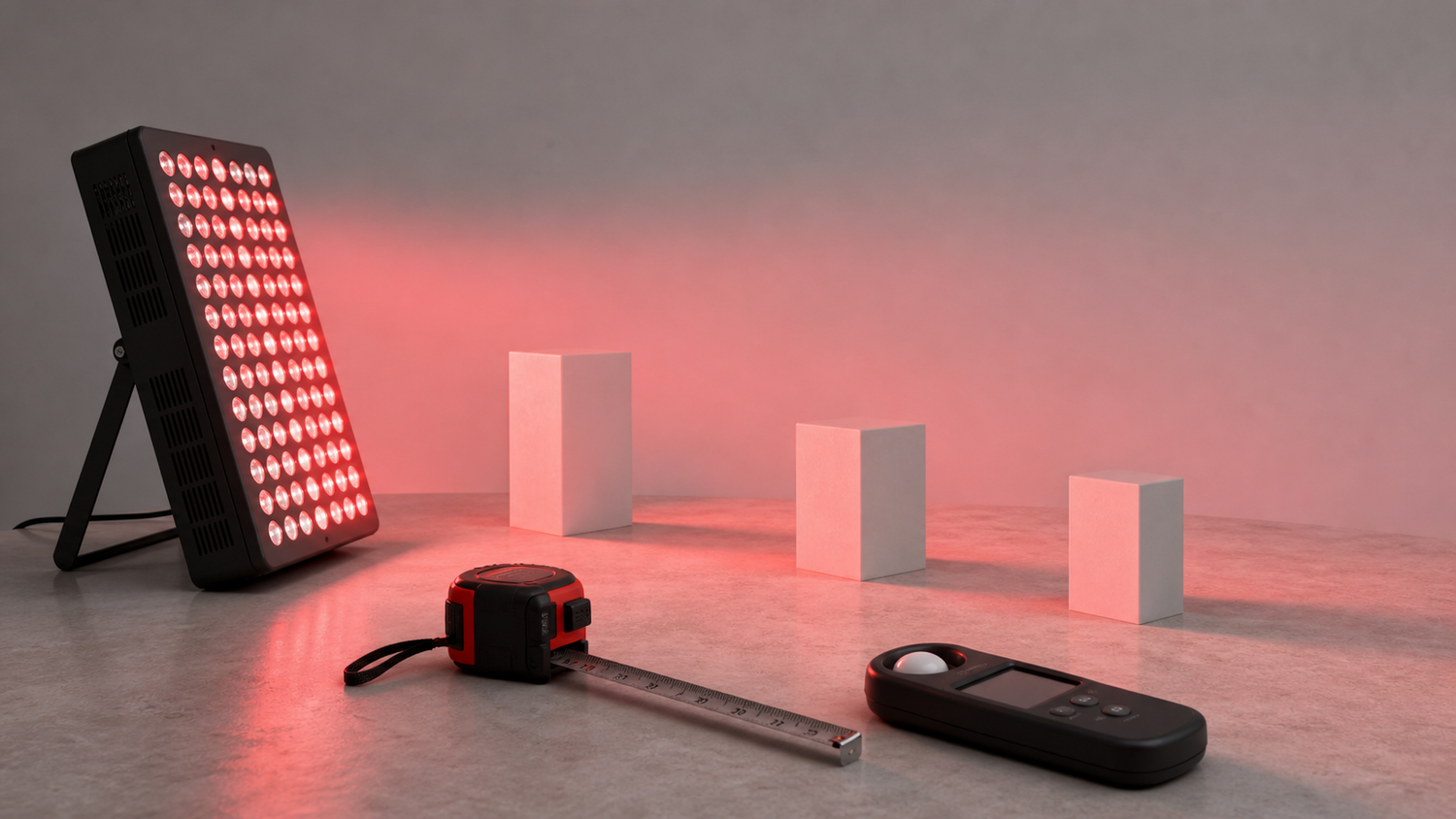
Shopping for a panel means running into terms like irradiance, wavelength, and coverage. They sound technical, but the practical ideas behind them are straightforward, and understanding them helps you compare panels with confidence instead of guessing.
Key takeaways
- Irradiance describes how much light energy reaches a surface at a given distance, so the figure depends on how far you sit from the panel.
- Always check the distance at which an irradiance figure was measured and compare panels at the same distance.
- Wavelength, in nanometers, identifies the light type; the two most common are 660nm red and 850nm near-infrared, often combined in one device.
- Coverage relates to panel size and layout – larger panels reach more of the body, while compact ones suit targeted seated routines.
- Sessions should feel comfortable; avoid staring into bright LEDs and consult a professional if pregnant, photosensitive, or managing a condition.
Irradiance: how much light reaches you
Irradiance describes how much light energy actually reaches a surface at a given distance. It is the spec that connects a panel's output to your real session, because the number changes depending on how far you sit. A figure measured right at the panel face will look very different from one measured at a typical session distance.
- Always check the distance at which an irradiance figure was measured.
- Compare panels at the same distance, not different ones.
- Higher irradiance generally means shorter sessions at that distance.
Wavelength: which light the panel emits
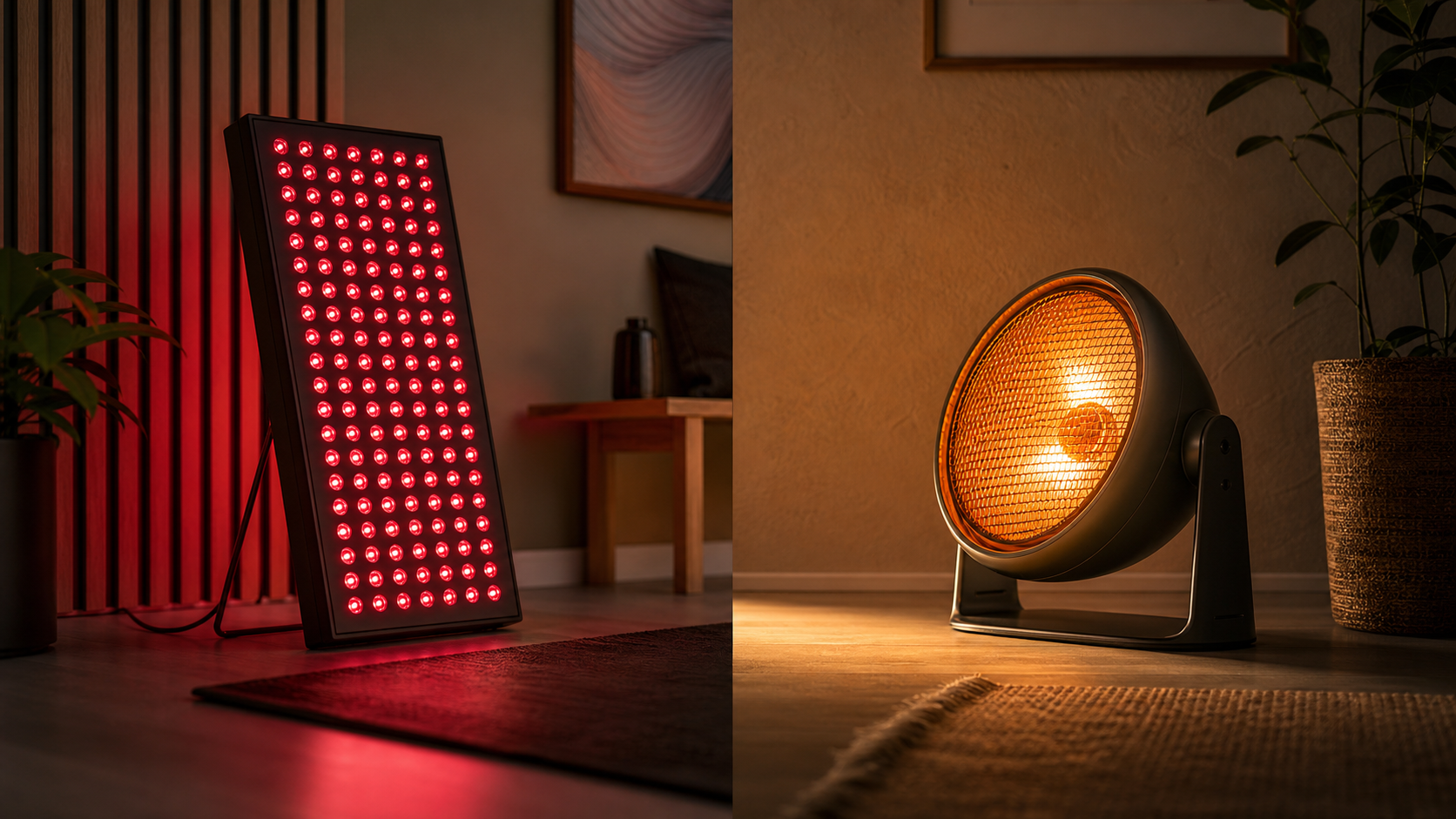
Wavelength, measured in nanometers, tells you the type of light. The two most common in wellness panels are 660nm red light and 850nm near-infrared light. Many panels combine both so you get visible red and the invisible near-infrared range in one device.
Coverage: how much of you the light reaches
Coverage is about panel size and layout: a larger panel reaches more of your body at once, while a compact one suits targeted, seated routines. Coverage does not change the quality of the light, only how much area you can treat in a single session.
Reading specs without overthinking
You do not need to become an engineer to choose well. Confirm the wavelengths, look for an irradiance figure with a stated distance, and match the panel size to your space and goals. Clear, honest specifications are themselves a good sign, because they show the maker is comfortable being measured.
Putting it together
The right panel is the one whose specs fit your routine: comfortable distance, the wavelengths you want, and enough coverage for the areas you care about. Once you know what the numbers mean, comparison shopping becomes much simpler.
Frequently asked questions
What does irradiance mean for a red light panel?
Irradiance describes how much light energy actually reaches a surface at a given distance, and the figure changes depending on how far you sit, so a reading at the panel face looks very different from one at a typical session distance.
How should I compare irradiance figures between panels?
Always check the distance at which an irradiance figure was measured and compare panels at the same distance, since higher irradiance generally means shorter sessions at that distance.
What do wavelength and coverage tell me?
Wavelength, measured in nanometers, tells you the type of light, commonly 660 nm red and 850 nm near-infrared, while coverage relates to panel size and layout and affects how much area you can treat at once rather than the quality of the light.
How do I read panel specs without overthinking?
Confirm the wavelengths, look for an irradiance figure with a stated distance, and match the panel size to your space and goals, since clear and honest specifications are themselves a good sign.
Where SOLRA fits
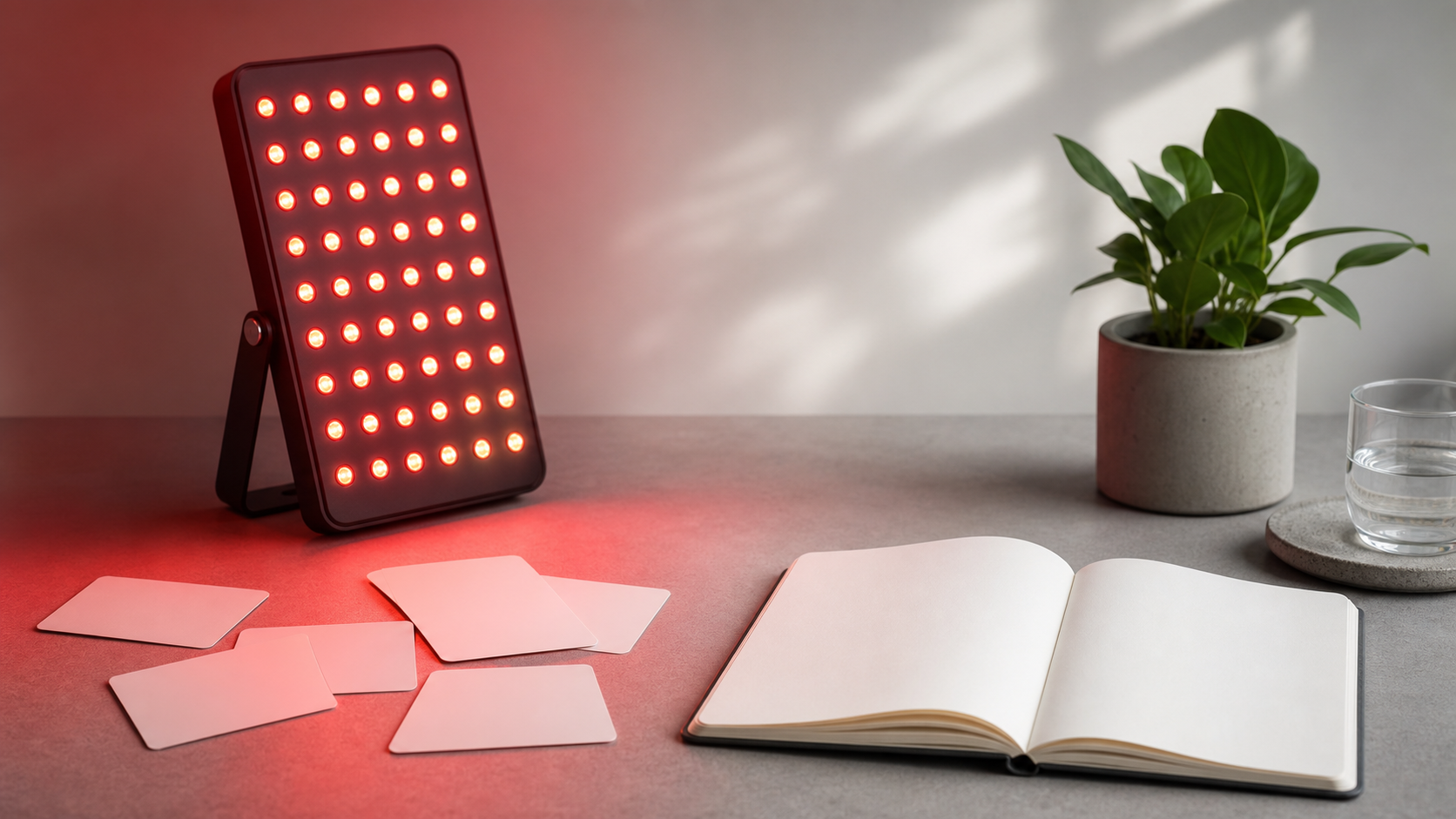
Choose the configuration that matches your space: a tabletop setup for compact, seated routines, or a floor stand for larger areas and full-body sessions. The SOLRA Red Light Panel is built around 660nm red light and 850nm near-infrared light, with setup options for panel-only use, tabletop placement, or a complete floor-stand kit.
Quick safety notes
Red light wellness routines should feel comfortable. Avoid staring directly into bright LEDs, follow your device instructions, and consult a qualified professional if you are pregnant, photosensitive, using light-sensitive medication, or managing a medical condition.
Wellness disclaimer: SOLRA products are general wellness devices and have not been evaluated by the FDA. This article is for educational purposes only and is not intended to diagnose, treat, cure, or prevent any disease. Consult a qualified healthcare professional before beginning a new wellness practice, especially if you have a medical condition or take medication.
About this guide. Written and maintained by the SOLRA Team, who design and support the SOLRA Red Light Panel (660nm red + 850nm near-infrared light). Our guides focus on practical, comfort-first routines and use general wellness language rather than medical claims. Always follow your device instructions and consult a qualified professional about any medical condition. Editorial review: SOLRA Team · Updated June 2026.

Leave a comment
This site is protected by hCaptcha and the hCaptcha Privacy Policy and Terms of Service apply.