
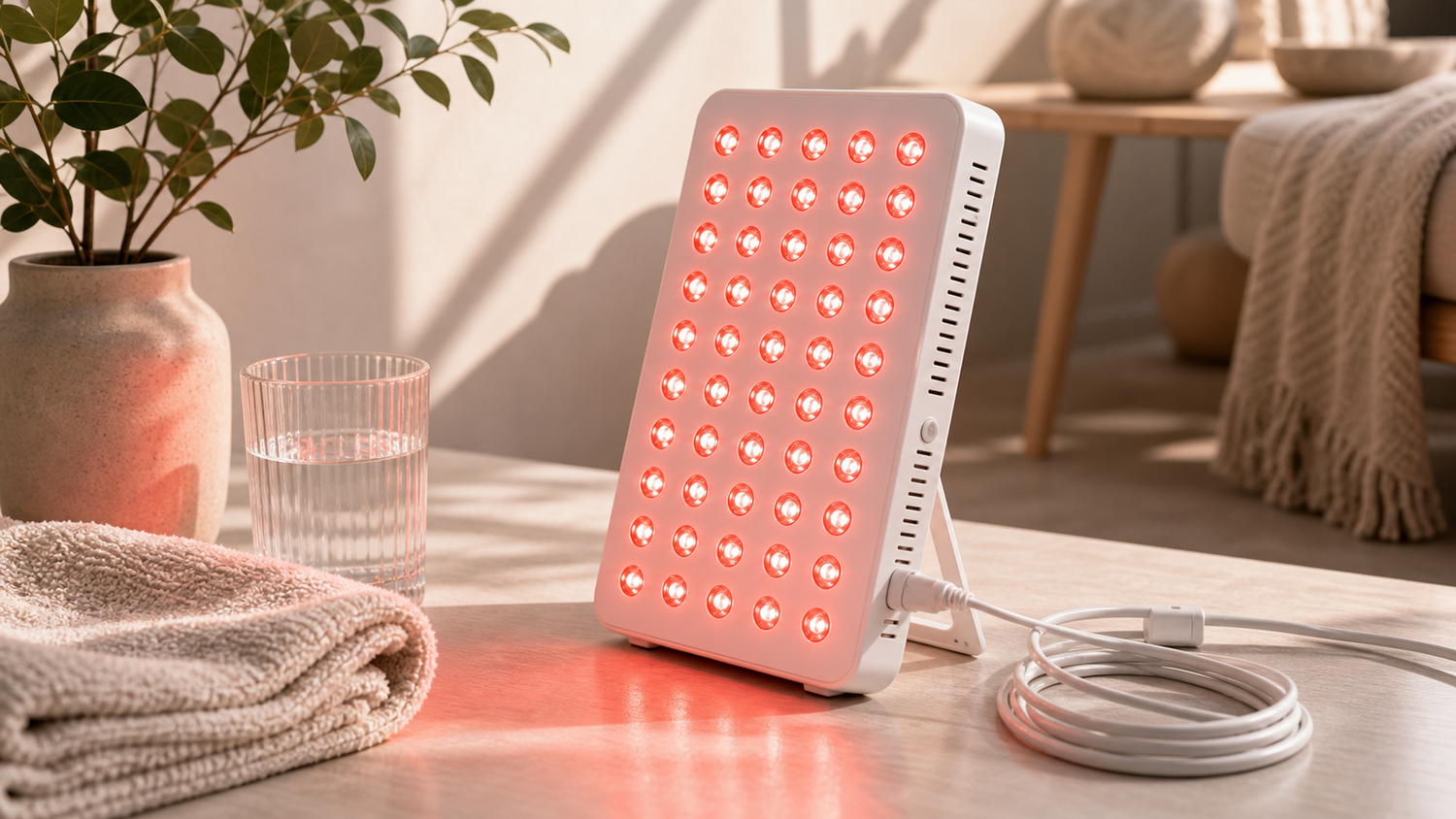
Buying guides usually focus on which panel to choose. This one is about what daily ownership actually feels like once the panel is in your home: how much power it uses, whether it gets warm, how loud it is, and how it fits into a normal room. Knowing this ahead of time makes the routine easier to stick with.
Key takeaways
- Daily ownership is described as low-effort: modest power use, gentle warmth, a quiet fan, and a stable spot in the home.
- You only draw power during a session, so for most households electricity is not the deciding factor – consistency and convenience matter more.
- LED panels produce some warmth many find pleasant; keep vents clear, and increase distance or end the session if it ever feels too warm.
- Many panels include cooling fans, so expect a soft, steady hum, worth considering for very quiet spaces like a bedroom.
- Maintenance is light – keep the surface clean, vents clear of dust, and store it somewhere dry when not in use.
Power use and your electricity bill
A home red light panel is a modest electrical device, especially compared with appliances that heat or cool. Because sessions are short and you only run it while you are using it, the day-to-day cost is small for most households.
- You only draw power during a session, not all day.
- Short, consistent sessions keep total runtime low.
- Check your panel's listed wattage if you want to estimate cost precisely.
For most home users, electricity is not the deciding factor. Consistency and convenience matter more.
Heat: warm, not hot
LED panels do produce some warmth, and you may feel gentle heat during a session, which many people find pleasant. The panel itself should stay within a normal operating range as long as it can ventilate. Keep the vents clear, avoid covering the back, and let it breathe during use.
If anything ever feels too warm, increase your distance from the panel or end the session. Comfort is the right guide.
Noise: usually just a quiet fan
Many panels include cooling fans, so expect a soft, steady hum rather than silence. For most rooms this fades into the background, but it is worth knowing if you plan to use the panel somewhere very quiet, like a bedroom during a wind-down routine.
If quiet matters to you, factor fan noise into where you place the panel.
Space and placement at home
Think about where the panel will live before it arrives. A tabletop placement needs a stable surface near an outlet; a floor stand needs a bit of clear floor space and room to sit or stand in front of it. The easiest setups are the ones that do not require rearranging the room each time.
A permanent or semi-permanent spot makes the habit far easier, because there is no setup friction between you and the session.
Maintenance and daily handling
Ongoing care is light: keep the surface clean, wipe it gently when needed, keep vents clear of dust, and store it somewhere dry if it is not on permanent display. A panel that is easy to reach and easy to clean is a panel you will actually use.
What ownership really comes down to
The practical reality of owning a panel is less dramatic than the spec sheet: modest power use, gentle warmth, a quiet fan, and a stable spot in your home. Once it has a place and a routine, it becomes a low-effort part of the day.
Frequently asked questions
Will a red light panel raise my electricity bill much?
For most households the day-to-day cost is small because you only draw power during a session, not all day, and short consistent sessions keep total runtime low.
Does the panel get hot during use?
LED panels produce some gentle warmth that many people find pleasant, and the panel should stay within a normal operating range as long as it can ventilate, so keep the vents clear and increase distance or end the session if anything feels too warm.
How loud is a red light panel?
Many panels include cooling fans, so expect a soft steady hum rather than silence, which usually fades into the background but is worth considering if you plan to use it somewhere very quiet like a bedroom.
What maintenance does owning a panel involve?
Ongoing care is light: keep the surface clean and wipe it gently when needed, keep vents clear of dust, and store it somewhere dry if it is not on permanent display.
Where SOLRA fits
For everyday ownership, choose the configuration that matches your space: tabletop for compact, seated routines, or a floor stand for larger areas. The SOLRA Red Light Panel is built around 660nm red light and 850nm near-infrared light, with setup options for panel-only use, tabletop placement, or a complete floor-stand kit.
Quick safety notes
Red light wellness routines should feel comfortable. Avoid staring directly into bright LEDs, follow your device instructions, and consult a qualified professional if you are pregnant, photosensitive, using light-sensitive medication, or managing a medical condition.
About this guide. Written and maintained by the SOLRA Team, who design and support the SOLRA Red Light Panel (660nm red + 850nm near-infrared light). Our guides focus on practical, comfort-first routines and use general wellness language rather than medical claims. Always follow your device instructions and consult a qualified professional about any medical condition. Editorial review: SOLRA Team · Updated June 2026.


Leave a comment
This site is protected by hCaptcha and the hCaptcha Privacy Policy and Terms of Service apply.