
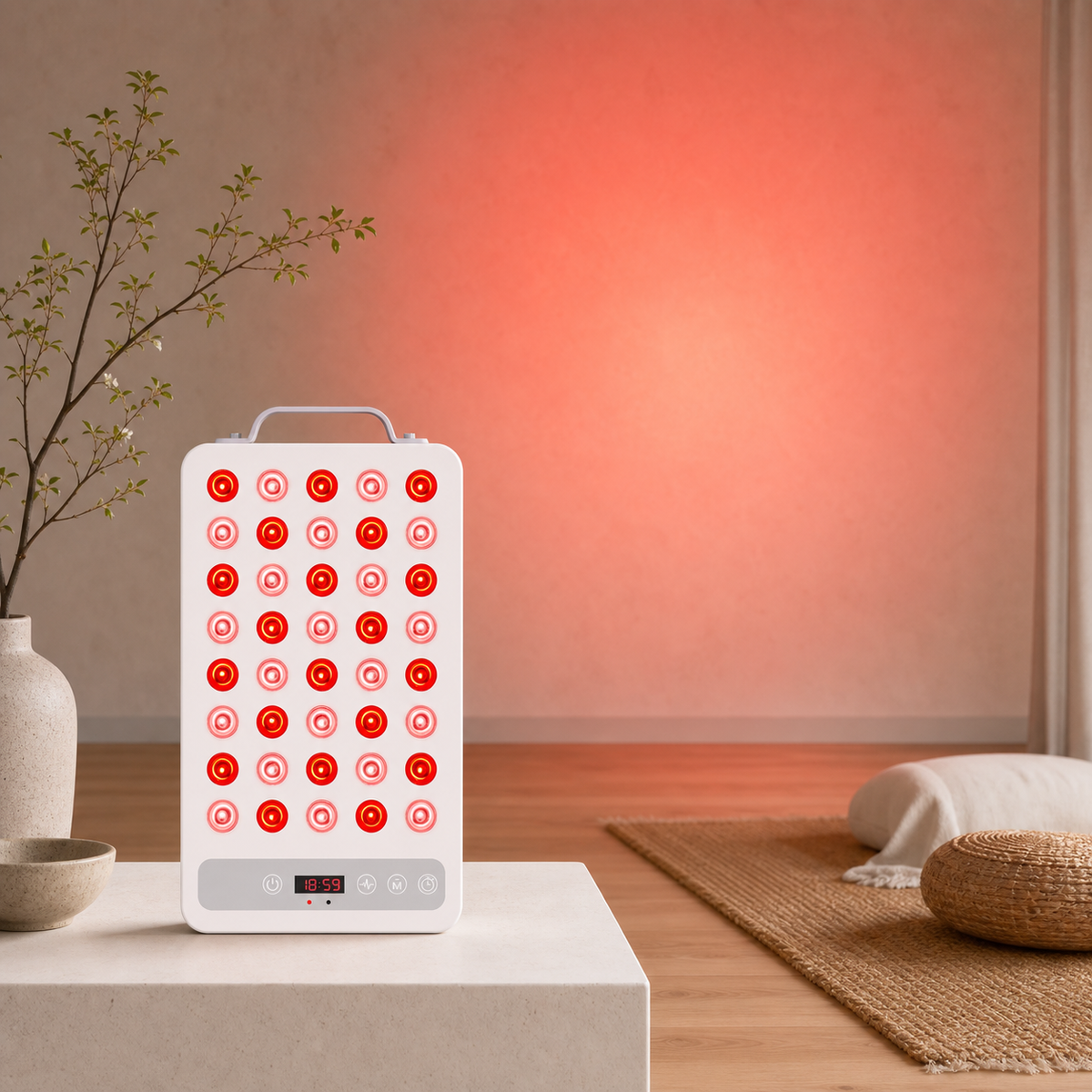
At the larger end of the market you will see full-body red light beds and towers — the big, spa-style installations that surround you with light. They look impressive, and it is fair to wonder whether a home panel can really compete. The honest answer is that they solve different problems for different budgets and spaces. Here is how a panel stacks up against a full-body setup.
Key takeaways
- Full-body beds and towers surround you with light for whole-body coverage in one go, but they are large, expensive, and usually a clinic or serious-home-gym investment.
- A panel covers a meaningful area at a time and is repositioned or approached area-by-area — far more practical for a home, a budget, and limited space.
- For most people at home, a well-specified panel delivers a comfortable, consistent routine without the footprint or cost of a full-body system.
- Choose by space, budget, and whether whole-body-at-once coverage is genuinely a priority for you.
What a full-body bed or tower is for
A full-body system — a bed you lie in or a tower you stand beside — is designed to bathe most of the body in light at once, so a single session covers everything without repositioning. That is its real advantage: convenience of coverage. The trade-offs are equally real: they are large, they are expensive, and they need dedicated space and often professional installation. They make the most sense in a clinic, studio, or a committed home-gym build, not a spare corner of a bedroom.
What a panel does differently
A red light panel takes the practical route. It covers a substantial area — your face and chest, your back, a set of muscles — and you either reposition it or shift how you sit to move between areas across a routine. That is slightly less "one-and-done" than a full-body bed, but it is dramatically more livable at home: it fits a normal room, costs a fraction as much, and stores easily. For the vast majority of home routines, that trade is well worth it, and panel coverage and beam angle plus panel size let you scale how much you cover.
Panel vs full-body system at a glance
| Factor | Red light panel | Full-body bed / tower |
|---|---|---|
| Coverage per session | A large area at a time; reposition for more | Whole body at once |
| Space needed | Fits a normal room; stores easily | Large, dedicated space |
| Cost | Home-friendly | Much higher; often clinic-level |
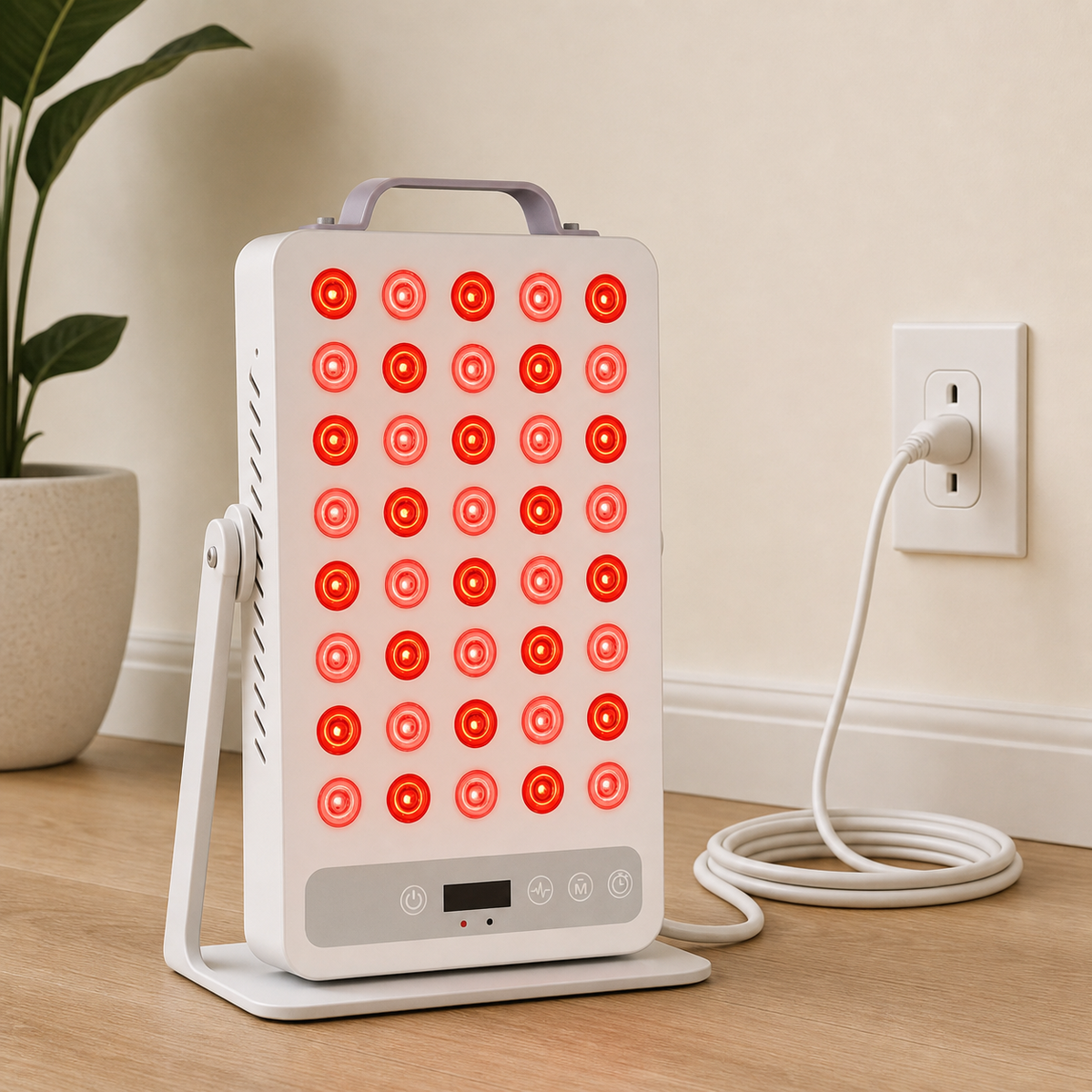
| Setup | Plug in on a stand | Often professional install |
| Best for | Home routines, most people | Clinics, studios, dedicated builds |
Does "whole body at once" actually matter to you?
This is the question that settles it. If covering the entire body in a single, no-repositioning session is a genuine priority — and you have the space and budget — a full-body system delivers that. But for most people, a routine that focuses on the areas they care about, repositioning a panel as needed, is completely satisfying and far more realistic. Be honest about whether you are paying for convenience you will truly use, or for a spa aesthetic. Our cost: home vs clinic guide is a useful companion here.
The practical verdict for home use
For a home routine, a well-specified panel is the sensible choice for almost everyone: it delivers a comfortable, consistent session without the footprint, cost, or installation of a full-body bed. Reserve the full-body systems for settings that can justify them — a clinic, a studio, or a dedicated home gym where whole-body-at-once coverage genuinely earns its space. Match the tool to your space and budget, and a panel wins the practicality contest at home. If you're weighing where to put one, our home setup guide helps.
Frequently asked questions
Is a red light panel as good as a full-body bed?
They solve different problems: a full-body bed covers the whole body at once but is large, expensive, and usually clinic-level, while a panel covers a large area at a time and is repositioned for more — for most home routines a well-specified panel delivers a comfortable, consistent session at a fraction of the cost and space.
Why are full-body red light systems so expensive?
They are large installations designed to surround the body with light, needing dedicated space and often professional setup, which drives cost far above a home panel; they make the most sense in clinics, studios, or committed home-gym builds rather than a typical room.
Can a panel cover the whole body?
A panel covers a substantial area at a time, and you reposition it or shift how you sit to move between areas across a routine; that is slightly less one-and-done than a full-body bed but far more practical at home, and panel size and distance let you scale how much you cover.
Which should I buy for home use?
For almost everyone at home, a well-specified panel is the sensible choice because it fits a normal room, costs far less, and needs no special installation; reserve full-body beds and towers for settings that can justify their space and price and where whole-body-at-once coverage is a genuine priority.
Where SOLRA fits
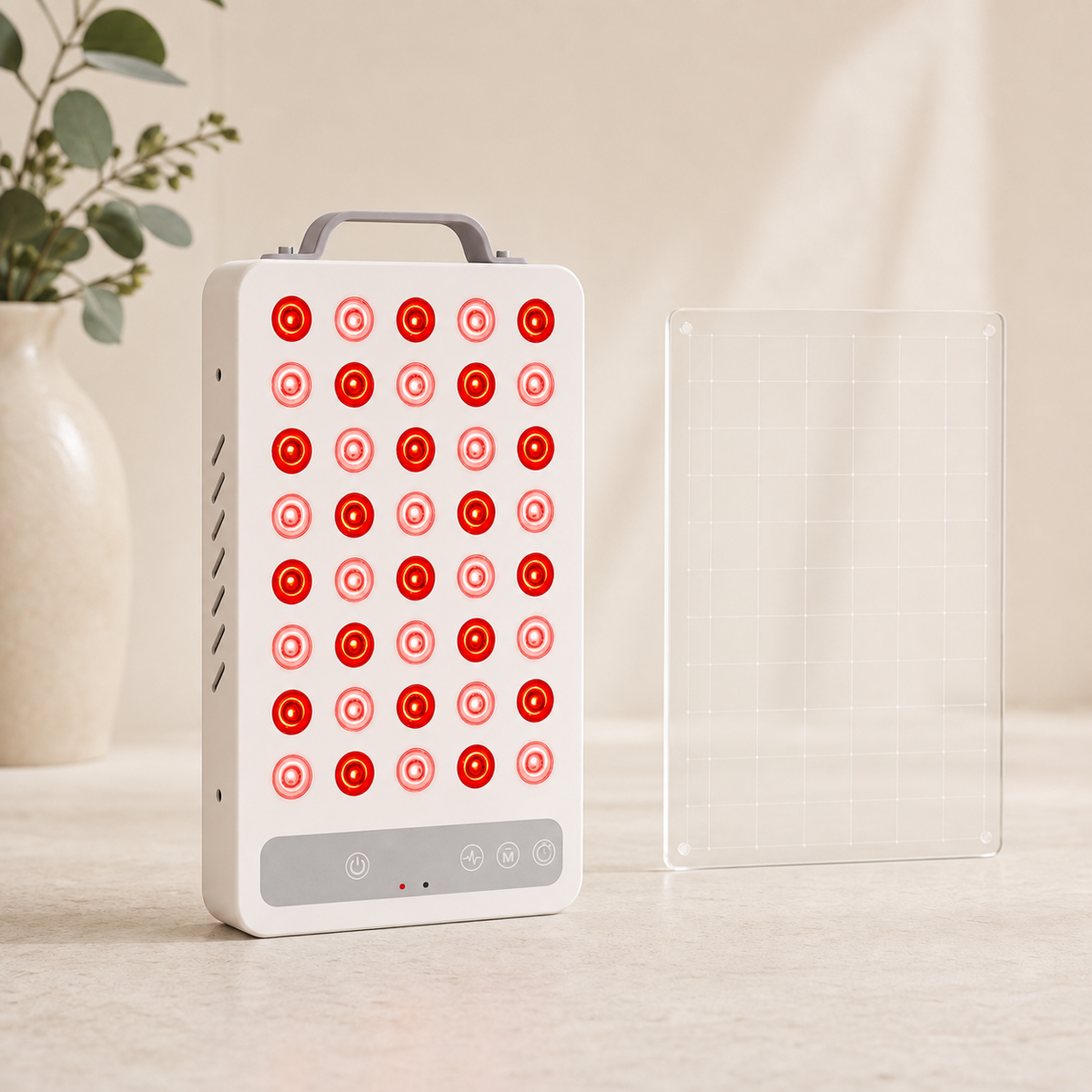
Choose the configuration that matches your space: a tabletop setup for compact, seated routines, or a floor stand for larger areas and full-body sessions. The SOLRA Red Light Panel is built around 660nm red light and 850nm near-infrared light, with setup options for panel-only use, tabletop placement, or a complete floor-stand kit.
Quick safety notes
Red light wellness routines should feel comfortable. Avoid staring directly into bright LEDs, follow your device instructions, and consult a qualified professional if you are pregnant, photosensitive, using light-sensitive medication, or managing a medical condition.
Wellness disclaimer. SOLRA content and products are intended for general wellness and comfort. They are not medical devices and are not intended to diagnose, treat, cure, or prevent any disease or health condition. These statements have not been evaluated by the Food and Drug Administration. Individual experiences vary; consult a qualified healthcare professional before starting any new wellness routine, especially if you are pregnant, photosensitive, taking light-sensitive medication, or managing a medical condition.
Wellness disclaimer: SOLRA products are general wellness devices and have not been evaluated by the FDA. This article is for educational purposes only and is not intended to diagnose, treat, cure, or prevent any disease. Consult a qualified healthcare professional before beginning a new wellness practice, especially if you have a medical condition or take medication.
About this guide. Written and maintained by the SOLRA Team, who design and support the SOLRA Red Light Panel (660nm red + 850nm near-infrared light). Our guides focus on practical, comfort-first routines and use general wellness language rather than medical claims. Always follow your device instructions and consult a qualified professional about any medical condition. Editorial review: SOLRA Team · Updated July 2026.

Leave a comment
This site is protected by hCaptcha and the hCaptcha Privacy Policy and Terms of Service apply.