
Last Updated: May 20, 2026
Key takeaways
- LED density mainly affects how uniformly light spreads across the panel surface – it does not, by itself, determine how strong or effective a panel is.
- The article ranks wavelength accuracy (true 660 nm and 850 nm), honest irradiance at 6 inches, and dual-wavelength configuration above density.
- Two panels with the same LED count but different sizes have different densities and deliver different total power.
- For most home users it suggests a mid-size dual-wavelength panel in the $150–300 range balances coverage, performance, and price.
- Red flags discussed include vague wavelength language, irradiance claims without a measurement distance, and short or missing warranties.
When choosing a red light wellness panel, LED density — the number of LEDs per square inch — comes up alongside other specs like wavelengths, irradiance, and build quality. This guide walks through what actually matters, what's marketing fluff, and how to evaluate panels at different price points without overpaying or underbuying.
What LED density actually affects
LED density determines how uniformly light is distributed across the panel surface. Higher density usually means more even coverage and fewer dark spots between LEDs. It does not, by itself, determine how strong or effective a panel is.
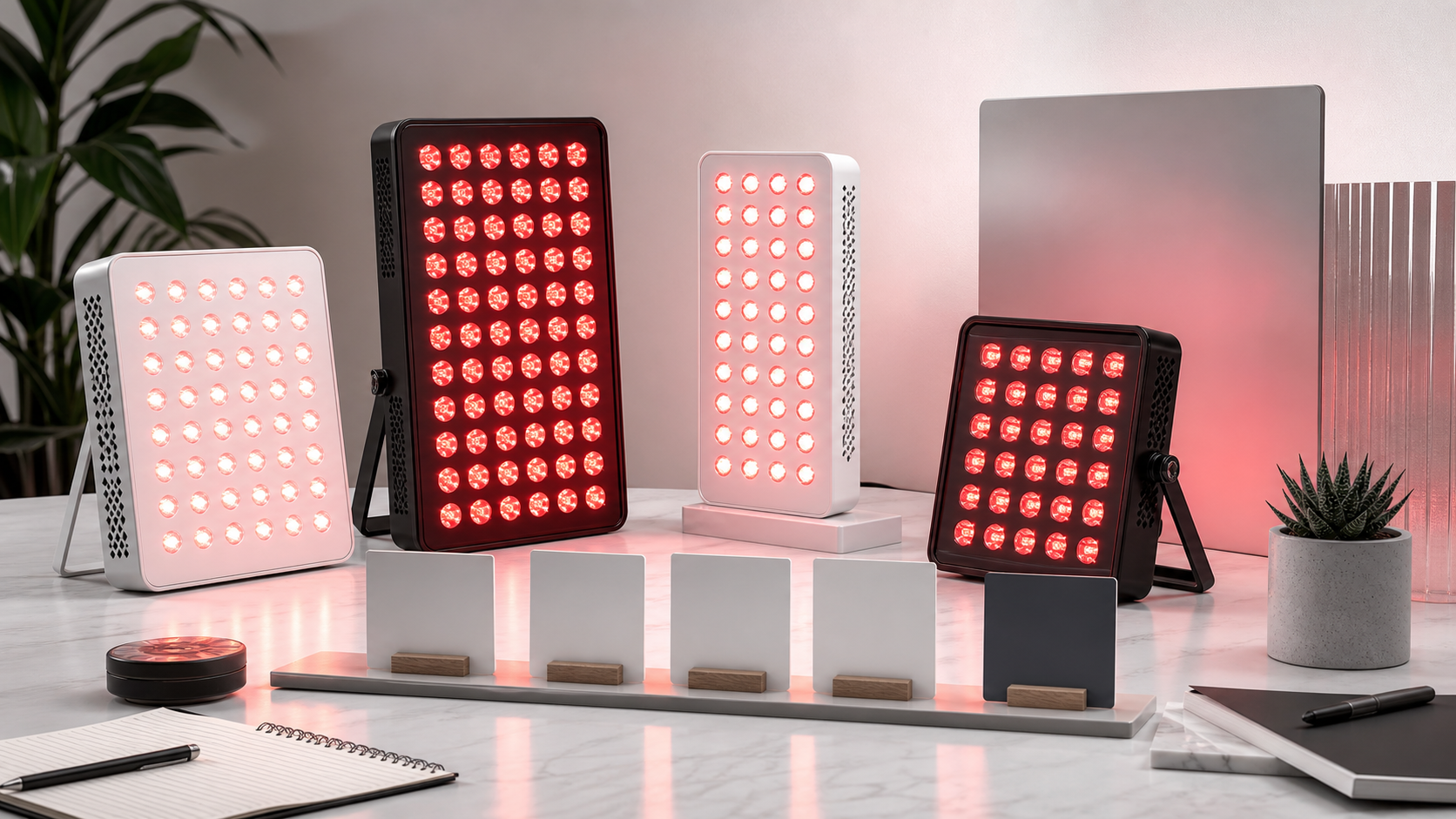
Two panels with the same total LED count can have very different densities depending on panel size. A 12x6 inch panel with 40 LEDs has higher density than a 24x12 inch panel with the same 40 LEDs. The smaller panel will have more uniform light across its surface; the larger panel will cover more area but with more spacing between LEDs.
Specs that actually matter (in priority order)
1. Wavelength accuracy
The single most important spec. Quality panels deliver true 660 nm and 850 nm wavelengths with narrow bandwidths. Cheaper panels often have wavelength drift — a panel claiming 660 nm may actually emit centered at 645 nm or 675 nm, with wide bandwidth distribution. Wavelength drift reduces how well the panel interacts with cytochrome c oxidase absorption peaks.
Look for: clear wavelength specs in product listings ("660 nm ± 5 nm" or similar). Avoid vague language like "red light spectrum." Our wavelength guide covers why specific wavelengths matter.
2. Irradiance (honest, at realistic distance)
Irradiance — the power delivered per square centimeter of skin — determines how much dose you receive per minute of session. The key word is "honest." Many budget panels report irradiance at zero distance (panel touching skin) or under ideal lab conditions. Real-world irradiance at typical 6–12 inch session distance is often 30–60% lower than the headline figure.
Look for: irradiance reported at 6 inches (the standard reference distance). A panel honestly rated at 50–100 mW/cm² at 6 inches outperforms one claiming 200 mW/cm² at the surface.
3. Dual wavelength configuration
Quality panels deliver both 660 nm (surface) and 850 nm (deeper tissue). Single-wavelength panels limit your application range. For most home users, dual wavelength is worth a small premium.
4. LED quality and binning
Premium-bin LEDs from established manufacturers (Osram, Cree, Lumileds) maintain output longer. Many budget panels use generic LEDs with no quality binning, which is invisible to the buyer but very real over a year of use. Output degradation is a real factor in long-term panel performance.
5. LED density
Now it gets attention — but after the four specs above, not before. Higher density means more uniform coverage. For panels in similar size ranges, more LEDs are usually better. But density alone doesn't make a panel "better" if wavelength accuracy or irradiance is poor.
6. Build quality and thermal management
Metal housing, proper cooling, electrical safety certifications. Panels that run uncomfortably hot are a safety concern and reduce LED longevity. Build quality affects how long the device survives normal home use.
7. Warranty and return policy
30+ day returns and 2+ year warranty signal manufacturer confidence in the device. Some Amazon-only dropshipped brands have no real warranty or support channel beyond the listing.
What LED density does NOT tell you
- Total output: Two panels with same density but different sizes deliver different total power
- Wavelength accuracy: A panel can be dense with poor wavelength quality
- Irradiance per spot: Depends on LED type and driver, not just count
- Build quality: Density doesn't reveal anything about housing or thermal management
- Longevity: LED count means nothing if the LEDs are low-quality
Typical density ranges
| Panel type | Typical LED count | Density notes |
|---|---|---|
| Mini panel (~12x6 in) | 20–40 LEDs | High density, focused area |
| Mid-size (~14x8 in) | 40–100 LEDs | Sweet spot for most home use |
| Large (~24x12 in) | 120–250 LEDs | Wider coverage, lower per-inch density |
| XL (~36+ in) | 250–1000+ LEDs | Whole-body coverage |
The honest framing for choosing a panel
Most home buyers do better with a mid-size, dual-wavelength panel ($150–300) than with a tiny ultra-dense panel or an oversized full-body panel. Reasons:
- Mid-size covers face + upper body in single position
- Dual wavelength means flexibility across applications
- Pricing in this range usually includes verified specs and real warranty
- Session times stay practical (10–20 min total)
- Storage and use are practical at home
Our panel size guide covers when to scale up or down. Our cheap panels guide covers what to watch out for at the low end.
Red flags when shopping
- Irradiance claims without specifying measurement distance
- "Red light spectrum" or vague wavelength language
- No warranty or warranty terms shorter than 1 year
- No real customer support contact, only an Amazon product page
- Marketing emphasis on benefits without supporting specs
- Reviews that are uniformly recent and uniformly five-star
- Suspiciously high LED count for the panel size (suggests low-quality LEDs)
- Specific medical claims (a red flag for both quality and regulatory compliance)
What the SOLRA Red Light Panel delivers
- 40 high-output dual-chip LEDs at verified 660 nm + 850 nm wavelengths
- 200W power output with strong irradiance
- Built-in timer (5, 10, 15, 20 minute presets)
- Low EMF design
- Quiet cooling
- 2-year warranty + 60-day money-back guarantee
- Free US shipping
- $159-229 depending on stand configuration
When to consult a healthcare professional
Red light therapy panels are general wellness devices, not medical interventions. Consult a qualified healthcare professional before starting any new wellness practice if you have any diagnosed medical condition, take photosensitizing medications, are pregnant or breastfeeding, or have any concerns about how red light might interact with your specific situation.
The bottom line
LED density is one factor among several in choosing a red light panel. Wavelength accuracy, honest irradiance, dual wavelength configuration, and LED quality matter more than density alone. For most home users, a mid-size dual wavelength panel in the $150–300 range delivers the right balance of coverage, performance, price, and practicality.
The SOLRA Red Light Panel sits in that range with verified specs, honest irradiance reporting, and a 60-day money-back guarantee so you can dial in whether it works for your routine.
Frequently asked questions
What does LED density actually affect on a red light panel?
LED density determines how uniformly light is distributed across the panel surface, so higher density usually means more even coverage and fewer dark spots between LEDs. It does not, by itself, determine how strong or effective a panel is.
Which spec matters most when choosing a panel?
Wavelength accuracy is the single most important spec, with quality panels delivering true 660 nm and 850 nm wavelengths at narrow bandwidths. Cheaper panels often have wavelength drift that reduces how well the panel interacts with cytochrome c oxidase absorption peaks.
Why is honest irradiance reporting important?
Many budget panels report irradiance at zero distance or under ideal lab conditions, but real-world irradiance at a typical 6 to 12 inch session distance is often 30 to 60 percent lower than the headline figure. A panel honestly rated at 50 to 100 mW per square centimeter at 6 inches outperforms one claiming 200 at the surface.
What does the SOLRA Red Light Panel deliver?
It uses 40 high-output dual-chip LEDs at verified 660 nm and 850 nm wavelengths with 200W power output, a built-in timer with 5, 10, 15 and 20 minute presets, low EMF design, and quiet cooling. It comes with a 2-year warranty and a 60-day money-back guarantee, priced at 159 to 229 dollars depending on stand configuration.
Wellness Disclaimer: The information in this article is for general wellness and educational purposes only and is not intended to diagnose, treat, cure, or prevent any disease. SOLRA products are general wellness devices and have not been evaluated by the FDA. Individual results may vary. Consult a qualified healthcare professional before starting any new wellness practice, especially if you have a medical condition or are taking medications.
If you are comparing an at-home option, explore the SOLRA red light panel: a 40-LED system with 660nm red and 850nm near-infrared light, an included floor stand, and a 2-year warranty.
About this guide. Written and maintained by the SOLRA Team, who design and support the SOLRA Red Light Panel (660nm red + 850nm near-infrared light). Our guides focus on practical, comfort-first routines and use general wellness language rather than medical claims. Always follow your device instructions and consult a qualified professional about any medical condition. Editorial review: SOLRA Team · Updated June 2026.

Leave a comment
This site is protected by hCaptcha and the hCaptcha Privacy Policy and Terms of Service apply.