
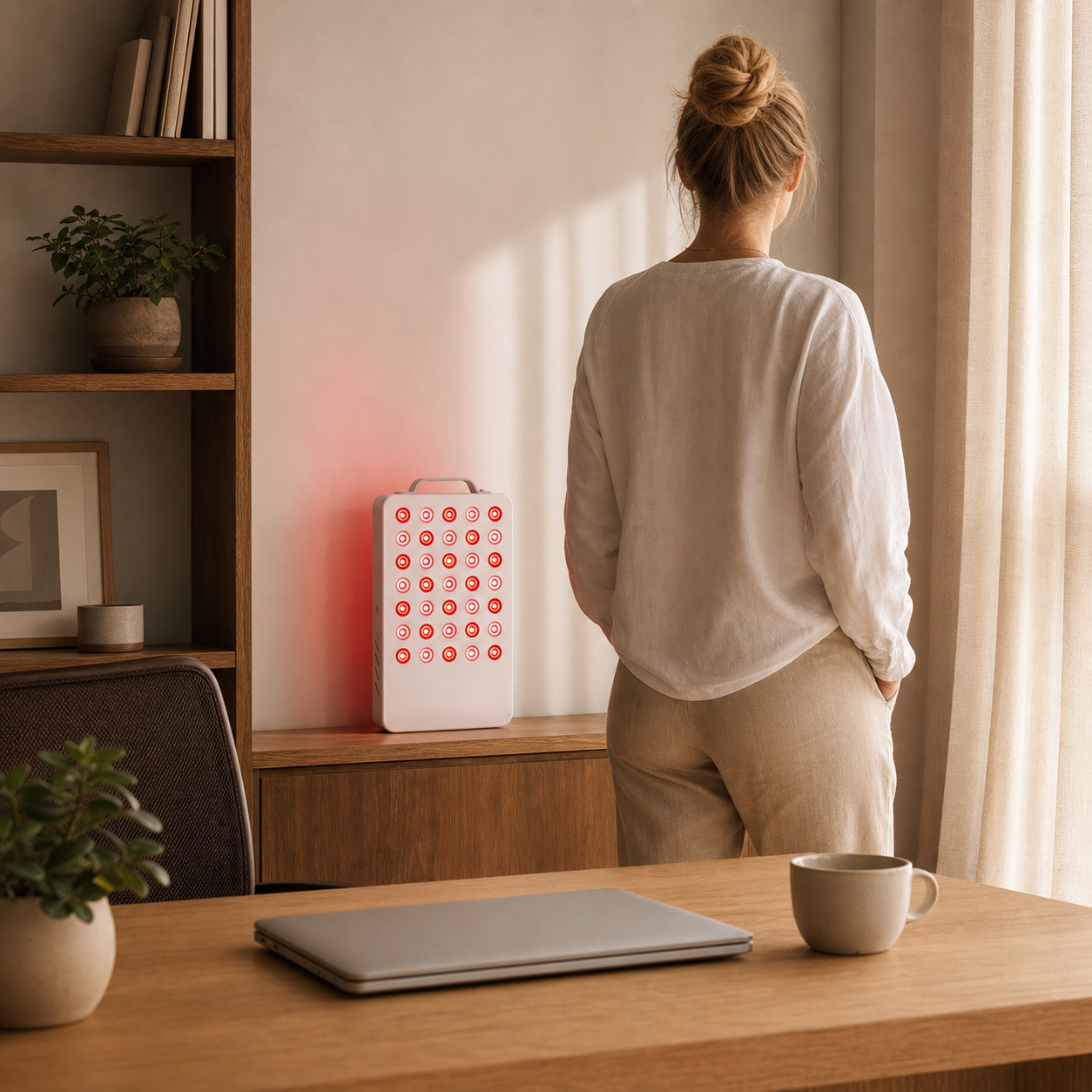
Remote work can blur the line between sitting, scrolling, and "taking a break" that is not really a break. A short red light session can become a simple boundary in the day: step away from the screen, sit still, and reset the room around you. Here is how to make it practical without pretending a panel fixes desk work.
Key takeaways
- Remote workers benefit most from making the session a real screen break, not another multitasking window.
- A tabletop or nearby fixed setup makes short sessions easier to repeat during desk-heavy days.
- Use the routine as a pause around posture, light, and comfort rather than as a promise about pain or fatigue.
- Keep it brief and consistent; a small daily reset is more realistic than an elaborate mid-day ritual.
Make the break real
The main advantage of a red light session during remote work is not that it adds another productivity tool. It gives you a reason to stop looking at a screen. Put the phone down, sit near the panel, and let the session become a clean break between work blocks. Our guide for desk workers covers a similar comfort-first framing for long sitting days.
Keep the setup close but separate
The best remote-work setup is nearby without being part of the desk clutter. A tabletop stand near a chair, a panel in the corner of the room, or a fixed spot beside a reading chair all work better than balancing the panel on your work surface. That separation matters because the routine should feel like stepping away, not continuing the same posture under a different light.
Use it around natural work transitions
Attach the session to a transition that already happens: after a long meeting block, before lunch, after shutting the laptop, or between focused work sessions. That keeps the habit from feeling random. If your days are unpredictable, aim for a simple anchor rather than a strict time. The principle is the same one in our busy-parents routine: attach the habit to real life.
Do not turn it into multitasking
It is tempting to answer emails during a session, but that misses the point. A red light break is more useful when it is quiet: no laptop, no phone in your face, no extra task. If you need something to do, use a timer, breathe normally, or simply sit. The panel is not a productivity hack. It is a practical pause.
A simple desk-day routine
Choose one reliable break in the day, keep the panel ready in a nearby non-desk spot, run a short session at the recommended distance, then return to work. If your session happens after work instead, that is fine too. The point is not the exact minute; it is the repeatable boundary between screen time and recovery time.
Frequently asked questions
How can remote workers use a red light panel?
Use it as a real screen break: step away from the desk, sit near a stable panel setup, keep the session short, and attach it to a natural transition such as after a meeting block, before lunch, or after shutting the laptop.
Should I use a panel at my desk?
It is usually better to keep the panel nearby but separate from the desk so the routine feels like a true break rather than more multitasking. A tabletop setup near a chair or a fixed corner placement can work well.
Can I answer emails during a red light session?
You can, but it weakens the purpose of the break. The routine is more useful when it creates a clean pause from screens, posture, and task switching, so treat the session as quiet time rather than another work window.
When is the best time for a remote-work routine?
Pick a transition that already exists in your day: after calls, before lunch, between focus blocks, or after closing the laptop. A repeatable anchor matters more than a perfect clock time.
Where SOLRA fits
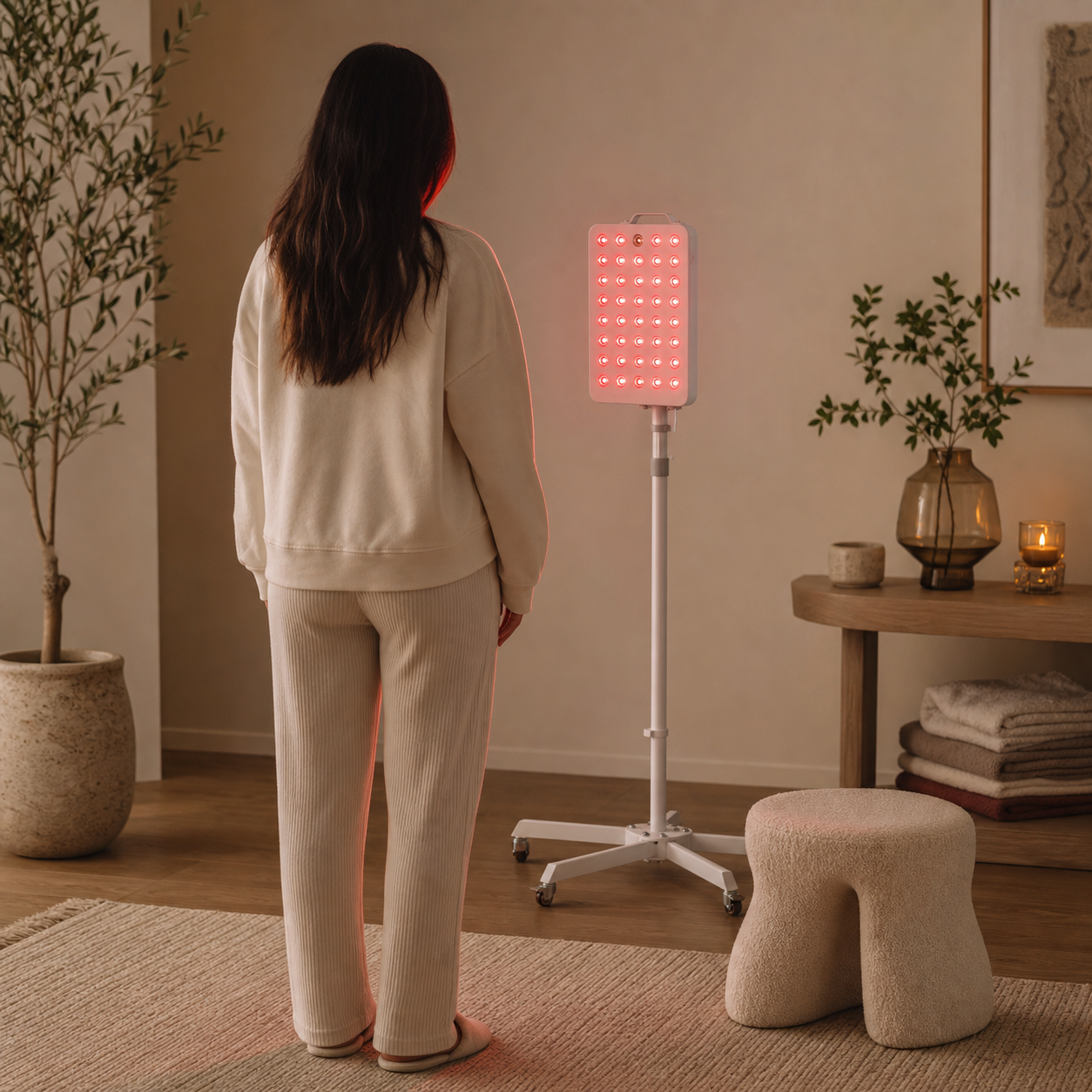
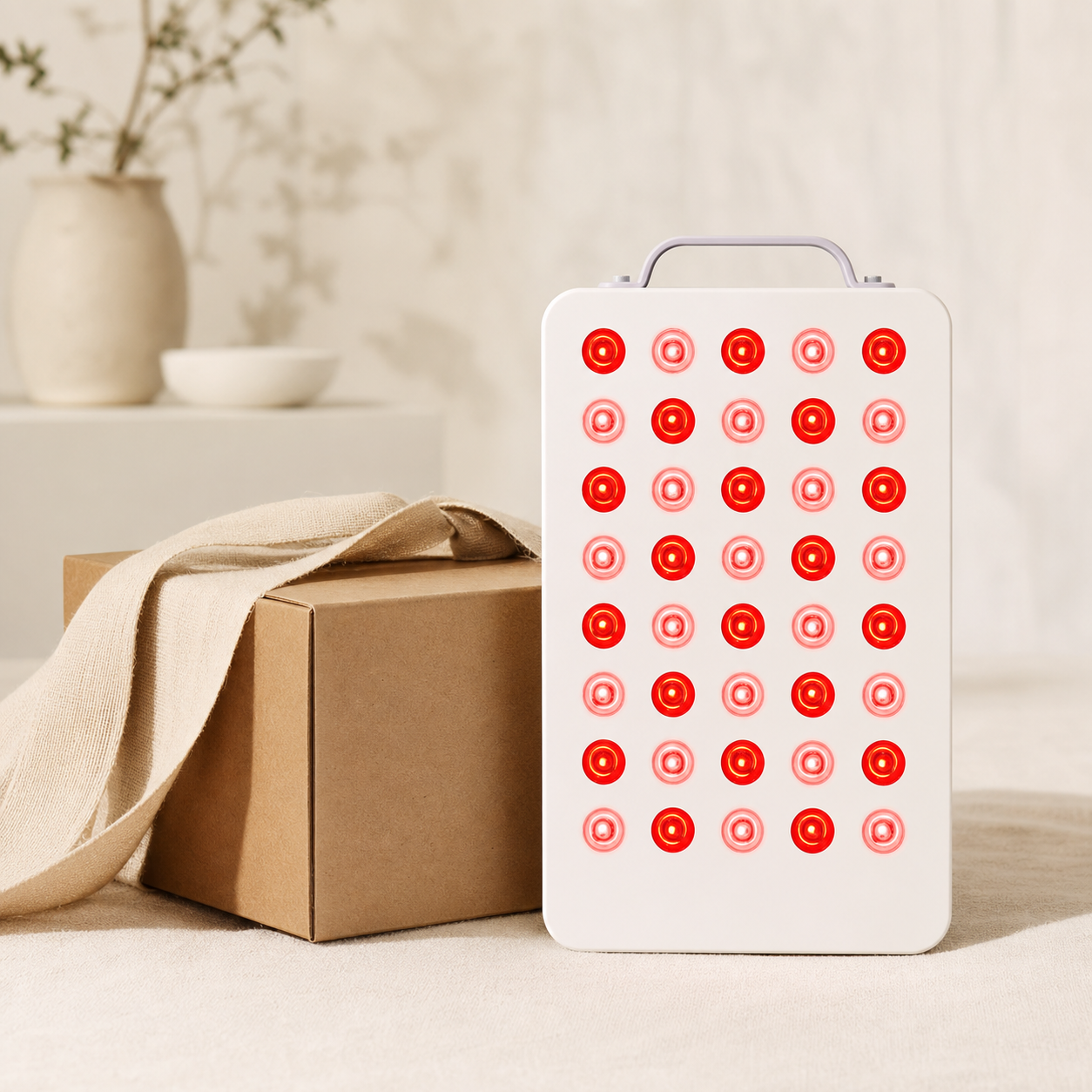
Choose the configuration that matches your space: a tabletop setup for compact, seated routines, or a floor stand for larger areas and full-body sessions. The SOLRA Red Light Panel is built around 660nm red light and 850nm near-infrared light, with setup options for panel-only use, tabletop placement, or a complete floor-stand kit. For more flexible, multi-area sessions, see the SOLRA Portable Red Light Panel.
Quick safety notes
Red light wellness routines should feel comfortable. Avoid staring directly into bright LEDs, follow your device instructions, and consult a qualified professional if you are pregnant, photosensitive, using light-sensitive medication, or managing a medical condition.
Wellness disclaimer. SOLRA content and products are intended for general wellness and comfort. They are not medical devices and are not intended to diagnose, treat, cure, or prevent any disease or health condition. These statements have not been evaluated by the Food and Drug Administration. Individual experiences vary; consult a qualified healthcare professional before starting any new wellness routine, especially if you are pregnant, photosensitive, taking light-sensitive medication, or managing a medical condition.
Wellness disclaimer: SOLRA products are general wellness devices and have not been evaluated by the FDA. This article is for educational purposes only and is not intended to diagnose, treat, cure, or prevent any disease. Consult a qualified healthcare professional before beginning a new wellness practice, especially if you have a medical condition or take medication.
About this guide. Written and maintained by the SOLRA Team, who design and support SOLRA red light panels. Our guides focus on practical, comfort-first routines and use general wellness language rather than medical claims. Always follow your device instructions and consult a qualified professional about any medical condition. Editorial review: SOLRA Team · Updated July 2026.

Leave a comment
This site is protected by hCaptcha and the hCaptcha Privacy Policy and Terms of Service apply.