
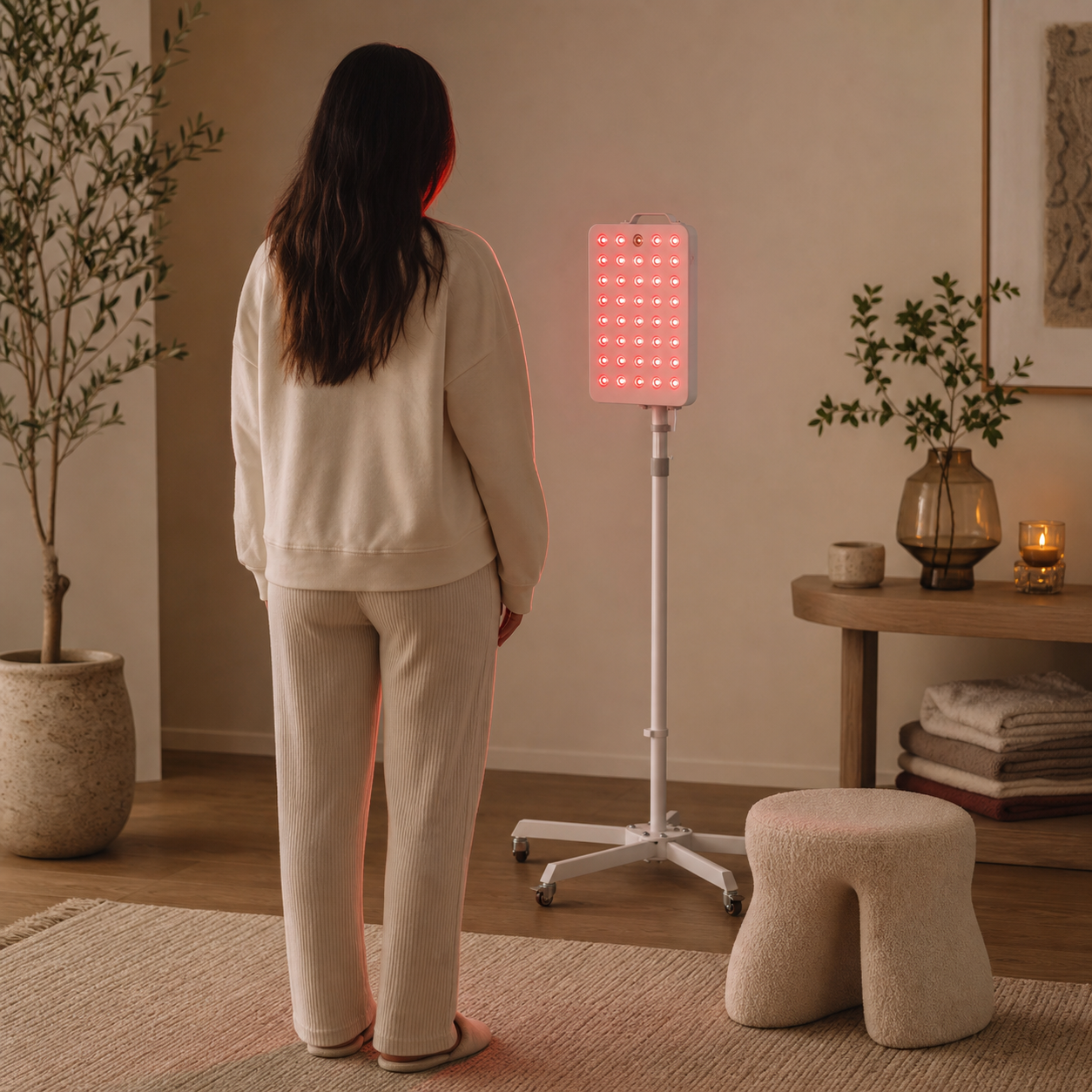
A red light session can be seated, standing, or something in between. That sounds like a small choice, but it affects comfort, coverage, and whether you will actually repeat the routine. Here is a simple way to choose the setup that fits your goals and your space.
Key takeaways
- Seated sessions are ideal for focused, comfortable routines such as face, neck, chest, hands, or upper body.
- Standing sessions make more sense for larger-area routines, especially when paired with a floor stand.
- Neither posture is automatically better; the right choice depends on coverage, comfort, and consistency.
- If the setup feels awkward, simplify it: the easiest routine is usually the one that lasts.
Why posture changes the routine
Posture changes what the panel reaches and how relaxed you feel during the session. A seated setup usually feels more stable and calm; a standing setup can cover more body area but requires better positioning. Think of posture as part of the setup, just like distance and angle. Our distance guide is the right reference for keeping either style sensible.
When seated sessions work best
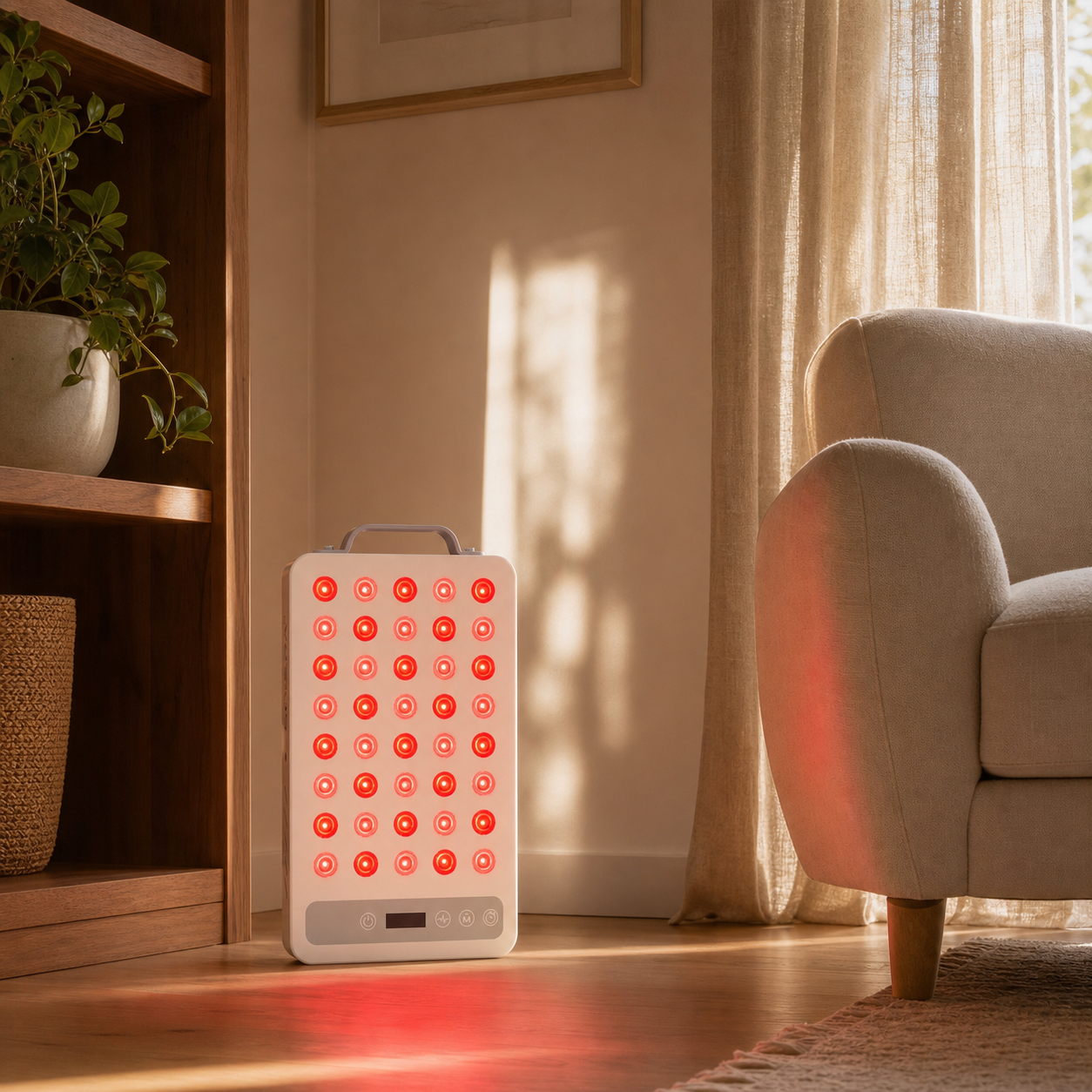
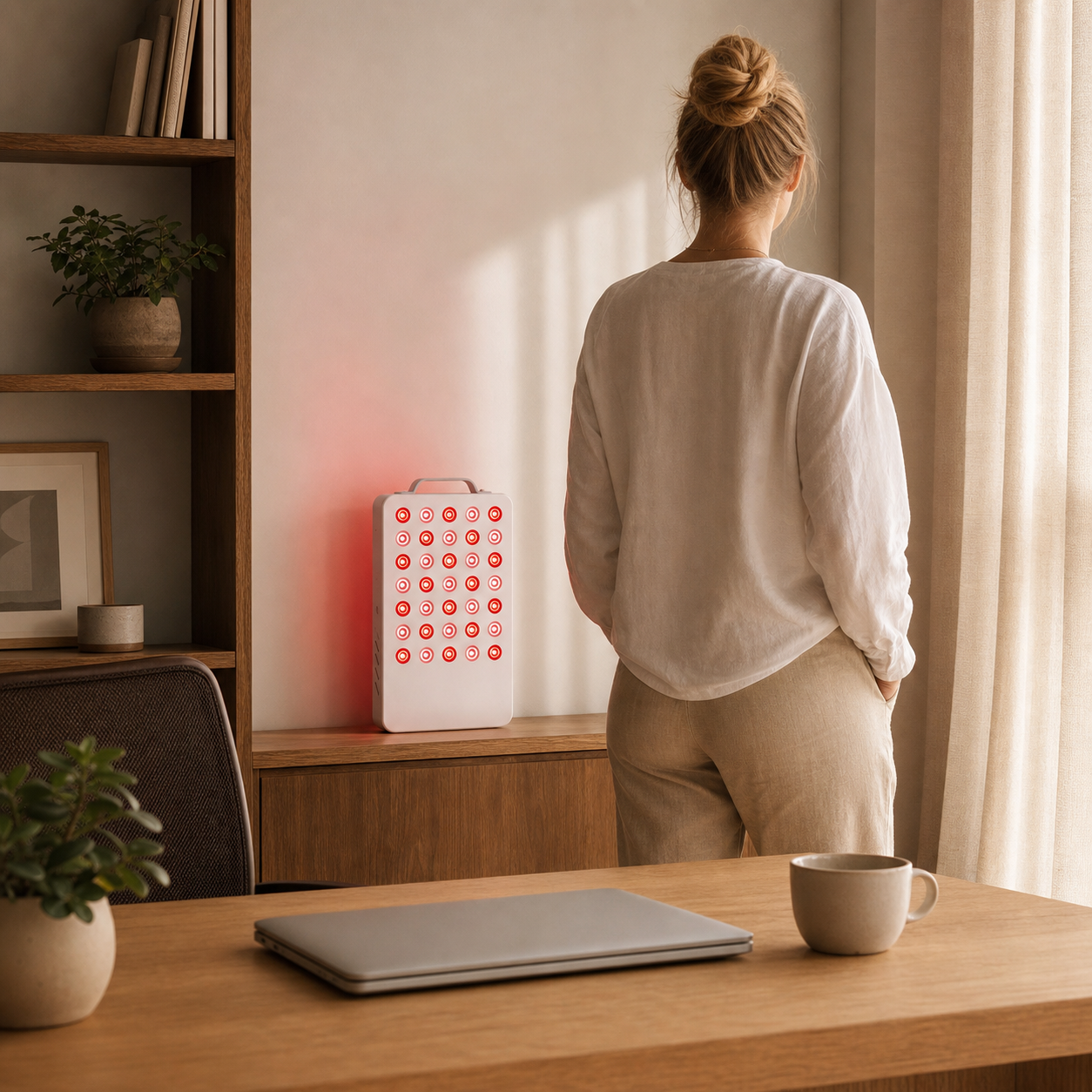
Seated routines are the natural choice for face, neck, chest, hands, wrists, and upper-body focus. They are easier to keep comfortable because you can settle into a chair, keep your distance consistent, and avoid fidgeting. A tabletop stand can work especially well here, because it keeps the panel stable without taking over the room. Seated sessions also pair nicely with short daily anchors like morning coffee or an evening pause.
When standing sessions make sense
Standing sessions are useful when you want broader coverage, especially across the back, legs, or larger body areas. They usually work best with a floor stand because the panel can be positioned at a height that makes sense for your body rather than balanced on furniture. If your goal is a larger-area routine, our configuration guide explains why the stand matters.
Comfort still decides
A standing session that feels like a chore will not beat a seated session you do every week. Likewise, a seated session that misses the area you care about may not be the right setup. Use comfort as the deciding vote: can you hold the posture easily, keep the panel stable, avoid glare, and stay within the recommended session length? If yes, the setup is doing its job.
A simple rule of thumb
Choose seated for focused, repeatable routines. Choose standing when coverage is the main goal. If you are unsure, start seated because it is easier to control; then add a floor stand later if you find yourself wanting larger-area sessions. The best setup is not the most elaborate one. It is the one that makes the next session easy to start.
Frequently asked questions
Is it better to sit or stand during a red light session?
Neither is automatically better. Seated sessions are easier for focused, comfortable routines, while standing sessions make more sense for larger-area coverage. Choose the posture that gives you stable distance, good coverage, and a routine you will repeat.
What are seated red light sessions best for?
Seated sessions are well suited to face, neck, chest, hands, wrists, and upper-body routines because you can stay comfortable, keep distance consistent, and use a tabletop or stable setup without much friction.
When should I use a standing setup?
A standing setup makes sense when you want broader coverage across areas like the back, legs, or larger body zones. It usually works best with a floor stand so the panel can sit at the right height.
Can I switch between seated and standing routines?
Yes. Many people use a seated setup for quick focused sessions and a standing setup for larger-area routines. Keep the same comfort-first habits: sensible distance, stable placement, and the recommended session length.
Where SOLRA fits
Choose the configuration that matches your space: a tabletop setup for compact, seated routines, or a floor stand for larger areas and full-body sessions. The SOLRA Red Light Panel is built around 660nm red light and 850nm near-infrared light, with setup options for panel-only use, tabletop placement, or a complete floor-stand kit. For more flexible, multi-area sessions, see the SOLRA Portable Red Light Panel.
Quick safety notes
Red light wellness routines should feel comfortable. Avoid staring directly into bright LEDs, follow your device instructions, and consult a qualified professional if you are pregnant, photosensitive, using light-sensitive medication, or managing a medical condition.
Wellness disclaimer. SOLRA content and products are intended for general wellness and comfort. They are not medical devices and are not intended to diagnose, treat, cure, or prevent any disease or health condition. These statements have not been evaluated by the Food and Drug Administration. Individual experiences vary; consult a qualified healthcare professional before starting any new wellness routine, especially if you are pregnant, photosensitive, taking light-sensitive medication, or managing a medical condition.
Wellness disclaimer: SOLRA products are general wellness devices and have not been evaluated by the FDA. This article is for educational purposes only and is not intended to diagnose, treat, cure, or prevent any disease. Consult a qualified healthcare professional before beginning a new wellness practice, especially if you have a medical condition or take medication.
About this guide. Written and maintained by the SOLRA Team, who design and support SOLRA red light panels. Our guides focus on practical, comfort-first routines and use general wellness language rather than medical claims. Always follow your device instructions and consult a qualified professional about any medical condition. Editorial review: SOLRA Team · Updated July 2026.

Leave a comment
This site is protected by hCaptcha and the hCaptcha Privacy Policy and Terms of Service apply.