
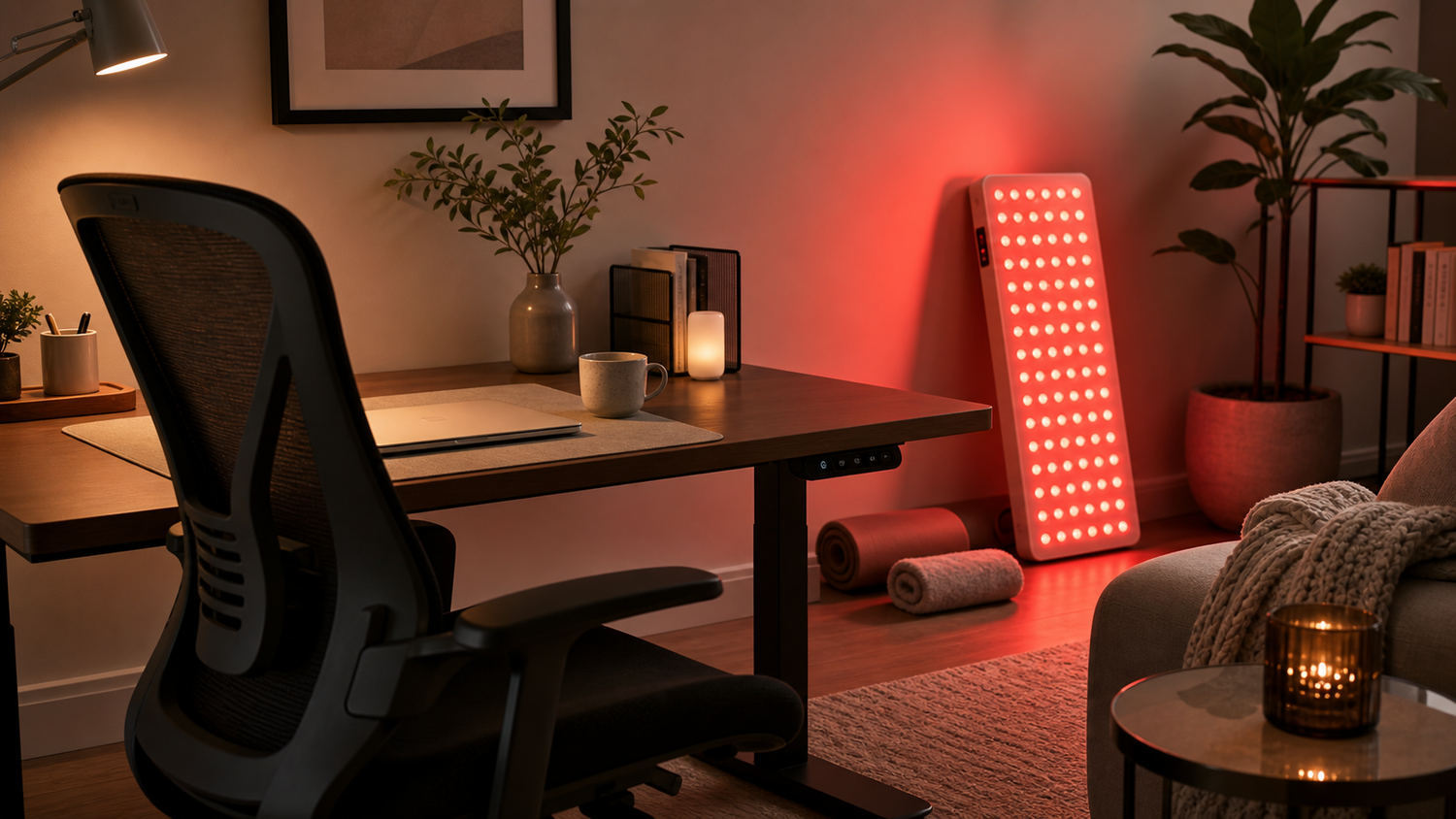
Desk work does not look physically demanding, but hours of sitting can leave the neck, shoulders, back, and hips feeling tight by the end of the day. A red light panel will not replace movement, posture changes, or strength work, but it can fit nicely into a simple recovery routine for people who spend long hours at a computer.
Key takeaways
- For desk workers, a red light panel can fit into a simple recovery routine for the neck, shoulders, and back – but it will not replace movement or posture changes.
- The most useful approach is a stack of small habits: short movement breaks, hydration, screen breaks, and a consistent evening routine.
- Position the panel for even coverage of the upper back or shoulders, using a floor stand for mid-back and lower-back areas, and avoid direct eye exposure.
- A practical after-work sequence is time away from the screen, water, a short session, gentle mobility, then wind-down, repeated several times per week.
- If back discomfort is severe, persistent, or injury-related, consult a professional rather than relying on a home wellness tool alone.
Why desk workers need a routine, not just a better chair
A better chair can help, but static posture is still static posture. The body likes movement, circulation, and variation. If the only recovery plan is to wait until the end of the day, tension has already had hours to build.
The most useful approach is a stack of small habits: short movement breaks, hydration, screen breaks, and a consistent evening routine. Red light wellness can become one part of that stack.
Neck and shoulder sessions
For neck and shoulders, position the panel so you can sit naturally without craning forward. The goal is even exposure across the upper back and shoulder area, not a dramatic pose. Keep the session comfortable and avoid direct eye exposure if the panel is near your face.
Many desk workers prefer this routine after work, before stretching, or after a warm shower.
- Sit tall but relaxed.
- Keep the panel centered on the upper back or shoulder area.
- Use the time to breathe and unwind instead of scrolling.
Mid-back and lower-back sessions
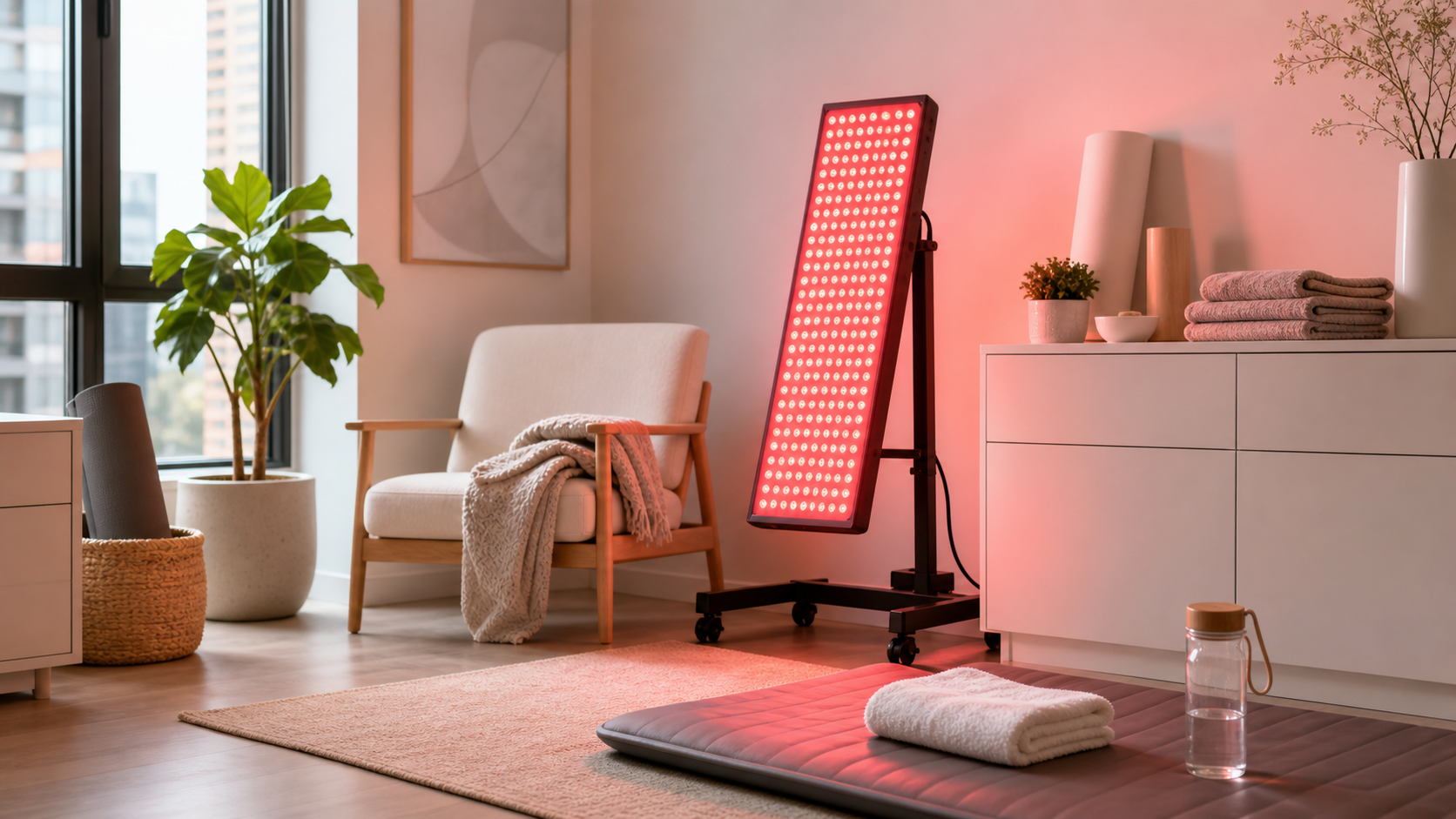
For the mid-back or lower back, a floor stand can make positioning much easier. Place the panel behind you while seated or standing, then adjust height so the light is centered on the target area. Avoid twisting your torso to reach the light; move the panel instead.
If your back discomfort is severe, persistent, or related to injury, use common sense and consult a professional rather than relying on any home wellness tool alone.
A simple after-work routine
Keep the routine short enough that you will actually do it. A practical sequence might be: five minutes away from the screen, water, a short red light session, gentle mobility, then dinner or evening wind-down.
The magic is not complexity. It is making recovery easier to repeat.
- Step 1: walk away from the desk.
- Step 2: set the panel for neck, shoulders, or back.
- Step 3: follow with light stretching or mobility.
- Step 4: repeat several times per week.
Do not skip movement
Red light wellness pairs best with active habits. Take walking breaks, strengthen your upper back, vary your seated position, and adjust your screen height. The panel is a support tool, not a substitute for moving your body.
Frequently asked questions
Can a red light panel replace movement and posture changes for desk workers?
No. The article frames the panel as a support tool, not a substitute for moving your body, and pairs best with active habits like walking breaks, strengthening the upper back, varying seated position, and adjusting screen height.
How should I position the panel for neck and shoulder sessions?
Position the panel so you can sit naturally without craning forward, aiming for even exposure across the upper back and shoulder area rather than a dramatic pose, and avoid direct eye exposure if the panel is near your face.
What does a simple after-work routine look like?
A practical sequence is five minutes away from the screen, water, a short red light session, gentle mobility, then dinner or evening wind-down, repeated several times per week. The point is making recovery easy to repeat rather than complex.
What if my back discomfort is severe or injury-related?
If your back discomfort is severe, persistent, or related to injury, the article advises using common sense and consulting a professional rather than relying on any home wellness tool alone.
Where SOLRA fits
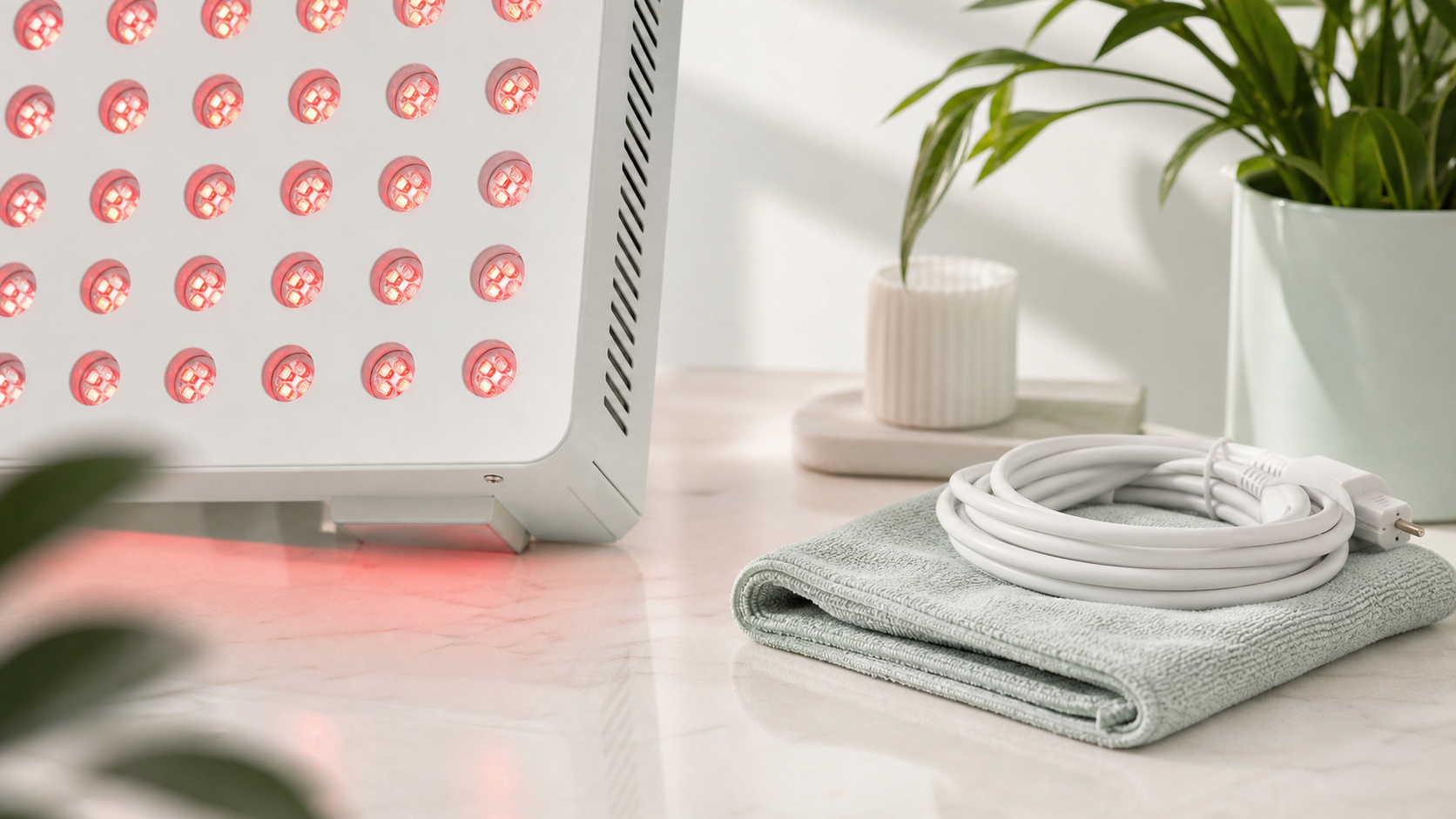
For desk workers, the most useful panel setup is one that can target the upper back, lower back, and shoulders without awkward positioning. The SOLRA Red Light Panel is built around 660nm red light and 850nm near-infrared light, with setup options for panel-only use, tabletop placement, or a complete floor-stand kit.
Quick safety notes
Red light wellness routines should feel comfortable. Avoid staring directly into bright LEDs, follow your device instructions, and consult a qualified professional if you are pregnant, photosensitive, using light-sensitive medication, or managing a medical condition.
Wellness disclaimer: SOLRA products are general wellness devices and have not been evaluated by the FDA. This article is for educational purposes only and is not intended to diagnose, treat, cure, or prevent any disease. Consult a qualified healthcare professional before beginning a new wellness practice, especially if you have a medical condition or take medication.
About this guide. Written and maintained by the SOLRA Team, who design and support the SOLRA Red Light Panel (660nm red + 850nm near-infrared light). Our guides focus on practical, comfort-first routines and use general wellness language rather than medical claims. Always follow your device instructions and consult a qualified professional about any medical condition. Editorial review: SOLRA Team · Updated June 2026.

Leave a comment
This site is protected by hCaptcha and the hCaptcha Privacy Policy and Terms of Service apply.