
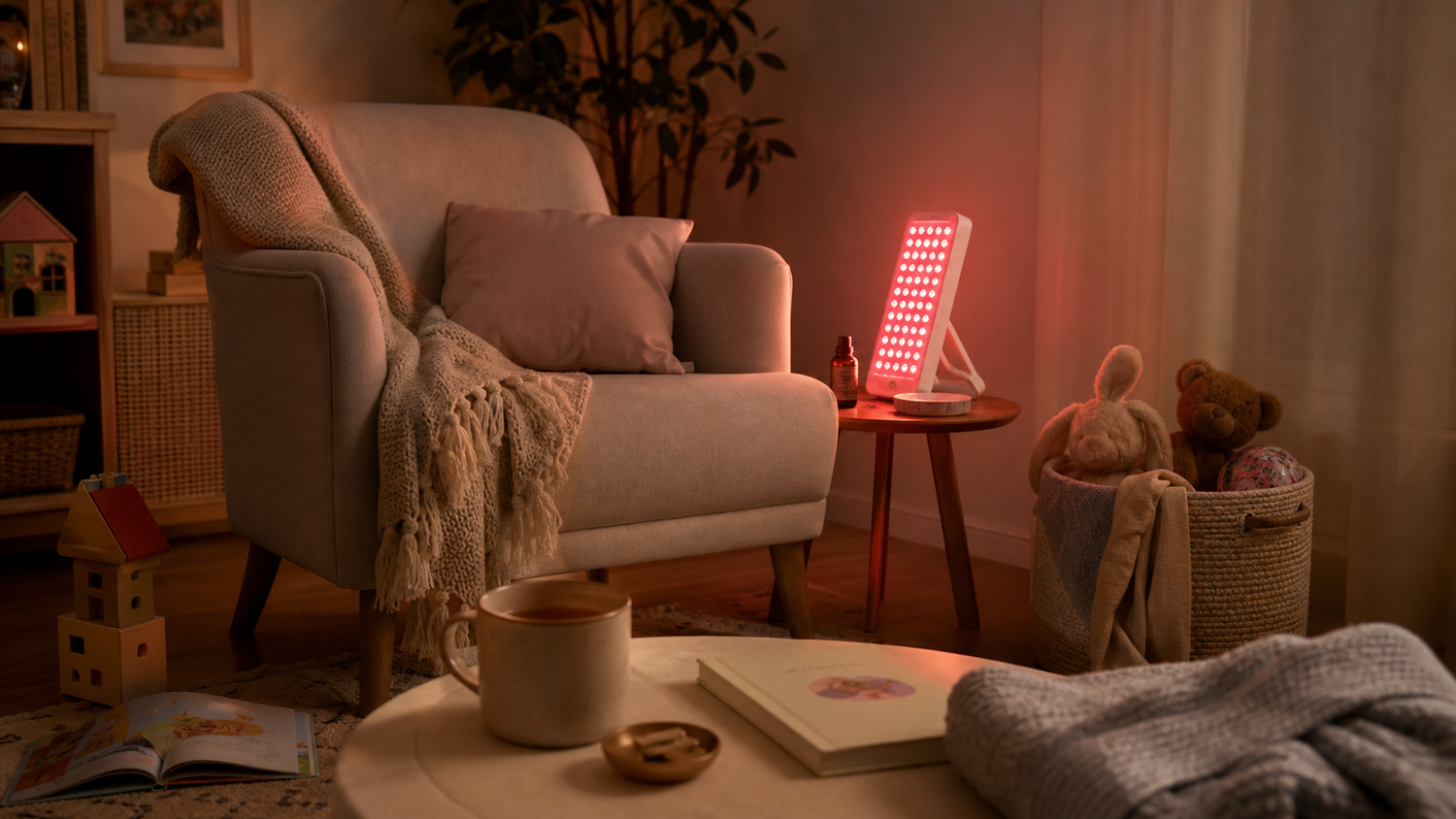
When your time is not really your own, elaborate wellness routines are the first thing to fall away. That is exactly why a red light routine can work for busy parents: it is short, passive, and easy to attach to moments you already have. Here is how to fit it into a full, unpredictable day without adding one more chore.
Key takeaways
- A red light routine suits busy parents because sessions are short and passive — you can sit through one during a moment you already have, without extra effort.
- Attach the session to an existing anchor (after the kids are down, with morning coffee) rather than trying to carve out a separate slot.
- Keep the setup grab-and-go: a stable stand in a fixed spot means starting a session takes seconds, not planning.
- Consistency beats length — a short session most days is far more realistic than an ideal routine you never have time for.
Why "short and passive" is the whole point
The reason a red light routine survives a busy household is that it asks almost nothing of you. There is no workout to complete, no products to layer, no skill to practice — you sit or stand near the panel and let a few minutes pass. For a parent, that "passive" quality is everything: it can happen while you drink your coffee or decompress at the end of the day, rather than competing for a dedicated block of time you do not have. Our beginner's guide keeps the basics simple.
Attach it to an anchor you already have
The trick with any habit in a chaotic schedule is to stop looking for new time and instead attach to existing moments:
- After the kids are down for the night, as part of winding down.
- With your morning coffee, before the day ramps up.
- During a quiet pocket you can predict, however short.
Anchoring to something that already happens means the routine rides along with your day instead of demanding a slot of its own. Our morning vs night guide can help you pick which anchor suits you.
Make the setup effortless
Friction is the enemy of any parent's routine. If starting a session means finding, unpacking, and positioning a panel, it will not happen. Keep it grab-and-go: a stable stand in a fixed, convenient spot so a session takes seconds to start. A tabletop placement by the spot where you have your coffee, or a floor stand in a corner of the bedroom, turns "I should" into "already done." Our setup guide covers easy fixed arrangements.
Consistency over the ideal routine
It is worth letting go of the "perfect" routine entirely. A short session most days, fitted into moments you already have, will always beat a longer, more thorough one you can never actually reach. If a day gets away from you, that is fine — the routine is forgiving by design. Our note on frequency reinforces that regularity matters more than any single long session.
A realistic parent-friendly routine
In practice: put the panel somewhere you already pause, keep it on a stable stand ready to go, run a short session when your anchor moment arrives, and forgive the days it does not happen. That is a routine built for real life rather than an ideal one built for someone else's schedule. If you travel with the kids, our travel routines guide keeps it going on the road.
Frequently asked questions
How can busy parents fit in red light therapy?
Because sessions are short and passive, the routine fits into moments you already have rather than a dedicated time slot: attach it to an existing anchor such as after the kids are down or with your morning coffee, and keep the setup ready so starting takes seconds.
What is the easiest way to keep a routine with no free time?
Stop carving out new time and attach the session to something that already happens in your day, keep the panel on a stable stand in a fixed convenient spot to remove friction, and prioritize a short session most days over a longer ideal one.
How long does a red light session take?
Sessions are short — you sit or stand near the panel for the length your device recommends — which is what makes the routine realistic for a busy schedule; consistency across the week matters more than any single long session.
Is it okay to miss days as a busy parent?
Yes. The routine is forgiving by design, and a short session most days fitted into moments you already have beats a thorough one you can never reach; if a day gets away from you, simply pick it back up when your anchor moment returns.
Where SOLRA fits
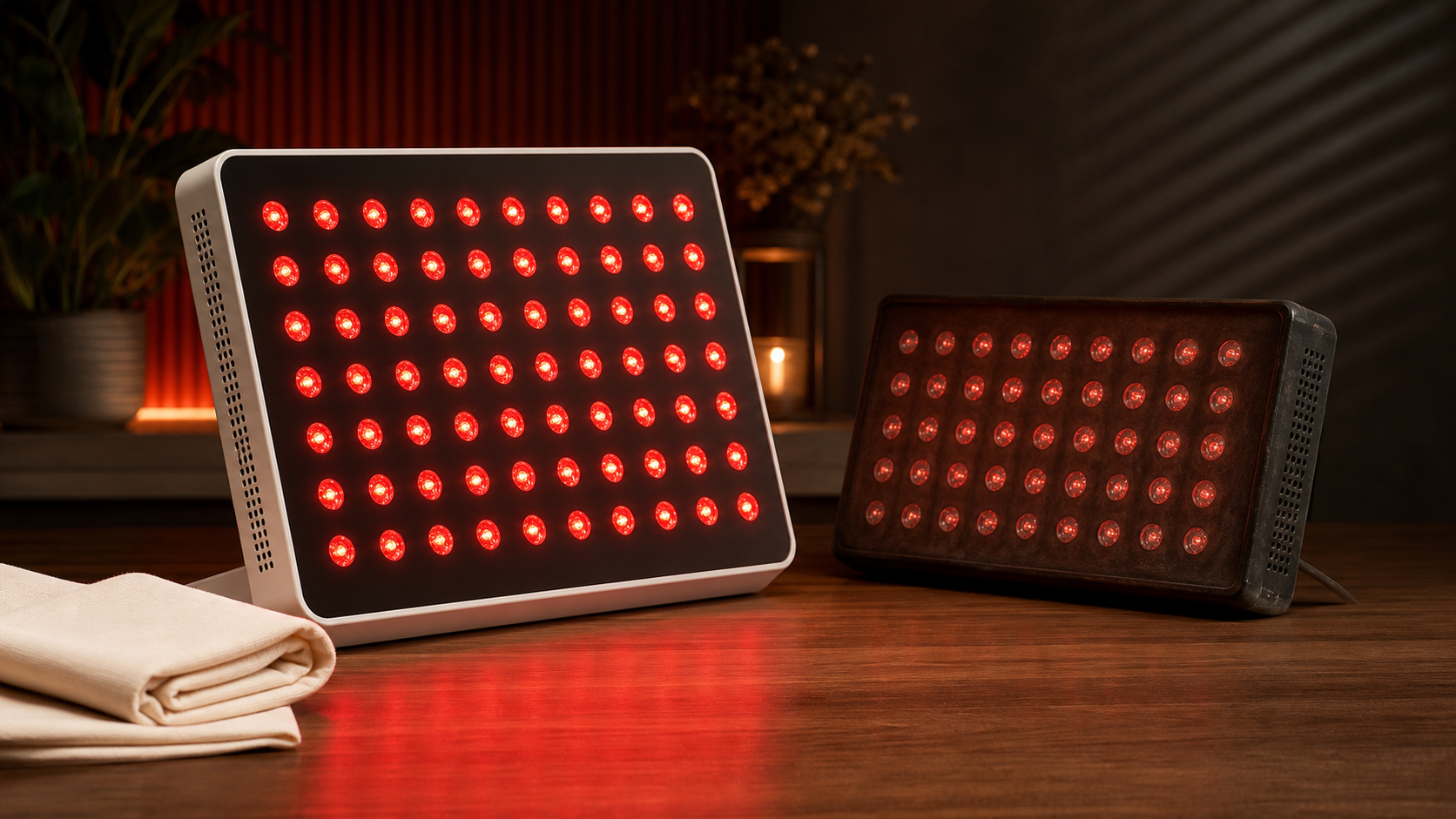
Choose the configuration that matches your space: a tabletop setup for compact, seated routines, or a floor stand for larger areas and full-body sessions. The SOLRA Red Light Panel is built around 660nm red light and 850nm near-infrared light, with setup options for panel-only use, tabletop placement, or a complete floor-stand kit.
Quick safety notes
Red light wellness routines should feel comfortable. Avoid staring directly into bright LEDs, follow your device instructions, and consult a qualified professional if you are pregnant, photosensitive, using light-sensitive medication, or managing a medical condition.
About this guide. Written and maintained by the SOLRA Team, who design and support the SOLRA Red Light Panel (660nm red + 850nm near-infrared light). Our guides focus on practical, comfort-first routines and use general wellness language rather than medical claims. Always follow your device instructions and consult a qualified professional about any medical condition. Editorial review: SOLRA Team · Updated July 2026.

Leave a comment
This site is protected by hCaptcha and the hCaptcha Privacy Policy and Terms of Service apply.