

It is a fair question to ask before your first session: do you need bare skin in front of the panel, or can you keep your clothes on? The short answer is that light reaches skin best when nothing is in the way, and clothing sits directly in that path. Here is a clear, practical look at why exposed skin is the usual recommendation and when a thin layer is a reasonable compromise.
Key takeaways
- Red and near-infrared light reaches skin most directly when nothing covers the area, so exposed skin is the standard recommendation for a red light session.
- Clothing — especially thick, dark, or tightly woven fabric — sits in the light path and blocks or scatters a meaningful amount before it reaches skin.
- A thin, light-colored layer lets more through than heavy fabric, but bare skin is still the most direct option for the area you are focusing on.
- Keep the recommended distance and session length regardless; covering skin does not make a longer or closer session worthwhile.
Why exposed skin is the usual advice
A red light panel works by delivering red (around 660nm) and near-infrared (around 850nm) light to the skin. Anything placed between the panel and your skin becomes something the light has to pass through first. Fabric is designed to do exactly what works against you here — cover skin — so a layer of clothing absorbs and scatters part of the light before it lands. That is why guides, including our overview of what red light wellness is, generally suggest exposing the area you want to focus on.
Not all fabric blocks light equally
If keeping some clothing on is more comfortable or practical, the type of fabric matters. As a rough rule, the thinner and lighter the material, the more light passes through.
- Thick, dark, tightly woven fabric (denim, heavy cotton, black athletic wear) blocks the most.
- Thin, light-colored, loosely woven fabric lets noticeably more through.
- Bare skin remains the most direct option for the specific area you are targeting.
This is why a person doing a full-body session in light loungewear is in a very different situation from someone pointing a panel at a thick sweater.
A practical way to think about it
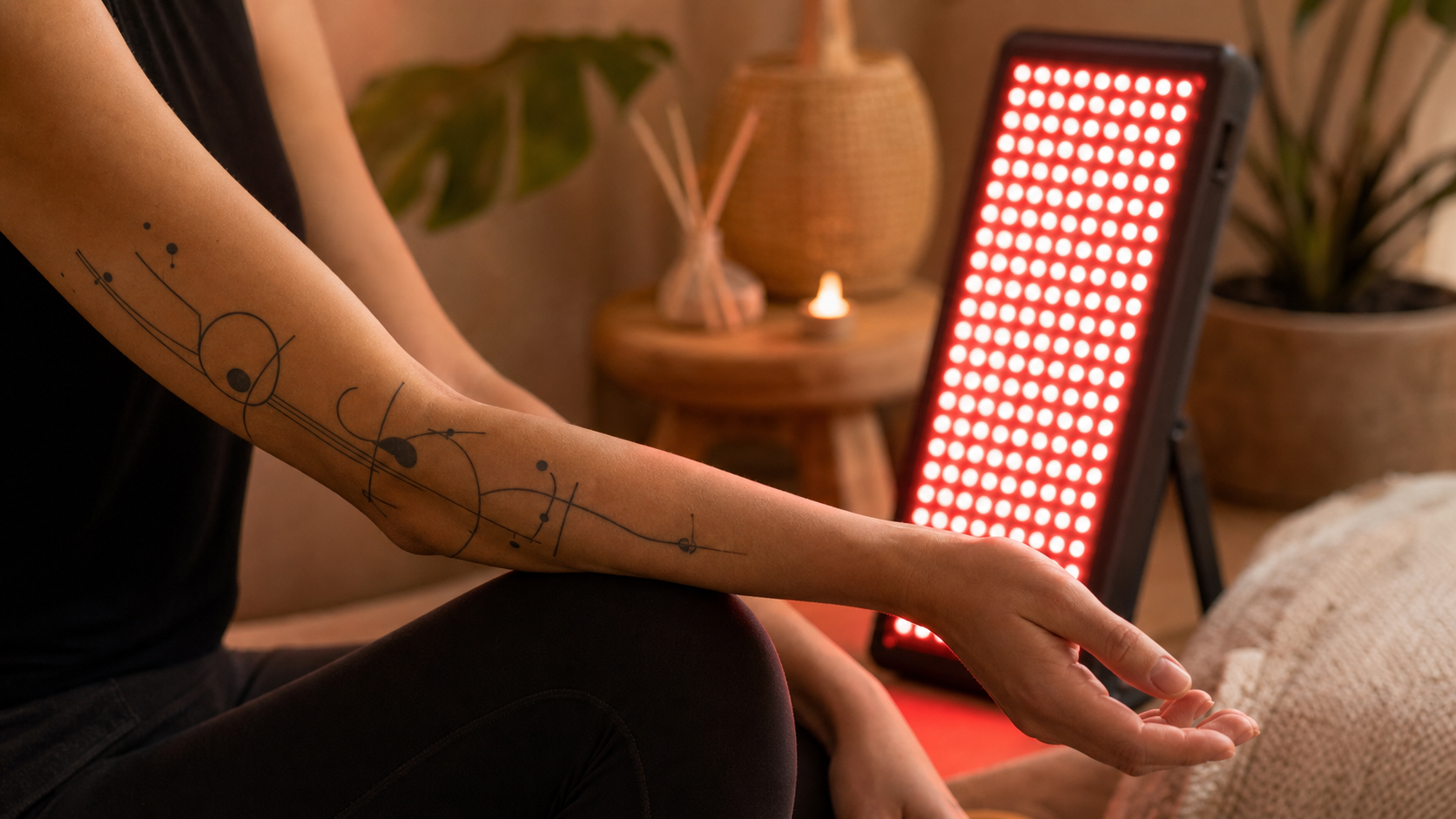
You do not need to strip down for every routine. A sensible approach is to expose the area you are actually focusing on — the face for a seated skincare-style session, or the back and shoulders for a recovery-style one — while staying comfortable elsewhere. If modesty, temperature, or setting means a layer stays on, choose the thinnest, lightest option over the area and accept that bare skin would be more direct. Our home setup guide covers comfortable positioning for different areas.
What clothing does not change
Covering skin does not turn a session into something that benefits from being longer or closer. The recommended distance and session length still apply. Trying to "make up" for a layer of fabric by crowding the panel or extending the session is not the right trade — it just adds heat and discomfort. Keep the routine comfortable and consistent, and expose skin where you reasonably can.
Frequently asked questions
Does red light therapy work through clothes?
Light reaches skin most directly when nothing covers the area, and clothing sits in that path and blocks or scatters part of it, so exposed skin is the standard recommendation; a thin, light-colored layer lets more through than heavy fabric, but bare skin is still the most direct option for the area you are focusing on.
What kind of fabric blocks red light the most?
Thick, dark, and tightly woven materials such as denim, heavy cotton, or black athletic wear block the most light, while thin, light-colored, loosely woven fabric lets noticeably more through; for the specific area you are targeting, bare skin remains the most direct option.
Do I have to be fully undressed for a red light session?
No. A practical approach is to expose the specific area you are focusing on — such as the face or the back and shoulders — while staying comfortable elsewhere; if a layer stays on, choose the thinnest, lightest fabric over that area.
Can I use a longer session to make up for keeping clothes on?
That is not a worthwhile trade. Covering skin does not make a longer or closer session beneficial, and crowding the panel mainly adds heat and discomfort; keep the recommended distance and session length and expose skin where you reasonably can.
Where SOLRA fits
Choose the configuration that matches your space: a tabletop setup for compact, seated routines, or a floor stand for larger areas and full-body sessions. The SOLRA Red Light Panel is built around 660nm red light and 850nm near-infrared light, with setup options for panel-only use, tabletop placement, or a complete floor-stand kit.
Quick safety notes
Red light wellness routines should feel comfortable. Avoid staring directly into bright LEDs, follow your device instructions, and consult a qualified professional if you are pregnant, photosensitive, using light-sensitive medication, or managing a medical condition.
About this guide. Written and maintained by the SOLRA Team, who design and support the SOLRA Red Light Panel (660nm red + 850nm near-infrared light). Our guides focus on practical, comfort-first routines and use general wellness language rather than medical claims. Always follow your device instructions and consult a qualified professional about any medical condition. Editorial review: SOLRA Team · Updated July 2026.

Leave a comment
This site is protected by hCaptcha and the hCaptcha Privacy Policy and Terms of Service apply.