
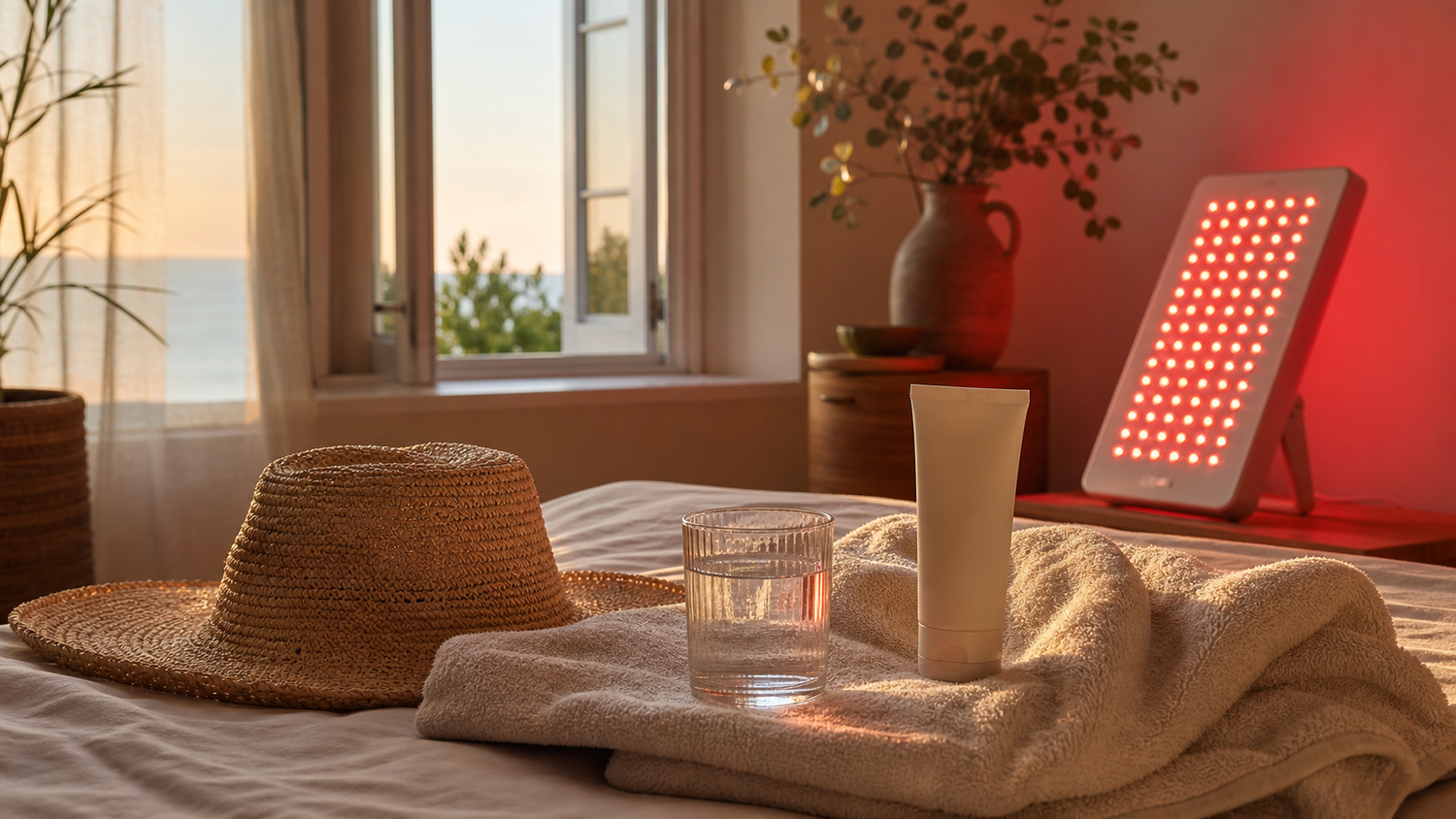
Wellness routines often shift with the seasons, and summer brings its own rhythm: more time outdoors, warmer rooms, and skin that has seen more sun. A red light routine adapts easily to all of it. Here is how to keep a comfortable, consistent routine going through the warmer months — and how it fits alongside a sensible summer skin routine.
Key takeaways
- Red light wellness works year-round; in summer the main adjustments are timing sessions around the heat and fitting them into a more outdoor-oriented schedule.
- Red light is not a substitute for sun protection — it does not replace sunscreen, shade, or sensible sun habits, which stay the priority in summer.
- A calm evening session can be a pleasant part of a post-sun, wind-down routine after a day outdoors.
- Keep sessions comfortable: a cooler room, the recommended distance, and your usual session length all help in warm weather.
Why summer changes the routine (a little)
Red light wellness is a year-round habit, and the core routine does not change with the calendar. What shifts in summer is the context around it: longer days, warmer rooms, and a schedule that leans outdoors. A routine that ran in the dark winter evenings might move to a cooler morning or a relaxed end-of-day session. The device and the approach stay the same; only the timing flexes. If you built a winter rhythm, our winter routines guide is the seasonal counterpart to this one.
Red light and sun protection are not the same job
This is the most important point for summer. Red light wellness uses red and near-infrared wavelengths and is not UV, so it is neither a tanning tool nor a replacement for sun protection. Sunscreen, shade, hats, and sensible time-in-sun habits remain the priority for summer skin. Think of a red light routine as a separate, comfort-first habit that sits alongside good sun sense, not instead of it. For the wider comparison, see red light vs sunlight.
A calm post-sun, wind-down session
After a day outdoors, an evening red light session can be a relaxing way to wind down. Keep it gentle and comfortable rather than treating it as a fix for too much sun.
- Cleanse and cool off first, so your skin feels comfortable before the session.
- Keep the recommended distance and your usual session length.
- Let it be part of an unhurried evening routine rather than an extra task.
If your skin feels genuinely sunburned or irritated, the right move is sun-care basics and patience — and a professional's advice if needed — not a longer or closer session.
Staying comfortable in the heat
Warm weather can make any indoor routine feel less appealing, so a few tweaks help. Run sessions in a cooler part of the home or the cooler hours of the day, keep the room ventilated, and stick to your normal distance rather than crowding the panel. A panel that is easy to reposition makes it simple to set up wherever the room is most comfortable. The aim is for the session to stay relaxing, even when it is warm out.
Keeping the habit through summer
Summer schedules are notoriously easy to derail — travel, social plans, and long evenings all compete for time. The fix is the same as any season: keep sessions short, keep the panel handy, and anchor the routine to something you already do. If you are away from home, our travel routines guide covers keeping things going on the road. A flexible, low-effort routine is the one that survives the summer.
Frequently asked questions
Can you use red light therapy in summer?
Yes. Red light wellness is a year-round routine, and in summer the main adjustments are timing sessions around the heat and fitting them into a more outdoor-oriented schedule; the device and approach stay the same.
Does red light therapy replace sunscreen?
No. Red light uses red and near-infrared wavelengths and is not UV, so it is not a tanning tool or a substitute for sun protection; sunscreen, shade, and sensible sun habits remain the priority for summer skin.
Is red light good after sun exposure?
A gentle evening session can be a relaxing part of a post-sun wind-down routine, kept at the recommended distance and usual length; if skin feels genuinely sunburned or irritated, focus on sun-care basics and a professional’s advice rather than a longer or closer session.
How do you stay comfortable using a panel in hot weather?
Run sessions in a cooler part of the home or cooler hours, keep the room ventilated, and stick to your normal distance rather than crowding the panel; a panel that is easy to reposition helps you set up wherever the room is most comfortable.
Where SOLRA fits
Choose the configuration that matches your space: a tabletop setup for compact, seated routines, or a floor stand for larger areas and full-body sessions. The SOLRA Red Light Panel is built around 660nm red light and 850nm near-infrared light, with setup options for panel-only use, tabletop placement, or a complete floor-stand kit.
Quick safety notes
Red light wellness routines should feel comfortable. Avoid staring directly into bright LEDs, follow your device instructions, and consult a qualified professional if you are pregnant, photosensitive, using light-sensitive medication, or managing a medical condition.
About this guide. Written and maintained by the SOLRA Team, who design and support the SOLRA Red Light Panel (660nm red + 850nm near-infrared light). Our guides focus on practical, comfort-first routines and use general wellness language rather than medical claims. Always follow your device instructions and consult a qualified professional about any medical condition. Editorial review: SOLRA Team · Updated June 2026.

Leave a comment
This site is protected by hCaptcha and the hCaptcha Privacy Policy and Terms of Service apply.