
Last Updated: May 25, 2026
Key takeaways
- The article covers five common beginner mistakes, rooted mainly in the more-is-better instinct and expecting fast results.
- Avoid overly long sessions: photobiomodulation follows a bell-shaped biphasic dose response, so keep face sessions 10–15 minutes and body sessions 15–20 minutes.
- Use the included eye protection every session, since eyelids are not opaque and bright 660nm + 850nm LEDs can stress the retina at close range.
- Do sessions on bare clean skin, because products like SPF and thick moisturizers can reduce light reaching skin by 30–70 percent.
- Stay consistent at 3–5 sessions per week anchored to existing habits, and plan for 8–12 weeks before evaluating results.
Most red light wellness panels don't come with a deeply detailed user manual, and the marketing around the category often focuses on benefits rather than how to actually use a panel well. As a result, beginners make some recurring mistakes that either limit results, cause discomfort, or lead to abandoning the practice entirely.
This guide walks through the 5 most common mistakes new red light wellness users make — and the simple adjustments that fix each one.
Mistake 1: Doing longer sessions because "more is better"
What people do
The intuition is: if 10 minutes is good, 30 minutes is better. So new users push session length to 25, 30, 45 minutes per area, often hoping for faster results.
Why it's wrong
Photobiomodulation follows a biphasic dose response — one of the most consistent findings in the research. Low doses produce stimulatory effects, medium doses produce optimal response, and high doses produce diminishing or no effect. The dose-response curve is bell-shaped, not linear.
Past the optimal window (roughly 10-20 minutes per area at 6-12 inches), additional time:
- Doesn't produce proportionally more benefit
- May produce less benefit (cellular response can shift past optimal)
- Wastes time you could spend on the foundations
- May increase mild side effects like skin warmth or transient flushing
The fix
- Face sessions: 10-15 minutes
- Body sessions: 15-20 minutes
- Frequency: 3-5 sessions per week
- Mindset: Consistency over weeks beats intensity in single sessions
If 15-minute sessions feel like they're not enough, the answer is more weeks of consistency — not longer sessions.
Mistake 2: Skipping eye protection
What people do
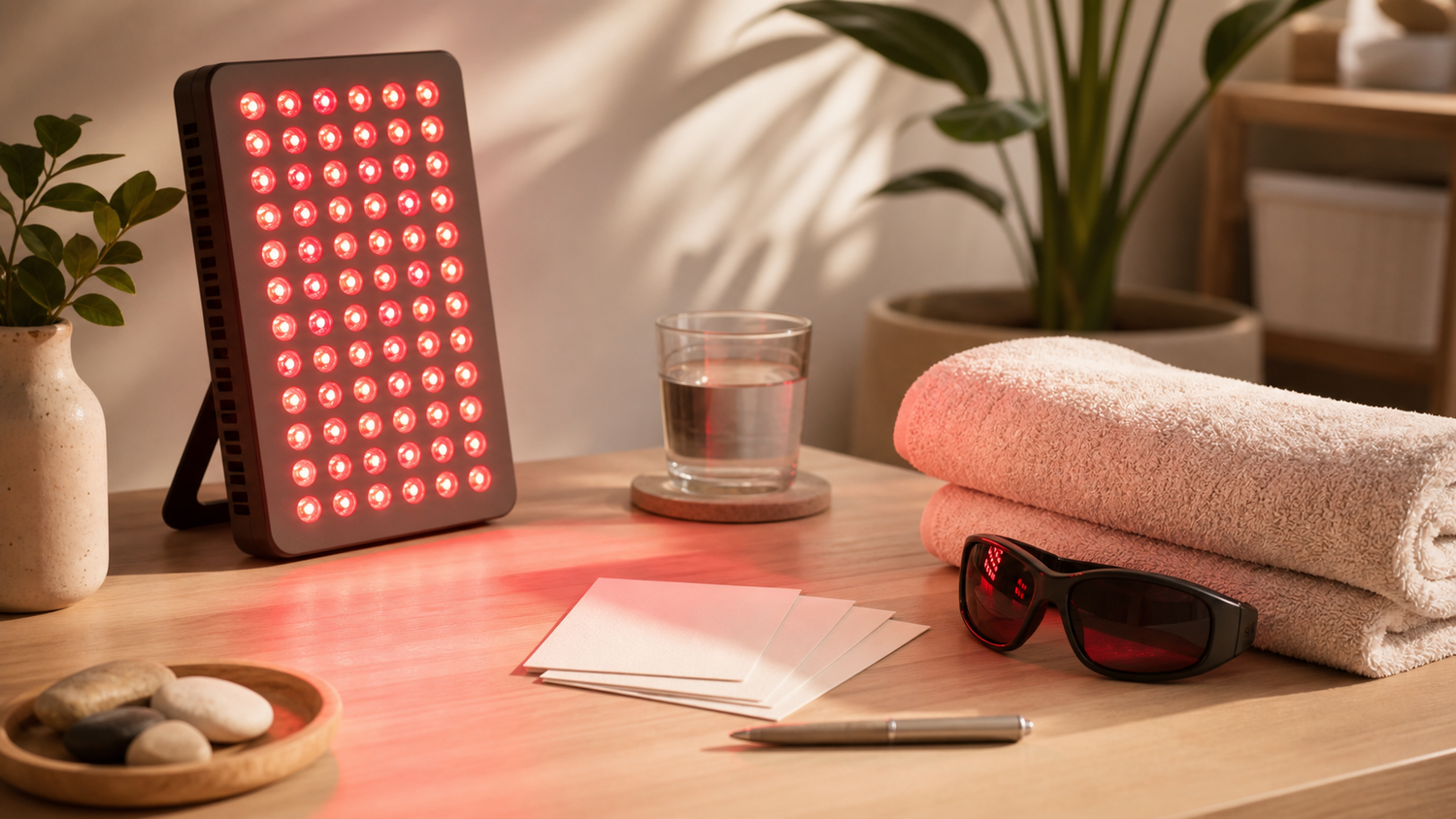
Some users skip the included goggles — "I'll just close my eyes," "it's only 10 minutes," "the light isn't that bright." Others wear sunglasses thinking they're equivalent.
Why it's wrong
- Eyelids are not opaque. Bright LED light at close range passes through.
- Sunglasses are designed for outdoor sunlight (UV protection), not specifically for high-intensity LED arrays at close range.
- The specific wavelengths (660 nm + 850 nm) aren't damaging the way UV is, but the intensity of the LEDs themselves can stress the retina at close range.
- This is one of the few real safety considerations in home red light wellness.
The fix
Use the included goggles every session, every time. Quality panels include them for a reason. If your panel didn't come with goggles, buy a pair rated for red light therapy before doing more sessions — they're inexpensive.
The habit: put goggles on before turning the panel on. Take them off after turning it off. No exceptions.
Mistake 3: Sessions on top of skincare products
What people do
Users apply their morning routine (cleanser, serum, moisturizer, sometimes even SPF) and then do red light. Or they do red light after applying retinoid at night. The reasoning: "I want my skincare to penetrate better," or "I'm doing both, might as well combine them."
Why it's wrong
- Products block light penetration. Sunscreens, foundations, thick moisturizers, mineral-based products reduce how much light reaches skin cells by 30-70%.
- Some products react with light energy unpredictably. Vitamin C oxidizes faster under bright light; retinoids can interact with skin's photosensitivity.
- SPF specifically is designed to block UV — but it also affects visible red and near-infrared.
The fix
Standard sequence: cleanse → do session on bare clean skin → apply skincare afterward.
Sessions should happen with nothing on skin except possibly the lightest hydrating mist if your skin is uncomfortably dry. Even that is optional. Our skincare layering guide covers full sequence for various actives.
Mistake 4: Inconsistent sessions over weeks
What people do
Use the panel intensively for a week, miss two weeks, come back for a few sessions, lapse again. Pattern: enthusiasm → lapse → guilt → sporadic use → abandonment.
Why it's wrong
Red light wellness benefits are cumulative. Cellular processes operate on slow timescales. A 10-minute session today doesn't "work" by itself — it contributes to a multi-week pattern of consistent exposure that may produce gradual effects.
Sporadic use:
- Doesn't accumulate the cellular response that comes with consistency
- Makes it hard to honestly evaluate whether the practice fits your routine
- Often leads to abandoning the practice because "it didn't work"
The fix
- Anchor sessions to existing habits. If you cleanse every morning, do red light right before. If you stretch after workouts, do red light during stretching.
- Aim for 3-5 sessions per week. Not every day — manageable.
- Make it easy. Keep the panel set up and ready. Friction = abandonment.
- Don't aim for perfection. Miss a day? Just resume. The benefit isn't erased.
- Plan for 12 weeks before evaluating. See our 12-week plan guide.
Mistake 5: Expecting dramatic visible results quickly
What people do
Inspired by marketing "before and after" content, new users expect to see significant changes in 1-2 weeks. When they don't, they assume the panel doesn't work, push intensity (Mistake 1), or quit.
Why it's wrong
- Cellular processes are slow. Collagen synthesis, microcirculation patterns, cellular signaling cascades operate on weeks-to-months timescales, not days.
- Skin cell turnover takes 28-60+ days depending on age.
- "Before and after" content often shows curated outliers, controlled lighting, or non-isolated variables — not realistic typical outcomes.
- Many individual responses are subtle — some users observe nothing visible they'd attribute specifically to red light. That's a valid outcome.
The fix
- Plan for 8-12 weeks before evaluating subjective changes
- Take consistent reference photos (same lighting, angle, time of day, weekly intervals)
- Read realistic expectation guides — our realistic expectations guide covers what to look for
- Track sessions, not results, in weeks 1-6 — evaluation comes later
- Accept that "no observed change" is also a valid outcome
Bonus mistakes worth knowing about
Mistake 6: Buying the cheapest panel available
Sub-$100 panels often have inaccurate wavelengths, dishonest irradiance specs (measured at zero distance), generic LEDs, and no real warranty. The dose you're actually receiving may be a fraction of what's claimed. Our cheap panels guide covers this in depth.
Mistake 7: Using red light during active sun damage or sunburn
Skin that's actively inflamed from sunburn or irritation should rest before adding new variables. Wait for redness and tenderness to fully resolve before resuming sessions on that area.
Mistake 8: Pointing the panel at eyes during setup
When adjusting position before goggles are on, don't directly face the panel at close range. Set distance and angle first with the panel off or pointed away.
Mistake 9: Sharing goggles without cleaning
If multiple household members use the panel, clean goggles between users with a soft cloth and gentle cleanser. The plastic is easy to keep hygienic.
Mistake 10: Treating red light wellness as a replacement for foundations
Red light wellness is one supportive practice. Sleep, nutrition, sun protection, hydration, stress regulation, and movement do the heavy lifting in any wellness routine. Don't compensate poor foundations with longer red light sessions.
When to consult a healthcare professional
Red light therapy panels are general wellness devices, not medical interventions. Consult a qualified healthcare professional before starting any new wellness practice including red light if you have any diagnosed medical condition, take photosensitizing medications (some antibiotics, retinoids, certain antidepressants, some diuretics, herbal supplements like St. John's Wort), have a photosensitive medical condition, are pregnant or breastfeeding, have a recent history of skin cancer or are being monitored for skin concerns, or have any concerns about how red light might interact with your specific situation.
Quick fix summary
| Mistake | Quick fix |
|---|---|
| Longer sessions for faster results | 10-15 min face / 15-20 min body, biphasic curve is bell-shaped |
| Skipping eye protection | Goggles every session, no exceptions |
| Sessions on top of skincare | Cleanse → session on bare skin → skincare after |
| Inconsistent sessions | 3-5x/week anchored to existing habit, 12 weeks before evaluating |
| Expecting dramatic quick results | Plan 8-12 weeks, track sessions not results initially |
The bottom line
Most red light wellness beginner mistakes come from two roots: "more is better" intuition (which fails because the dose response is bell-shaped), and "fast results" expectation (which fails because cellular processes are slow). Get session parameters right, use eye protection every time, do sessions on bare clean skin, stay consistent over weeks, and have realistic expectations — you'll get more out of red light wellness than 90% of users.
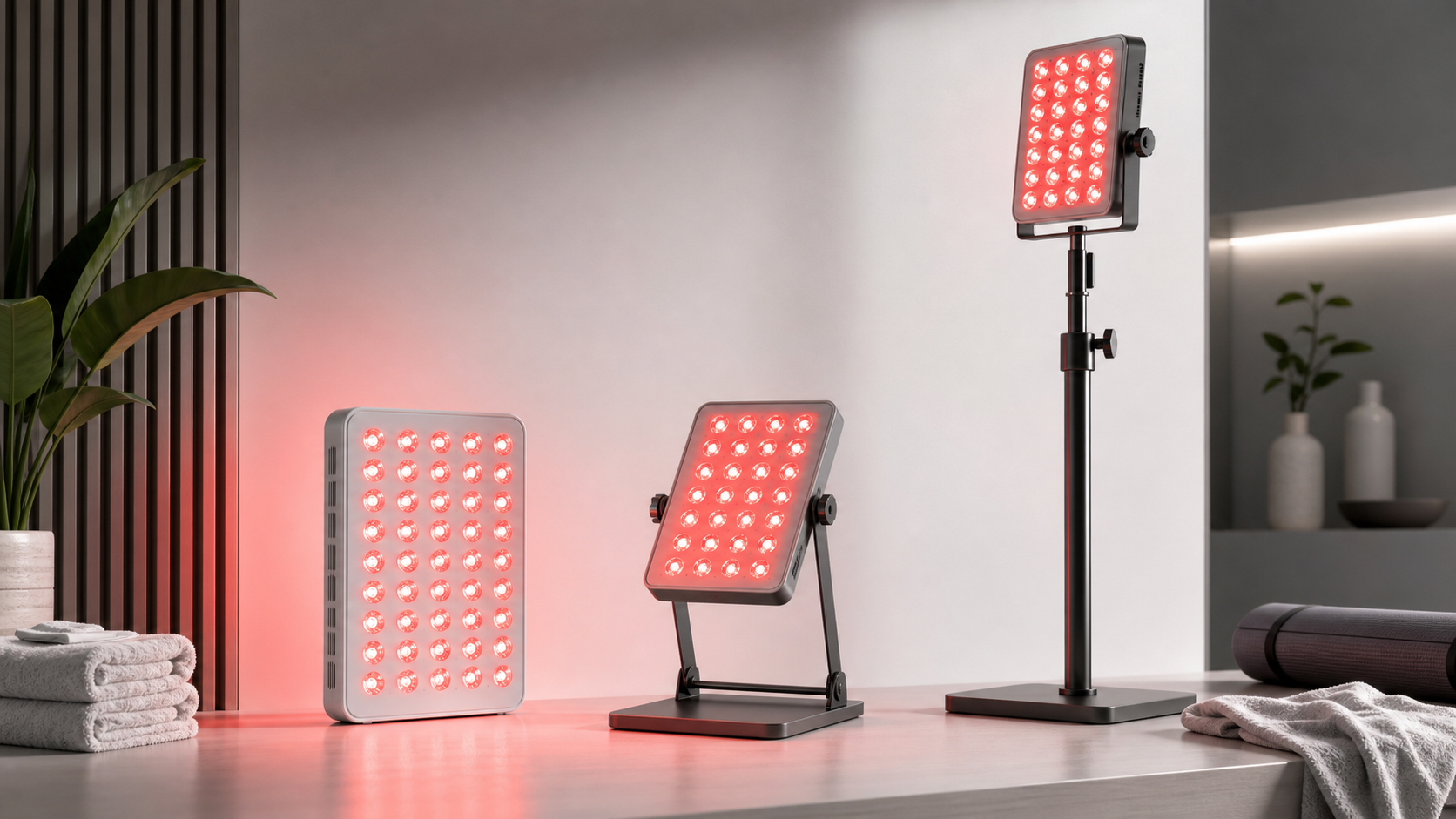
If you're starting your red light wellness practice with realistic expectations, the SOLRA Red Light Panel delivers verified 660 nm + 850 nm wavelengths through 40 dual-chip LEDs with honest irradiance, included eye protection, and a 60-day money-back guarantee — so you can avoid these mistakes from session one. $159-229 depending on stand configuration, with free US shipping and 2-year warranty.
Frequently asked questions
Are longer sessions better for faster results?
No. Photobiomodulation follows a biphasic, bell-shaped dose response, so past roughly 10 to 20 minutes per area at 6 to 12 inches, extra time does not add proportional benefit and may produce less; aim for 10 to 15 minutes for face and 15 to 20 for body.
Do I really need eye protection?
Yes. Eyelids are not opaque and the intensity of the LEDs at close range can stress the retina, so the article advises using the included goggles every session with no exceptions, putting them on before turning the panel on.
Can I do a session on top of my skincare products?
No, products like sunscreens, foundations, and thick moisturizers can reduce light reaching skin cells by 30 to 70 percent; the standard sequence is cleanse, do the session on bare clean skin, then apply skincare afterward.
How often should I use the panel and how long before judging results?
Aim for 3 to 5 sessions per week anchored to an existing habit, and plan for 8 to 12 weeks before evaluating, tracking sessions rather than results in the early weeks.
Wellness Disclaimer: The information in this article is for general wellness and educational purposes only and is not intended to diagnose, treat, cure, or prevent any disease. SOLRA products are general wellness devices and have not been evaluated by the FDA. Individual results may vary. Consult a qualified healthcare professional before starting any new wellness practice, especially if you have a medical condition or are taking medications.
About this guide. Written and maintained by the SOLRA Team, who design and support the SOLRA Red Light Panel (660nm red + 850nm near-infrared light). Our guides focus on practical, comfort-first routines and use general wellness language rather than medical claims. Always follow your device instructions and consult a qualified professional about any medical condition. Editorial review: SOLRA Team · Updated June 2026.

Leave a comment
This site is protected by hCaptcha and the hCaptcha Privacy Policy and Terms of Service apply.