
Last Updated: May 25, 2026
Key takeaways
- A structured 12-week plan helps turn red light wellness from a new purchase into a consistent routine, since consistency matters more than session intensity.
- Twelve weeks maps to skin cellular turnover, habit formation, photobiomodulation research timelines, and a realistic evaluation window.
- The plan moves through phases: foundation, establishing rhythm, consistency, subtle observations, continued routine, and evaluation.
- Sessions start conservative (12 inches, 10 minutes, 3x/week) and settle around 6–12 inches, 10–20 minutes, 3–5x/week.
- It will not treat any condition or produce dramatic transformations; missed sessions are not erased – just resume the schedule.
One of the harder things about building any new wellness habit is going from "I bought it" to "this is part of my routine." Red light wellness specifically benefits from consistency over weeks rather than intensity in single sessions — which means a structured 12-week plan often produces better outcomes than open-ended "I'll do it when I can."
This guide walks through a realistic 12-week plan for incorporating red light wellness into your routine — phase by phase, with the considerations that matter most at each stage. It's not the only valid plan; it's a workable starting framework.
Why 12 weeks
The 12-week timeline isn't arbitrary. It maps to:
- Skin cellular turnover: Roughly 28-40 days for most adults; mature skin slower
- Habit formation: Research suggests 8-12 weeks for a daily-ish practice to become automatic
- Photobiomodulation research timelines: Most cellular research studies span 8-16 weeks
- Realistic evaluation window: Long enough to observe subjective changes, short enough to commit to
At the 12-week mark, you'll have enough sessions under your belt to honestly evaluate whether red light wellness fits your routine.
Phase 1: Foundation (Weeks 1-2)
Goal: Get the panel set up, do your first sessions, build the muscle memory.
Setup checklist
- Unbox panel and stand
- Choose a permanent location (where you'll naturally end up, see our first week guide)
- Test that everything turns on and works
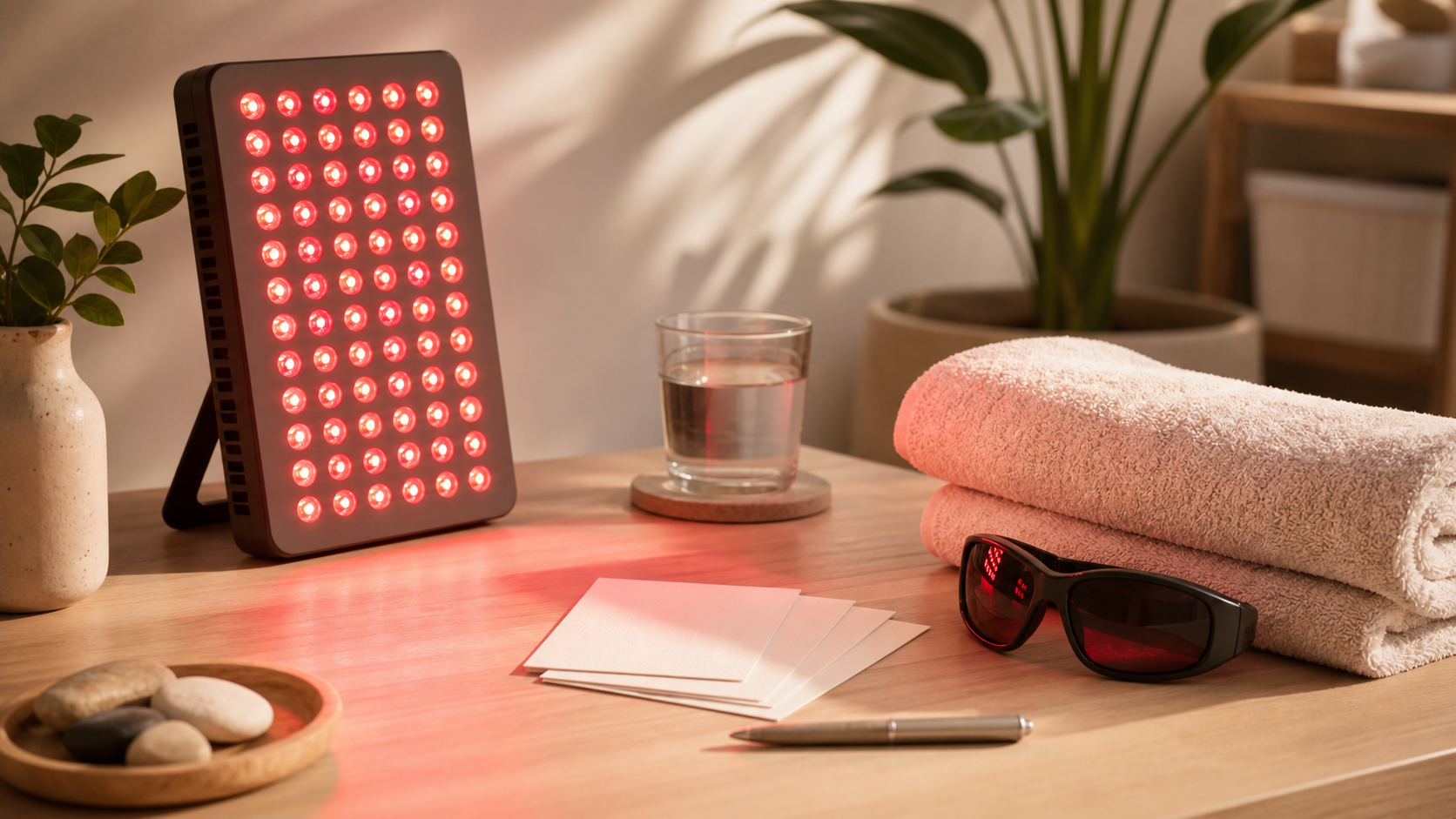
- Locate the goggles (use every session)
- Decide on morning or evening as your default session time
Session parameters (start conservative)
- Distance: 12 inches
- Session length: 10 minutes for face
- Frequency: 3 sessions per week (Mon/Wed/Fri or whatever fits)
- What to track: Just whether you did the session. Not results yet.
What to expect
- The novelty will fade quickly — that's normal
- Mild skin warmth or transient flushing for some users — normal
- No visible results yet — normal and expected
- Some sessions will feel awkward as you find your routine — normal
Phase 2: Establishing rhythm (Weeks 3-4)
Goal: Make sessions automatic, dial in your preferred parameters.
Adjustments to consider
- If skin tolerated week 1-2 well: Move to 8-10 inches, 12-15 minutes for face
- If skin was sensitive: Stay at 12 inches, 8-10 minutes; only adjust if comfortable
- Frequency: Add a 4th day if you've been consistent (4x/week is solid)
- Add body area: If you want to address muscle recovery or specific areas, add a 15-min body session 2-3x/week
Habit anchoring
By now you should have a natural anchor for sessions:
- After morning shower, before skincare
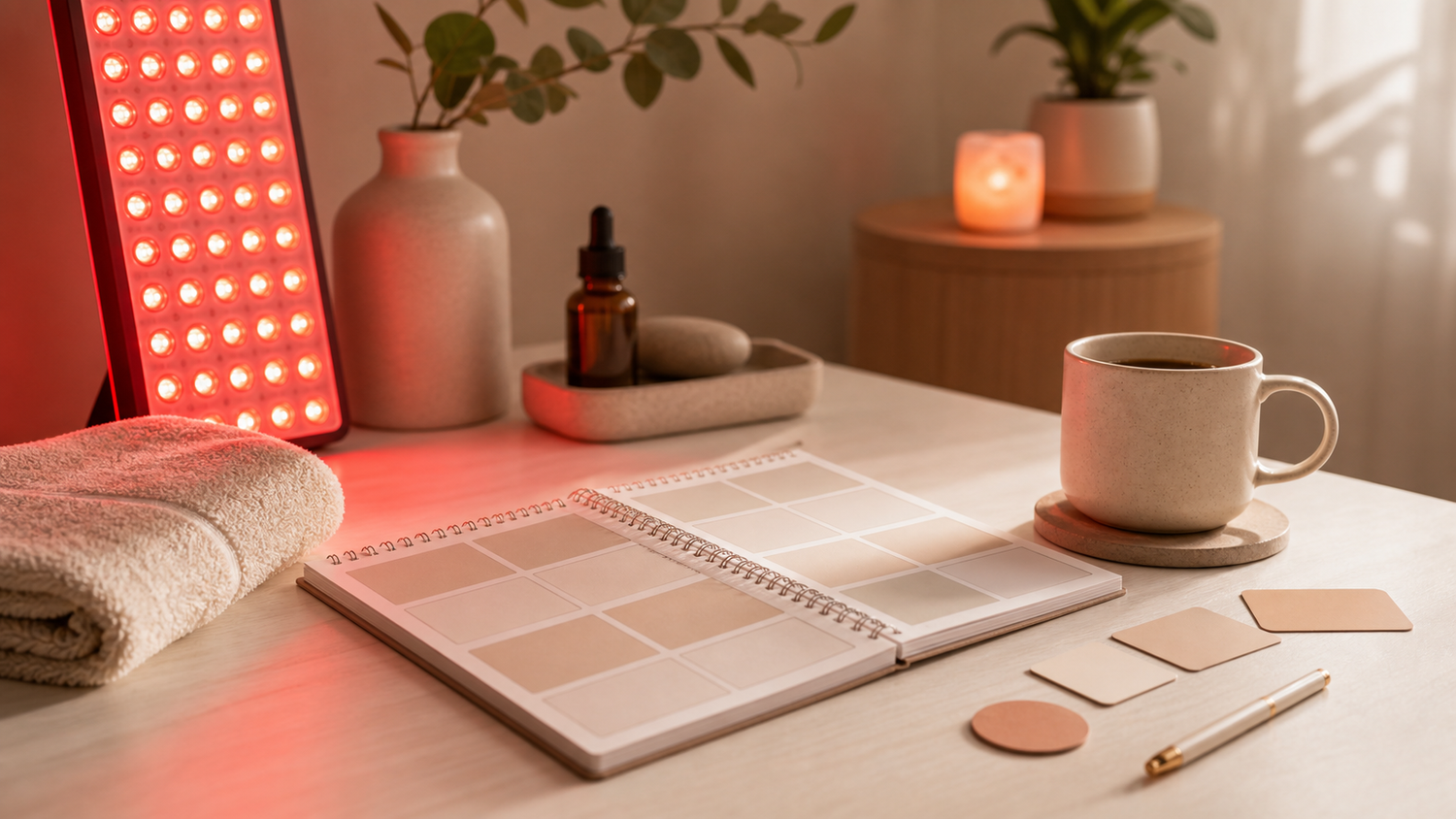
- During morning coffee while reading
- After workout, during stretching
- Before bed wind-down routine
If you haven't found one, pick one this week and stick with it.
Phase 3: Consistency (Weeks 5-6)
Goal: Move from "new habit" to "automatic routine."
By this point
- Setup time is minimal — you know your distance, time, position
- Sessions feel like brushing teeth: just something you do
- Eye protection is automatic (you put goggles on without thinking)
- You may start noticing subtle subjective changes — or not
Standard parameters by now
- Distance: 6-12 inches based on what your skin tolerates
- Session length: 10-15 min face, 15-20 min body
- Frequency: 3-5 sessions per week
- Tracking: Sessions log + brief observations
Common challenges
- Lost motivation: Normal at this stage. The novelty has worn off; you haven't seen dramatic results. This is when most people quit. Push through — the cumulative benefit is still building.
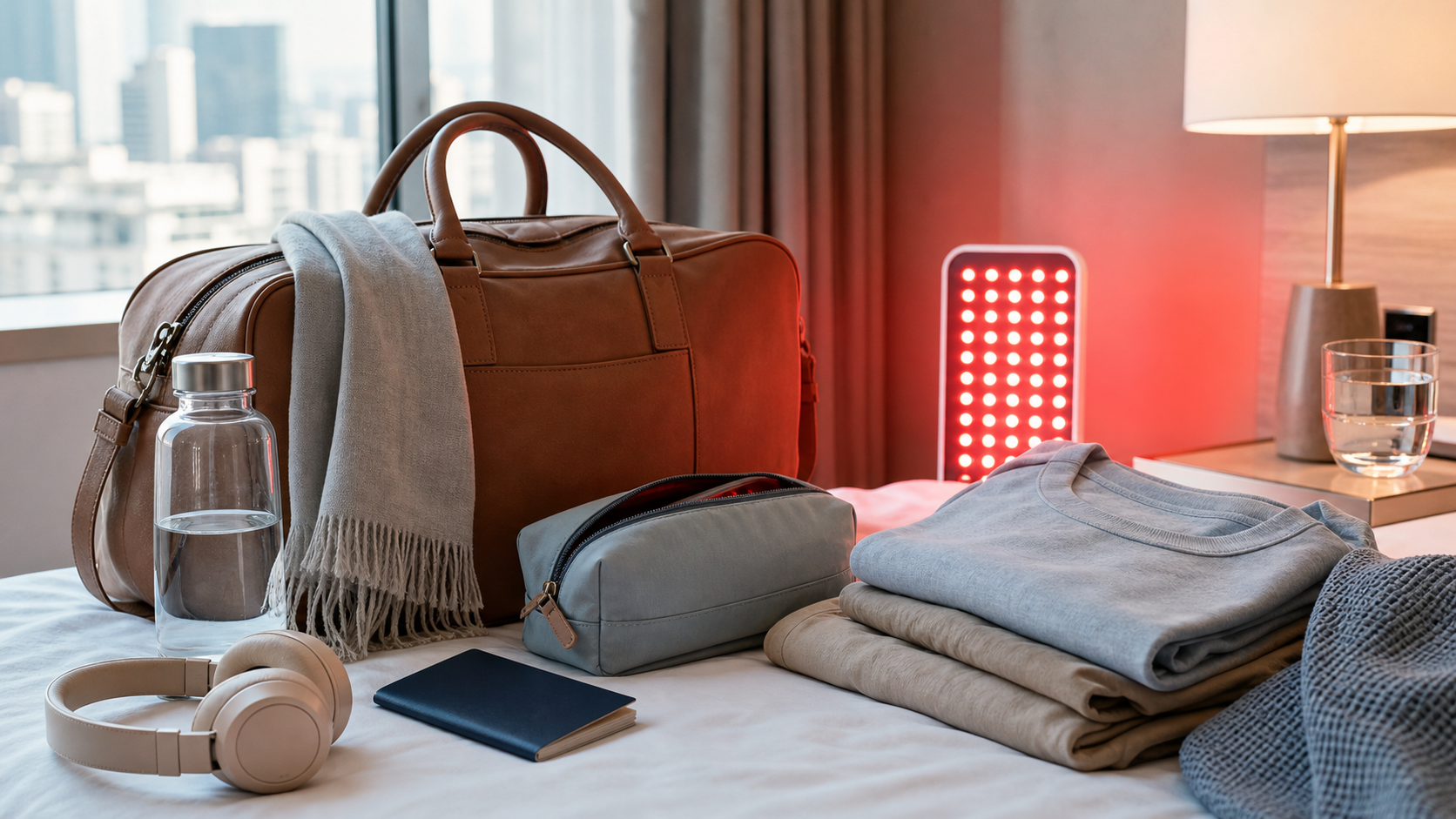
- Schedule disruption: Travel, busy weeks, sick days. Miss what you miss, resume normal.
- Boredom during sessions: Read, meditate, listen to podcasts — sessions are quiet time you can use productively.
Phase 4: Subtle observations (Weeks 7-8)
Goal: Start honestly tracking observations.
What to track now
- Reference photos (same lighting, same angle, weekly or bi-weekly)
- Brief notes on how skin or body feels
- Other variables that might affect what you're observing (new product, stress, sleep changes, season)
What you might observe (or not)
- Subtle changes in skin texture or hydration feel
- Recovery feel changes if you're using for muscle recovery
- Comfort changes if you're using for joint areas
- Nothing observable — also valid, individual response varies widely
Resist the urge to evaluate "is this working?" yet. The realistic evaluation window is still 4 weeks out.
Phase 5: Continued routine (Weeks 9-10)
Goal: Maintain the routine. Don't change variables.
Stay the course
- Same session parameters as Phase 3-4
- Same frequency
- Don't add new skincare actives or other wellness practices this week (so you can isolate red light's contribution at evaluation)
- Continue tracking
Phase 6: Evaluation (Weeks 11-12)
Goal: Honestly assess whether red light wellness fits your routine.
Compare week 1-2 photos to week 11-12 photos
- Same lighting, same angle, same time of day
- Look for subtle gradual changes — not transformations
- Be honest about what other variables changed during the 12 weeks (products, sleep, season, life events)
Review your notes
- What did you observe consistently?
- What didn't change?
- How does the routine feel — sustainable or burdensome?
- What's the time investment vs. observed benefit?
Possible conclusions
- "Yes, this fits my routine" — continue as ongoing practice (3-5x/week maintenance)
- "Mixed results, want to continue and see" — give another 8-12 weeks
- "I observed nothing meaningful, don't enjoy the time investment" — fully valid to stop. Some users observe subtle effects; others don't. Both are normal individual variation.
The 12-week schedule at a glance
| Phase | Weeks | Focus | Sessions/week |
|---|---|---|---|
| Foundation | 1-2 | Setup, first sessions | 3 |
| Establishing rhythm | 3-4 | Dial in parameters | 3-4 |
| Consistency | 5-6 | Automatic routine | 3-5 |
| Subtle observations | 7-8 | Start honest tracking | 3-5 |
| Continued routine | 9-10 | Stay the course | 3-5 |
| Evaluation | 11-12 | Compare, decide | 3-5 |
If you fall behind
Real life happens. If you miss a week:
- Don't try to make it up with intense sessions
- Just resume your schedule
- The cumulative benefit isn't erased by a gap
If you miss 2-3 weeks (vacation, illness, life event):
- Resume gradually — first week back, do conservative parameters
- Add a week to your evaluation timeline
- This is more realistic than abandoning the plan entirely
What this plan won't do
Honest framing:
- Won't treat any specific medical condition (consult a healthcare professional for those)
- Won't produce dramatic visible transformations
- Won't replace the foundations (sleep, sun protection, nutrition, professional care)
- Won't work as a shortcut — 12 weeks of consistency is the actual investment
When to consult a healthcare professional
Red light therapy panels are general wellness devices, not medical interventions. Consult a qualified healthcare professional before starting any new wellness practice including red light if you have any diagnosed medical condition, take photosensitizing medications, are pregnant or breastfeeding, have a photosensitive medical condition, have a recent history of skin cancer or are being monitored for skin concerns, or have any concerns about how red light might interact with your specific situation.
Frequently asked questions
Can I do an 8-week version instead?
You can, but the evaluation window will be tighter and cumulative benefits less developed. 12 weeks is the recommended minimum for honest evaluation.
What if I see results in week 4?
Great — keep going. Early observations can be encouraging but also subject to confirmation bias. The 12-week mark still serves as a more reliable evaluation point.
What if I miss too many sessions in a phase?
Add 1-2 weeks to your evaluation timeline. If you're missing more than half the planned sessions, the routine may not fit your life realistically — worth reconsidering frequency.
Should I change session times within the 12 weeks?
Try to keep the time consistent. Switching morning to evening mid-plan introduces a new variable that complicates evaluation.
What happens at week 13+?
If you continue, ongoing maintenance phase: 3-5 sessions per week at your dialed-in parameters. Just keep going. Cellular processes continue to benefit from continued consistency.
The bottom line
A structured 12-week plan turns red light wellness from "a new thing I bought" into "part of my routine." Foundation → rhythm → consistency → observation → maintenance → evaluation. Honest expectations and patience matter more than intensity or perfection.
If you're ready to commit to a 12-week red light wellness practice, the SOLRA Red Light Panel delivers verified 660 nm + 850 nm wavelengths through 40 dual-chip LEDs with honest irradiance reporting and a 60-day money-back guarantee — so you can complete your first phases and decide whether to continue. $159-229 depending on stand configuration, with free US shipping and 2-year warranty.
Frequently asked questions
Why is the plan built around 12 weeks?
The 12-week timeline maps to skin cellular turnover of roughly 28 to 40 days, habit formation that research suggests takes 8 to 12 weeks, photobiomodulation research that often spans 8 to 16 weeks, and a realistic evaluation window.
What parameters does the plan start with in the first phase?
Phase 1 starts conservative at 12 inches distance, 10 minutes for the face, and 3 sessions per week, tracking only whether you did the session rather than results.
Can I do an 8-week version instead?
You can, but the evaluation window will be tighter and cumulative benefits less developed, so 12 weeks is the recommended minimum for honest evaluation.
What happens at week 13 and beyond?
If you continue, it becomes an ongoing maintenance phase of 3 to 5 sessions per week at your dialed-in parameters, since cellular processes continue to benefit from continued consistency.
Wellness Disclaimer: The information in this article is for general wellness and educational purposes only and is not intended to diagnose, treat, cure, or prevent any disease. SOLRA products are general wellness devices and have not been evaluated by the FDA. Individual results may vary. Consult a qualified healthcare professional before starting any new wellness practice, especially if you have a medical condition or are taking medications.
About this guide. Written and maintained by the SOLRA Team, who design and support the SOLRA Red Light Panel (660nm red + 850nm near-infrared light). Our guides focus on practical, comfort-first routines and use general wellness language rather than medical claims. Always follow your device instructions and consult a qualified professional about any medical condition. Editorial review: SOLRA Team · Updated June 2026.

Leave a comment
This site is protected by hCaptcha and the hCaptcha Privacy Policy and Terms of Service apply.