
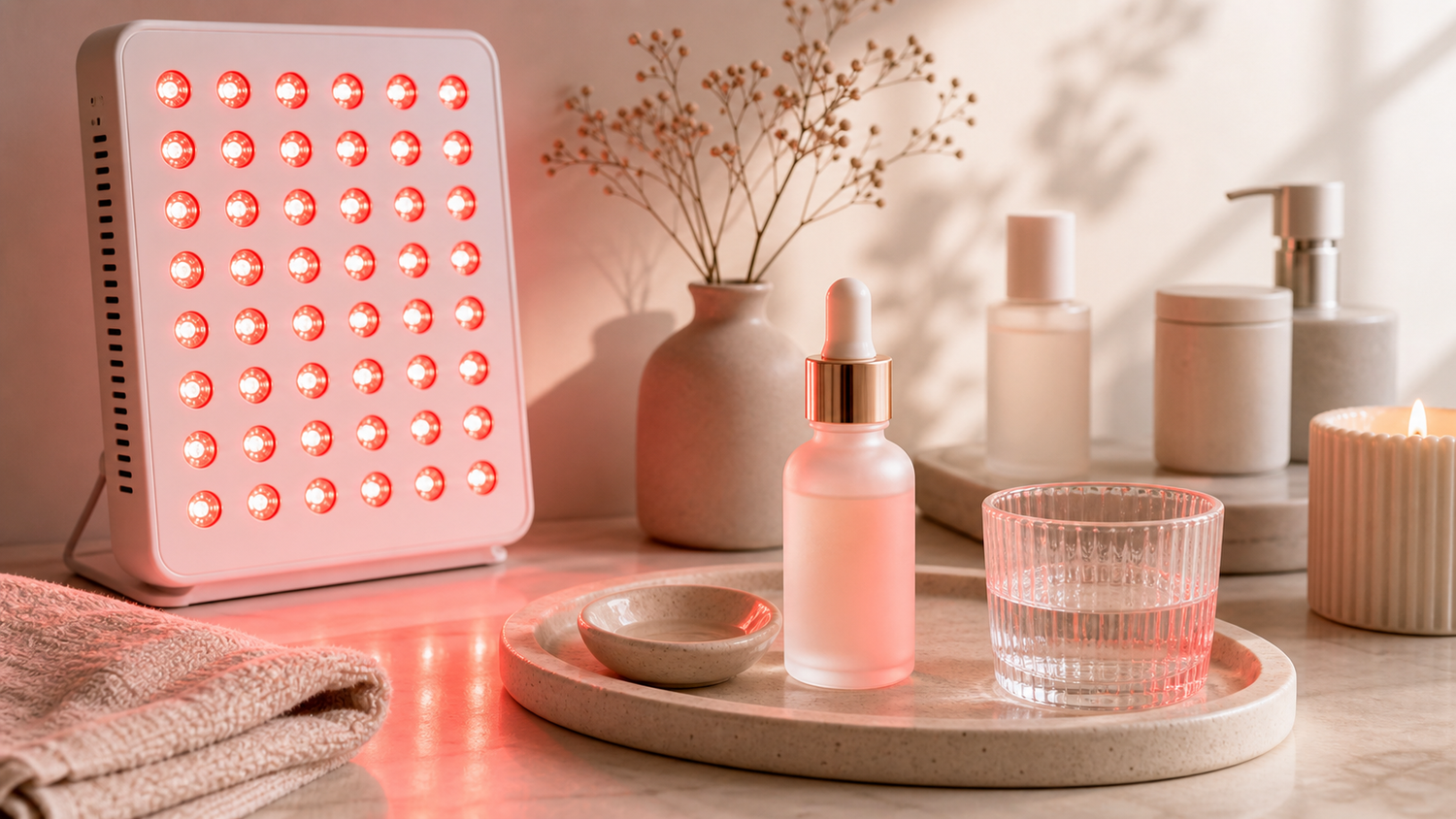
Last Updated: May 20, 2026
Key takeaways
- Red light wellness uses 660 nm and 850 nm wavelengths that may interact with skin cells via photobiomodulation, framed as one supportive layer, not an anti-aging treatment.
- Cellular research is discussed around fibroblasts, collagen synthesis, microcirculation and skin barrier, though it does not establish red light as a treatment for any skin condition.
- For facial sessions the article suggests 6–12 inches, 10–15 minutes, 3–5 times weekly, with consistency over 8–12 weeks.
- Sessions are suggested on bare, clean skin with eye protection, applying serums and moisturizer afterward.
- It sits alongside foundations like sun protection, sleep and hydration, and is not a replacement for dermatology care.
Skin appearance changes over time as a function of many factors — collagen synthesis slowing, microcirculation shifting, sun exposure cumulating, hydration patterns evolving. Among the wellness practices people layer onto their skincare routines, red light wellness has become one of the more discussed options because of the cellular research base around how specific wavelengths interact with skin cells.
This guide walks through what current research suggests about red light wavelengths and skin wellness, the framework for incorporating it into a broader routine, and where professional care is the right path instead.
What red light wellness is, at the cellular level
Red light wellness uses specific narrow wavelengths of visible red light (around 660 nm) and near-infrared light (around 850 nm) to interact with cells at the cellular level, without producing significant heat.
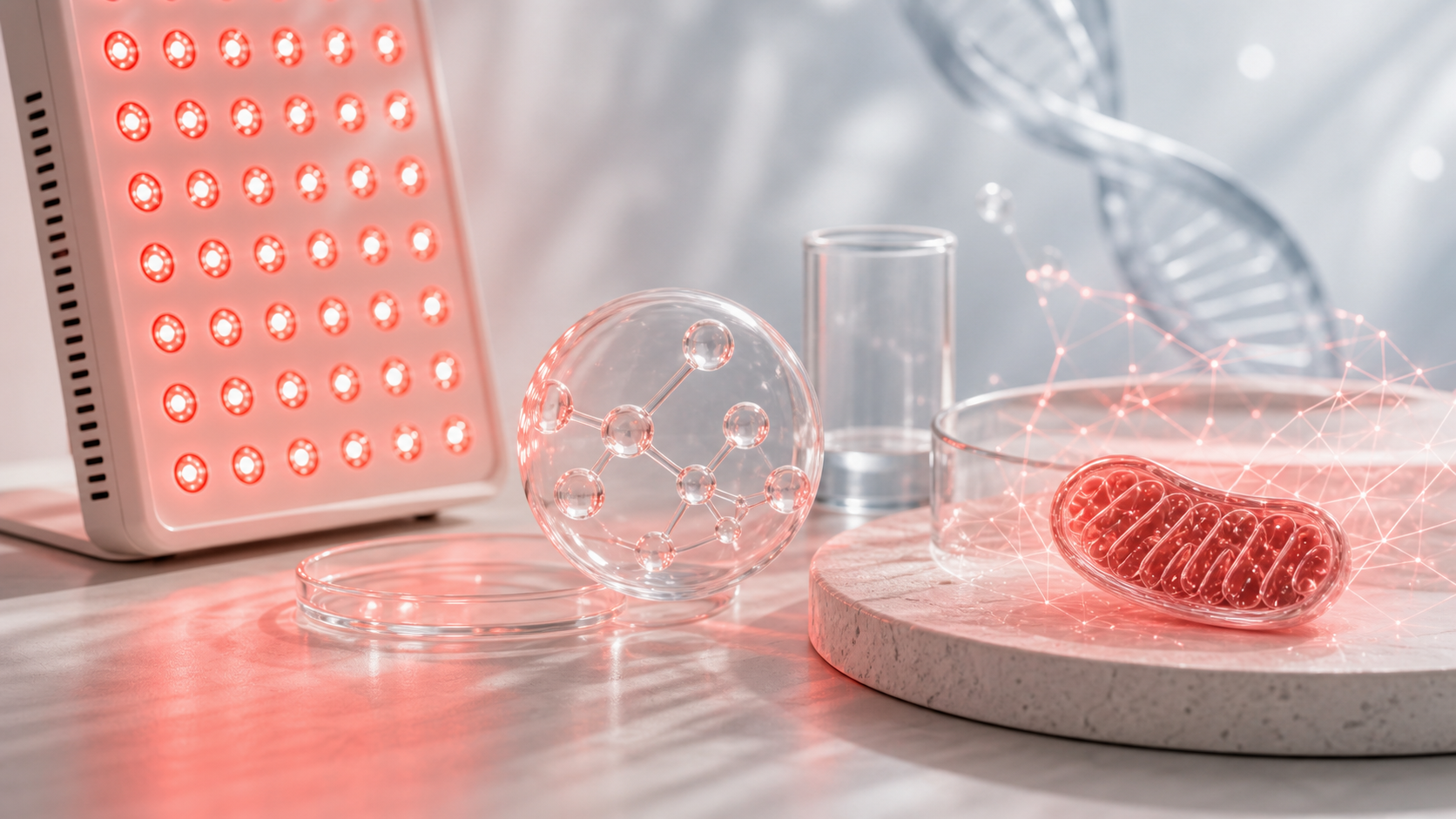
The mechanism, technically called photobiomodulation, centers on absorption of these wavelengths by cytochrome c oxidase in mitochondria. This absorption may support ATP production, modulate cellular signaling, and influence inflammatory markers at the cellular level. The full mechanistic picture is in our photobiomodulation guide.
For surface skin wellness specifically, 660 nm is more commonly emphasized because it interacts primarily with cells in the epidermis and upper dermis — the layers most relevant to surface appearance. The 850 nm wavelength penetrates deeper into the dermis.
What research suggests about red light and skin processes
The cellular biology of photobiomodulation in skin has been studied for decades. Several categories of research are relevant for skin wellness:
Fibroblast and collagen-related research
Fibroblasts are skin cells responsible for producing collagen, elastin, and other structural proteins. Studies in cell culture have observed that fibroblasts exposed to therapeutic doses of red light may show increased proliferation rates and changes in collagen synthesis. The translation from in-vitro findings to real-world consistent skin outcomes depends on many factors, but the underlying cell biology is reasonably well established.
Microcirculation research
Some research has explored how red and near-infrared wavelengths may affect blood flow in skin capillaries. Improved microcirculation may support delivery of oxygen and nutrients to skin cells and clearance of cellular waste.
Skin barrier research
Preliminary research has explored possible effects on skin barrier function. This is an active research area.
None of this cellular research establishes red light therapy as a treatment for any specific skin condition. What it does suggest is that the underlying mechanisms are plausible and worth understanding if you're considering whether red light wellness fits into a broader skincare routine.
The biphasic dose response
Photobiomodulation follows a bell-shaped dose-response curve: low doses produce stimulatory effects, medium doses produce optimal response, and high doses produce diminishing or no effect. "More is better" reasoning fails here — stay within recommended session parameters.
The foundations of skin wellness
Before any discussion of supportive wellness practices, the foundations that the evidence base supports for general skin wellness:
- Sun protection — the single most studied skin wellness practice
- Gentle cleansing and hydration — a consistent routine matters more than expensive products
- Sleep — skin repair processes operate during sleep
- Nutrition and hydration — skin reflects broader health status
- Stress regulation — chronic stress affects skin through multiple pathways
- Avoidance of known disruptors — smoking, excessive sun, harsh products
- Professional care when indicated — dermatology and esthetician services where appropriate
Red light wellness sits at most as one supportive layer alongside these foundations, not a replacement for any of them.
Session approach for skin wellness
Distance and time
For facial sessions: 6–12 inches from skin, 10–15 minutes per session. Closer (6–8 inches) for intensive focused sessions; farther (10–12 inches) for broader coverage. Our distance guide covers how distance affects intensity.
Frequency
3–5 sessions per week is the general framework. Consistency over 8–12 weeks matters more than any individual session. Our frequency guide covers schedules.
Use bare, clean skin
Cleanse thoroughly before sessions. Skincare products — particularly sunscreens, foundations, retinoids, and exfoliating acids — can block light penetration or react unpredictably. Cleanse, session on bare skin, then apply serums and moisturizer afterward.
Wear eye protection
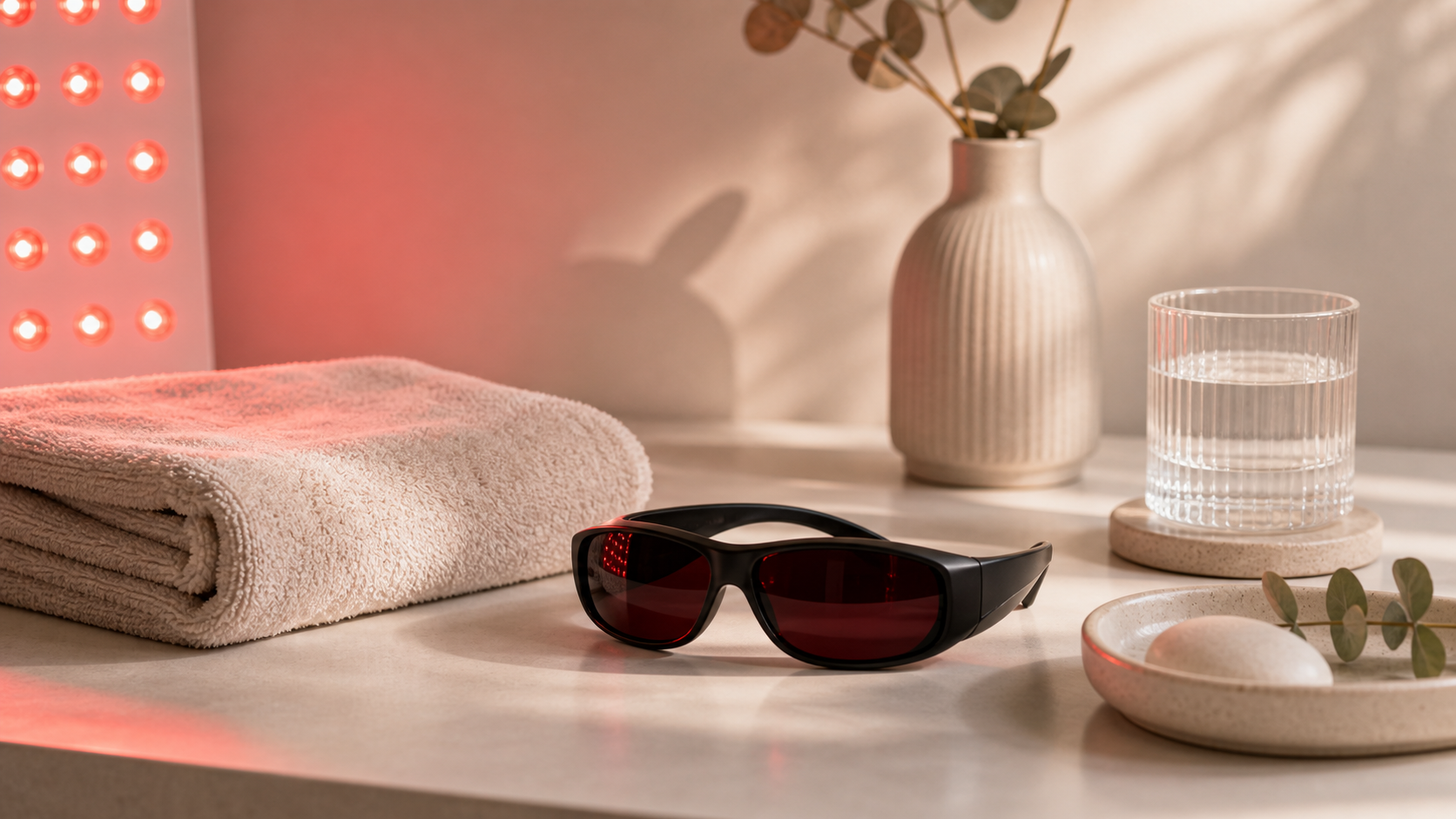
Quality panels include goggles. Use them every session.
Don't combine with new strong actives initially
Avoid introducing new retinoids, AHA/BHA exfoliants, or other strong actives in the same week you start red light. Layer one variable at a time so you can identify what your skin is responding to.
Timeline expectations
Skin processes operate on slow timescales:
- Weeks 1–2: Establishing the habit. Skin may feel slightly different in tone or hydration.
- Weeks 3–6: Some users observe gradual changes in skin texture or feel.
- Weeks 6–12: Skin processes have had time to respond. Observed changes (if any) are most apparent here.
- Month 3+: Ongoing maintenance phase.
Individual responses vary widely. Many other variables affect skin during the same period — weather, products, sleep, stress — making attribution to any single practice difficult.
When to consult a healthcare professional
Red light therapy panels are general wellness devices, not medical treatments. Consult a dermatologist or qualified healthcare professional if:
- You have any diagnosed skin condition
- You have persistent skin concerns that don't respond to general skincare
- You notice significant or sudden skin changes
- You take photosensitizing medications
- You have a photosensitive medical condition
- You're pregnant or breastfeeding
- You have a recent history of skin cancer or are being monitored for skin concerns
- You have any concerns about how red light might interact with your specific situation
Frequently asked questions
Does red light wellness work for skin?
The cellular research base supports plausible mechanisms for how 660 nm wavelengths interact with skin fibroblasts. Whether you'll observe specific changes depends on many individual factors, the consistency of your sessions, and the foundations of your overall skin care.
Is it safe for sensitive skin?
For most users, the safety profile is benign when used as directed. For sensitive skin specifically, our sensitive skin guide covers a more conservative approach.
Can I combine red light with my regular skincare?
Yes — on bare clean skin during the session, then apply skincare products afterward. Avoid combining with new strong actives initially so you can isolate variables.
How does this compare to LED face masks?
Different format with similar underlying wavelengths. Panels typically deliver higher irradiance at adjustable distance. Our panel vs mask comparison covers the full picture.
Can red light wellness replace dermatology care?
No. Red light is a general wellness device. For any diagnosed skin condition or persistent concern, professional dermatology care is essential.
The bottom line
For general skin wellness in users without diagnosed conditions, red light is one supportive practice that may sit alongside the foundations — sun protection, cleansing, hydration, sleep, nutrition, professional care where indicated. It is not a treatment for any specific skin concern and not a guarantee of any specific outcome.
If you decide red light wellness fits into your skincare routine, the SOLRA Red Light Panel delivers 660 nm + 850 nm wavelengths through 40 dual-chip LEDs with verified specs and honest irradiance reporting. $159-229 depending on stand configuration, with free US shipping and a 60-day money-back guarantee.
Frequently asked questions
How close should I hold the panel and how long should a facial session be?
For facial sessions, position the panel 6 to 12 inches from the skin for 10 to 15 minutes, using closer distances of 6 to 8 inches for focused sessions and 10 to 12 inches for broader coverage.
How often and for how many weeks should I use red light for skin wellness?
The general framework is 3 to 5 sessions per week, with consistency over 8 to 12 weeks mattering more than any individual session.
Should I apply my skincare before or after a session?
Cleanse and do the session on bare clean skin, then apply serums and moisturizer afterward, since products like sunscreens, foundations, retinoids, and exfoliating acids can block light penetration or react unpredictably.
Can red light wellness replace seeing a dermatologist?
No. Red light is a general wellness device, and for any diagnosed skin condition or persistent concern, professional dermatology care is essential.
Wellness Disclaimer: The information in this article is for general wellness and educational purposes only and is not intended to diagnose, treat, cure, or prevent any disease. SOLRA products are general wellness devices and have not been evaluated by the FDA. Individual results may vary. Consult a qualified healthcare professional before starting any new wellness practice, especially if you have a medical condition or are taking medications.
About this guide. Written and maintained by the SOLRA Team, who design and support the SOLRA Red Light Panel (660nm red + 850nm near-infrared light). Our guides focus on practical, comfort-first routines and use general wellness language rather than medical claims. Always follow your device instructions and consult a qualified professional about any medical condition. Editorial review: SOLRA Team · Updated June 2026.

Leave a comment
This site is protected by hCaptcha and the hCaptcha Privacy Policy and Terms of Service apply.