
Last Updated: May 20, 2026
Key takeaways
- Red light wellness is at most a supportive layer alongside the foundations of body composition – it will not change body composition on its own.
- Cellular research on adipocytes and metabolism is more preliminary than marketing suggests and does not establish predictable weight outcomes or spot fat reduction.
- The foundations that actually move body composition are energy balance, protein, resistance training, cardiovascular activity, sleep, stress regulation, and consistency.
- If incorporated, suggested approach is 6–12 inches, 15–20 minute sessions, 3–5 times weekly, with 850nm emphasized for deeper penetration alongside 660nm.
- Treat any marketing claim about melting fat with skepticism, and consult a professional for meaningful weight change.
Body composition is a multi-factor topic. The factors that move it — nutrition, exercise, sleep, stress regulation, hormones, age, genetics — are individually well-studied and collectively complicated. When a new modality enters the conversation, the honest question is not "does it work" but "what does it actually do, and how does it fit alongside everything else that already matters?"
Red light wellness is one such modality. There is genuine cellular research exploring how specific wavelengths interact with fat cells (adipocytes) and cellular metabolism. There is also a lot of marketing that runs well ahead of the evidence. This guide walks through what the research actually explores, what it does not establish, and how to think about red light wellness as part of — not a replacement for — the foundations of body composition.
What is red light wellness, at the cellular level?
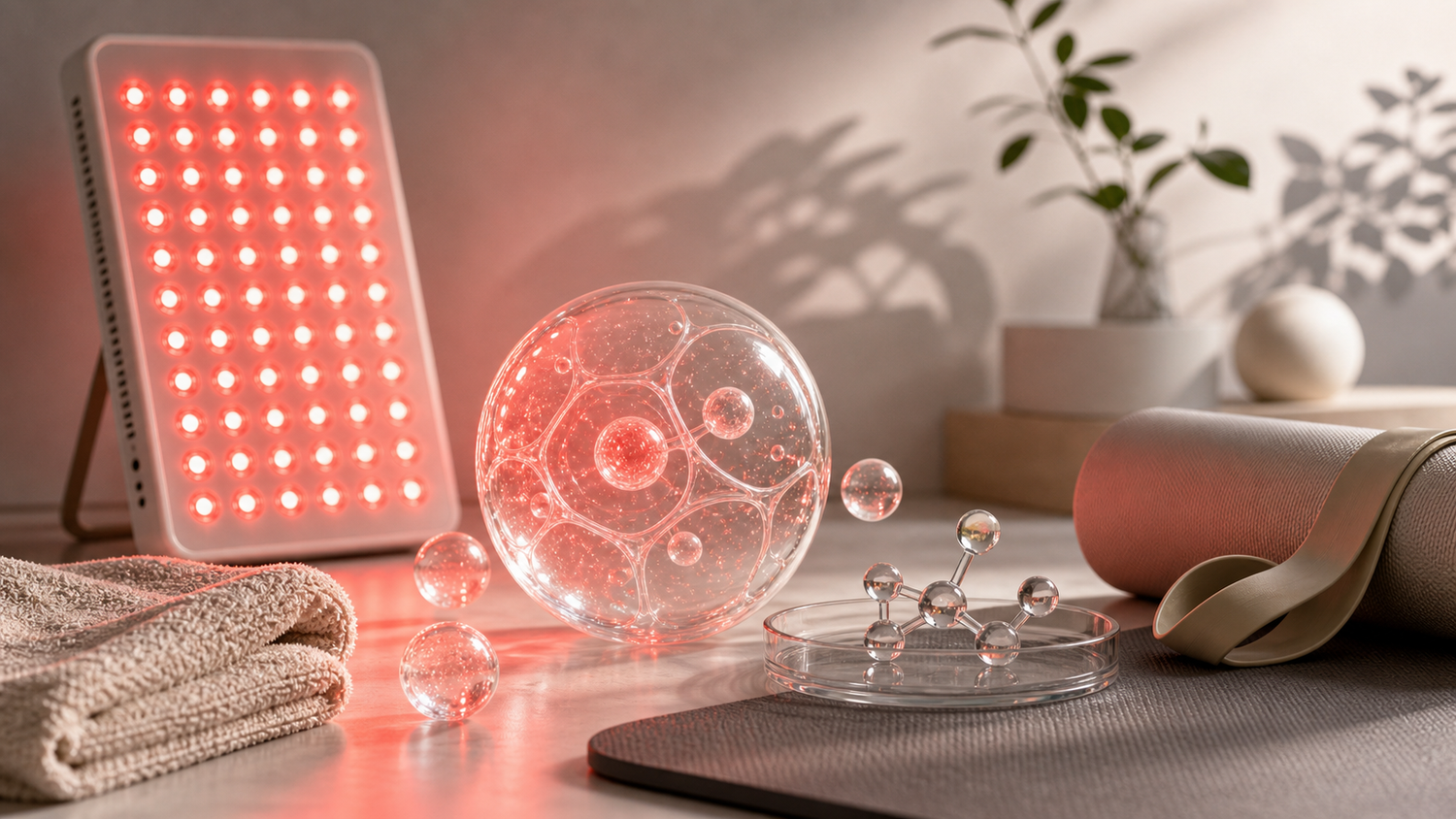
Red light wellness uses specific wavelengths of visible red light (around 660 nm) and near-infrared light (around 850 nm) to interact with cellular structures — primarily cytochrome c oxidase in mitochondria — without producing significant heat.
The mechanism, technically called photobiomodulation, is the same regardless of what tissue is being explored. Light is absorbed by mitochondrial chromophores. ATP production may be supported. Cellular signaling may shift. The downstream effects vary by tissue type, dose, and individual response.
For body composition specifically, two cellular research areas come up:
- Adipocyte (fat cell) research: Some cell-culture studies have observed that adipocytes exposed to therapeutic doses of red light may show changes in lipid droplet dynamics and cellular membrane permeability
- Cellular metabolism research: Mitochondrial activity is central to how cells use energy. Photobiomodulation appears to influence mitochondrial function in various cell types, which is the broader research interest
The mechanistic foundation is covered in our photobiomodulation guide.
What does research actually suggest about red light and fat cells?
The research base in this area is more preliminary than the marketing suggests. Some cell-culture and small clinical studies have explored adipocyte responses to specific wavelength exposure, but the translation to real-world body composition outcomes remains an active research area.
What the research has explored:
- In-vitro studies on isolated fat cells exposed to specific wavelengths and doses
- Small clinical trials measuring circumference at various body areas after multi-week session protocols
- Mechanistic research on how light absorption affects adipocyte signaling pathways
What the research does not establish:
- Red light as a stand-alone weight-management modality
- Predictable, dose-response weight outcomes across individuals
- Replacement for the foundations of body composition (nutrition, training, sleep, stress)
- Specific clinical applications
The honest framing: there is interesting cellular research here, and there are small clinical signals worth following. There is not a body of evidence that supports red light as a body composition intervention in the way that diet and exercise are.
The foundations that actually move body composition
Before any discussion of supportive wellness practices, it's worth being explicit about what the evidence base actually supports for changing body composition:
- Energy balance: Sustained energy intake relative to energy expenditure remains the central driver
- Protein intake: Adequate protein supports lean tissue retention during energy deficit
- Resistance training: Strength training supports lean tissue retention and metabolic rate
- Cardiovascular activity: Regular movement supports broader metabolic health
- Sleep: Sleep regulation strongly influences appetite hormones and metabolic processes
- Stress regulation: Chronic stress affects cortisol, sleep, and behavioral choices that compound over time
- Patience and consistency: Body composition changes meaningfully on month-to-year timescales, not week-to-week
Any other modality — red light included — sits as a possible supportive layer on top of these foundations. It does not replace them, and it does not produce meaningful results if the foundations are absent.
How might red light fit alongside the foundations?
Red light wellness may fit into a broader routine as a supportive practice, particularly for users who are already managing the foundations and looking for ancillary practices that align with their wellness goals.
Possible roles that come up in user routines:
Post-training recovery support
For users who train regularly, red light wellness sessions after workouts may support recovery processes at the cellular level. The muscle recovery research is the more established area here.
General wellness routine
Some users incorporate red light sessions into broader wellness practices alongside other supportive habits like consistent sleep schedules, stress regulation practices, and structured movement.
Skin support during body composition changes
Active body composition changes can affect skin appearance. The skin-related cellular research (collagen processes, microcirculation) is more established and may be relevant alongside body composition work.
What red light wellness should not be: a primary intervention for weight management, a substitute for nutrition or exercise, or a guarantee of any specific outcome.
Session approach if you decide to incorporate it
Distance and time
For body-focused sessions, position the panel 6-12 inches from the target area, with sessions of 15-20 minutes. Larger body areas may require repositioning during a session to cover the full area at adequate dose. Our distance guide covers the inverse square law and intensity tradeoffs.
Frequency
3-5 sessions per week is the framework most often discussed in research and practitioner guidance. Consistency over weeks matters more than any single session. Our frequency guide covers session scheduling.
Wavelength
Quality dual-wavelength panels deliver both 660 nm and 850 nm. For body-focused use, 850 nm's deeper penetration is the more commonly emphasized wavelength.
The biphasic dose response
Photobiomodulation follows a bell-shaped dose-response curve — more is not better past the optimal range. Sessions longer than 20-25 minutes at close distance may produce diminishing or no additional response.
When to consult a healthcare professional
Red light therapy panels are general wellness devices, not medical interventions. Consult a qualified healthcare professional before starting any new wellness practice (including red light) if:
- You are pregnant or breastfeeding
- You take photosensitizing medications
- You have a diagnosed medical condition affecting metabolism, hormones, or weight regulation
- You are recovering from surgery or have implanted medical devices in the session area
- You have a history of photosensitive conditions
- You have any concerns about how red light might interact with your individual situation
For meaningful body composition change — particularly significant weight loss or weight gain — a qualified healthcare professional, registered dietitian, or certified trainer is the appropriate resource. A wellness device is not a substitute for professional guidance.
Frequently asked questions
Will red light wellness change my body composition on its own?
No. Body composition changes are driven by nutrition, training, sleep, and consistent behavior over months-to-years timescales. Red light wellness is at most a supportive practice alongside those foundations.
How long would I need to use it to see any effect?
Any cellular-level effects accumulate slowly. If you decide to incorporate red light wellness, plan for 8-12 weeks of consistent sessions before evaluating whether you observe anything you'd attribute to it — and even then, isolating its contribution from other variables (training, nutrition, sleep) is difficult.
What does the research not support?
Predictable weight loss outcomes, spot fat reduction, replacement of diet and exercise, or any specific clinical claim. The marketing language in this category often runs well ahead of what the evidence base actually establishes.
Is this safe to use alongside other body composition efforts?
Red light wellness has a benign safety profile for most healthy adults. For specific medical situations, consult a healthcare professional. The general framework is to layer it onto a stable foundation of nutrition, training, and sleep — not to start it as a primary intervention.
How does this differ from infrared sauna use?
Different mechanism. Infrared sauna uses far-infrared wavelengths that heat the body, producing sweating and cardiovascular responses. Red light wellness uses non-thermal wavelengths absorbed at the cellular level. They are not interchangeable. Our comparison guide covers the full picture.
What about specific marketing claims about "melting fat"?
Treat any marketing claim that promises specific weight outcomes, inches lost, or visible body changes from red light alone with skepticism. Quality research does not support those framings, and reputable wellness brands do not make them.
The bottom line
Body composition is a foundational health topic where the evidence base strongly supports a specific set of practices — nutrition, training, sleep, stress regulation — carried out consistently over long timescales. Red light wellness is not part of that foundation, and any honest assessment recognizes that.
What red light wellness may be is a supportive practice that fits alongside the foundations for users who are already managing them. The cellular research is interesting; the clinical applications are still being characterized; and the marketing in this category often outpaces the evidence.
If you decide red light wellness fits into your broader routine, the SOLRA Red Light Panel delivers 660 nm + 850 nm wavelengths through 40 dual-chip LEDs with verified specs and honest irradiance reporting. $159-229 depending on stand configuration, with free US shipping and a 60-day money-back guarantee.
Frequently asked questions
Will red light wellness change my body composition on its own?
No. Body composition changes are driven by nutrition, training, sleep, and consistent behavior over months-to-years timescales, and red light wellness is at most a supportive practice alongside those foundations.
What does the research on red light and fat cells actually show?
The research base is more preliminary than the marketing suggests. Some cell-culture and small clinical studies have explored adipocyte responses to specific wavelength exposure, including changes in lipid droplet dynamics, but the translation to real-world body composition outcomes remains an active research area.
What distance, time, and frequency does the article suggest for body sessions?
For body-focused sessions, position the panel 6-12 inches from the target area for 15-20 minutes, repositioning as needed to cover larger areas, with 3-5 sessions per week as the framework most often discussed. Consistency over weeks matters more than any single session.
How should I treat marketing claims about melting fat?
Treat any marketing claim that promises specific weight outcomes, inches lost, or visible body changes from red light alone with skepticism, because quality research does not support those framings and reputable wellness brands do not make them.
Wellness Disclaimer: The information in this article is for general wellness and educational purposes only and is not intended to diagnose, treat, cure, or prevent any disease. SOLRA products are general wellness devices and have not been evaluated by the FDA. Individual results may vary. Consult a qualified healthcare professional before starting any new wellness practice, especially if you have a medical condition or are taking medications.
About this guide. Written and maintained by the SOLRA Team, who design and support the SOLRA Red Light Panel (660nm red + 850nm near-infrared light). Our guides focus on practical, comfort-first routines and use general wellness language rather than medical claims. Always follow your device instructions and consult a qualified professional about any medical condition. Editorial review: SOLRA Team · Updated June 2026.

Leave a comment
This site is protected by hCaptcha and the hCaptcha Privacy Policy and Terms of Service apply.