
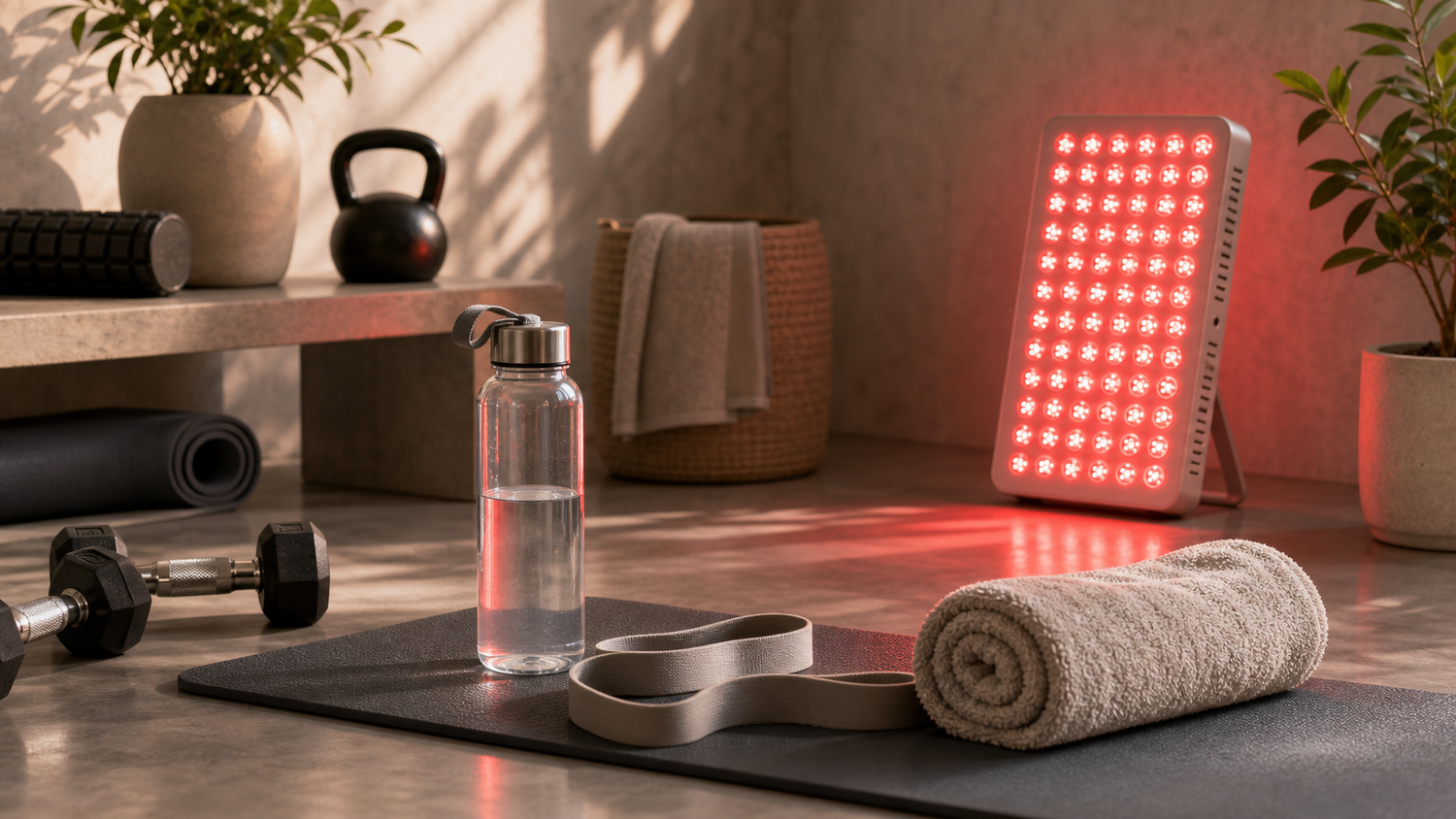
If you train regularly, you have probably wondered where a red light session fits: before the workout, after it, or on rest days. There is no single rule, but there are sensible ways to fit a panel into a training routine without overcomplicating it.
Key takeaways
- There is no single rule for when a red light session fits around training – before, after, or on rest days can all work.
- A short pre-workout session can be part of a calm warm-up, kept brief so it does not eat into training time.
- The most common approach is a relaxed post-training session targeting the area that worked hardest, paired with easy stretching or cooldown.
- Rest-day sessions on lingering tight spots are often easiest to keep consistent because there is no time pressure.
- Keep distance comfortable at roughly 6 to 12 inches – closer is not automatically better – and pick the timing you will actually repeat.
Before your workout: warm-up and readiness
Some people like a short session before training as part of a calm warm-up routine. Used this way, it is less about the session itself and more about easing into movement: sit down, do a brief session on the area you are about to work, then move into your usual warm-up.
Keep it short so it does not eat into your training time or leave you sitting too long before you get moving.
After your workout: a recovery ritual
The most common approach is a post-training session as part of a recovery routine. After you cool down, target the area that worked hardest and keep the position relaxed.
- Quads and hamstrings after leg day.
- Shoulders and chest after pressing.
- Back after pulling work.
- Calves after running.
Pair the session with easy stretching or quiet cooldown time, but avoid turning recovery into another long checklist.
Rest days count too
You do not have to attach every session to a workout. On rest days, a relaxed session focused on lingering tight spots can be a comfortable part of a recovery routine. For many people, rest-day sessions are the easiest to keep consistent because there is no time pressure.
Fit it to your schedule, not the other way around
The best timing is the one you will actually repeat. If mornings are rushed, an evening session after training will stick better. If you train at night, a relaxed session afterward can double as a wind-down. Consistency usually matters more than hitting a perfect window.
Keep sessions comfortable
Whenever you fit it in, keep the distance and position comfortable. A common starting point is roughly 6 to 12 inches from the panel, adjusted for warmth and coverage. Closer is not automatically better, and a position you can relax in is one you will keep using.
A simple weekly rhythm
If you want a starting template, keep it light: a few post-workout sessions on training days targeting what you worked, plus an optional rest-day session for areas that stay tight. Adjust based on how it feels and how easily it fits your week.
Frequently asked questions
Is there a single best time to use a red light panel around training?
No. The article says there is no single rule, and the best timing is the one you will actually repeat, since consistency usually matters more than hitting a perfect window.
How can I use a session before a workout?
Some people like a short session before training as part of a calm warm-up, doing a brief session on the area they are about to work, then moving into their usual warm-up. Keep it short so it does not eat into training time or leave you sitting too long before getting moving.
Which areas should I target after different workouts?
After you cool down, target the area that worked hardest: quads and hamstrings after leg day, shoulders and chest after pressing, back after pulling work, and calves after running.
What distance does the article suggest for comfortable sessions?
A common starting point is roughly 6 to 12 inches from the panel, adjusted for warmth and coverage. Closer is not automatically better, and a position you can relax in is one you will keep using.
Where SOLRA fits
For training routines, a floor stand makes it easy to cover larger muscle groups like legs and back, while a tabletop placement works for seated upper-body sessions. The SOLRA Red Light Panel is built around 660nm red light and 850nm near-infrared light, with setup options for panel-only use, tabletop placement, or a complete floor-stand kit.
Quick safety notes
Red light wellness routines should feel comfortable. Avoid staring directly into bright LEDs, follow your device instructions, and consult a qualified professional if you are pregnant, photosensitive, using light-sensitive medication, or managing a medical condition.
About this guide. Written and maintained by the SOLRA Team, who design and support the SOLRA Red Light Panel (660nm red + 850nm near-infrared light). Our guides focus on practical, comfort-first routines and use general wellness language rather than medical claims. Always follow your device instructions and consult a qualified professional about any medical condition. Editorial review: SOLRA Team · Updated June 2026.

Leave a comment
This site is protected by hCaptcha and the hCaptcha Privacy Policy and Terms of Service apply.