
Last Updated: May 20, 2026
Key takeaways
- Cellular research suggests photobiomodulation may modulate inflammatory signaling in context-dependent ways – it does not support simple claims that red light reduces inflammation.
- Inflammation is a complex category of cellular signaling involving cytokines, transcription factors like NF-kB, and reactive oxygen species – not a single on-off condition.
- Photobiomodulation follows a biphasic dose response, so staying within recommended parameters matters and more is not better.
- Suggested approach for general cellular wellness: 6–12 inches, 10–15 minutes face or 15–20 minutes body, 3–5 sessions weekly, using 660nm & 850nm.
- Diagnosed inflammatory or autoimmune conditions call for professional care, not a wellness device.
Inflammation is one of the most loaded words in wellness discourse. In popular use, it has become a kind of catch-all explanation for a wide range of concerns. In actual cellular biology, it's a precise and important process — not a single thing, but a category of signaling that the body uses constantly, in countless contexts, for both helpful and unhelpful purposes.
When red light wellness comes up in conversations about "reducing inflammation," the simplification often runs ahead of what the research actually establishes. This guide walks through what cellular research suggests about photobiomodulation and inflammatory signaling, where the evidence is meaningful, where it's been oversimplified, and how to think clearly about red light wellness in this context.
What "inflammation" actually means in cellular biology
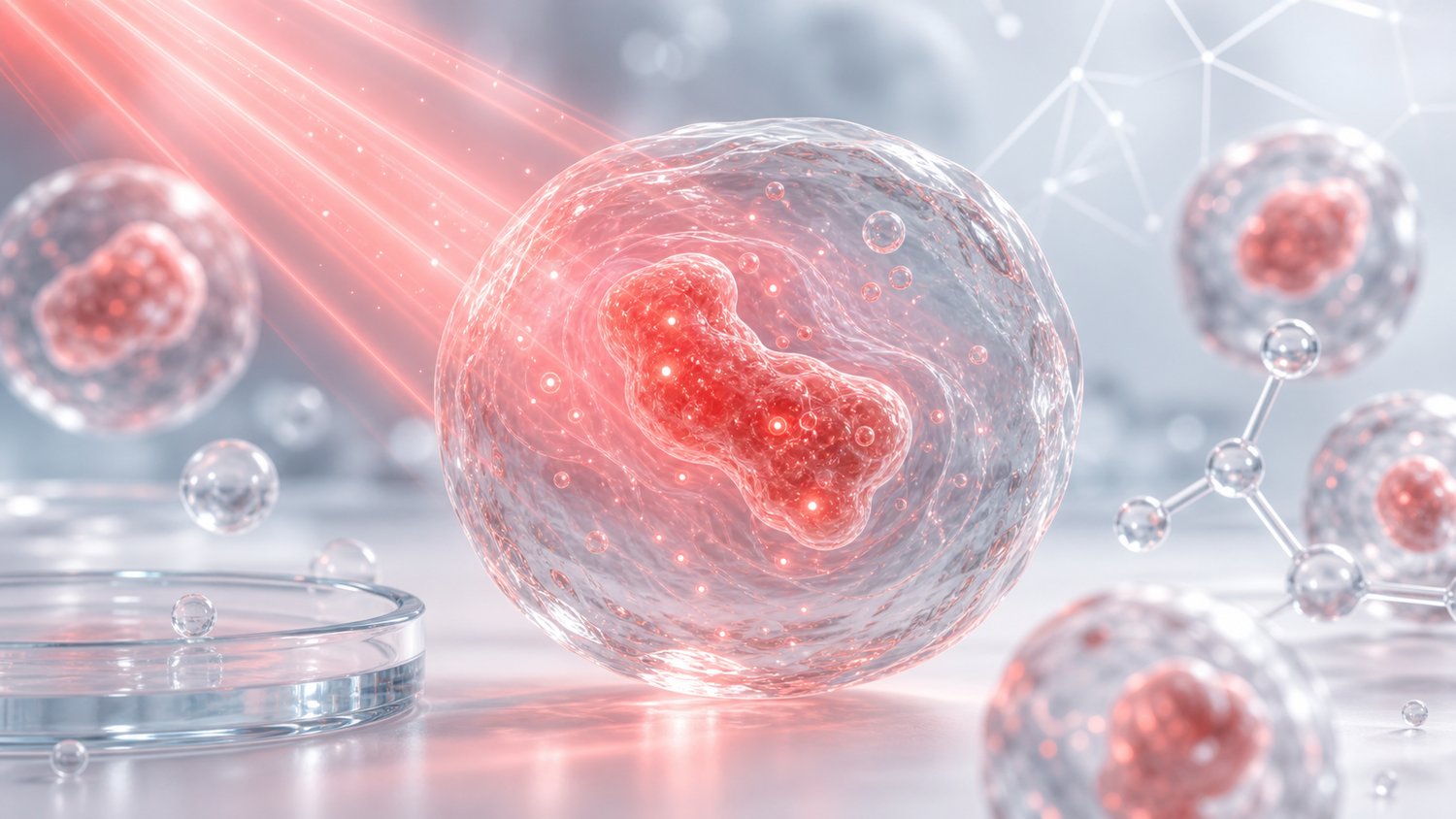
At the cellular level, inflammation is not a single condition but a category of signaling involving many different molecules, pathways, and cell types — some that contribute to acute response, some to ongoing regulation, and some to chronic patterns.
The popular framing of "good inflammation vs bad inflammation" is too simple but captures something real. Acute inflammatory response after injury or infection is essential — it's how the body coordinates repair. Persistent low-grade inflammatory signaling, by contrast, is implicated in a range of health concerns and is what most wellness conversations are gesturing toward.
Specific molecules and pathways involved include cytokines (TNF-alpha, IL-6, IL-10, and many others), inflammatory transcription factors (NF-kB, AP-1), reactive oxygen species, and immune cell populations. The biology is genuinely complex — simple claims about "red light reduces inflammation" obscure this complexity in ways that are not honest.
What research has explored about photobiomodulation and inflammatory signaling
A body of research has explored how specific wavelengths of light interact with various inflammatory signaling molecules at the cellular level, with findings that are context-dependent rather than uniformly "anti-inflammatory."
What the research has explored:
Cytokine modulation
Studies in cell culture have observed that exposure to therapeutic doses of red and near-infrared light may modulate the production of various cytokines — sometimes reducing pro-inflammatory cytokines, sometimes increasing anti-inflammatory cytokines, sometimes both. The direction and magnitude depend on cell type, baseline state, dose, and other factors.
Transcription factor effects
The transcription factors NF-kB and AP-1 are central regulators of inflammatory gene expression. Some research suggests photobiomodulation may influence these pathways in context-dependent ways — not uniformly suppressing them, but modulating them based on the cellular environment.
Reactive oxygen species (ROS) as signaling molecules
The term ROS often carries negative connotations in popular health writing, but at low levels, ROS function as cellular signaling molecules — not damage agents. Photobiomodulation appears to produce a brief, controlled ROS increase that may trigger protective and adaptive responses, similar to how moderate exercise produces beneficial ROS-mediated adaptations.
Immune cell modulation
Various immune cell populations have shown altered behavior in response to specific wavelength exposure in research settings. Whether and how these in-vitro findings translate to whole-organism outcomes remains an active research area.
What the research does not establish
The cellular research does not support simple claims that red light "reduces inflammation" in any single, predictable, clinical sense — the biology is too context-dependent for that framing.
What the cellular research does not establish:
- Red light as a treatment for any specific inflammatory condition
- Predictable dose-response across individuals and conditions
- Replacement for medical management of inflammatory conditions
- A general "anti-inflammatory" effect outside of specific cellular contexts
- Equivalence to anti-inflammatory medications or other clinical interventions
Marketing claims that frame red light as broadly anti-inflammatory are running well ahead of what the research base supports. The honest framing is that photobiomodulation modulates inflammatory signaling at the cellular level in context-dependent ways — which is interesting biology, but not a clinical claim.
The biphasic dose response
One important consistent finding: photobiomodulation follows a biphasic dose-response curve. Low doses produce stimulatory effects, medium doses produce optimal response, and high doses produce diminishing or no effect. For inflammatory signaling specifically, this means very high doses may produce different effects than moderate doses — the dose-response is not linear.
Practical implication: stay within recommended session parameters. "More is better" reasoning fails with photobiomodulation, including in inflammatory contexts.
When red light wellness is NOT the right answer
Specific inflammatory health concerns require professional care — not self-management with a wellness device.
Red light therapy panels are general wellness devices, not medical interventions. If you have any diagnosed inflammatory condition, ongoing symptoms that may involve inflammation, or anything affecting your daily life, the right path is a qualified healthcare professional — not a wellness panel.
Signals that warrant professional care:
- Any diagnosed autoimmune or inflammatory condition
- Persistent symptoms that significantly affect daily life
- Symptoms accompanied by fever, fatigue, weight changes, or other systemic findings
- Joint pain, persistent skin concerns, or gastrointestinal concerns warrant appropriate evaluation
- Any concern about your inflammatory status
If you've decided to incorporate red light for general cellular wellness
For users without diagnosed conditions, exploring red light as part of a broader wellness routine:
Session approach
- Distance: 6-12 inches from skin (see our distance guide)
- Time: 10-15 minutes face, 15-20 minutes body
- Frequency: 3-5 sessions per week (see our frequency guide)
- Wavelengths: Quality panels deliver both 660 nm and 850 nm
Foundations matter most
For general cellular wellness in healthy adults, the foundations that influence inflammatory signaling broadly are: adequate sleep, regular movement, balanced nutrition, stress regulation, hydration, and avoidance of known disruptors. Red light wellness is at most one supportive practice alongside these foundations, never a replacement.
When to consult a healthcare professional
Consult a qualified healthcare professional before starting any new wellness practice including red light if you:
- Have any diagnosed medical condition, especially involving inflammation, autoimmunity, or immune function
- Take photosensitizing medications
- Have a photosensitive medical condition
- Are pregnant or breastfeeding
- Have any concerns about how red light might interact with your specific situation
Frequently asked questions
Does red light reduce inflammation?
The honest answer is more complicated than that. Cellular research suggests photobiomodulation modulates inflammatory signaling at the cellular level in context-dependent ways. "Reduces inflammation" is too simple a framing for the actual biology, and it's also a clinical-sounding claim that wellness devices should not make.
Can I use red light for a specific inflammatory condition?
That requires professional care, not a wellness device. A qualified healthcare professional can evaluate your specific situation. Red light wellness may or may not be appropriate alongside professional care, and that's a question for your provider.
How does this compare to anti-inflammatory medications?
They are categorically different. Anti-inflammatory medications are pharmaceutical interventions with well-characterized mechanisms and clinical evidence. Red light wellness is a general wellness practice with cellular research support. The two are not equivalent and should not be compared as alternatives.
What does red light not do?
Red light wellness does not treat any specific inflammatory condition, does not replace professional medical care, and does not produce predictable outcomes across individuals.
How long before I might observe anything?
Cellular processes operate on slow timescales. Plan for 8-12 weeks of consistent sessions before evaluating subjective changes — which are also hard to attribute to any single variable in a broader wellness routine.
Is this safe to use alongside other wellness practices?
For most healthy adults using a quality panel at recommended distance and time, the safety profile is benign and compatibility with other general wellness practices is good. For specific medical situations, consult a healthcare professional first.
The bottom line
"Inflammation" is a complex category of cellular signaling, not a single condition that can be turned on or off. Photobiomodulation research has explored how specific wavelengths interact with inflammatory signaling in context-dependent ways — which is interesting cellular biology, but should not be oversimplified into clinical claims.
For users without diagnosed conditions, red light wellness is one supportive practice that may sit alongside the foundations of general cellular wellness — sleep, movement, nutrition, stress regulation, hydration. It is not a treatment for any specific condition.
For diagnosed inflammatory or autoimmune conditions, the right path is professional care, not a wellness device.
If you decide red light wellness fits into your broader routine, the SOLRA Red Light Panel delivers 660 nm + 850 nm wavelengths through 40 dual-chip LEDs with verified specs and honest irradiance reporting. $159-229 depending on stand configuration, with free US shipping and a 60-day money-back guarantee.
Frequently asked questions
Does red light reduce inflammation?
The honest answer is more complicated than that. Cellular research suggests photobiomodulation modulates inflammatory signaling at the cellular level in context-dependent ways, and reduces inflammation is too simple a framing for the actual biology as well as a clinical-sounding claim a wellness device should not make.
What does the cellular research not establish about red light and inflammation?
It does not establish red light as a treatment for any specific inflammatory condition, a predictable dose-response across individuals, a replacement for medical management, a general anti-inflammatory effect outside specific cellular contexts, or equivalence to anti-inflammatory medications.
Why does the article say more is not better with session length?
Photobiomodulation follows a biphasic dose-response curve, where low doses are stimulatory, medium doses are optimal, and high doses produce diminishing or no effect. The practical implication is to stay within recommended session parameters rather than assume more is better.
How long before I might observe anything from consistent sessions?
Cellular processes operate on slow timescales, so the article suggests planning for 8-12 weeks of consistent sessions before evaluating subjective changes, which are also hard to attribute to any single variable in a broader wellness routine.
Wellness Disclaimer: The information in this article is for general wellness and educational purposes only and is not intended to diagnose, treat, cure, or prevent any disease. SOLRA products are general wellness devices and have not been evaluated by the FDA. Individual results may vary. Consult a qualified healthcare professional before starting any new wellness practice, especially if you have a medical condition or are taking medications.
About this guide. Written and maintained by the SOLRA Team, who design and support the SOLRA Red Light Panel (660nm red + 850nm near-infrared light). Our guides focus on practical, comfort-first routines and use general wellness language rather than medical claims. Always follow your device instructions and consult a qualified professional about any medical condition. Editorial review: SOLRA Team · Updated June 2026.

Leave a comment
This site is protected by hCaptcha and the hCaptcha Privacy Policy and Terms of Service apply.