
Last Updated: May 20, 2026
Key takeaways
- Red light wellness uses around 660 nm red and 850 nm near-infrared light to interact with cells via photobiomodulation, without significant heat.
- It is framed as a supportive general wellness practice alongside foundations like sleep, nutrition, and movement – not a treatment.
- A typical protocol is 6–12 inches distance, 10–15 minutes for face and 15–20 minutes for body, 3–5 times per week, with eye protection.
- The biphasic dose response means extending sessions to 30–45 minutes does not add proportional benefit.
- Consistency matters most; plan for 8–12 weeks of regular sessions before evaluating results.
If you're new to red light wellness and considering whether it fits into your routine, this guide walks through what you actually need to know to start — the science in plain terms, the practical session framework, what to expect over the first weeks and months, and where the foundations of broader wellness matter most.
What red light wellness is
Red light wellness uses specific narrow wavelengths of visible red light (around 660 nm) and near-infrared light (around 850 nm) to interact with cells at the cellular level, without producing significant heat.
The technical name is photobiomodulation. The mechanism centers on absorption of these wavelengths by cytochrome c oxidase in mitochondria. Research suggests this absorption may support ATP production, modulate cellular signaling, and influence inflammatory markers at the cellular level. The full picture is in our photobiomodulation science guide.
Why these specific wavelengths
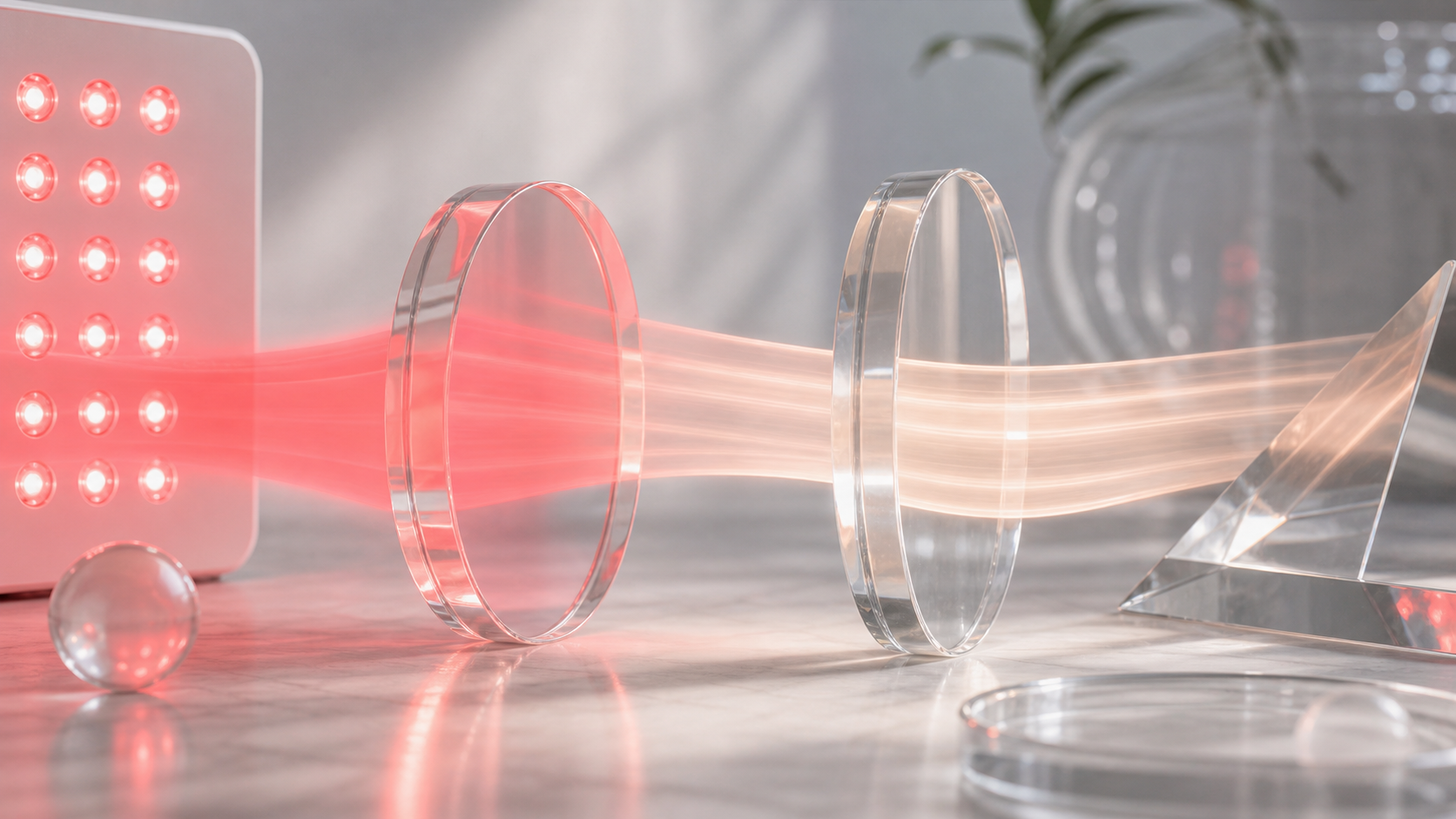
Researchers identified a "therapeutic window" — roughly 600 to 1000 nm — where light penetrates tissue meaningfully and is absorbed by cellular structures without producing heat damage.
- 660 nm (visible red): Penetrates a few millimeters into tissue, primarily skin layers
- 850 nm (near-infrared): Penetrates several centimeters into deeper tissue
Quality panels deliver both wavelengths for flexibility across applications.
What to expect: the realistic framing
Before getting into protocols, the honest framing:
- Red light wellness is a general wellness practice, not a treatment for any specific condition
- Cellular processes operate on slow timescales — plan for 8–12 weeks before evaluating
- Individual responses vary widely
- It sits as a supportive practice alongside foundations like sleep, nutrition, movement, and professional care
- For any diagnosed condition or persistent concern, the right path is a qualified healthcare professional — not a wellness device
Setting up your first sessions
Choose where the panel will live
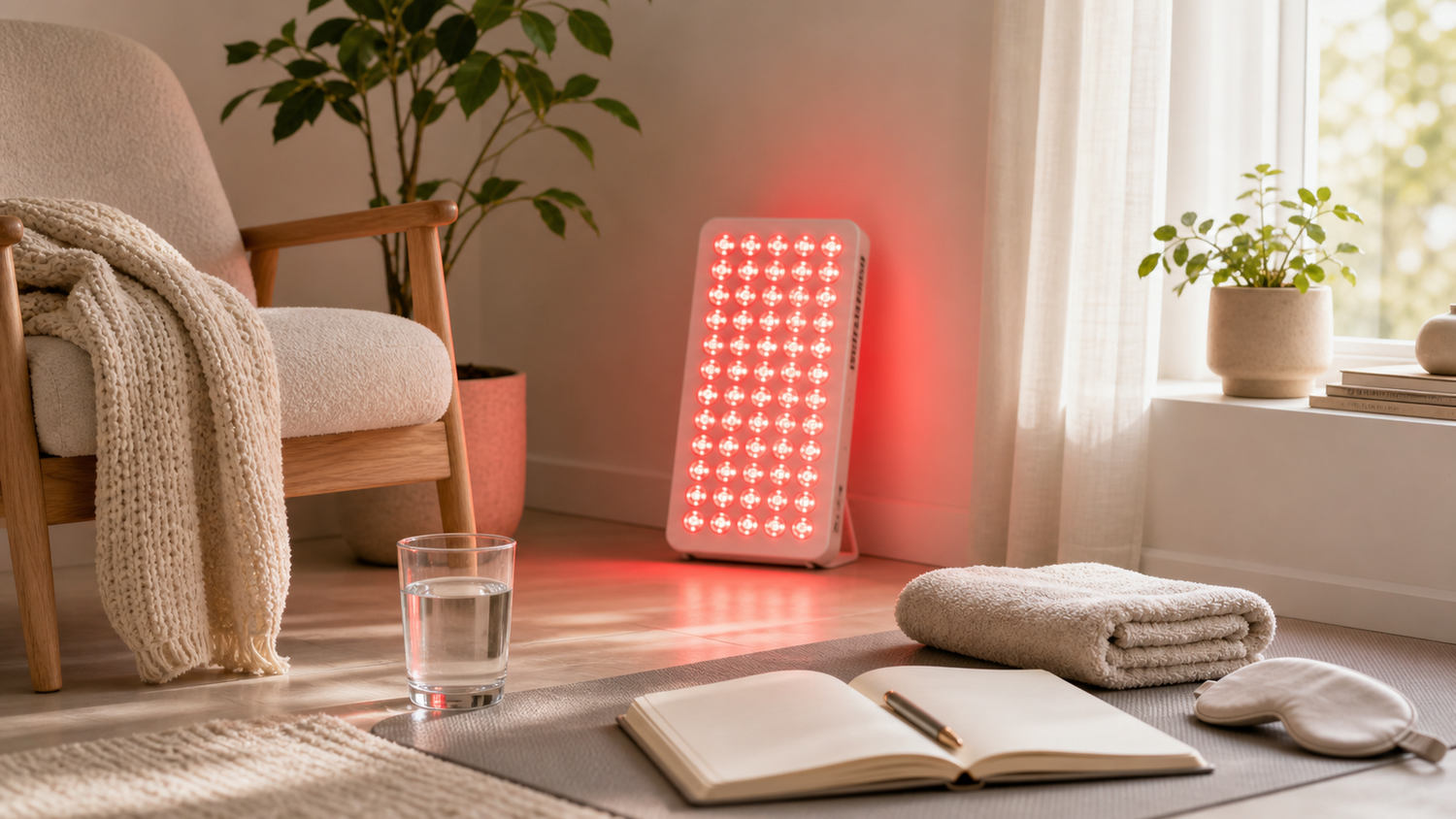
Consistency is the most important variable in red light wellness. A panel that lives in a closet doesn't get used. Pick a spot where you can do sessions easily — a desk for morning skin sessions, a stand near where you read in the evening, or a spot where you can do post-workout sessions.
Mount it properly
For face sessions, a tabletop stand at desk height works well. For body sessions, a floor stand at adjustable height gives flexibility. The SOLRA Red Light Panel comes with both stand options depending on configuration.
Set the right distance
6–12 inches from skin is the standard range. Closer (6–8 inches) for intensive sessions; farther (10–12 inches) for broader coverage. For sensitive skin or first-time users, start at 12–18 inches and 5–7 minutes, building from there. See our distance guide for the full picture.
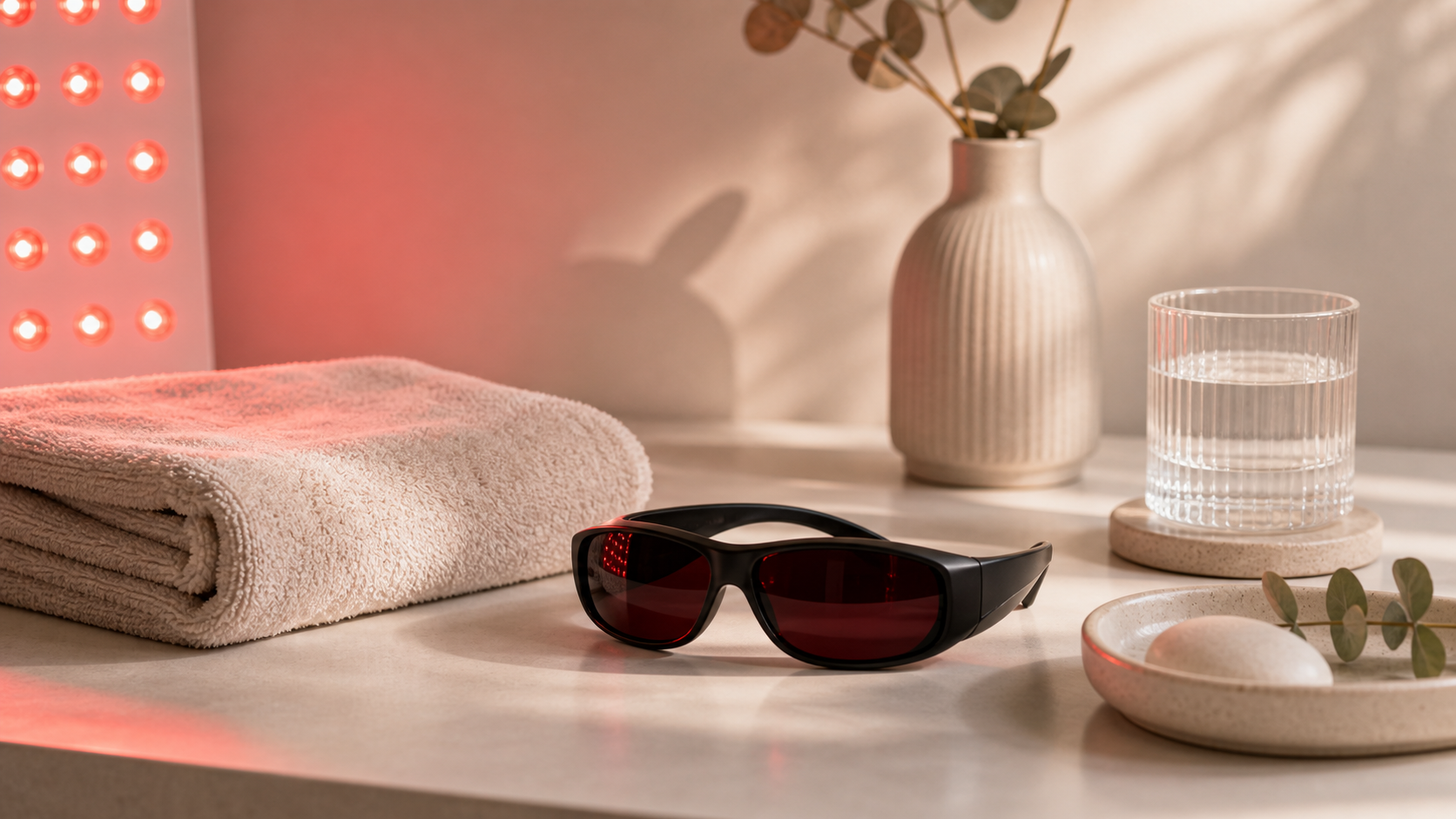
Wear eye protection
Quality panels include goggles. Use them every session.
A typical session protocol
| Focus area | Distance | Time | Frequency |
|---|---|---|---|
| Face / skin wellness | 6–12 inches | 10–15 min | 3–5x/week |
| Post-exercise recovery | 6–12 inches | 15–20 min | After training |
| Body areas | 6–12 inches | 15–20 min | 3–5x/week |
| Sensitive skin (start) | 12–18 inches | 5–7 min | 3x/week |
| Scalp area | 6–12 inches | 5–10 min | 3–5x/week |
Our frequency guide covers schedules by goal in more depth.
The biphasic dose response
One of the most consistent findings in photobiomodulation research is the biphasic dose response: low doses produce stimulatory effects, medium doses produce optimal response, and high doses produce diminishing or no effect.
The practical implication: stay within recommended session parameters. Extending sessions to 30 or 45 minutes does not produce proportionally more benefit. "More is better" reasoning fails with red light wellness.
Building the habit
The biggest predictor of long-term results with red light wellness is consistency. Some practical tips:
- Anchor it to an existing habit. If you already have a morning skincare routine, add red light right before it. If you stretch after workouts, add red light during stretching.
- Make it easy. Keep your panel set up and ready. If you have to dig it out of a closet, you'll stop doing it.
- Track sessions. A simple habit tracker or calendar checkmark builds momentum.
- Don't aim for perfection. Missed a day? Just start again. The cumulative benefit isn't erased by a gap.
Timeline expectations
- Weeks 1–2: Establishing the habit. Skin or body may feel slightly different in subtle ways.
- Weeks 3–8: Cellular processes have had time to respond. Subjective observations vary widely.
- Weeks 8–12: Most consistent observations show up here.
- Month 3+: Ongoing maintenance phase.
What red light wellness does not do
For honest framing:
- Treat any specific medical condition
- Replace professional medical care or skincare
- Produce guaranteed outcomes
- Substitute for the foundations: sleep, movement, nutrition, stress regulation, hydration
- Work as a quick fix — results compound over weeks of consistent use
When to consult a healthcare professional
Red light therapy panels are general wellness devices, not medical interventions. Consult a qualified healthcare professional before starting if you:
- Have any diagnosed medical condition
- Take photosensitizing medications
- Have a photosensitive medical condition
- Are pregnant or breastfeeding
- Have a recent history of skin cancer or are being monitored for skin concerns
- Have any concerns about how red light might interact with your specific situation
For specific applications, see our specialized guides:
- Muscle recovery for athletes
- Sensitive skin wellness
- Joint comfort wellness
- Sleep and circadian wellness
- Skin clarity routines
Frequently asked questions
How long before I might notice something?
Plan for 8–12 weeks of consistent sessions. Cellular processes take time. Subjective changes are also hard to attribute to any single variable.
Is daily use safe?
For most healthy adults at recommended parameters, daily sessions are within the well-studied range. The biphasic dose response means more is not better past the optimal window.
Should I do morning or evening sessions?
Either works. Morning pairs well with skincare; evening pairs with wind-down routines. The right time is the one you'll do consistently. See our morning vs night guide.
What size panel do I need?
Mid-size (12–20 inches wide, 40–100 LEDs) is the sweet spot for most home users. Our size guide covers the full range.
Can I do face and body sessions in the same routine?
Yes. Many users do a short face session (10 min at closer distance) followed by a body session (15 min at farther distance) for total coverage.
The bottom line
Red light wellness is a research-supported general wellness practice that can fit into a broader routine alongside the foundations — sleep, movement, nutrition, professional care where indicated. It's not a treatment, not a quick fix, and not a substitute for any of the foundations. With consistent sessions at recommended parameters over weeks, it's one supportive layer in a broader wellness practice.
If you're ready to start, the SOLRA Red Light Panel delivers 660 nm + 850 nm wavelengths through 40 dual-chip LEDs with verified specs and honest irradiance reporting. $159-229 depending on stand configuration, with free US shipping and a 60-day money-back guarantee.
Frequently asked questions
How long before I might notice something as a beginner?
Plan for 8 to 12 weeks of consistent sessions because cellular processes take time, and subjective changes are also hard to attribute to any single variable.
Is daily use safe?
For most healthy adults at recommended parameters, daily sessions are within the well-studied range, though the biphasic dose response means more is not better past the optimal window.
What distance and timing should a beginner start with?
6 to 12 inches from the skin is the standard range, and for sensitive skin or first-time users the article suggests starting at 12 to 18 inches for 5 to 7 minutes and building from there.
Can I do face and body sessions in the same routine?
Yes. Many users do a short face session of about 10 minutes at a closer distance followed by a body session of about 15 minutes at a farther distance for total coverage.
Wellness Disclaimer: The information in this article is for general wellness and educational purposes only and is not intended to diagnose, treat, cure, or prevent any disease. SOLRA products are general wellness devices and have not been evaluated by the FDA. Individual results may vary. Consult a qualified healthcare professional before starting any new wellness practice, especially if you have a medical condition or are taking medications.
About this guide. Written and maintained by the SOLRA Team, who design and support the SOLRA Red Light Panel (660nm red + 850nm near-infrared light). Our guides focus on practical, comfort-first routines and use general wellness language rather than medical claims. Always follow your device instructions and consult a qualified professional about any medical condition. Editorial review: SOLRA Team · Updated June 2026.

Leave a comment
This site is protected by hCaptcha and the hCaptcha Privacy Policy and Terms of Service apply.