
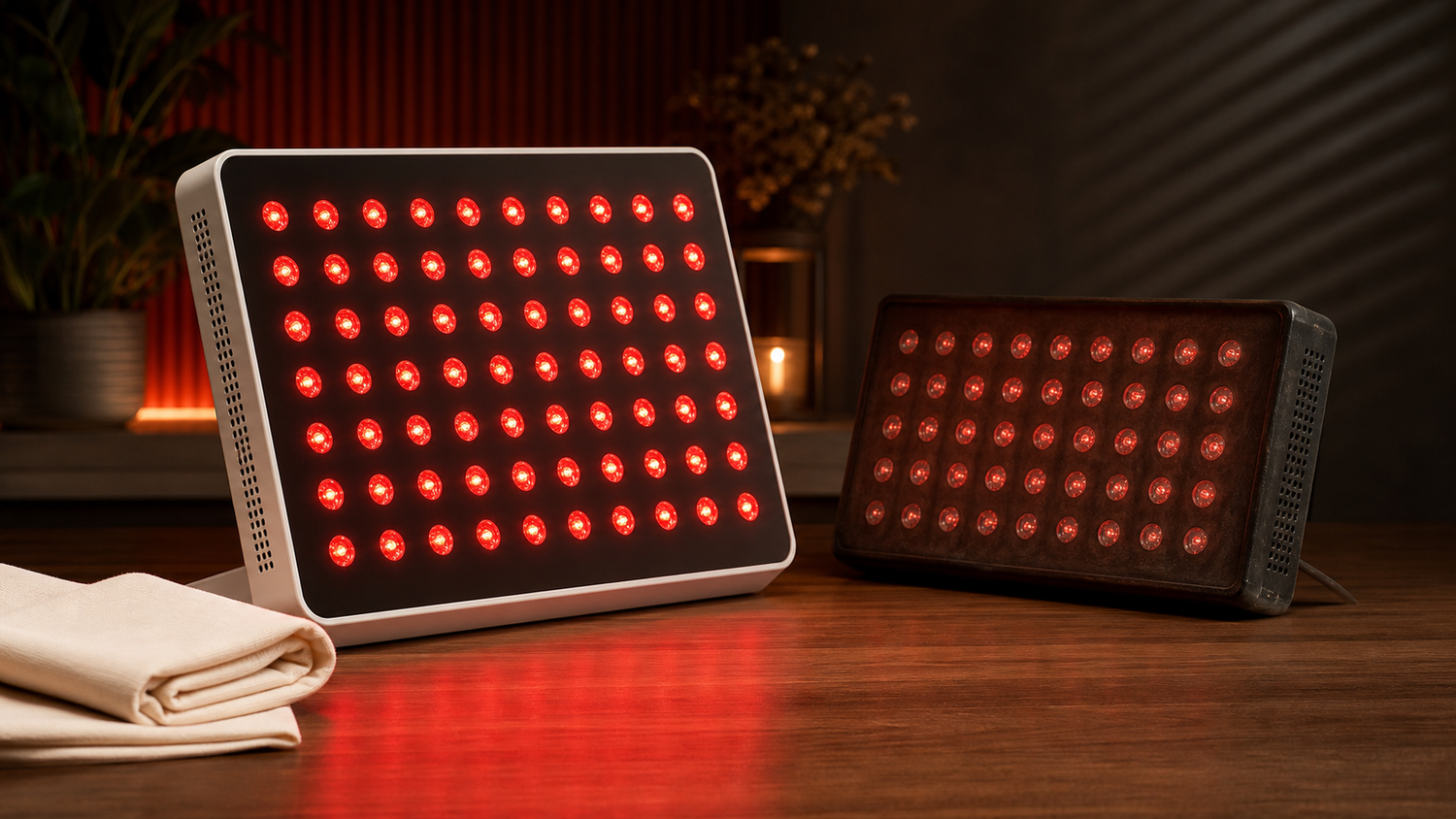
A red light panel is a considered purchase, so it is natural to look at used or refurbished units to save money. Sometimes that is a smart move; sometimes the savings hide real risks. Here is a level-headed look at what you gain and give up when you buy secondhand, and how to decide.
Key takeaways
- Buying new gets you full warranty, verified specs, and known condition; buying used or refurbished can save money but shifts more risk onto you.
- The biggest secondhand risks are no or limited warranty, unknown usage history and LED wear, and specs you cannot independently verify.
- "Refurbished" from the original brand with a warranty is very different from an anonymous used unit sold as-is.
- Weigh the discount against the lost warranty and unknown history; for a device you will use regularly, coverage and known condition often justify buying new.
What you actually pay for when buying new
A new panel is not just an unused one — it comes with things that are hard to get secondhand: a full warranty, verified specifications, and a known, zero-hours condition. If something is wrong, you have recourse. Those protections are part of the price, and they matter more for a device you plan to use regularly over years.
The real risks of used and refurbished
Secondhand can genuinely save money, but the savings come with trade-offs worth naming plainly:
- Warranty: a private used sale usually has none, so any fault is your problem.
- Unknown history: you rarely know how many hours the LEDs have run or how the unit was handled.
- Unverifiable specs: you are trusting the listing's wavelength and output claims with no way to confirm them, which our cheap-panel guide warns about generally.
Not all "used" is equal
There is a big difference between an anonymous unit sold as-is and a manufacturer-refurbished one. Refurbished directly from the original brand, with a stated warranty, has been checked and stands behind itself. An unknown-seller used panel with no coverage is a different proposition entirely. Read the fine print on which one you are actually being offered.
New vs used vs refurbished at a glance
| Factor | New | Manufacturer refurbished | Private used |
|---|---|---|---|
| Warranty | Full | Often some coverage | Usually none |
| Known condition | Zero hours | Checked / reset | Unknown history |
| Spec verification | From the brand | From the brand | Listing claims only |
| Price | Highest | Middle | Lowest |
| Risk to you | Lowest | Moderate | Highest |
How to decide
Put the discount next to what it costs you. If a used unit saves a modest amount but drops the warranty and hides its history, the "deal" may not be one — especially for a panel you will use often. If a manufacturer-refurbished unit offers a real discount with coverage, that can be a genuine middle path. And if you do buy secondhand, check the fundamentals our how-to-choose guide lays out, and lean toward sellers who stand behind the unit.
The bottom line
Used and refurbished can make sense, but only with eyes open. For a device meant for regular, long-term use, the warranty, verified specs, and known condition of a new unit — or a properly warrantied refurb — often justify paying more than the cheapest anonymous listing. Let the size of the discount, the presence of a warranty, and how much you will use it guide the call.
Frequently asked questions
Is it safe to buy a used red light panel?
It can be, but with more risk: a private used sale usually has no warranty, an unknown usage history and LED wear, and specs you cannot independently verify, so weigh the discount against those trade-offs, especially for a device you will use regularly.
What is the difference between used and refurbished?
Manufacturer-refurbished units are checked and often come with some warranty from the original brand, while an anonymous private-used panel is typically sold as-is with no coverage; they are quite different propositions, so read which one you are being offered.
Is buying a new red light panel worth the extra cost?
A new panel includes a full warranty, verified specifications, and a known zero-hours condition, which matter more for a device used regularly over years; those protections are part of the price and often justify buying new over the cheapest secondhand listing.
What should I check before buying a secondhand panel?
Confirm whether any warranty applies, ask about usage history and hours, be cautious that specs may be listing claims only, and lean toward sellers who stand behind the unit; checking the same fundamentals as any panel purchase helps reduce the risk.
Where SOLRA fits
Choose the configuration that matches your space: a tabletop setup for compact, seated routines, or a floor stand for larger areas and full-body sessions. The SOLRA Red Light Panel is built around 660nm red light and 850nm near-infrared light, with setup options for panel-only use, tabletop placement, or a complete floor-stand kit.
Quick safety notes
Red light wellness routines should feel comfortable. Avoid staring directly into bright LEDs, follow your device instructions, and consult a qualified professional if you are pregnant, photosensitive, using light-sensitive medication, or managing a medical condition.
About this guide. Written and maintained by the SOLRA Team, who design and support the SOLRA Red Light Panel (660nm red + 850nm near-infrared light). Our guides focus on practical, comfort-first routines and use general wellness language rather than medical claims. Always follow your device instructions and consult a qualified professional about any medical condition. Editorial review: SOLRA Team · Updated July 2026.

Leave a comment
This site is protected by hCaptcha and the hCaptcha Privacy Policy and Terms of Service apply.