
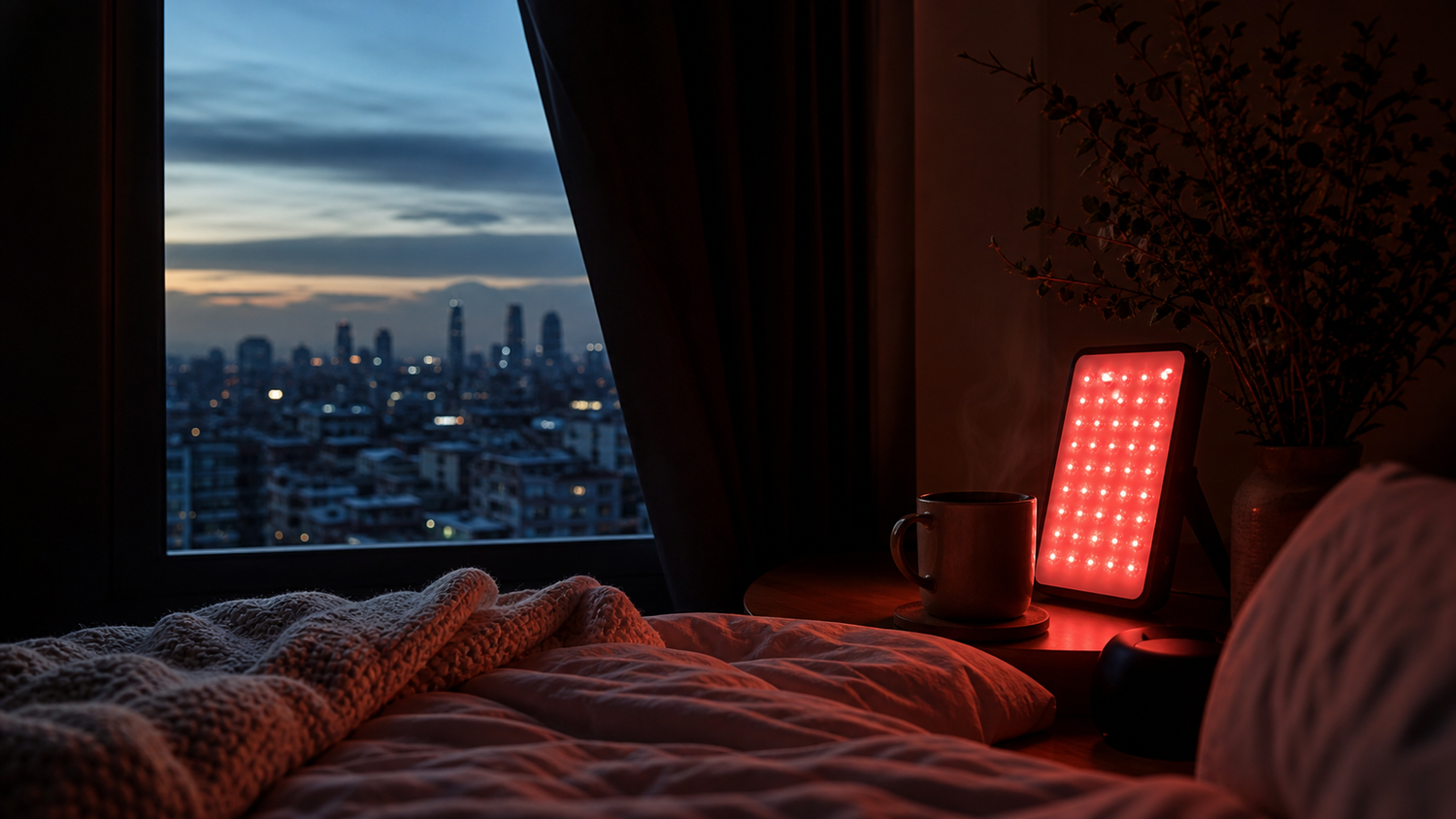
Shift work scrambles the usual daily rhythm, and fitting any wellness routine around rotating or overnight hours takes a bit of thought. A red light routine is actually well suited to irregular schedules because it is short and flexible — but timing it around light and sleep deserves care. Here is a practical, comfort-first approach.
Key takeaways
- A red light routine suits irregular schedules because sessions are short and can attach to your own waking rhythm rather than the clock.
- Be mindful of bright light and sleep: any bright light source near bedtime can affect winding down, so consider where a session sits relative to your sleep window.
- Anchor the routine to a fixed point in your day — after waking or before a shift — rather than a specific clock time that shift work keeps moving.
- Keep expectations realistic; a panel is a general wellness habit and not a substitute for the sleep and rest shift work makes harder to get.
Why shift work makes routines hard — and where red light helps
Rotating and overnight schedules break the anchors most habits rely on: consistent wake times, meals, and daylight. The upside for red light wellness is that a session is short and portable within your day, so it can attach to your rhythm rather than a fixed clock time. If your "morning" is 7pm, your routine can move with it. That flexibility is exactly what shift workers need from a habit.
Mind the light-and-sleep relationship
The one genuinely important nuance is that a red light panel is a bright light source, and bright light near your sleep window can affect how easily you wind down. This matters more for shift workers, whose sleep already fights the clock. Our guide on red light and circadian rhythm and the morning vs night discussion both go deeper; the practical takeaway is to think about where a session sits relative to when you plan to sleep.
Anchor to your rhythm, not the clock
Because your schedule moves, tie the routine to a repeatable event rather than a time:
- After you wake up (whenever that is), as part of your start-of-day block.
- Before a shift, as a settled pre-work ritual.
- Well before your planned sleep, not right up against it.
Anchoring to an event keeps the habit alive even when your hours rotate week to week.
Keep it realistic
Shift work makes rest genuinely harder, and it is worth being honest that a wellness panel does not replace sleep or fix a punishing schedule. Consider it one small, pleasant, controllable habit in a day that has few of them — not as a countermeasure to sleep loss. If shift work is affecting your health, that is a conversation for a qualified professional. Our note on realistic expectations is a useful reset.
A shift-friendly routine
Put together: pick an event anchor that survives your rotation, keep sessions to the recommended length, place them well away from your planned sleep, and stay consistent across your cycle. A short routine you can actually keep — even on a night rotation — beats an ideal one that assumes a 9-to-5 you do not have.
Frequently asked questions
Can shift workers use red light therapy?
Yes, and the short, flexible format suits irregular schedules well because a session can attach to your own waking rhythm rather than a fixed clock time; the main nuance is being mindful of bright light near your planned sleep window.
When should a night-shift worker do a red light session?
Anchor it to a repeatable event — after you wake, or before a shift — rather than a clock time your rotation keeps moving, and place it well before your planned sleep rather than right up against it, since bright light near bedtime can affect winding down.
Does red light therapy help with shift-work sleep problems?
A panel is a general wellness habit and not a substitute for sleep or a fix for a demanding schedule; be mindful of its timing relative to your sleep window, keep expectations realistic, and speak with a qualified professional if shift work is affecting your health.
How do you keep a routine going on a rotating schedule?
Tie the routine to an event that survives your rotation — such as after waking or before a shift — rather than a specific time, keep sessions to the recommended length, and stay consistent across your cycle so the habit persists even as hours change.
Where SOLRA fits
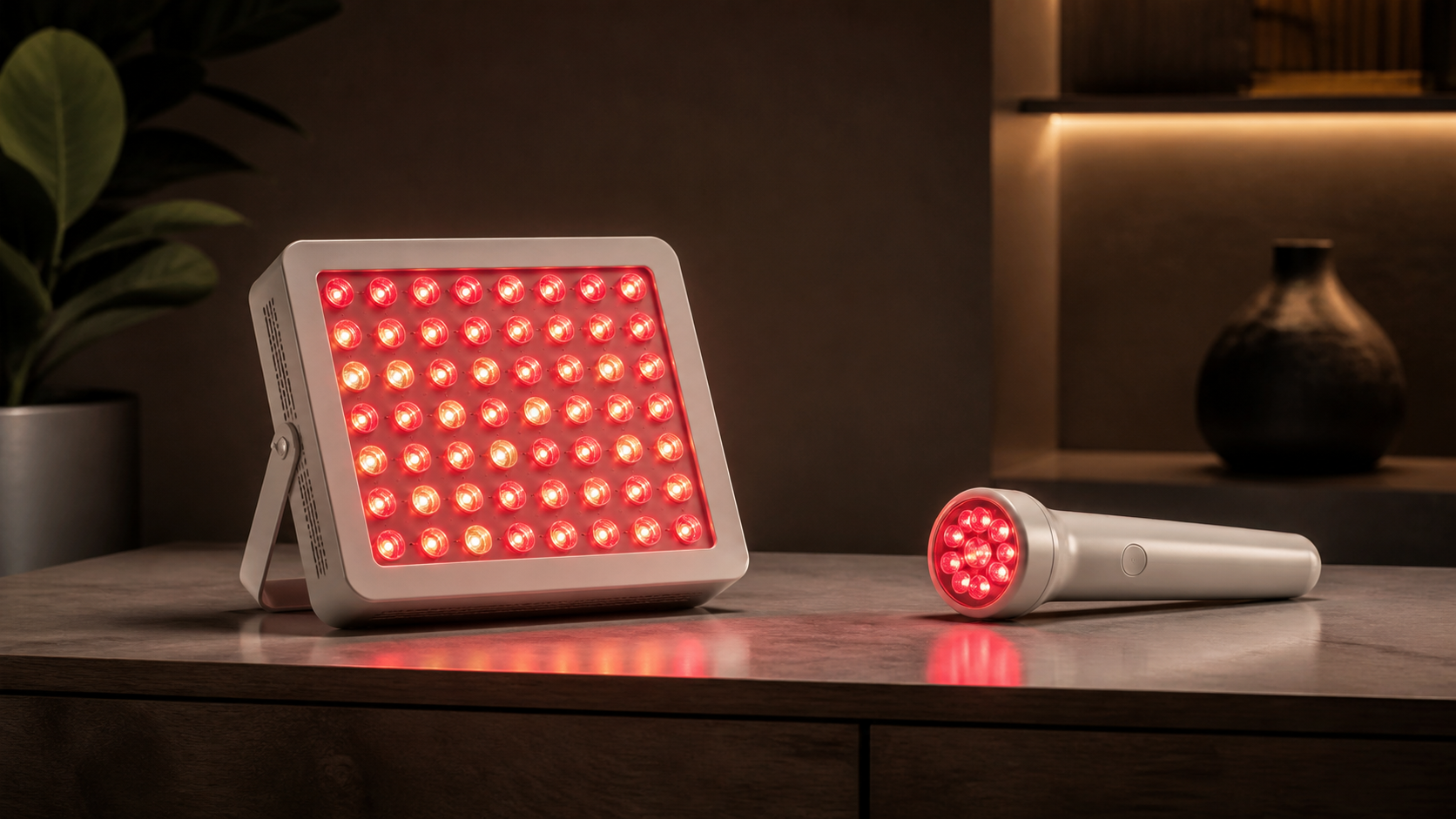
Choose the configuration that matches your space: a tabletop setup for compact, seated routines, or a floor stand for larger areas and full-body sessions. The SOLRA Red Light Panel is built around 660nm red light and 850nm near-infrared light, with setup options for panel-only use, tabletop placement, or a complete floor-stand kit.
Quick safety notes
Red light wellness routines should feel comfortable. Avoid staring directly into bright LEDs, follow your device instructions, and consult a qualified professional if you are pregnant, photosensitive, using light-sensitive medication, or managing a medical condition.
Wellness disclaimer: SOLRA products are general wellness devices and have not been evaluated by the FDA. This article is for educational purposes only and is not intended to diagnose, treat, cure, or prevent any disease. Consult a qualified healthcare professional before beginning a new wellness practice, especially if you have a medical condition or take medication.
About this guide. Written and maintained by the SOLRA Team, who design and support the SOLRA Red Light Panel (660nm red + 850nm near-infrared light). Our guides focus on practical, comfort-first routines and use general wellness language rather than medical claims. Always follow your device instructions and consult a qualified professional about any medical condition. Editorial review: SOLRA Team · Updated July 2026.

Leave a comment
This site is protected by hCaptcha and the hCaptcha Privacy Policy and Terms of Service apply.