
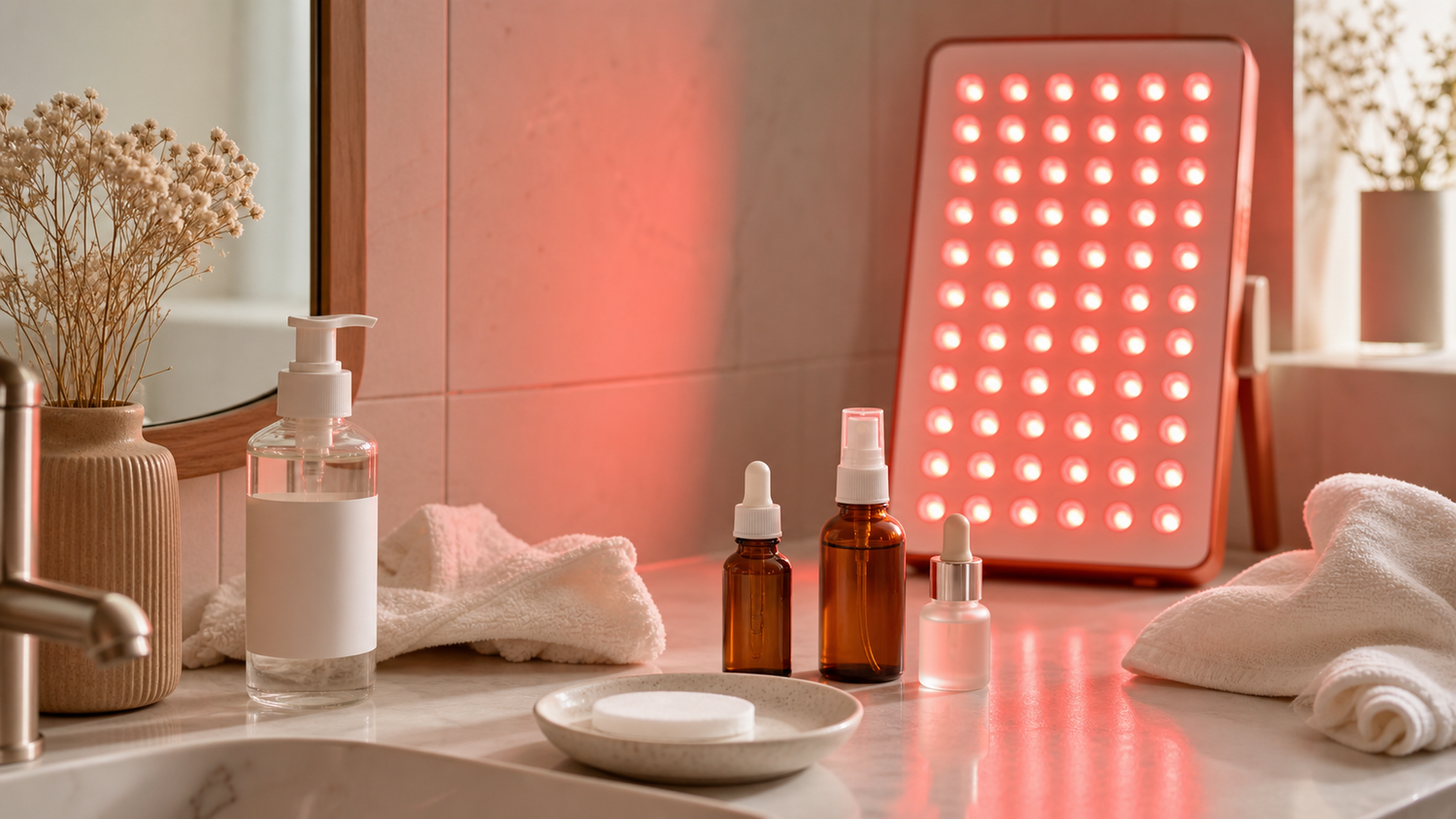
A common question before a facial red light session is whether your skin should be bare, or whether it is fine to keep your serum, moisturizer, or makeup on. The general guidance is simple: clean skin first. Here is why a fresh face is the usual recommendation, and how skincare products fit around — rather than during — a session.
Key takeaways
- The common recommendation is to do a facial red light session on clean skin: makeup and heavy products sit on the surface and can get in the light’s way.
- Makeup especially is worth removing first — some formulas contain pigments or particles that can block or scatter light before it reaches skin.
- Most people apply skincare after a session rather than during it, so the routine is usually cleanse → session → skincare.
- A few ingredients can increase light sensitivity, so if you use active skincare or anything a professional has flagged as photosensitizing, check with them about timing.
Why clean skin is the usual advice
A facial session works best when light reaches skin directly. Anything sitting on the surface — makeup, heavy creams, thick occlusive layers — is one more thing the light passes through first. Starting with freshly cleansed skin removes that variable and keeps the session simple. This is the same "clear the path" logic behind not doing sessions through clothing, applied to the face.
Makeup is the one to remove first
Makeup deserves particular attention. Many formulas contain pigments, minerals, or light-reflecting particles designed to sit on and alter the look of the skin surface — exactly the kind of thing that can block or scatter light. Removing makeup before a session is the sensible default, so the light is not fighting a cosmetic layer. Cleanse thoroughly, then start.
Where skincare products fit: usually after
Most people follow the order cleanse, then session, then skincare. Applying serums and moisturizer after a session, onto clean skin, keeps the session itself unobstructed and lets your products go on afterward as usual. If you are wondering how specific actives fit, our guide to layering with vitamin C, retinoids, and niacinamide covers sequencing, and our before-and-after guide lays out a simple order.
A caution on light-sensitizing ingredients
One point worth flagging: certain active skincare ingredients can increase the skin's sensitivity to light. This is not about red light specifically so much as general good practice — if you use active skincare, or anything a professional has told you increases photosensitivity, ask them about timing before combining it with a light routine. When in doubt, keep the session on clean skin and get personalized advice. Our wellness safety guide reinforces the same caution.
The simple version
If you want one rule: cleanse first, run the session on bare skin, apply products afterward. Remove makeup beforehand without exception, and if you use active skincare a professional has flagged as photosensitizing, check timing with them. That keeps the session clean, comfortable, and uncomplicated.
Frequently asked questions
Should you do red light therapy on clean skin?
Yes, clean skin is the common recommendation for a facial session because makeup and heavy products sit on the surface and can get in the light’s way; cleansing first removes that variable and keeps the session simple.
Can you use red light therapy with makeup on?
It is best to remove makeup first — many formulas contain pigments or light-reflecting particles that can block or scatter light before it reaches skin — so cleanse thoroughly before starting a facial session.
Do you apply skincare before or after red light therapy?
Most people apply skincare after a session rather than during it, so the usual order is cleanse, then session on clean skin, then serums and moisturizer afterward as normal.
Can skincare products make red light sessions unsafe?
Certain active skincare ingredients can increase the skin’s sensitivity to light, so if you use such products or anything a professional has flagged as photosensitizing, ask them about timing before combining it with a light routine, and otherwise keep the session on clean skin.
Where SOLRA fits
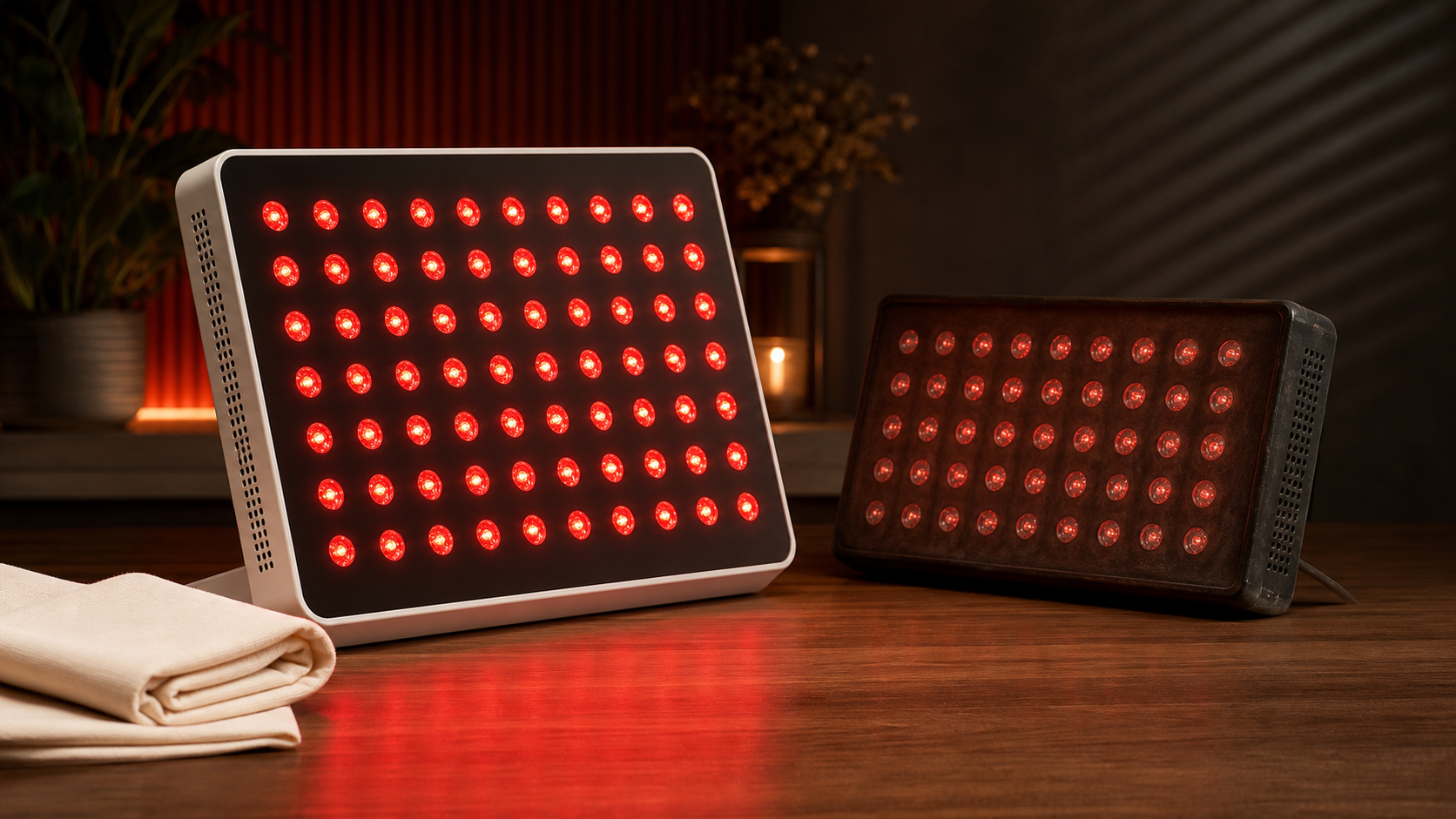
Choose the configuration that matches your space: a tabletop setup for compact, seated routines, or a floor stand for larger areas and full-body sessions. The SOLRA Red Light Panel is built around 660nm red light and 850nm near-infrared light, with setup options for panel-only use, tabletop placement, or a complete floor-stand kit.
Quick safety notes
Red light wellness routines should feel comfortable. Avoid staring directly into bright LEDs, follow your device instructions, and consult a qualified professional if you are pregnant, photosensitive, using light-sensitive medication, or managing a medical condition.
About this guide. Written and maintained by the SOLRA Team, who design and support the SOLRA Red Light Panel (660nm red + 850nm near-infrared light). Our guides focus on practical, comfort-first routines and use general wellness language rather than medical claims. Always follow your device instructions and consult a qualified professional about any medical condition. Editorial review: SOLRA Team · Updated July 2026.

Leave a comment
This site is protected by hCaptcha and the hCaptcha Privacy Policy and Terms of Service apply.