
Last Updated: May 21, 2026
Key takeaways
- Red light wellness combines well with most other supportive practices because the mechanisms – heat, cold, pressure, light, breath – are different and often complement rather than conflict.
- Sequencing matters most: do cold exposure first and red light afterward, with a gap of at least 30–60 minutes for blood flow to normalize.
- Massage, meditation, breathwork, compression, and percussion are generally complementary; for skincare, do the session on bare clean skin and apply serums and moisturizer afterward.
- Avoid stacking too many new variables at once – pick 2–3 supportive practices, since consistency beats variety.
- Foundations – sleep, movement, nutrition, stress regulation – still do the heavy lifting in any routine, regardless of how many modalities you layer on.
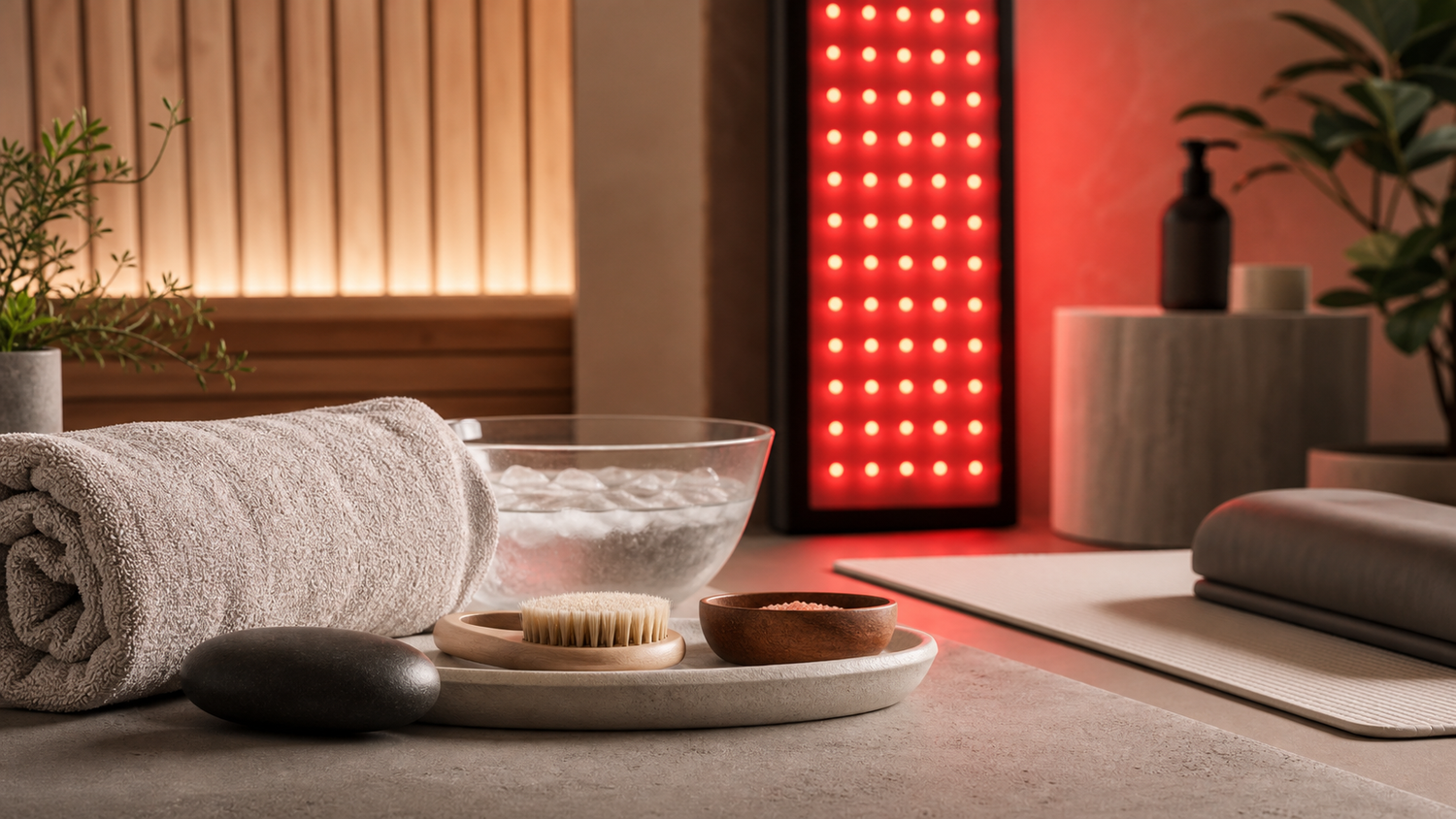
If you've found your way to red light wellness, you've probably also explored other modalities — sauna, cold plunge, massage, breathwork, meditation. The biohacking-adjacent wellness space has produced a lot of practices, and a common question is whether and how to combine them.
This guide walks through how red light wellness fits alongside other common practices, where combinations make sense, where they don't, and the practical timing and sequencing considerations for building a multi-modality routine.
The framework: different mechanisms, different uses
Most wellness modalities work through fundamentally different mechanisms — heat, cold, pressure, light, breath — which means they can often complement rather than conflict. The exceptions matter, though, and timing and sequencing are where most user questions come up.
A useful frame: think of each practice as targeting a different cellular or physiological pathway. Red light wellness works through photobiomodulation (cellular ATP and signaling). Sauna works through heat-induced cardiovascular response and sweating. Cold plunge works through vasoconstriction and cold-shock response. Massage works through mechanical tissue manipulation. These are different toolboxes — not competing tools.
Red light wellness + sauna
How they interact
Both involve thermal-spectrum exposure in some way, but the mechanisms are quite different. Sauna (whether traditional or infrared) heats the body, producing cardiovascular and sweating responses. Red light wellness operates at non-thermal doses at the cellular level. Our comparison guide covers the full mechanistic picture.
Combining them
- Same day, different sessions: No conflict. Many users do morning red light, evening sauna, or vice versa.
- Back-to-back: Generally fine. Some users do red light during sauna sessions; others prefer to keep them separate so they can dial in distance and time for red light without sauna's heat as a variable.
- Timing tip: If doing both in one session, finishing with red light on cooled skin (after a sauna cool-down) makes session control easier.
What to watch for
Sauna heat can mask the mild warmth you'd normally feel from a red light session, which can lead to using the panel closer or longer than usual without realizing it. Keep distance and session length consistent regardless of pairing.
Red light wellness + cold plunge / cold exposure
How they interact
Cold exposure produces vasoconstriction — blood vessels narrow, blood flow to the surface decreases. Red light wellness depends partly on microcirculation in the session area. Doing cold immediately before red light reduces the blood flow that red light effects rely on.
Combining them
- Sequence matters: Generally, do cold first and red light afterward, with a gap of at least 30-60 minutes for blood flow to normalize.
- Or, separate sessions entirely: Morning cold plunge, evening red light is a common pattern.
- Avoid: Doing red light immediately before or during cold exposure on the same target area.
What the research suggests
Cold and red light wellness target different recovery mechanisms. For post-exercise recovery, some users combine them in sequence; others choose one based on personal preference and what they're recovering from. The research base for specific combination protocols is preliminary.
Red light wellness + massage / manual therapy
How they interact
Massage works through mechanical tissue manipulation — pressure, kneading, friction — affecting muscle, fascia, and circulation directly. Red light wellness works at the cellular level. These are highly complementary mechanisms.
Combining them
- Before or after: Either works. Some users do red light before massage to support tissue readiness; others do red light after to support recovery.
- Same session: Doing red light during the rest portion of a self-massage routine (foam rolling, percussion device) integrates well.
- Post-deep-tissue: Red light may pair well with post-deep-tissue-massage recovery routines on subsequent days when the area is sensitive.
What to watch for
If massage produces any acute soreness or bruising, give the area time to settle before doing red light directly over it. Acutely irritated tissue is a signal to pause, not to add variables.
Red light wellness + resistance training / exercise
How they interact
This is one of the more researched combinations — the muscle-recovery research base for photobiomodulation has explored both pre-exercise and post-exercise sessions in athletic contexts. See our muscle recovery guide.
Combining them
- Post-workout (within 60 minutes): The most studied protocol. Many users do 15-20 minute sessions targeting worked muscle groups.
- Pre-workout: Some research has explored short sessions (5-10 minutes) before training. Less common in routines but a possibility.
- Rest days: Maintenance sessions can support ongoing routine recovery.
What to watch for
Don't use red light wellness as a reason to skip warmups, cool-downs, or other recovery foundations. The foundations are still the foundations.
Red light wellness + meditation / breathwork
How they interact
Mechanically separate — meditation and breathwork affect nervous system regulation, stress response, and cognitive processes. Red light wellness is a cellular-level intervention without cognitive or nervous-system mechanism.
Combining them
- During sessions: Red light sessions are quiet, passive, and well-suited to meditation or breathwork integration. Many users do 10-15 minute sessions while meditating with eyes closed (goggles still on).
- Synergy: The combination feels more meditative than either alone for some users — the gentle light, quiet environment, and time-limited container create a natural meditation space.
Red light wellness + skincare routines
How they interact
Most skincare products are mechanically compatible with red light, but timing and sequencing matter. Products on the skin can block light penetration or react unpredictably.
Combining them
- Standard sequence: Cleanse, do red light session on bare clean skin, apply serums and moisturizer afterward.
- What to avoid during sessions: Sunscreens, foundations, retinoids, AHA/BHA acids, vitamin C — these can either block light or react.
- What's fine afterward: Any standard skincare can be applied after the session.
If you're starting both red light and a new active ingredient (retinoid, etc.) at the same time, layer them in 2-3 weeks apart so you can identify what your skin is responding to.
Red light wellness + supplements / wellness drinks
How they interact
Mechanically independent in most cases. Some supplements can affect photosensitivity (St. John's Wort, some others), which is why consulting a healthcare professional matters for individual situations.
Combining them
- Generally compatible: Most common supplements (creatine, omega-3, protein, vitamin D, magnesium) have no known interaction with red light wellness.
- Be transparent with healthcare providers: Mention everything you take and do, including red light wellness.
- Photosensitizing supplements: St. John's Wort and a few others can increase light sensitivity. Consult a healthcare professional.
Red light wellness + compression / pneumatic recovery
How they interact
Compression boots and pneumatic recovery devices work through mechanical pressure to support fluid movement. Different mechanism from red light wellness; generally complementary.
Combining them
- Sequential: Most users do them separately. Compression then red light, or vice versa, both work.
- Same session: Some users wear compression while doing red light on a different area (compression boots + red light on upper body, for example).
Red light wellness + percussion / vibration therapy
How they interact
Percussion devices work through high-frequency mechanical stimulation. Different mechanism from red light; complementary.
Combining them
- Sequence: Either order works. Some users find percussion before red light helps relax muscle for the session; others prefer red light first.
- Same session: Doing red light on one area while using percussion on another can work.
A sample multi-modality day
A common biohacker-adjacent routine that incorporates several practices:
- Morning: Cold plunge or cold shower (5-10 min) → wait 30+ minutes → light breakfast and hydration
- Mid-morning: Red light wellness session (10-15 min) during morning skincare routine or work setup
- Workout (afternoon or evening): Resistance training or cardio
- Post-workout: Within 60 min, red light session on worked muscle groups (15-20 min)
- Evening: Sauna session if used (15-30 min), separate from red light
- Pre-sleep: Meditation or breathwork; red light is not necessary here
This is an aggressive stack — most users will benefit from less, not more. The foundations (sleep, nutrition, movement, stress regulation) still do the heavy lifting in any wellness routine, regardless of how many modalities you layer on top.
The diminishing returns problem
Adding more modalities does not produce linearly more benefit. After a certain point, you're spending time managing a stack rather than living. Some honest principles:
- Pick 2-3 supportive practices that fit your life, not 8
- Consistency beats variety — one practice done for 12 weeks beats four practices done for 2 weeks each
- Foundations first — if sleep and nutrition aren't dialed in, no stack of modalities compensates
- Track what you actually enjoy doing; abandoned modalities don't produce results
When to consult a healthcare professional
Consult a qualified healthcare professional before starting any new wellness practice including red light, sauna, cold plunge, or other modalities if you:
- Have any diagnosed medical condition (especially cardiovascular)
- Take photosensitizing medications (some antibiotics, retinoids, certain antidepressants, some diuretics, herbal supplements like St. John's Wort)
- Have a photosensitive medical condition
- Are pregnant or breastfeeding
- Have any concerns about how any of these practices might interact with your specific situation
Different modalities have different individual contraindications — cold exposure carries cardiovascular considerations; sauna affects hydration and cardiovascular load; red light has photosensitivity considerations. A healthcare professional can guide what's right for you.
The bottom line
Red light wellness combines well with most other supportive wellness practices because the mechanisms are different. The main considerations are sequencing (cold before red light, not after), avoiding stacking too many new variables at once, and remembering that foundations — sleep, movement, nutrition, stress regulation — do the heavy lifting in any routine.
If you're building a routine that includes red light wellness, the SOLRA Red Light Panel delivers verified 660 nm + 850 nm wavelengths through 40 dual-chip LEDs with honest specs. $159-229 depending on stand configuration, with free US shipping, 2-year warranty, and a 60-day money-back guarantee.
Frequently asked questions
Can I do red light wellness and sauna on the same day?
Yes, there is no conflict; many users do morning red light and evening sauna or vice versa, and back-to-back sessions are generally fine. If doing both in one session, finishing with red light on cooled skin after a sauna cool-down makes session control easier.
Should I cold plunge before or after a red light session?
Generally do cold first and red light afterward, with a gap of at least 30-60 minutes for blood flow to normalize, since cold exposure narrows blood vessels and reduces the microcirculation red light relies on. Avoid doing red light immediately before or during cold exposure on the same target area.
What skincare products should I avoid wearing during a red light session?
Avoid sunscreens, foundations, retinoids, AHA/BHA acids, and vitamin C during sessions, as these can block the light or react. Do red light on bare clean skin and apply serums and moisturizer afterward.
How many wellness modalities should I realistically stack?
Adding more does not produce linearly more benefit, so pick 2-3 supportive practices that fit your life rather than eight. Consistency beats variety, and foundations like sleep, nutrition, movement, and stress regulation still do the heavy lifting.
Wellness Disclaimer: The information in this article is for general wellness and educational purposes only and is not intended to diagnose, treat, cure, or prevent any disease. SOLRA products are general wellness devices and have not been evaluated by the FDA. Individual results may vary. Consult a qualified healthcare professional before starting any new wellness practice, especially if you have a medical condition or are taking medications.
About this guide. Written and maintained by the SOLRA Team, who design and support the SOLRA Red Light Panel (660nm red + 850nm near-infrared light). Our guides focus on practical, comfort-first routines and use general wellness language rather than medical claims. Always follow your device instructions and consult a qualified professional about any medical condition. Editorial review: SOLRA Team · Updated June 2026.

Leave a comment
This site is protected by hCaptcha and the hCaptcha Privacy Policy and Terms of Service apply.