
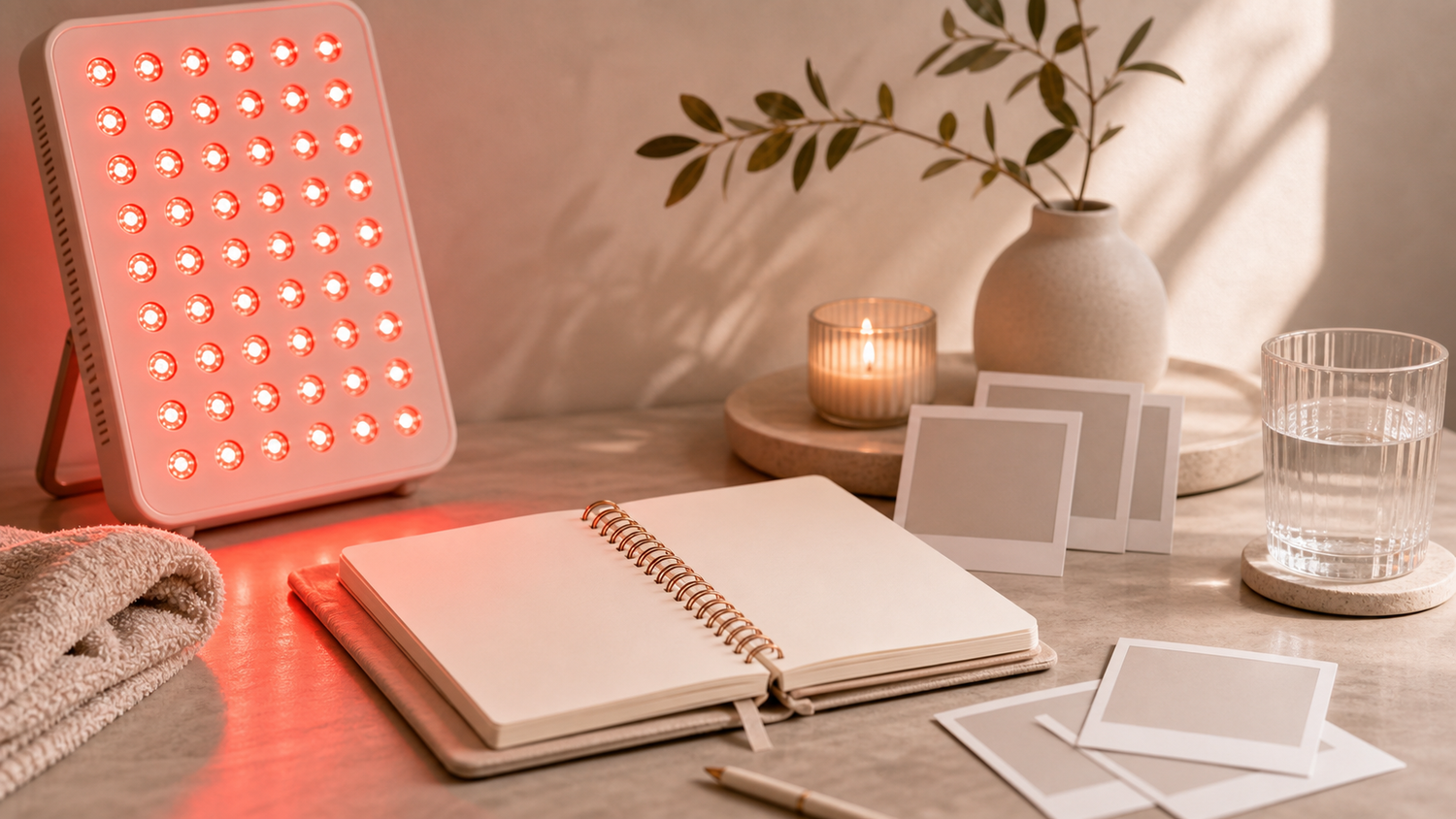
One of the most common questions new owners ask is simple: how do I know it is working? Red light wellness routines are gradual and subtle, so a little bit of tracking goes a long way. It keeps your expectations realistic and helps you stay consistent long enough to notice change.
Key takeaways
- Because red light wellness is gradual, light-touch tracking is discussed as the way to judge progress over weeks rather than guessing from memory.
- Take simple, consistent photos using the same spot, lighting, and time of day, on a fixed weekly schedule rather than every day.
- Keep a short session journal noting the date, area, distance, and how you felt to spot patterns and check your consistency.
- Track how you feel, not just how you look, using a simple one-to-five scale for comfort, sleep routine, or recovery.
- Set a realistic review window of several weeks, then change one thing at a time so you can tell what made a difference.
Why tracking matters
When results are slow and gentle, day-to-day change is almost impossible to feel. Tracking gives you a record to compare against, so you are judging progress over weeks rather than guessing from memory. It also keeps you honest about consistency, which usually matters more than any single session.
The goal is not to turn wellness into a spreadsheet you dread. A few light-touch habits are enough.
Take simple, consistent photos
For skin-focused routines, photos are the most useful record because memory is unreliable. The key is consistency, not quality.
- Use the same spot, same lighting, and same time of day.
- Avoid filters and keep the camera distance the same.
- Take a photo on a fixed schedule, such as once a week, not every day.
Comparing week four to week one tells you far more than staring at the mirror each morning.
Keep a short session journal
A few lines after each session is enough to spot patterns. Note the date, the area you focused on, the distance, and how you felt. Over a few weeks you will see whether you are actually being consistent and which routines you keep coming back to.
You can use a notebook, a notes app, or a simple calendar. The format matters less than actually doing it.
Track how you feel, not just how you look
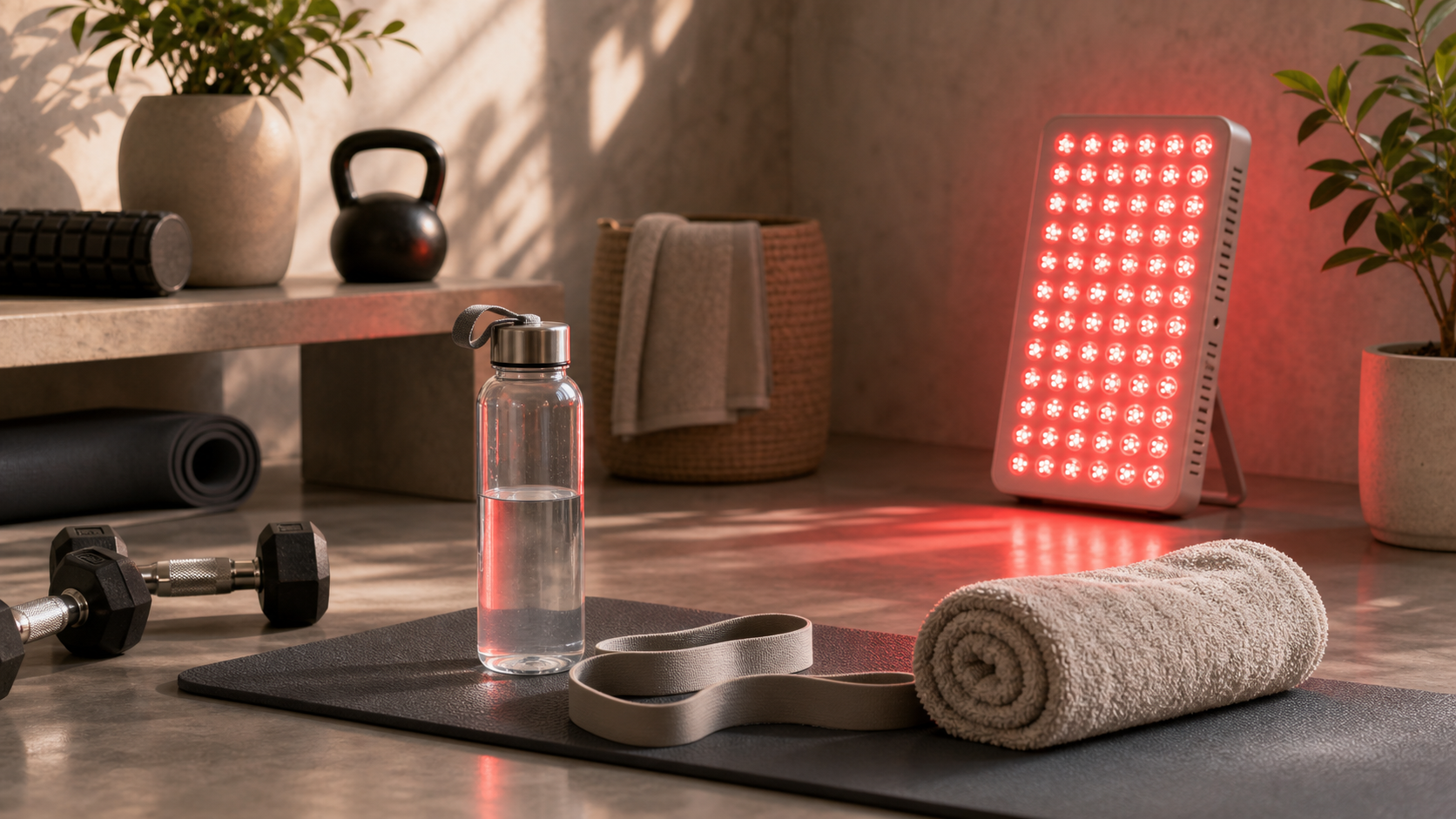
Not every goal is visible. Many people use a panel as part of a recovery or wind-down routine, so it helps to note comfort, sleep routine consistency, or how your body feels after activity. Simple ratings, like an easy one-to-five scale, are enough to reveal a trend.
Set a realistic review window
Give a routine a fair trial before judging it. A common approach is to commit to a consistent schedule for several weeks, then review your photos and notes together. Looking back across that window is much more meaningful than reacting to a single day.
If you have not been consistent, that is the first thing to fix before changing anything else about your setup.
Adjust based on what you see
Once you have a few weeks of records, you can make small, deliberate changes: a different time of day, a more comfortable distance, or a focus on the area that matters most to you. Change one thing at a time so you can tell what actually made a difference.
Frequently asked questions
Why should I track my red light wellness progress?
Because results are slow and gentle, day-to-day change is almost impossible to feel, so a record lets you judge progress over weeks and keeps you honest about consistency.
How should I take progress photos?
Use the same spot, same lighting, and same time of day, avoid filters, keep the camera distance the same, and take a photo on a fixed schedule such as once a week rather than every day.
What should I write in a session journal?
A few lines after each session is enough; note the date, the area you focused on, the distance, and how you felt, using a notebook, notes app, or simple calendar.
Should I track how I feel as well as how I look?
Yes, since not every goal is visible, it helps to note comfort, sleep routine consistency, or how your body feels after activity, using a simple one-to-five scale to reveal a trend.
Where SOLRA fits
Tracking is easiest when your setup is consistent, because a repeatable position keeps your sessions comparable week to week. The SOLRA Red Light Panel is built around 660nm red light and 850nm near-infrared light, with setup options for panel-only use, tabletop placement, or a complete floor-stand kit, so you can lock in the same routine each time.
Quick safety notes
Red light wellness routines should feel comfortable. Avoid staring directly into bright LEDs, follow your device instructions, and consult a qualified professional if you are pregnant, photosensitive, using light-sensitive medication, or managing a medical condition.
About this guide. Written and maintained by the SOLRA Team, who design and support the SOLRA Red Light Panel (660nm red + 850nm near-infrared light). Our guides focus on practical, comfort-first routines and use general wellness language rather than medical claims. Always follow your device instructions and consult a qualified professional about any medical condition. Editorial review: SOLRA Team · Updated June 2026.

Leave a comment
This site is protected by hCaptcha and the hCaptcha Privacy Policy and Terms of Service apply.