
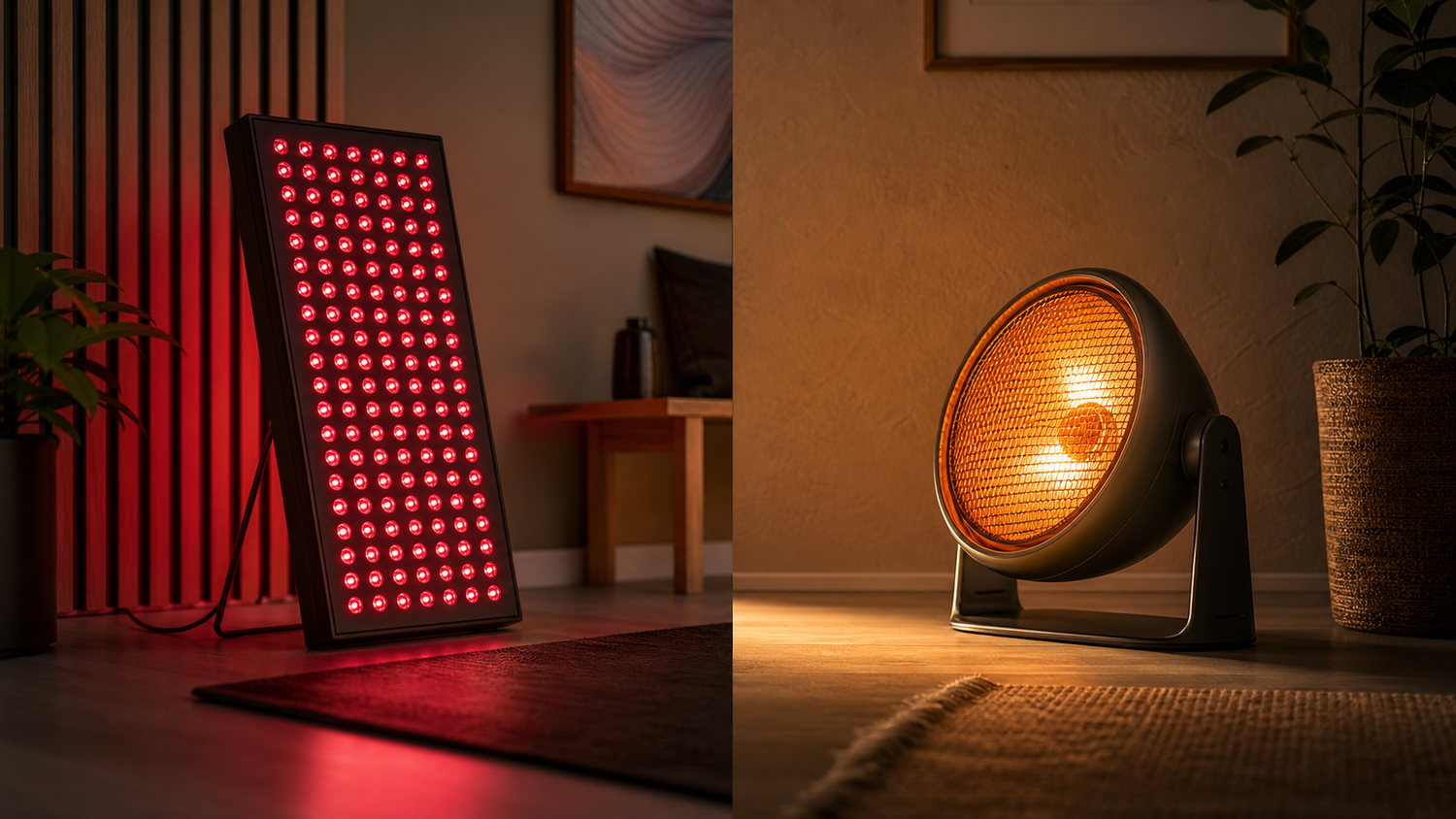
At a glance, a red light panel, a heat lamp, and an infrared heater can seem similar: they all glow, and several feel warm. But they work in different ways and are built for different purposes. Knowing the difference helps you pick the right tool and set realistic expectations.
Key takeaways
- Heat lamps and infrared heaters are built to produce warmth; their glow is a byproduct, not a defined dose of light.
- A red light wellness panel is engineered around specific wavelengths — 660nm red and 850nm near-infrared — at a measured output, where warmth is incidental.
- Tell them apart by the specs: panels state wavelengths in nanometers (often with an irradiance figure at a distance); heaters advertise wattage and heat output.
- They are not interchangeable — pick a heater for cozy warmth, and a wavelength-rated panel for a red light routine.
Heat lamps are about warmth
A traditional heat lamp is designed to do one thing: produce heat. The reddish glow is a byproduct, and the main output is thermal energy meant to warm a surface or a small area. These bulbs are not engineered around specific wavelengths and are not built for an even, controlled light dose.
Infrared heaters warm a room or body
Infrared heaters, including the panels used in some saunas and patios, are built to deliver warmth across a larger area. Comfort comes from the heat itself. Like heat lamps, they are optimized for temperature rather than for a defined band of light at a measured intensity.
Red light panels are about light, not heat
A wellness red light panel is engineered around specific wavelengths, most commonly 660nm red light and 850nm near-infrared light, delivered at a consistent, measurable output. A quality panel may feel mildly warm up close, but warmth is not the point. The point is even, comfortable light coverage at a sensible distance.
- Heat lamp: warmth first, unspecified light.
- Infrared heater: warmth across a space, unspecified light.
- Red light panel: defined wavelengths at a measured output, gentle warmth at most.
How to tell which you have
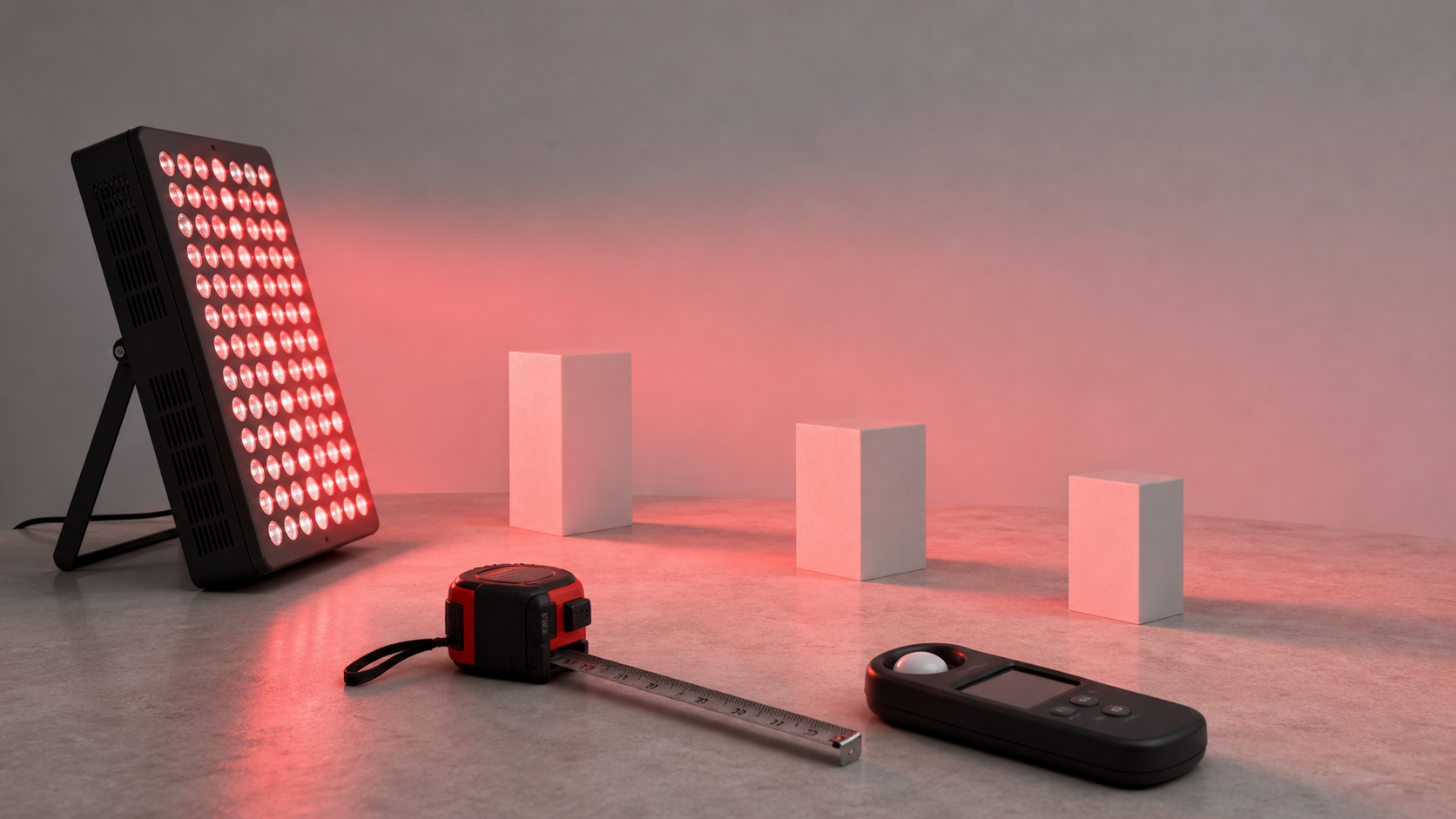
Check the specifications. A purpose-built panel will state its wavelengths in nanometers and usually an irradiance figure with a measurement distance. A heat lamp or heater will talk about wattage and heat output, not wavelengths. If a product only advertises how warm it gets, it is a heating device, not a wellness light panel.
Choosing the right tool
If you want cozy warmth, a heater does that job well. If you want a controlled red light wellness routine, look for a panel designed around stated wavelengths and a recommended distance. They are not interchangeable, and the clearer a product is about what it emits, the easier your decision becomes.
Quick comparison
| Heat lamp | Infrared heater | Red light panel | |
|---|---|---|---|
| Primary purpose | Warmth (small area) | Warmth (room or body) | Defined light dose |
| Spec advertised | Wattage / heat | Wattage / heat | Wavelength (nm) + irradiance |
| Specific wavelengths | No | No | Yes — 660nm / 850nm |
| Warmth | Main output | Main output | Gentle at most |
Frequently asked questions
What is the difference between a red light panel and a heat lamp?
A heat lamp is built to produce warmth and its reddish glow is a byproduct, while a red light wellness panel is engineered around specific wavelengths, 660nm red and 850nm near-infrared, at a measured output where warmth is incidental.
Can an infrared heater be used for red light wellness?
No, infrared heaters are built to deliver warmth across an area and are not engineered around a defined band of light at a measured intensity, so they are not a substitute for a wavelength-rated panel.
How can I tell whether a product is a red light panel or a heating device?
Check the specifications: a purpose-built panel states its wavelengths in nanometers and usually an irradiance figure with a measurement distance, while a heat lamp or heater talks about wattage and heat output.
Should I choose a heater or a panel?
If you want cozy warmth, a heater does that job well; if you want a controlled red light wellness routine, choose a panel designed around stated wavelengths and a recommended distance, since they are not interchangeable.
Where SOLRA fits
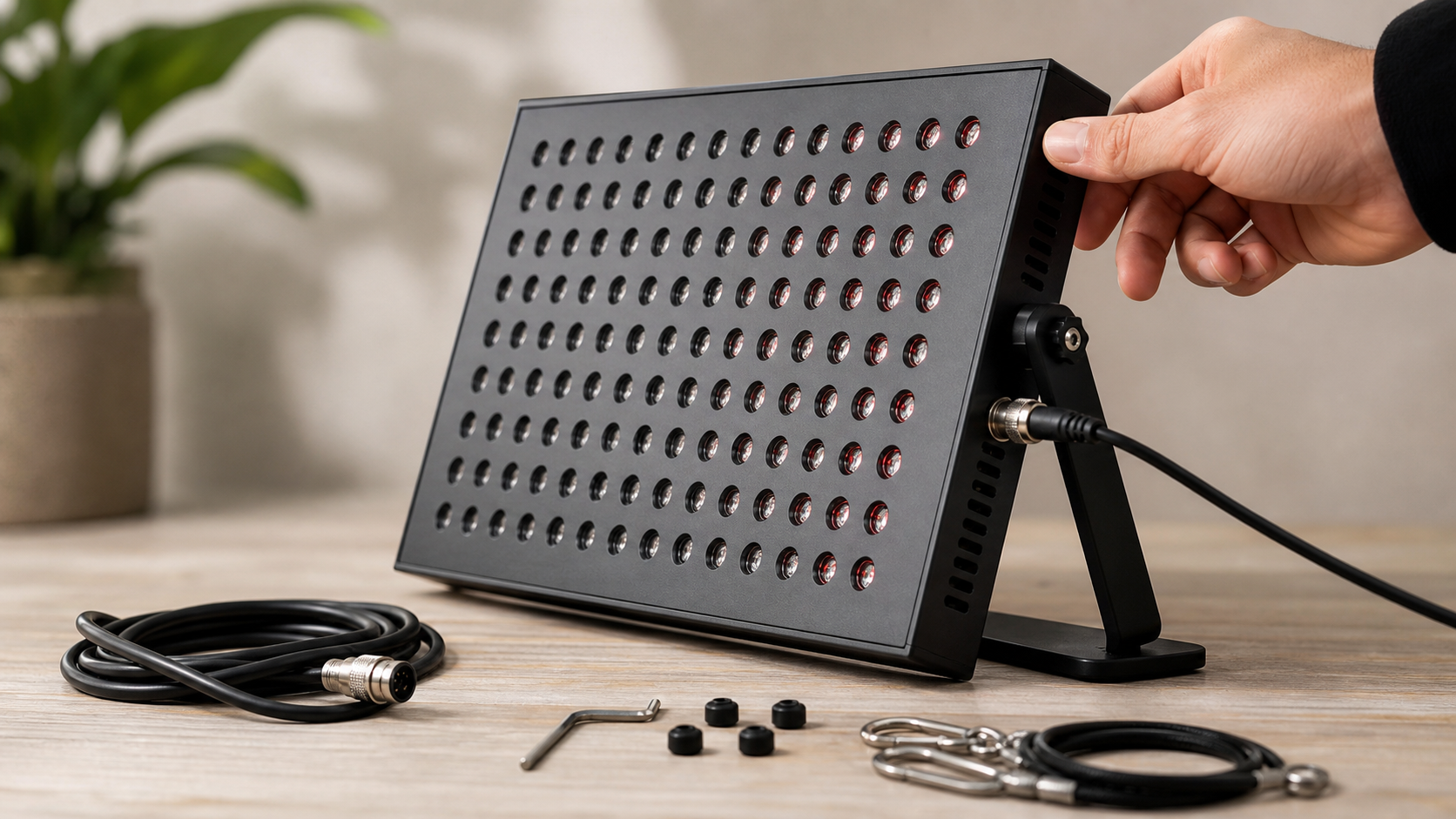
Choose the configuration that matches your space: a tabletop setup for compact, seated routines, or a floor stand for larger areas and full-body sessions. The SOLRA Red Light Panel is built around 660nm red light and 850nm near-infrared light, with setup options for panel-only use, tabletop placement, or a complete floor-stand kit.
Quick safety notes
Red light wellness routines should feel comfortable. Avoid staring directly into bright LEDs, follow your device instructions, and consult a qualified professional if you are pregnant, photosensitive, using light-sensitive medication, or managing a medical condition.
Wellness disclaimer: SOLRA products are general wellness devices and have not been evaluated by the FDA. This article is for educational purposes only and is not intended to diagnose, treat, cure, or prevent any disease. Consult a qualified healthcare professional before beginning a new wellness practice, especially if you have a medical condition or take medication.
About this guide. Written and maintained by the SOLRA Team, who design and support the SOLRA Red Light Panel (660nm red + 850nm near-infrared light). Our guides focus on practical, comfort-first routines and use general wellness language rather than medical claims. Always follow your device instructions and consult a qualified professional about any medical condition. Editorial review: SOLRA Team · Updated June 2026.

Leave a comment
This site is protected by hCaptcha and the hCaptcha Privacy Policy and Terms of Service apply.