
Last Updated: May 20, 2026
Key takeaways
- The article says the 2026 value sweet spot for typical home users is verified dual-wavelength panels at $150–300, with diminishing returns above that range.
- It notes mid-market pricing has compressed, so panels that cost $400+ in 2022 are now available for $150–300 as LED technology matured.
- Quality is framed around verified 660 nm & 850 nm wavelengths, honest irradiance reported at 6 inches, and real warranty and support.
- Dual wavelength has become standard, with single-wavelength panels limited to the lowest price tier.
- Listed red flags include specific medical claims, vague wavelength language, and suspiciously high LED counts for the panel size.
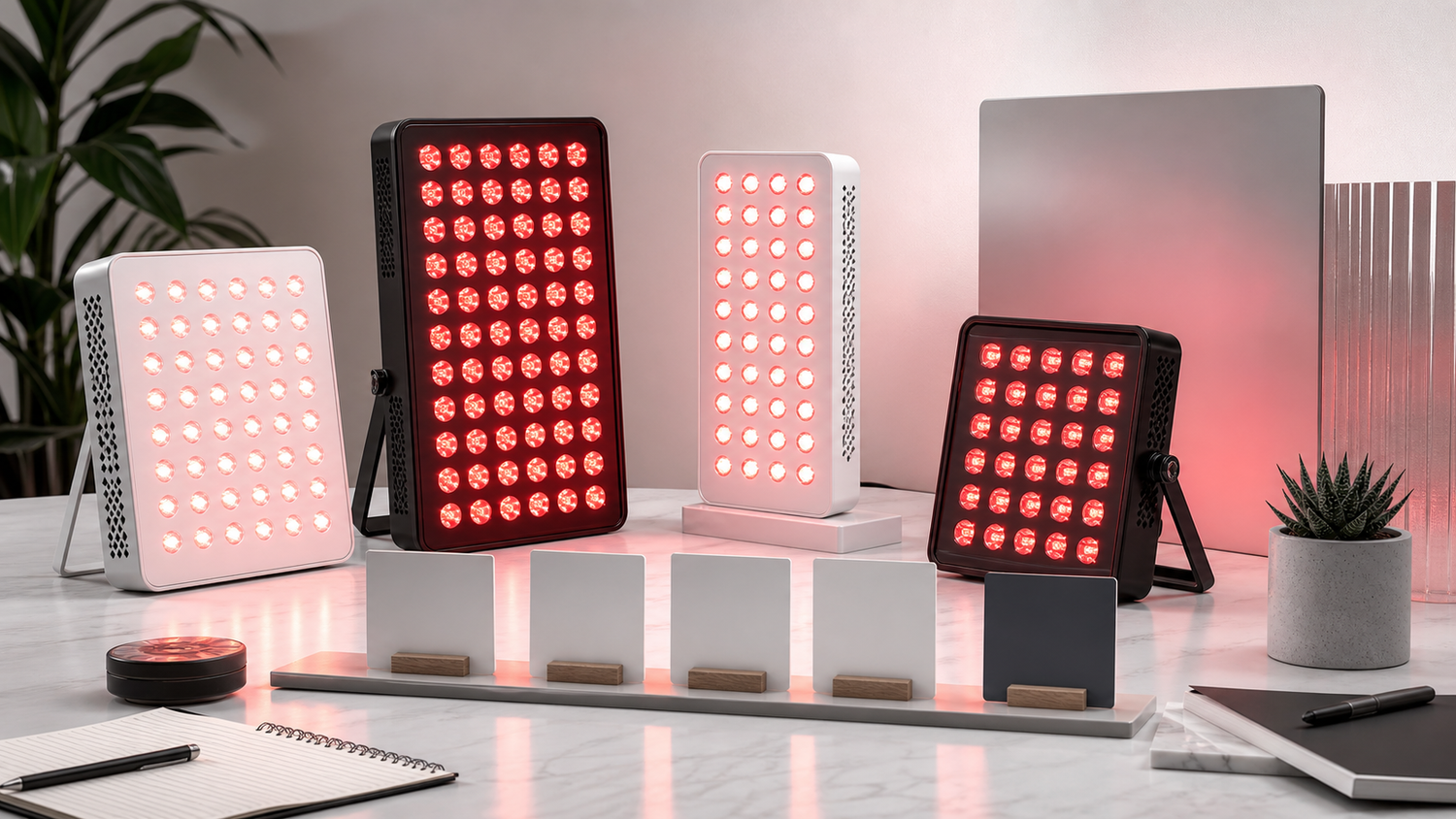
The red light wellness panel market in 2026 spans a wide range — from $40 mini panels to $5,000 whole-body systems, with a confusing variety of specs, claims, and pricing. This guide walks through what's actually changed in the category, what's marketing hype, and how to evaluate panels honestly at any price point.
The state of the red light panel market in 2026
A few category-wide observations from 2026:
- Pricing has compressed at the middle of the market. Quality dual-wavelength panels that delivered research-spec performance for $400+ in 2022 are now available in the $150-300 range as the underlying LED technology has matured.
- Spec transparency varies widely. Quality manufacturers report irradiance honestly at realistic distance (6 inches). Many budget panels still report irradiance at zero distance under lab conditions.
- Dual wavelength has become standard. Single-wavelength panels are increasingly limited to the lowest price tier.
- Marketing claims have grown louder. Some categories make specific outcome claims that the underlying evidence base does not support. Verified specs matter more than claims.
Price tiers in 2026: what you actually get
Sub-$100: avoid for serious use
Single-wavelength, often inaccurate wavelength specs, irradiance reported at zero distance, generic LEDs, no real warranty. You can use these, but the dose you're actually getting is often a fraction of what's claimed.
$100-200: entry-level dual wavelength
Smaller panels (~12x6 inches), often dual wavelength on quality models, real but limited irradiance, good for testing the concept or face-focused use. SOLRA Panel sits at $159 in this tier with full dual wavelength + 40 LEDs.
$200-450: mid-tier sweet spot
Larger panels (12x12 to 20x12 inches), 60-100+ LEDs, dual wavelength, real warranty, real support. This is where most home users should look. SOLRA Panel + floor stand at $229 sits in this range.
$500-1,200: premium home
Large panels (20x36+ inches), high LED counts, premium build quality, often with feature additions like app control or pulsing modes. Justified for athletes, multi-user households, or dedicated wellness setups. Diminishing returns vs mid-tier for typical single-user home use.
$1,200-3,500: prosumer / whole-body
Full-length panels (60+ inches tall), standing position whole-body coverage, approaching clinic-grade specs. Mostly overkill for individual home users; makes sense for dedicated wellness rooms or households with 4+ daily users.
$3,500+: professional / clinical
Multi-panel systems, whole-room installations, clinic-grade specs. Used by clinics and dedicated home wellness rooms. Not the right purchase for typical home use.
What to look for, regardless of price
Independent of brand, these are the specs and qualities that determine whether a panel delivers what the research describes:
- Verified wavelengths: True 660 nm ± 5 nm and 850 nm ± 10 nm. Specific specs, not vague language. See our wavelength guide.
- Honest irradiance: Reported at 6 inches, not zero distance.
- Dual wavelength: 660 nm + 850 nm in one device.
- LED quality and density: Quality binning, sufficient density for the panel size. See our panel buyer's guide.
- Build quality: Metal housing, proper thermal management, electrical safety certifications.
- Real return policy: 30+ days, no questions asked.
- Real warranty: 2+ years signal manufacturer confidence.
- Real support: A real brand with a real support email, not just an Amazon listing.
Red flags in 2026 panel listings
- Specific medical claims ("treats X condition")
- Irradiance claims without specifying measurement distance
- "Red light spectrum" or vague wavelength language
- No warranty or warranty terms shorter than 1 year
- No real customer support contact
- Marketing emphasis on benefits without supporting specs
- Uniformly recent and uniformly five-star reviews
- Influencer-heavy marketing with no spec transparency
- Suspiciously high LED counts for the panel size
How SOLRA compares to the 2026 market
SOLRA sits intentionally in the $159-229 range because that's where the value math is best for typical home users. Our positioning:
- Verified dual wavelength: True 660 nm + 850 nm
- Honest irradiance: Reported at 6 inches
- 40 dual-chip LEDs: High output, real coverage
- Premium build: Metal housing, low EMF, quiet cooling
- Real warranty: 2 years
- Real returns: 60-day money-back guarantee
- Free US shipping: On every order
- Honest specs, not marketing claims: No specific medical claims, no inflated numbers
We deliberately stay out of the $400+ tier because the engineering differential is small past the mid-tier for typical home use — most of the premium pricing reflects brand and marketing budgets, not delivered performance.
How to decide what panel size you need
Beyond price, panel size matters for what fits your space and routine. Our panel size guide covers the tradeoffs by use case. The summary:
- Mini (8-12 inches): Face only or single body areas
- Mid-size (12-20 inches): Face plus upper body — best for most users
- Large (24-36 inches): Full upper body, athletes
- XL (36+ inches): Whole-body, dedicated wellness rooms
When to consult a healthcare professional
Red light therapy panels are general wellness devices, not medical interventions. Consult a qualified healthcare professional before starting any new wellness practice if you have any diagnosed medical condition, take photosensitizing medications, are pregnant or breastfeeding, or have any concerns about how red light might interact with your specific situation.
The bottom line
The 2026 red light panel market offers good value at the middle of the price range — $150 to $300 for verified dual wavelength panels with honest specs, real build quality, and real warranty. Above that range, you're paying for incremental improvements past the point of diminishing returns for typical home use. Below that range, you're often paying for performance that the listing claims but the panel doesn't actually deliver.
The SOLRA Red Light Panel is built around that value sweet spot — verified 660 nm + 850 nm, honest irradiance, durable build, real warranty. $159-229 depending on stand configuration, with free US shipping and a 60-day money-back guarantee.
Frequently asked questions
How has the red light panel market changed by 2026?
Pricing has compressed at the middle of the market, so quality dual-wavelength panels that cost 400 dollars or more in 2022 are now available in the 150 to 300 dollar range as the underlying LED technology has matured. Dual wavelength has also become standard.
What price range offers the best value for most home users?
The 200 to 450 dollar mid-tier is the sweet spot for most home users, with larger panels, 60 to 100 or more LEDs, dual wavelength, and real warranty and support. The article notes that above the mid-tier the engineering differential is small for typical home use.
What specs should a buyer look for regardless of price?
Look for verified wavelengths of true 660 nm plus or minus 5 nm and 850 nm plus or minus 10 nm, honest irradiance reported at 6 inches, dual wavelength in one device, quality LED binning and density, solid build quality, and real return, warranty, and support terms.
Where does SOLRA position itself in the 2026 market?
SOLRA sits intentionally in the 159 to 229 dollar range with verified true 660 nm and 850 nm wavelengths, honest irradiance at 6 inches, 40 dual-chip LEDs, metal housing, low EMF, a 2-year warranty, and a 60-day money-back guarantee. It deliberately stays out of the 400 dollar plus tier where premium pricing mostly reflects brand and marketing budgets.
Wellness Disclaimer: The information in this article is for general wellness and educational purposes only and is not intended to diagnose, treat, cure, or prevent any disease. SOLRA products are general wellness devices and have not been evaluated by the FDA. Individual results may vary. Consult a qualified healthcare professional before starting any new wellness practice, especially if you have a medical condition or are taking medications.
About this guide. Written and maintained by the SOLRA Team, who design and support the SOLRA Red Light Panel (660nm red + 850nm near-infrared light). Our guides focus on practical, comfort-first routines and use general wellness language rather than medical claims. Always follow your device instructions and consult a qualified professional about any medical condition. Editorial review: SOLRA Team · Updated June 2026.

Leave a comment
This site is protected by hCaptcha and the hCaptcha Privacy Policy and Terms of Service apply.