
Last Updated: May 20, 2026
Key takeaways
- 660 nm is emphasized for surface skin because it works in the epidermis and upper dermis, while 850 nm penetrates deeper into muscle and connective tissue.
- Both wavelengths sit in the therapeutic window (roughly 600–1000 nm) and are absorbed by cytochrome c oxidase in mitochondria.
- 660 nm is more studied for skin and microcirculation; 850 nm is more studied for muscle recovery and joint-area research.
- Dual-wavelength panels delivering both are presented as the most flexible choice for home users with varied session goals.
- The biphasic dose response applies regardless of wavelength, so staying within 10–20 minutes at 6–12 inches is advised.
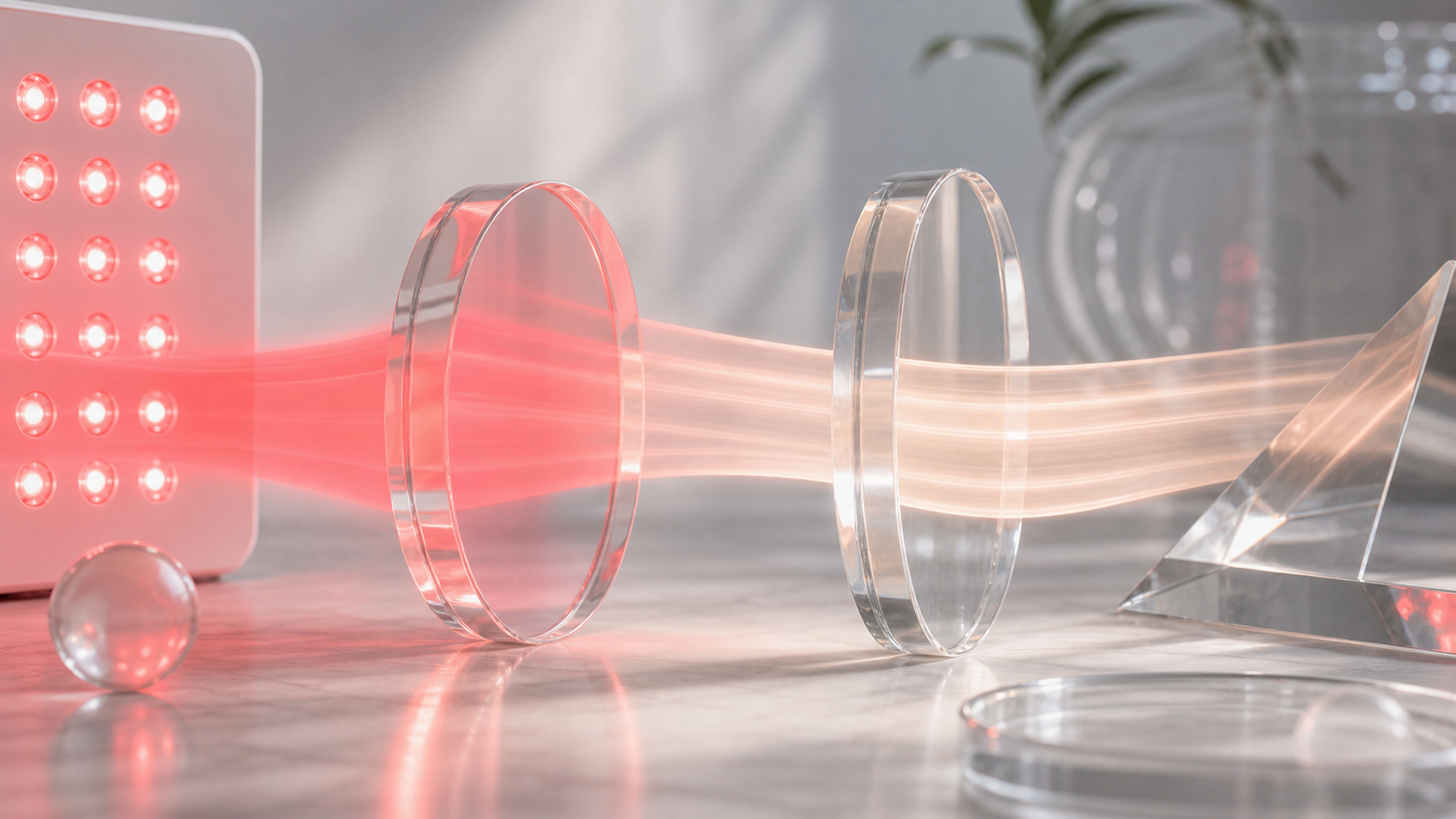
If you've started researching red light panels, you've come across two wavelengths repeatedly: 660 nm (visible red) and 850 nm (near-infrared). The difference between them comes up in product specs, research papers, and marketing copy. This guide walks through what each wavelength actually does at the cellular level, where the science distinguishes them, and why most quality home panels deliver both.
The short answer
660 nm is more commonly emphasized for surface skin work because it interacts primarily with cells in the epidermis and upper dermis. 850 nm penetrates deeper into tissue, reaching muscle and connective tissue layers. For most home users, a panel that delivers both wavelengths is the most flexible choice — not because you need to choose between them, but because different session goals benefit from different penetration depths.
What both wavelengths share
Both 660 nm and 850 nm sit in what researchers call the "therapeutic window" — roughly 600 to 1000 nm — where light penetrates tissue meaningfully and is absorbed by cellular structures without producing heat damage.
Both wavelengths are absorbed by cytochrome c oxidase in mitochondria, which is the core mechanism of photobiomodulation. Both may support ATP production, modulate cellular signaling, and influence inflammatory markers at the cellular level. The mechanism is the same; the difference is mainly where in tissue the absorption happens. The full picture is in our photobiomodulation guide.
660 nm: visible red light
660 nm sits at the deep red end of the visible spectrum. You can see it — a red panel running 660 nm looks distinctly red to the eye.
Tissue penetration
660 nm penetrates a few millimeters into tissue. It's primarily absorbed in the epidermis and upper dermis — the surface layers of skin.
Research focus
660 nm is the more commonly studied wavelength for skin-related cellular research, particularly:
- Fibroblast and collagen-related research
- Surface skin microcirculation
- Skin barrier processes
Common wellness applications
- Skin wellness routines (see our skin clarity guide)
- General face-focused sessions
- Scalp area sessions (with depth coverage from 850 nm as well)
850 nm: near-infrared light
850 nm sits just past the visible spectrum, in the near-infrared range. Most LEDs at this wavelength produce a faint red glow visible at the source but appear largely invisible at the target tissue.
Tissue penetration
850 nm penetrates several centimeters into tissue, reaching deeper structures including dermis, subcutaneous tissue, muscle bellies, and connective tissue around joints.
Research focus
850 nm is the more commonly studied wavelength for deeper-tissue cellular research:
- Muscle recovery research
- Joint-area cellular research
- Deeper tissue microcirculation
Common wellness applications
- Post-exercise recovery (see our muscle recovery guide)
- Joint comfort routines (see our joint comfort guide)
- Back area sessions (see our back-area wellness guide)
Why dual wavelength panels make sense
The reason quality panels deliver both 660 nm and 850 nm comes down to flexibility:
- You're not locked into one application area
- You can focus on different goals across different sessions
- Skin sessions get the 660 nm benefit; body sessions get the 850 nm depth
- Many cellular processes appear to respond to combined wavelength exposure rather than either alone
A panel that only delivers 660 nm limits you to surface applications. A panel that only delivers 850 nm gives you depth but less surface focus. Dual wavelength panels give you both.
Practical wavelength choices by goal
| Goal | Primary wavelength | Why |
|---|---|---|
| Surface skin wellness | 660 nm (with 850 nm) | Skin cells are mostly in surface layers |
| Skin clarity | 660 nm (with 850 nm) | 660 nm interacts with surface skin cells |
| Muscle recovery | 850 nm (with 660 nm) | Muscle tissue is below surface |
| Joint comfort | 850 nm | Deeper tissue penetration |
| General cellular wellness | Both 660 + 850 nm | Comprehensive coverage |
| Scalp wellness | Both 660 + 850 nm | Follicles span surface to deeper |
| Back area wellness | 850 nm (with 660 nm) | Deeper tissue depth |
Common questions about wavelengths
Can I just buy a 660 nm or 850 nm only panel?
Yes, but you're limiting yourself to one application area. For the price difference (small in most cases), dual wavelength panels give you more flexibility.
Do other wavelengths matter (like 630 nm or 810 nm)?
Other wavelengths in the therapeutic window have been studied. 630 nm sits closer to orange-red and is similar to 660 nm but slightly less penetrating. 810 nm is similar to 850 nm but slightly less penetrating. 660 nm + 850 nm has emerged as the most commonly studied combination because they sit close to the absorption peaks of cytochrome c oxidase.
Does combining wavelengths produce different effects than either alone?
Some cellular research suggests combined exposure may produce effects different from either wavelength alone. This is an active research area.
What about blue or green light?
Shorter wavelengths (blue at ~450 nm, green at ~530 nm) have been studied in specific contexts but don't penetrate tissue meaningfully and have different mechanisms than red and near-infrared wavelengths. They are not part of mainstream red light wellness.
The biphasic dose response applies regardless of wavelength
One consistent finding across photobiomodulation research, regardless of which wavelength: the biphasic dose response. Low doses produce stimulatory effects, medium doses produce optimal response, and high doses produce diminishing or no effect. Stay within recommended session parameters (10–20 minutes at 6–12 inches) for either wavelength or both.
When to consult a healthcare professional
Red light therapy panels are general wellness devices, not medical interventions. Consult a qualified healthcare professional before starting any new wellness practice if you have any diagnosed medical condition, take photosensitizing medications, are pregnant or breastfeeding, or have any concerns about how red light might interact with your specific situation.
The bottom line
660 nm and 850 nm are the two most commonly used wavelengths in red light wellness because they sit close to the absorption peaks of cytochrome c oxidase, the cellular target of photobiomodulation. 660 nm focuses on surface tissue; 850 nm penetrates deeper. For most home users, dual wavelength panels delivering both are the most practical choice — not because you need both for every session, but because different goals benefit from different penetration depths, and a dual wavelength panel covers them all.
The SOLRA Red Light Panel delivers verified 660 nm + 850 nm wavelengths through 40 dual-chip LEDs with honest irradiance reporting. $159-229 depending on stand configuration, with free US shipping and a 60-day money-back guarantee.
Quick comparison
| 660nm (red) | 850nm (near-infrared) | |
|---|---|---|
| Visibility | Visible red | Invisible |
| Penetration | Surface — skin (a few mm) | Deeper — muscle & joint areas (cm) |
| Most studied for | Skin & microcirculation | Muscle recovery & joint-area research |
| Best paired | Dual-wavelength panels deliver both for flexible home use | |
Frequently asked questions
What is the difference between 660 nm and 850 nm light?
660 nm is visible red that penetrates a few millimeters and is absorbed mainly in the epidermis and upper dermis, while 850 nm is near-infrared that penetrates several centimeters into deeper structures including muscle and connective tissue around joints.
Why do quality panels deliver both 660 nm and 850 nm?
Dual wavelength panels offer flexibility so you are not locked into one application area, with 660 nm supporting surface skin sessions and 850 nm providing depth for body sessions, and many cellular processes appear to respond to combined wavelength exposure.
Can I just buy a 660 nm or 850 nm only panel?
Yes, but you would be limiting yourself to one application area, and for a usually small price difference a dual wavelength panel gives you more flexibility.
What about blue or green light for this kind of wellness?
Shorter wavelengths such as blue at around 450 nm and green at around 530 nm have been studied in specific contexts but do not penetrate tissue meaningfully and have different mechanisms, so they are not part of mainstream red light wellness.
Wellness Disclaimer: The information in this article is for general wellness and educational purposes only and is not intended to diagnose, treat, cure, or prevent any disease. SOLRA products are general wellness devices and have not been evaluated by the FDA. Individual results may vary. Consult a qualified healthcare professional before starting any new wellness practice, especially if you have a medical condition or are taking medications.
Current SOLRA product facts: See the SOLRA Red Light Panel Buying Guide for the current 40-LED panel wavelengths, configurations, and listed specifications.
About this guide. Written and maintained by the SOLRA Team, who design and support the SOLRA Red Light Panel (660nm red + 850nm near-infrared light). Our guides focus on practical, comfort-first routines and use general wellness language rather than medical claims. Always follow your device instructions and consult a qualified professional about any medical condition. Editorial review: SOLRA Team · Updated June 2026.

Leave a comment
This site is protected by hCaptcha and the hCaptcha Privacy Policy and Terms of Service apply.