
Last Updated: May 21, 2026
Key takeaways
- Week one is for setup, dialing in parameters, and building the habit – not for seeing results.
- A safe starting point is 9–12 inches and about 10 minutes, since photobiomodulation follows a biphasic dose response where more is not better.
- Goggles are advised every session, and sessions are best done on bare, clean skin because even thin fabric reduces light penetration by 30–70%.
- Mild, temporary skin flushing or warmth for 15–30 minutes after a session is described as normal and usually reflects increased microcirculation.
- Aim for 3–5 sessions in week one and track sessions rather than results; plan to evaluate after 6–8 weeks.
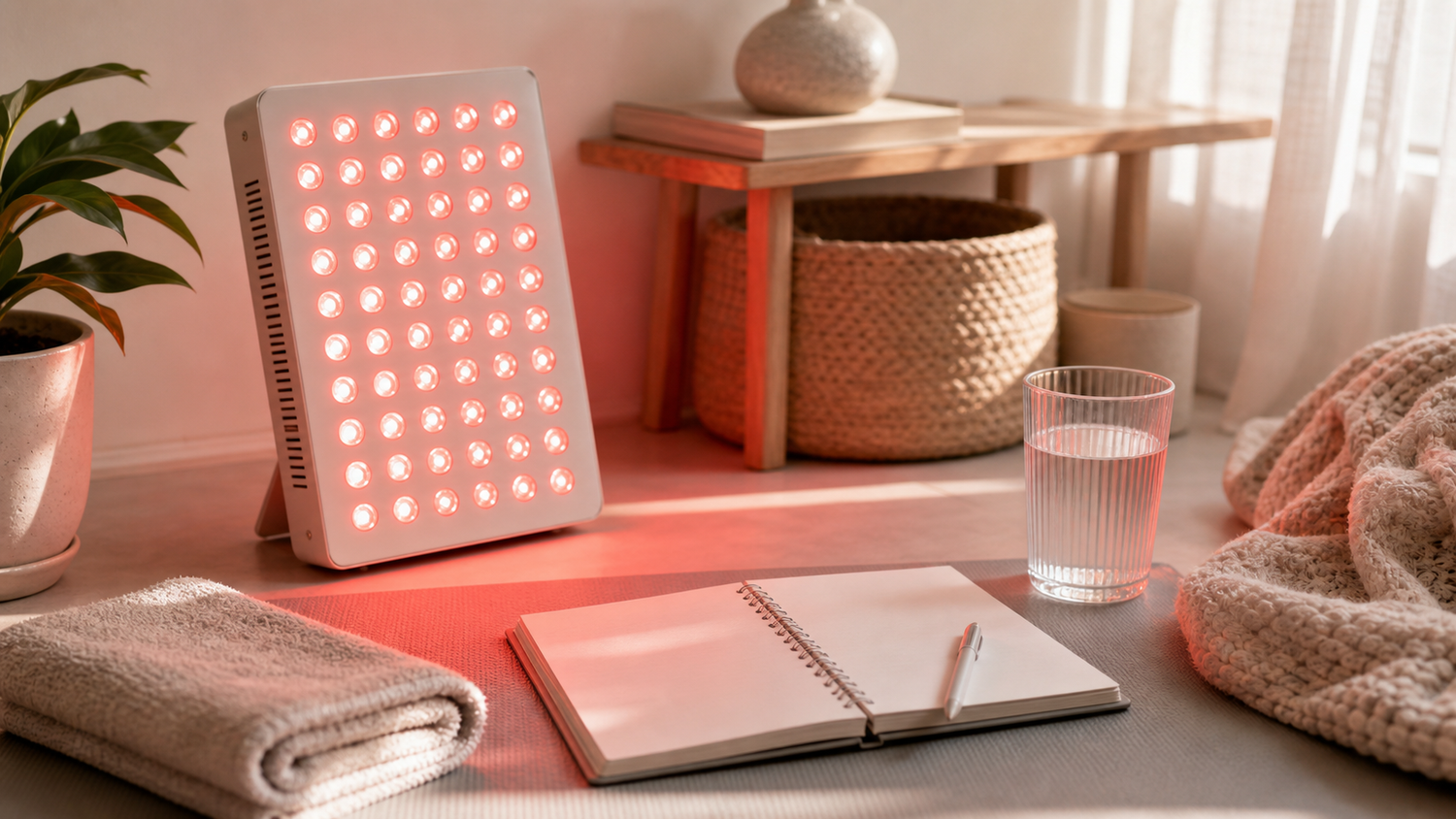
The first week with a new red light wellness panel is when most user questions come up. Setup feels unfamiliar, session parameters take some dialing in, and small things that aren't covered in the manual become real questions once you start.
This guide walks through the most common first-week questions — from unboxing and setup, through the first few sessions, to what's normal and what isn't — so you can build a routine that actually sticks.
Setup and unboxing
What's actually in the box?
A typical SOLRA panel order includes: the red light panel itself, your chosen stand (tabletop or floor stand depending on configuration), the power adapter and cable, protective eyewear (goggles), a hanging kit for wall or door mounting, and a user manual. If anything is missing or damaged on arrival, contact care@solra.com and we'll sort it out.
Where should I set it up?
The single biggest predictor of whether you'll stay consistent is location. A panel that lives in a closet doesn't get used. Pick a spot where you'll naturally end up: near your morning skincare routine, next to where you stretch after workouts, or in a quiet corner where you read in the evening. A floor stand makes the panel portable between rooms. A tabletop stand keeps it on your desk for short face sessions during the day.
Does it need a special outlet?
No — standard US household outlet (110-120V). The panel draws 200W during sessions, similar to a desktop computer or small space heater. No surge protector is required, but using one is fine.
How do I mount it on a wall or door?
The included hanging kit works for both. For wall mounting, anchor the included hook into a stud or use a drywall anchor rated for at least 10 pounds. For door mounting, the kit includes an over-the-door hanger that requires no hardware. Use the included strap to keep the panel stable during sessions.
Your first session
What distance should I start at?
For most users, 9-12 inches is a safe starting distance. Closer (6-9 inches) delivers higher intensity in a smaller area; farther (12-18 inches) covers more area at lower intensity. If you have sensitive skin or are unsure, start at 12 inches and adjust based on how your skin responds over the first few sessions. Our distance guide covers the full picture.
How long should my first session be?
10 minutes is a reasonable starting point. The temptation to start with a 20-minute session because "more is better" is understandable but counterproductive — photobiomodulation follows a biphasic dose response, where more is not better past the optimal window. Start at 10 minutes, see how your skin and body respond, and adjust from there over the first 1-2 weeks.
Do I have to use the goggles?
Yes — every session. The wavelengths themselves aren't damaging the way UV light is, but bright LEDs at close range can stress the retina. Eyelids are not opaque enough to block the light. Put the goggles on before turning the panel on, take them off after turning it off.
Should I do sessions on bare skin or through clothing?
Bare skin. Even thin fabric reduces light penetration by 30-70%, which significantly cuts the dose your skin actually receives. For face sessions, cleanse first and apply skincare products afterward. For body sessions, expose the target area directly.
What does it feel like during a session?
Mostly nothing dramatic. You'll feel mild warmth from the LEDs themselves (not from the light wavelengths being absorbed). Some users describe a subtle sense of relaxation; others feel essentially nothing. Both are normal. The cellular effects of photobiomodulation happen without obvious sensation.
What's normal in the first week
Mild skin flushing or warmth right after sessions
Some users notice mild, temporary skin flushing for 15-30 minutes after a session, particularly on the face. This usually reflects increased microcirculation and typically resolves quickly. If it persists for hours or causes discomfort, increase distance from the panel or shorten session length.
Feeling a slight "glow" or relaxation
Subjective. Some users describe this in evening sessions; others don't notice anything. Either is fine.
Not noticing dramatic changes
Completely expected. Cellular processes operate on slow timescales. Skin changes (if any) typically take 4-8 weeks of consistent sessions. Recovery effects accumulate over weeks of consistent use. The first week is about building the habit, not seeing results.
Mild headaches in the first 1-2 sessions
Occasionally reported, possibly related to bright light exposure or adjusting to a new routine. Using the goggles every session and starting with shorter sessions (5-10 minutes) at slightly farther distance helps. If headaches persist beyond 2-3 sessions, stop and consult a healthcare professional.
What's NOT normal in the first week
Stop sessions and consult a healthcare professional if you experience:
- Skin irritation that persists more than a few hours after sessions
- Rash, swelling, or unusual skin changes in the session area
- Headaches that intensify or don't resolve after the first 1-2 sessions
- Eye discomfort or vision changes (even with goggles)
- Any reaction that seems unusual for you
Most users have none of these. But if anything feels off, the conservative answer is always: pause sessions and check with a qualified healthcare professional before resuming.
Building the habit in week 1
Anchor it to an existing routine
The most reliable way to build a new daily habit is to attach it to one that already exists. If you already cleanse your face every morning, do red light right before that. If you stretch after workouts, do red light during stretching. The trigger you already have is doing the work of remembering.
Aim for 3-5 sessions in week 1
Daily sessions aren't necessary in week 1, and chasing them often leads to burnout. 3-5 sessions of 10-15 minutes each is a sustainable starting cadence. Our frequency guide covers schedules by goal.
Pick a consistent time
Morning vs evening doesn't matter much from a cellular biology perspective — the difference is which time you'll actually do consistently. Morning sessions pair well with skincare and feel energizing for some; evening sessions integrate with wind-down routines and don't disrupt sleep the way bright blue light does. Our morning vs night guide covers the differences.
Track sessions, not results
In week 1, track whether you did a session — not what you observed. A simple checkmark on a calendar or a note in your phone is enough. Tracking results in week 1 invites confirmation bias and disappointment. Tracking sessions builds the consistency that produces actual cumulative effects over weeks.
Common first-week questions
Can I use it daily right from the start?
Yes, daily use is generally fine for most healthy adults at recommended parameters. Some users prefer 3-5 sessions per week initially and build to daily; others go straight to daily. Both approaches work.
Can I use it more than once per day?
Possible, but not necessary. Photobiomodulation follows a biphasic dose response — cells reach saturation within a single session. Additional sessions same-day produce diminishing returns until cells have time to process (24+ hours). One quality session per day is plenty.
Should I apply skincare before or after sessions?
After. Skincare products — particularly sunscreens, foundations, retinoids, and exfoliating acids — can block light penetration or react unpredictably. Cleanse before the session, do the session on bare skin, apply serums and moisturizer afterward.
Can I read or work during sessions?
Yes — with goggles on. Many users do sessions while reading, meditating, or scrolling on a phone (eyes on the device, goggles still on). Just keep the panel positioned at consistent distance and angle.
What if I miss a day or two?
Fine. The cumulative benefit isn't erased by a gap. Just resume your schedule. Consistency over weeks matters more than any single session.
How will I know if it's working?
Honestly — most likely you won't, in week 1. Cellular processes are slow. Plan to evaluate after 6-8 weeks of consistent sessions, with simple notes and (for skin-focused use) consistent reference photos. Our realistic expectations guide covers what to look for and when.
Can I share it with my partner or family?
Yes — panels work for multiple users without issue. Just clean the goggles between users and let everyone find their own preferred distance and session length.
What if my skin reacts negatively?
Stop sessions immediately. Note what happened, when, and what other variables changed recently (new product, new medication, recent skin treatment). Consult a healthcare professional before resuming.
Setting expectations for weeks 2-4
If week 1 went smoothly, weeks 2-4 are about deepening the routine:
- Most users settle into a consistent cadence by week 2
- Initial flushing/warmth often subsides as your skin acclimates
- Subtle subjective changes may emerge — or may not
- The session itself becomes faster and easier (no setup friction)
- Tracking observations (not results) starts to be useful
By week 4-6, cellular processes have had enough time that you may notice gradual changes. By week 8-12, any observable effects are most apparent.
When to consult a healthcare professional
Red light therapy panels are general wellness devices, not medical interventions. Consult a qualified healthcare professional before starting any new wellness practice including red light if you:
- Have any diagnosed medical condition
- Take photosensitizing medications (some antibiotics, retinoids, certain antidepressants, some diuretics, some herbal supplements like St. John's Wort)
- Have a photosensitive medical condition
- Are pregnant or breastfeeding
- Have a recent history of skin cancer or are being monitored for skin concerns
- Have any concerns about how red light might interact with your specific situation
The bottom line
Week 1 is for setup, dialing in your session parameters, and building the habit — not for seeing results. Stay within recommended parameters (6-12 inches, 10-15 minutes, 3-5 sessions per week), use eye protection every session, do sessions on bare clean skin, and track sessions rather than results. The cumulative effects of consistent use over weeks are what red light wellness is about.
If you're just starting with the SOLRA Red Light Panel or considering one, we include free US shipping, a 60-day money-back guarantee, and 2-year warranty so you can dial in your routine risk-free.
Frequently asked questions
Does the panel need a special outlet?
No, it uses a standard US household outlet at 110 to 120V, and the panel draws 200W during sessions, similar to a desktop computer or small space heater.
Should I do sessions on bare skin or through clothing?
Bare skin, because even thin fabric reduces light penetration by 30 to 70 percent, which significantly cuts the dose your skin actually receives.
Do I have to use the goggles every session?
Yes, every session, because bright LEDs at close range can stress the retina and eyelids are not opaque enough to block the light, so put goggles on before turning the panel on and take them off after turning it off.
Can I use it more than once per day?
It is possible but not necessary, since photobiomodulation follows a biphasic dose response and cells reach saturation within a single session, with additional same-day sessions producing diminishing returns until cells have 24 or more hours to process.
Wellness Disclaimer: The information in this article is for general wellness and educational purposes only and is not intended to diagnose, treat, cure, or prevent any disease. SOLRA products are general wellness devices and have not been evaluated by the FDA. Individual results may vary. Consult a qualified healthcare professional before starting any new wellness practice, especially if you have a medical condition or are taking medications.
About this guide. Written and maintained by the SOLRA Team, who design and support the SOLRA Red Light Panel (660nm red + 850nm near-infrared light). Our guides focus on practical, comfort-first routines and use general wellness language rather than medical claims. Always follow your device instructions and consult a qualified professional about any medical condition. Editorial review: SOLRA Team · Updated June 2026.

Leave a comment
This site is protected by hCaptcha and the hCaptcha Privacy Policy and Terms of Service apply.